
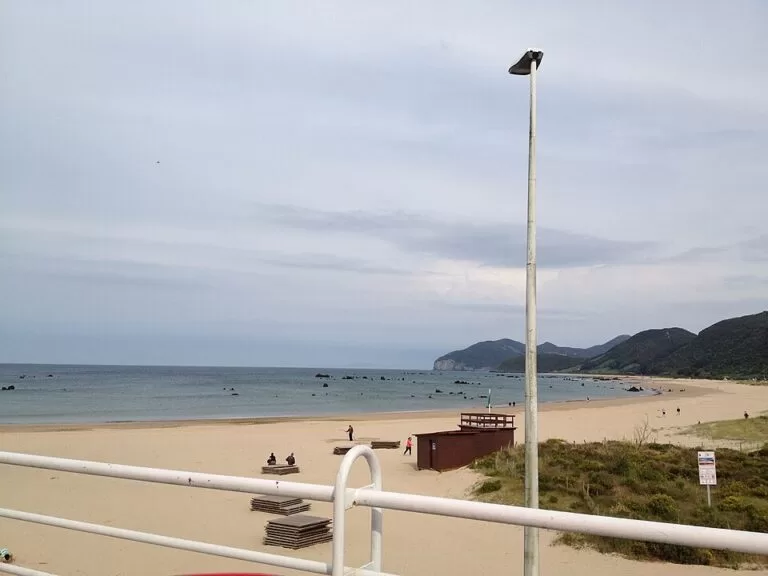
Noja is a beach resort on the east coast of Cantabria, 43 km from Santander, between the marshes of Victoria and Joyel and the open sea. Its two long beaches, Trengandín and Ris, are the main draw: Spain.info calls them kilometres of uninterrupted golden sand, with low-tide rock shelves, sunsets and marshland known for birdwatching. It suits families, surfers, kayakers and birdwatchers in summer; skip it if you want an old harbour town, as Noja is mostly holiday flats and is very quiet out of season.
Quick facts
- Names: Noja; the main beach is written Trengandín or Tregandín (Spain.info uses both).
- Where: eastern Cantabria, in the historic district of Trasmiera, between Arnuero to the west and Santoña to the east (Wikipedia).
- Coordinates: 43.4798, -3.5208 (the tourist office on Plaza de la Villa, OpenStreetMap).
- Population: 2,661 registered residents (INE 2025); about 96 per cent of homes are second homes, and the summer population is estimated at 70,000 to 80,000 (Wikipedia).
- Beaches: Trengandín, 3,700 m by 200 m; Ris, 2,200 m by 100 m; Helgueras, 2,200 m, part of the natural park (Spain.info).
- Nature: the Victoria and Joyel marshes, at either end of the municipality, belong to the Santoña, Victoria and Joyel Marshes Natural Park.
Getting there and parking
By car: Noja is 43 km from Santander (Wikipedia). From the A-8, follow the local roads north; Spain.info lists the CA-141 as the nearest main road to Trengandín and the CA-151 for Ris (Spain.info).
Parking: both main beaches can be reached by car or on foot, and Trengandín also by a path (Spain.info). In July and August, park early or walk from your accommodation.
Without a car: there is no railway. We could not confirm bus timetables to Noja; OpenStreetMap shows a bus station in Laredo, 11.7 km away.
What to expect
Trengandín. A very long, wide beach under the peaks of Brusco, Miravalles and Mijedo, with a campsite close by. It has moderate waves and wind, sun lounger and water craft rental, showers, a sports area and a children’s play area (Spain.info). Spain.info recommends it for diving and suggests walking it at low tide, when the rocks give the shore a moon-like look (Spain.info). At its eastern end, beyond the Brusco headland, is Santoña’s Berria.
Ris. The town beach, 2,200 m long, often windy, with toilets, showers and a tourist office point, and rated high for occupancy in summer (Spain.info). Spain.info calls it great for surfing and canoeing. Islets lie off the beach, among them the Isla de la Oliva and San Pedruco (Wikipedia).
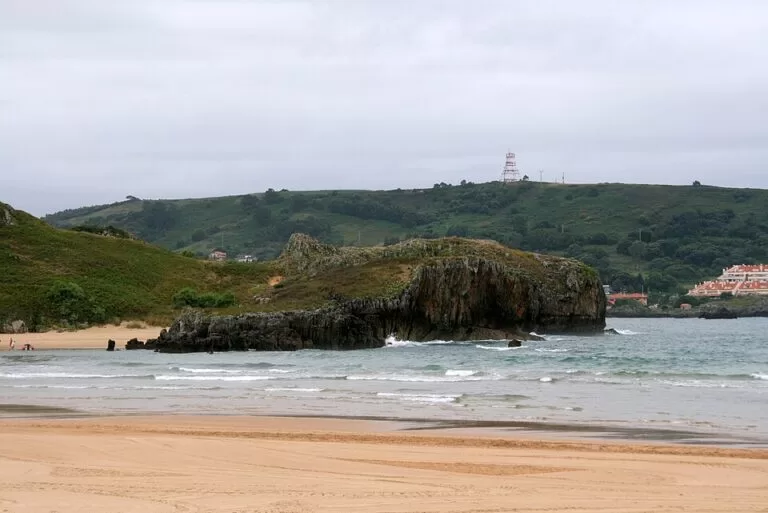
Helgueras. Reached from the El Brusco and Helgueras neighbourhoods at the eastern end of the Noja coast, this is an almost unspoilt beach backed by vegetated dunes inside the natural park. Waves and wind keep it uncrowded even in high season, and lifeguards are on duty in summer (Spain.info).
The marshes and birds. The marshland around Noja attracts thousands of birds every year (Spain.info). OpenStreetMap shows a viewpoint and a wooden bird hide on the Victoria marsh beside the Trengandín promenade (OpenStreetMap). The old tide mill of Victoria, which used the marsh water for power, is a listed monument (Wikipedia).
The village. Behind the beaches, Noja keeps traditional stone mansions, a medieval bridge, chapels, fountains and sand mills (Spain.info). The best known are the Torre de los Velasco, near the town hall, and the palaces of Zilla and of the Marqués de Albaicín (Wikipedia).
Practical details
- Tourist office: Plaza de la Villa, in the centre (OpenStreetMap). We could not confirm its hours or reach the town hall website.
- Food: Spain.info suggests the nécora, a small local crab, and grilled anchovies or sardines.
- Festivals: San Juan (24 June), San Pedro (29 June), Nuestra Señora del Carmen (16 July) and the Santos Mártires in the last week of August (Spain.info). In early March the town recreates the 1644 grant of its own town council by Philip IV (Wikipedia).
Accessibility and safety
The promenades and the town centre are flat. Spain.info lists all three beaches as windy with moderate waves; swim where lifeguards are on duty and keep off the low-tide rocks when the tide turns. The marsh paths are unpaved in places, and OpenStreetMap marks the Victoria bird hide as not wheelchair accessible.
Best time to visit
July and August are the beach season, when the town fills and every service is open. June and September are calmer and still warm enough for the beach on good days. Autumn and winter suit birdwatching in the marshes, but many flats, bars and shops close.
Nearby alternatives
- Santoña, 6.8 km away: anchovies, forts, Monte Buciero and Berria beach.
- Laredo, 11.7 km away: the Puebla Vieja and La Salvé beach.
- Isla de Santa Marina, 16.9 km away: the island off Loredo.
- Isla de Mouro, 19 km away: the lighthouse island at the mouth of the bay of Santander.
- Castro Urdiales, 26.8 km away: the harbour town with a Gothic church and castle-lighthouse.
Distances are in a straight line from the tourist office in Noja.
FAQ
Which is the best beach in Noja?
Trengandín is the longest, at 3,700 m, and the most scenic; Ris is the town beach, good for surfing and canoeing; Helgueras is the quietest.
Can you surf in Noja?
Yes. Spain.info recommends Ris for surfing and canoeing, and both Ris and Trengandín have moderate, windy conditions.
Is Noja busy in summer?
Very. The registered population is about 2,700, but the summer population is estimated at 70,000 to 80,000.
Where can you see birds in Noja?
In the Victoria marsh beside the Trengandín promenade, which has a viewpoint and a bird hide, and in the Joyel marsh on the west side of the municipality.
How far is Noja from Santander?
About 43 km by road, roughly 23 km in a straight line.
Sources and freshness
Checked 9 November 2026 · 6 sources Show
Checked 9 November 2026. Official: Spain.info on Noja (beaches, marshes, village, food, festivals) and the beach sheets for Trengandín, Ris and Helgueras (sizes, conditions, services, access). The Cantabria tourism website blocked automated access and the town hall website could not be reached, so opening hours and bus times are not confirmed. Background: Wikipedia (Spanish), Noja (population, islets, monuments, festivals). Location, tourist office and bird hide: OpenStreetMap contributors (ODbL). Photos: Wikimedia Commons, licences as credited.
How this page is made. CostaMap is written with an AI editorial system run by Ebizapple. This page is based on the sources listed above. Last updated 9 November 2026. Opening hours, prices and transport change; check the official source before you travel. How we work · Partner links and ads