
Xàtiva
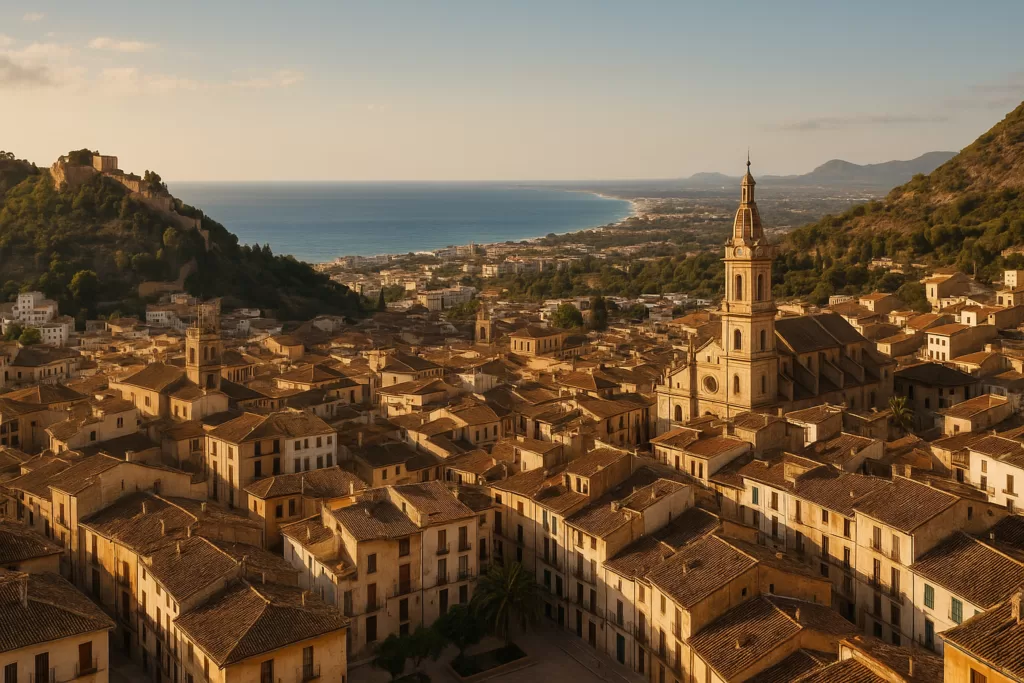
Historic siteXàtiva (Játiva in Spanish) is the capital of La Costera, an inland town about 54 km from Valencia city, with a two-part castle on the hill above a listed old town. It is the birthplace of two Borgia popes, Callixtus III and Alexander VI, and it has its own station on the Valencia commuter line C-2. Skip it if you want the sea: Gandia, on the coast, is about 29 km away.

Quick facts
- Castle: a Site of Cultural Interest in two parts, the older Castell Menor and the larger medieval Castell Major (Turisme Comunitat Valenciana).
- Old town: listed as a Historic and Artistic Centre in 1982.
- The Borgias: Xàtiva was the birthplace of several members of the family, including two popes.
- Altitude: the town stands at 115 m (Wikipedia, es).
- Tourist office: Av. Selgas 2, open Tuesday to Thursday 10:00–17:00, Friday 10:00–18:00, weekends and holidays 10:00–14:00.
Access and parking
By train: Xàtiva station has Renfe long-distance trains, the Media Distancia line 47 to Alcoy and the Cercanías Valencia line C-2 (Wikipedia, es). From the station to La Seu is about 700 m in a straight line.
By car: the A-7 passes the town, the A-35 runs to Almansa and the CV-41 to Alzira. OpenStreetMap shows a car park called La Bassa about 500 m west of La Seu.
By bus: the bus station has lines to Valencia, Alcoy, Ontinyent and Gandia, among others.
By air: Valencia airport is about 56 km away in a straight line.
What to expect
The castle: Turisme Comunitat Valenciana calls it one of the most impressive fortresses in the province. The Castell Menor is the oldest part, built on Iberian and Roman remains, with views over the Bixquert valley. The Castell Major is medieval, the largest and best preserved part; after James I took the town it became the main defence between Castile and the Kingdom of Valencia (Turisme CV, castle). Inside are Roman and Islamic remains and the Gothic chapel of Santa María. Wikipedia (es) adds that the castle and walls were rebuilt and enlarged between 1287 and 1369, much as they look today.

La Seu: the Collegiate Church of Santa Maria, on Plaza Calixto III, has been under construction since the 16th century and is still not finished. It is mostly Herrerian in style, with Gothic paintings, gold and silverwork, a sculpture by Mariano Benlliure over the altar and a museum (Turisme CV, La Seu).

Museu de l’Almodí: the town’s archaeology museum, in a mid-16th-century grain exchange with a Gothic front and a Renaissance courtyard of Ionic columns, at Corretgeria 46. It runs from the Palaeolithic to al-Andalus, with reproductions of finds from the Cova Negra, an Iberian male head from the 4th century BC and an Arabic basin among its main pieces (Turisme CV, Almodí).
The old town: beyond La Seu, the listed centre includes the Municipal Hospital, the chapels of San Félix and Santa Ana, the former convent of Santo Domingo and the birthplace of Pope Alexander VI (Turisme CV, old town).
The history behind it: Roman Saetabis was known for its linen, and the Muslim town was a pioneer of paper-making in Western Europe. In the War of the Spanish Succession it sided with Archduke Charles; Bourbon troops sacked it, and it was renamed San Felipe. A portrait of Philip V hangs upside down in the city museum (Wikipedia, es).
Practical details
- Castle tickets: Turisme CV sends visitors to the town’s official ticket page for current prices and hours. That site did not load when we checked, so we give no price here.
- Guided castle walk: Love Xàtiva Tours lists a 1 h 15 min tour of the castle at €14, without transport up the hill (Turisme CV, experiences).
- Tourist office: Av. Selgas 2, tel. 962 273 346, oficinaturisme@xativa.es (Turisme CV, Tourist Info Xàtiva).
- Food: Turisme CV names arròs al forn (oven-baked rice) and arnadí, a pumpkin and almond sweet, as the dishes to try.
Accessibility and safety
We found no official accessibility details for the castle or La Seu. The castle stands on top of a hill above the town, on the Carretera del Castell, and the tour company above does not include transport up. The Love Xàtiva Tours walk is offered all year. Ask the tourist office about access before you go with a wheelchair or a pushchair.
Best time to visit
Turisme Comunitat Valenciana lists the Fallas, Easter week and the August fair among Xàtiva’s festivals; Wikipedia (es) puts the Fira d’Agost from 15 to 20 August. Outside the town, the Cova Negra natural area by the River Albaida has the Palaeolithic site of Cova Negra, the Les Arcadetes d’Alboi aqueduct and routes for walking, mountain biking and climbing.
Nearby alternatives
- Alzira travel guide, about 20 km away: in La Ribera Alta, towards Valencia.
- Ontinyent travel guide, about 20 km away: in the Vall d’Albaida.
- Gandia travel guide, about 29 km away: the coast.
- Collegiate Basilica of Gandia, about 29 km away.
- Valencia travel guide, about 54 km away.
- For the whole coast, see our Costa de Valencia guide.
Distances are in a straight line from La Seu.
FAQ
How do you get to Xàtiva from Valencia?
By train on the Cercanías line C-2, or by car on the A-7. The town is about 54 km from Valencia city in a straight line.
What is Xàtiva’s link with the Borgias?
Two Borgia popes, Callixtus III and Alexander VI, were born here, and the Borgia Route takes in their birthplace and other monuments linked to the family.
Why is the portrait of Philip V upside down?
Philip V’s Bourbon troops sacked Xàtiva in the War of the Spanish Succession and renamed it San Felipe. His portrait hangs upside down in the city museum.
Sources and freshness
Checked 3 October 2026. Official: Turisme Comunitat Valenciana on Xàtiva, the castle, La Seu, the Almodí, the old town, the tourist office and the castle tour. The town’s tourism site did not load when we checked. History, transport, altitude and festivals: Wikipedia (es). Airport: OurAirports. Location and distances: OpenStreetMap contributors (ODbL). Photos: Wikimedia Commons, licences as credited.
Find Xàtiva on the map
On the map: Col·legiata Basílica de Santa Maria (La Seu) · Castell de Xàtiva · Museu de l’Almodí · Hospital Reial · Tourist office · Xàtiva station · 38.98807, -0.51831. The pin is on La Seu in the old town; the castle is about 600 m south, up the hill, and the station about 700 m north-west.
Place type
Area · next level
 Costa Valenciana
Xàtiva
Capital of La Costera, about 54 km from Valencia: a two-part castle above a listed old town, La Seu and the Almodí museum. Birthplace of two Borgia popes; trains on the C-2 line.
On CostaMap
Places worth knowing
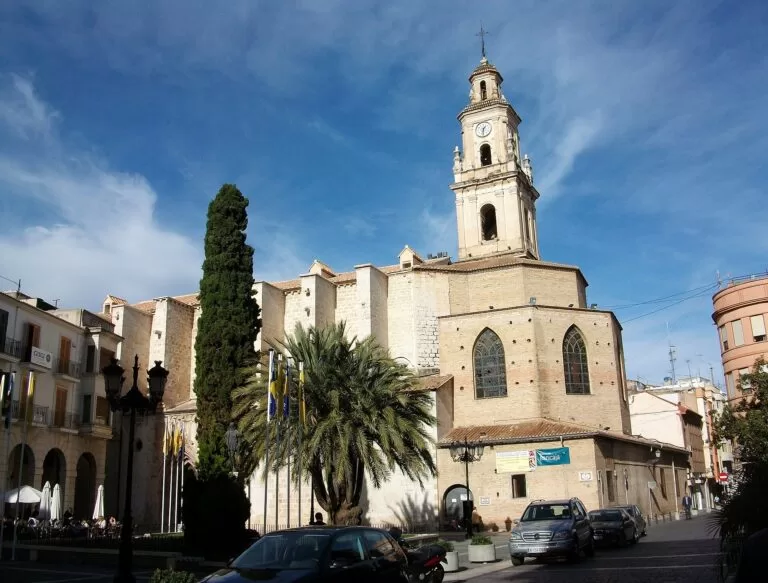 Costa ValencianaCollegiate Basilica of GandiaThe Collegiate Basilica of Gandia baptised Francis Borgia, the one member of the notorious papal family who became a canonised saint.Read more →
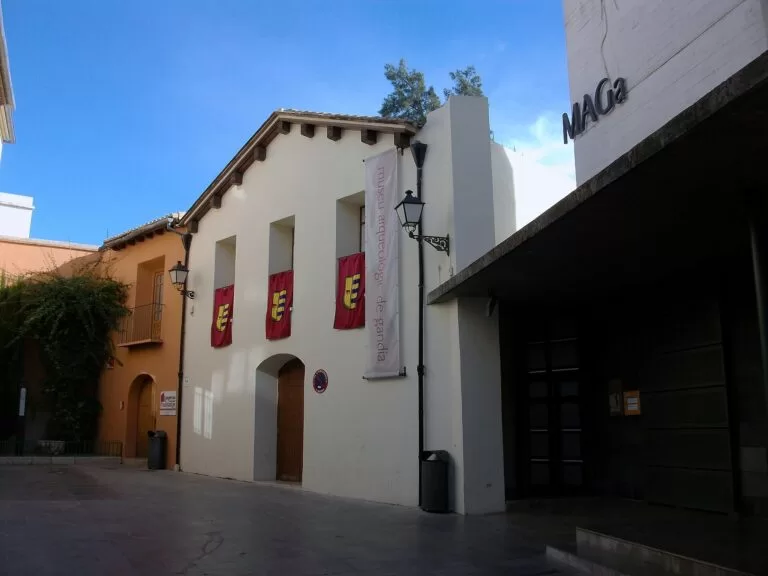 Costa ValencianaArchaeological Museum of GandiaGandia’s archaeological museum closed for 16 years (1987-2003) for research and restoration — its collection includes some of Europe’s earliest evidence of controlled fire.Read more →
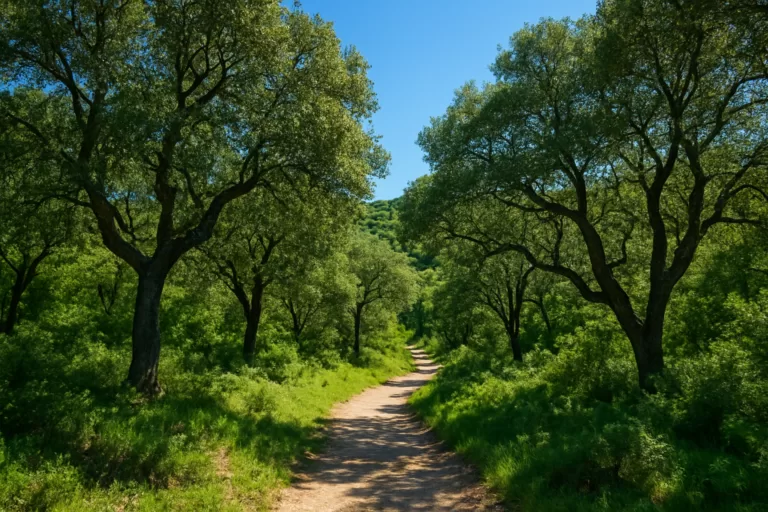 Costa ValencianaFont Roja Natural Park (Alcoy)Font Roja Natural Park offers diverse trails and one of the best-preserved holm-oak forests in Costa Blanca.Read more →
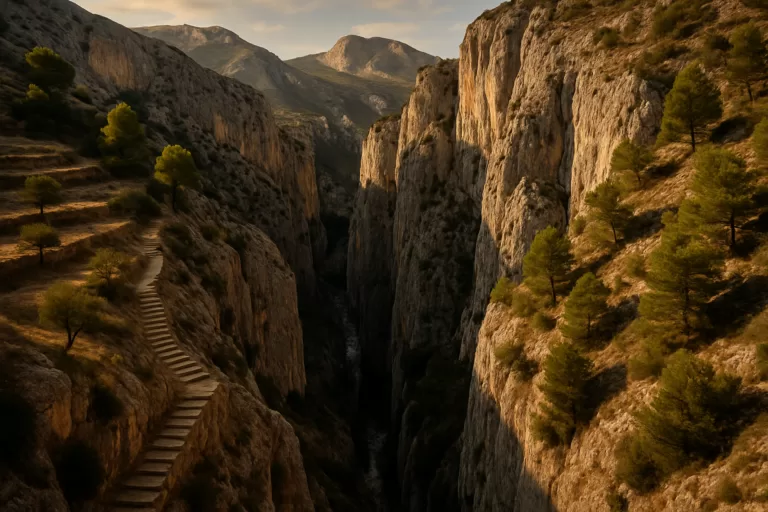 Costa ValencianaBarranc de l’InfernOne of the Costa Blanca’s most famous hikes: a circular trail through a deep gorge on 6,800 Moorish stone steps, the Cathedral of Hiking in the Vall de Laguar.Read more →
This place is part of our Costa Valenciana Map: Valencia, Gandia and the Albufera — see every town, beach and cove we have mapped on that coast.
How this page is maintained. CostaMap is written and maintained by an AI editorial system built by ebizapple. Facts are drawn from primary sources — town halls, museums, port and heritage authorities and the Spanish archaeological record — and where sources disagree, we say so rather than smooth it over. Photographs marked as ours are taken on location. This page was last reviewed on 3 October 2026. Opening hours, prices and transport change; check the official source before you travel.