
Expect a place that wears its layers of history on its sleeves: a port city that grew from a Roman military camp onto a Talaiotic site, deepened by centuries of Islamic and medieval commerce, and in the modern era remade itself into the Balearics’ primary tourism hub. If you arrive imagining an unchanging island idyll, prepare to see busy streets, a working seaport, and a city shaped by commercial pressure as much as by heritage. That tension—between monumental architecture, old-quarter atmospheres and a tourism-driven economy—is what most visitors actually experience here.
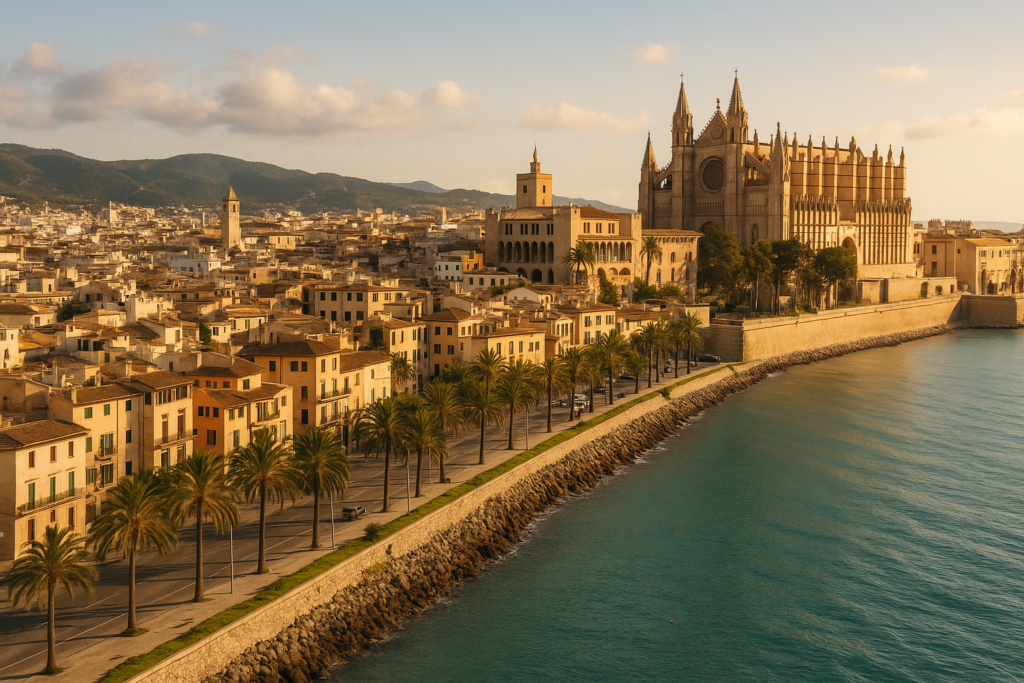
Palma de Mallorca at a glance
- Capital and largest city of the Balearic Islands — the island’s administrative, cultural and transport hub.
- Major seaport on the Bay of Palma, sitting on Mallorca’s south coast.
- La Seu cathedral stands on the site of a former mosque; the Old City still shows traces of an Arab past.
- Climate is officially classified as hot semi-arid, bordering on a hot-summer Mediterranean type.
- Tourism dominates the local economy; the sector contributes a very large share of Mallorca’s GNP.
- Historically a trading centre in the Middle Ages due to its advantageous coastal location.
- Municipal territory includes the Cabrera Archipelago, which forms part of its jurisdiction.
Things to do in the town
Start with the Old City and the cathedral — these are the spine of any visit. As you move outward you’ll notice the city’s maritime role and modern tourist infrastructure. Expect a mix of architectural sightseeing, market streets, and promenades by the bay rather than a compact “walk-everywhere” small town.
| Attraction | What it is | Price/entry | Best for |
|---|---|---|---|
| La Seu (the cathedral) | Gothic cathedral built on the site of a former mosque | – | Architecture and history |
| The Old City | Historic quarter with streets hinting at an Arab past | – | Strolling, medieval urban fabric |
| Cabrera Archipelago | Group of islands that are part of the municipality | – | Nature and maritime excursions |
La Seu — the cathedral on the bay
La Seu is the city’s single most recognisable monument and its presence dominates views across the Bay of Palma. The cathedral’s most notable feature for visitors is its siting: it occupies the footprint of a former mosque, a reminder of the Islamic period that shaped the Old City’s street pattern. Architecturally it is a focal point for anyone interested in the city’s layered past; expect grand façades and a sense of civic prominence along the waterfront.
The Old City and its Arab traces
The Old City preserves a street plan and details that hint at the centuries when the settlement was known as Medina Mayurqa and was under Islamic control (between 902 and 1229). Narrow lanes and certain defensive and residential patterns in the historic core still reflect that medieval urbanism — read the streets carefully and you will spot those echoes. The Old City remains a primary reason people come: it concentrates the cathedral, markets, and many historic civic buildings within walkable distance.
Cabrera Archipelago: the municipal wildlands
Part of the municipality’s territory is the Cabrera Archipelago — a cluster of islands and islets. Although not part of the main urban experience on the south coast, the archipelago forms a distinct natural component of the municipal area and is relevant for anyone planning longer coastal or maritime trips originating from the port. It’s a reminder that municipal limits here include both dense urban zones and protected marine landscapes.
Best beaches in the area
Palma sits on the Bay of Palma and the coastline directly around the city provides a variety of coastal experiences from urban promenades to harbour-front stretches. For detailed descriptions of specific beaches and the facilities they offer, consult local resources once you arrive, because official lists and flags can change season by season.
How to get to the city and get around
The town functions as Mallorca’s main seaport on the Bay of Palma and acts as the island’s primary transport and administrative hub. That seaport status means there are maritime links and a busy quay area; the city’s role as capital concentrates many island services and onward connections here. Within the urban core, expect a mix of walking-friendly historic quarters and busier modern avenues; getting around the Old City is mostly on foot, while trips to outlying parts of the municipality use roads and maritime services where applicable.
Best time to visit
Climate classification places the city in a hot semi-arid category bordering on a hot-summer Mediterranean climate. What that means for visitors in practical terms is that summers are hot and dry compared with many inland European cities, while the mild coastal location moderates extremes compared with interior areas. Tourism is a dominant force in the local economy, so peak visitor months align with warm weather; if you want fewer crowds, seek shoulder seasons when weather remains pleasant but city life is less frenetic.
| Season | Months | What to expect |
|---|---|---|
| High season | – | Warm weather and busiest tourist activity; expect full services and a strong tourism focus in the city |
| Shoulder seasons | – | Fewer crowds; still beneficial weather due to the coastal climate; a sensible compromise if you dislike peak visitor volumes |
History of the resort
The settlement that became the city began as a Roman camp on a site already occupied by a Talaiotic settlement, indicating prehistoric occupation. In the medieval period its advantageous coastal position turned it into a prosperous trading centre — an asset that informed urban growth and civic wealth. Between 902 and 1229 the town was under Islamic rule and was known as Medina Mayurqa; the imprint of that era survives in street patterns and place names. Later centuries saw continued commercial importance and, in the 20th century, a profound shift: from the 1950s onwards the city experienced a tourism boom that reshaped its economy and urban life, turning tourism into the dominant sector of activity on the island.
Practical info
- Economy and costs: Tourism is the dominant economic driver for the island, accounting for a very large share of Mallorca’s GNP; this commercial orientation affects prices and the availability of tourist services in the city.
- Port and maritime services: The city is a major seaport on the Bay of Palma, so expect active quay areas, ferry activity and maritime infrastructure concentrated around the waterfront.
- Agriculture: Beyond tourism the island and its economy still include agricultural outputs; notable local exports include almonds and olives, which continue to form part of the rural economy within the municipality.
- Population: As of 2024 the city’s population stands at 438,234, which helps explain the urban scale and the wide range of services available.
- Connectivity within the municipality: The municipal territory includes both dense urban areas on the south coast and more remote elements like the Cabrera Archipelago — this mix means travel options can vary from short urban walks to longer boat-based trips for island visits.
Worth it for: history and architecture lovers who want an accessible mix of monumental sights and a live port atmosphere; visitors who appreciate a city with a coastal setting and a broad variety of services. Less so if: you expect an untouched rustic island experience — the urban core is shaped heavily by mass tourism and modern commerce.
How we assess this guide
This guide compiles and cross-checks verified facts about the city’s history, geography and economy. We highlight the status of major sites and municipal components and avoid claiming any details not supported by reliable sources. We flag historic eras and administrative facts accurately; where precise, current service details (like daily opening hours, seasonal flags or entry fees) change frequently, we advise checking local official sources before travel.
Frequently asked questions
Is this the capital of the Balearic Islands?
Yes. The city is the capital and largest city of the Balearic Islands and serves as the regional administrative and commercial centre.
What is the city’s climate like?
Official classifications describe the climate as hot semi-arid, bordering on a hot-summer Mediterranean climate. Expect a generally dry, warm to hot coastal climate compared with many mainland European cities.
How important is tourism to the local economy?
Tourism is the major economic activity and accounts for a very large share of Mallorca’s GNP; the sector’s dominance has shaped the city’s services, infrastructure and employment.
Are there visible signs of the city’s Islamic past?
Yes. The Old City preserves street patterns and features that hint at an Arab past from the period when the settlement was known as Medina Mayurqa (between 902 and 1229), and the cathedral itself stands on the site of a former mosque.
What is La Seu and why is it significant?
La Seu is the cathedral built on the footprint of a previous mosque. It is a major architectural and historical landmark and dominates the waterfront panorama.
Is the city a good base for exploring the Balearic Islands?
As the island’s capital and main seaport on the Bay of Palma, the town functions as a central hub for services and transport links. It’s a logical base for exploring the island and for maritime excursions that depart from the bay.
Does the municipality include any islands?
Yes. The Cabrera Archipelago forms part of the municipality’s territory, adding protected natural and maritime areas to the city’s administrative remit.
When did modern tourism take off here?
The city underwent a tourism boom beginning in the 1950s, a period that transformed the local economy and urban development patterns.
Is agriculture still part of the economy?
Yes. While tourism dominates, agriculture persists in the wider island economy; almonds and olives are notable local exports associated with the region.
How many people live in the city?
As of 2024 the reported population is 438,234, which reflects the city’s scale and the breadth of services you can expect to find.
Is the Old City walkable?
Yes. The historic centre concentrates major sights and retains narrow lanes and a compact street plan that are best explored on foot, though the overall municipality includes more spread-out coastal and maritime areas.
Are there good nature or island excursions available from the port?
The city’s role as a major seaport and its municipal inclusion of the Cabrera Archipelago mean maritime excursions and island-oriented trips are part of the broader offer; check local operators for current schedules and access rules.
Is it busy year-round?
Because tourism is central to the island’s economy, visitor activity peaks in warm months. Shoulder seasons provide a quieter experience while retaining most services, due to the city’s coastal climate and its status as the island’s primary urban centre.
Is the town suitable for short city breaks?
Yes. The concentration of major historic sights like the cathedral and the Old City makes the urban core well-suited to short visits, though the city’s wider maritime and municipal features support longer stays too.
Are there any major sporting events here?
The city hosted the UEFA Futsal Champions League Finals in 2023, reflecting its capacity to stage international sporting events.
Plan the wider trip
This place is part of our Balearic Islands Guide: Mallorca, Menorca, Ibiza & Formentera — see every town, beach and cove we have mapped on that coast.
How this page is maintained. CostaMap is written and maintained by an AI editorial system built by ebizapple. Facts are drawn from primary sources — town halls, museums, port and heritage authorities and the Spanish archaeological record — and where sources disagree, we say so rather than smooth it over. Photographs marked as ours are taken on location. This page was last reviewed on 15 August 2026. Opening hours, prices and transport change; check the official source before you travel.