
Expect a compact Mallorcan inland town where traces of industry and deep local traditions sit at the foot of the Tramuntana mountains. This is not a resort with long, sandy beaches or a bustling nightlife scene — it’s a place of narrow streets, a parish church at its heart, local fairs and a small-town rhythm that mostly appeals if you want to explore rural Mallorca and the nearby mountains or use it as a quiet base a short drive from Palma.
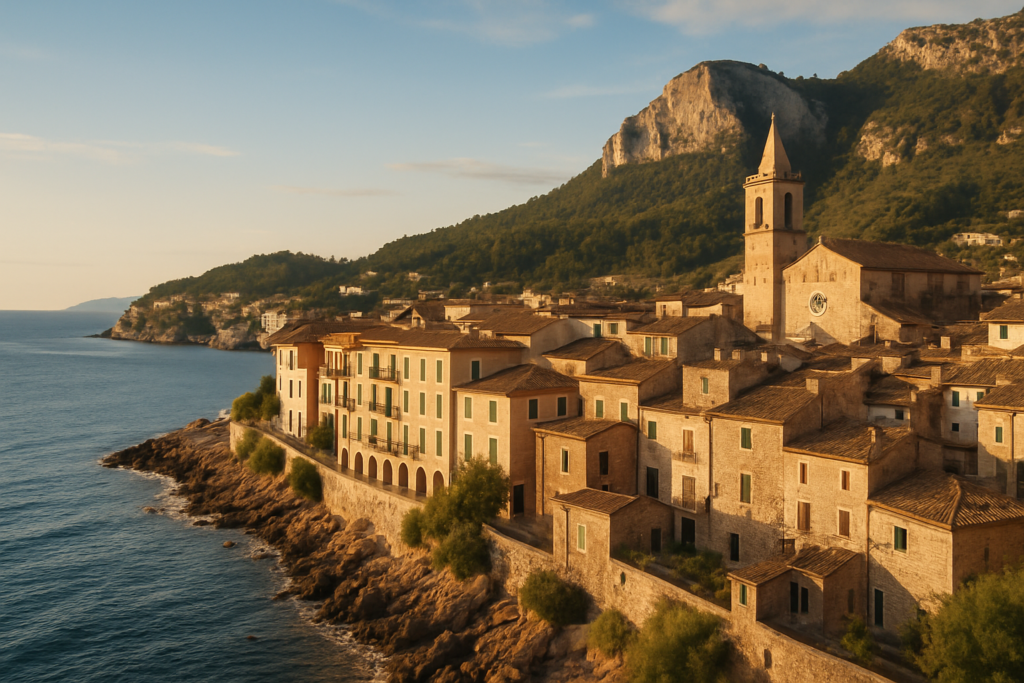
Esporles at a glance
- About 15 kilometres from Palma de Mallorca — an easy half‑hour drive under normal traffic.
- Located around the Serra de Tramuntana, making it a gateway for mountain walks and scenic drives.
- Two historic quarters: Vilavella (the old town) and Vilanova (a later expansion).
- Local cultural calendar highlights: Festes de Sant Pere (23–30 June) and La Fira Dolça (first Sunday of October).
- Heritage of a once-significant textile industry; a converted factory now houses the public library Sa Fabrica (opened 2010).
- Small residential developments include Ses Rotgetes de Canet and Es Verger.
- Economy now largely based on tourism, after traditional agriculture and animal husbandry.
Things to do in Esporles
There’s no long list of big-ticket attractions here, but a few locally meaningful sites and events give the place character. The fittings of the town — a parish church, a converted factory-turned-library, sports grounds and seasonal public facilities — are the reasons visitors come, often as part of a wider Tramuntana or Palma itinerary.
| Attraction | What it is | Price/entry | Best for |
|---|---|---|---|
| Parochial church of Sant Pere | Historic town church, focal point of the old quarter | – | Architecture buffs, cultural atmosphere |
| Sa Fabrica (local library) | Library housed in a converted textile factory; opened 2010 | – | Quiet visits, local heritage, exhibitions |
| Son Quint sports facilities | Sports hub including a football pitch | – | Active families, local matches |
| Local fairs and festivals | Annual events such as La Fira Dolça and the Festes de Sant Pere | – | Cultural visitors, food lovers |
Sa Fabrica — a modern use for industrial heritage
The town’s textile past survives more in buildings than in active mills. One of those former factories was transformed into Sa Fabrica, the local library that opened in 2010. It’s a straightforward example of adaptive reuse: you can expect contemporary civic functions set inside an industrial shell, and this is a good spot to understand the community’s pivot from manufacturing to cultural and tourist services.
Sport and local life at Son Quint
The sports facilities at Son Quint, including a football pitch, are where residents gather for weekend matches and training. For visitors who prefer low-key, authentic local life over staged tourist experiences, catching a community fixture or using the sports areas (when public access is permitted) offers a genuine snapshot of everyday Esporles.
Festivals and seasonal highlights
If your trip can be timed to local events you’ll get the liveliest impression of the town. The week-long Festes de Sant Pere takes place from 23 to 30 June and is the main summer civic celebration. In autumn, La Fira Dolça — the Sweet Fair — is held on the first Sunday of October and has been a fixture since 2005; it focuses on local confectionery traditions and draws local producers and visitors from neighbouring towns.
Best beaches nearby
Esporles itself is inland and has no beaches. If you need sea time, the town’s location around the Serra de Tramuntana makes coastal spots accessible by car from Palma on a day trip. Plan beach visits separately from town activities.
Esporles with kids
Families will find a modest number of kid-friendly options concentrated on outdoor play and seasonal public facilities. This is a relaxed, rural environment rather than a children’s entertainment hub.
- There is a public open roof swimming pool that operates in spring and summer — a clear seasonal option for children when it is open.
- Sports facilities at Son Quint, including the football pitch, provide space for active kids and informal play.
- Local fairs such as La Fira Dolça often include food stalls and family-oriented activities suited to younger visitors.
How to get to Esporles and get around
Getting to the town is straightforward from Palma if you have a car; the close proximity makes it a popular short excursion. Once in the town, expect to walk between sights — the centre is compact, and the two historic quarters are best explored on foot.
Where to stay in Esporles
The town is compact enough that where you stay is more about style than location. Distinguishing the main areas helps choose the right base:
- Vilavella — the old town: best if you want historic streets and being close to the parish church and any small cafés or plazas.
- Vilanova — later expansion: suits visitors who prefer slightly newer neighbourhoods and more straightforward street layouts.
- Ses Rotgetes de Canet and Es Verger — small developments: offer quieter residential accommodation away from the busiest parts of town, suitable for longer stays and private-rental options.
Best time to visit Esporles
Choose timing based on whether you prioritise events or quieter mountain access. Summers bring festivals and the seasonal pool; autumn offers the Sweet Fair. Winters can be quiet, reflecting the town’s calm local rhythm outside peak tourist seasons.
| Season | Months | What to expect |
|---|---|---|
| Summer | June–August | Festes de Sant Pere (23–30 June); pool open in spring/summer; busiest time locally |
| Autumn | September–November | La Fira Dolça on the first Sunday of October; pleasant weather for walking |
History of the town
The area grew from an agricultural and animal husbandry base into a centre for textile manufacture in past centuries. That industrial chapter left physical traces — mills and factory buildings — even though only fragments of the once-significant textile industry remain. One such factory was repurposed as the public library Sa Fabrica, opening in 2010 and symbolising the town’s shift from production to cultural and tourism-focused activities. The parish church of Sant Pere stands as the focal spiritual and architectural landmark of the old quarter.
Practical info
- Parking: The town’s compact nature makes short-term parking and on-street spaces the typical options; expect smaller car parks rather than large multi-storey facilities.
- Costs: The local economy is oriented to tourism, so service offerings aimed at visitors are available, but this is not a high‑price resort market like some coastal zones.
- Accessibility: Streets in the old quarter can be narrow and uneven in places, typical of historic Mallorcan towns; mobility-impaired visitors should plan routes carefully.
- Connectivity: Proximity to Palma (about 15 kilometres) makes day trips and access to larger services straightforward; public transport options exist in the region, but a car gives the most flexibility for exploring the Tramuntana foothills.
Worth it for: travellers seeking a quiet Tramuntana foothill town with authentic local festivals, architectural echoes of Mallorcan industry, and a short drive from Palma.
Less so if: you want long beaches, nightlife, or a wide choice of visitor attractions within town — those amenities are found on the coast and in larger nearby resorts.
How we assess this guide
We compile this guide from verified local facts and cross-checked sources. We flag event dates and the opening status of notable public facilities, and we avoid presenting closed venues as open. This guide synthesises civic, cultural and geographic information to set realistic expectations; it does not include first-hand field reporting but is grounded in documented claims and official local details.
Frequently asked questions
How far is it from Palma airport or city?
The town is located approximately 15 kilometres from Palma de Mallorca, making it a short drive from the city and the island’s main transport hubs.
Is Esporles expensive to visit?
Prices reflect a small inland town with a tourism-focused economy; it is generally less resort-priced than major coastal destinations, though visitor services aimed at tourists are available.
Which is the best beach if I stay here?
Esporles has no beaches itself — you will need to drive or travel to the coast from here. Use the town as a base for inland activities and plan separate beach days on the island’s shoreline.
How many days should I allocate to see the town?
A day trip is sufficient to walk the old quarter, visit Sa Fabrica and catch local life; two to three days allow a more relaxed pace and attendance at nearby events or mountain excursions.
Is Esporles good for families with children?
Yes for quiet family stays: there is a public open roof swimming pool open in spring and summer and sports facilities including a football pitch at Son Quint that suit active families.
Can I get around without a car?
Walking covers the compact centre, but exploring the surrounding Tramuntana foothills and reaching beaches is easiest with a car. There are regional public transport options on Mallorca, but they are less flexible than driving.
Is parking available in the town?
Parking in smaller on-street spaces and short-term car parks is the typical arrangement; expect simple, local parking rather than large, centralised garages.
What are rainy-day options?
Indoor options include visiting Sa Fabrica, the library housed in a former factory; otherwise, cafés and local shops provide shelter, but the town’s main appeal is outdoor and cultural, so rainy days reduce available activities.
When is the best time of year to visit for festivals?
Plan for late June to attend Festes de Sant Pere (23–30 June) or the first Sunday of October for La Fira Dolça, which celebrates local confectionery and has run since 2005.
Are there notable churches or historic buildings to see?
The parochial church of Sant Pere is the principal historic religious building and a focal point of the old quarter’s streets and civic life.
Does the town have a cultural centre or library worth visiting?
Yes — Sa Fabrica is a library situated in a former textile factory; it opened in 2010 and is an example of the town’s industrial heritage being repurposed for cultural use.
Is there a textile industry history worth exploring?
Esporles had a historically significant textile industry, and although only traces of the factories remain, those traces form part of the town’s identity and are visible in repurposed buildings.
Are there organised tours from Palma or surrounding resorts?
Many visitors combine a trip here with itineraries in the Serra de Tramuntana or Palma excursions. Specific guided tours may include the town as part of broader regional routes; check local tour operators for current offerings.
What small neighbourhoods are part of the municipality?
Small developments within the municipality include Ses Rotgetes de Canet and Es Verger, which are residential areas offering quieter accommodation choices.
Is Esporles a good base for exploring the Tramuntana?
Yes — situated around the Serra de Tramuntana, the town serves as a convenient foothill base for mountain drives, short hikes and visiting neighbouring Tramuntana towns.
Plan the wider trip
Esporles on the map
How this page is maintained. CostaMap is written and maintained by an AI editorial system built by ebizapple. Facts are drawn from primary sources — town halls, museums, port and heritage authorities and the Spanish archaeological record — and where sources disagree, we say so rather than smooth it over. Photographs marked as ours are taken on location. This page was last reviewed on 14 August 2026. Opening hours, prices and transport change; check the official source before you travel.