
Expect an area that’s less a single town and more a stitched-together coastal municipality: an extensive, sometimes rugged stretch of southwest Mallorca where long tourist seasons, archaeological pockets and seaside hamlets sit alongside one another. This guide tells you what to expect, where the genuine highlights are, and which commonplace travel hype to take with a pinch of salt so you don’t arrive disappointed.
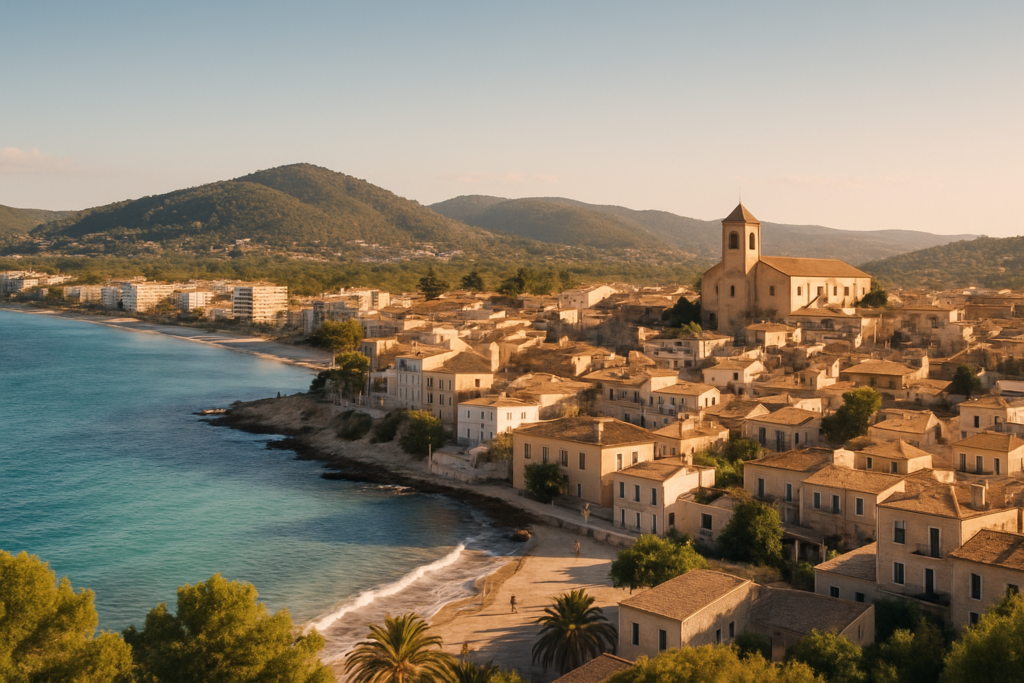
Calvià at a glance
- Southwest Mallorca municipality and resort area; the municipal seat is the town of Calvià Vila.
- Coastline totals 54 km and includes 34 beaches and coves — expect a mix of sand, pebbles and rocky shoreline.
- Historic layers range from Neolithic settlements (as early as 2,000 BCE) to medieval churches; Roman remains are minimal here.
- Key archaeological sites include the Puig de sa Morisca Archaeological Park and Sa Mesquida.
- Bordered by Palma de Mallorca to the east and the Mediterranean to the south; Serra mountain ridges sit to the north and northeast.
- One of the Balearics’ most touristed and populated municipalities after Palma; the 2008 census recorded just over 50,000 residents.
Before you plan
There are no venue closures flagged in the claims used for this guide. This section appears because our editorial process always checks for closures and redevelopments; if a listed attraction or facility is under redevelopment we will call that out here. For this edition, the archaeological sites and historic church are presented as existing sites to visit, and beaches/coves are described as a physical coastline rather than specific facilities that may change year to year.
Things to do in Calvià
The municipality offers three broad categories of activity: coastal time (beaches and coves across a long coastline), low-key cultural history (archaeology and medieval churches), and built-up resort life where tourism is the dominant local economy. Below is a compact comparison of the most robust, grounded claims so you can prioritise what matters to you.
| Attraction | What it is | Price/entry | Best for |
|---|---|---|---|
| Puig de sa Morisca Archaeological Park | Archaeological site and park with prehistoric remains | – | History and archaeology enthusiasts |
| Sa Mesquida | Recognised archaeological site (part of the municipality’s prehistoric heritage) | – | People wanting quieter, off-the-main-route heritage |
| Santa Ponça (landing site) | Historic coastal place tied to King James I’s 1229 landing | – | History-minded visitors and coastal walkers |
Puig de sa Morisca Archaeological Park
This park is one of the named archaeological sites inside the municipality and represents the best easy-to-access evidence of the area’s prehistoric past. The site sits within the municipal territory and forms a direct link to the region’s Neolithic and later prehistoric settlement activity. If you’re curious about Mallorca before the medieval era, this is the place to prioritise.
Sa Mesquida — local archaeology away from the crowds
Sa Mesquida is another archaeological point mentioned in the record of notable sites. It’s worth visiting for the sense of continuity between Neolithic occupation and later population centres; don’t expect expansive Roman monuments — the historical record emphasises that Roman vestiges are not a prominent part of the municipal landscape.
Follow the medieval thread
Calvià’s medieval history is visible in its long-standing ecclesiastical presence. The parish church of Sante Ihoannes Caviano has been known since 1248, and the medieval era is also signposted by the historical narrative of King James I landing at the coast on 10 September 1229. Those two facts combine to make the town and its coastline interesting for anyone who wants a walk that pairs shoreline scenery with visible signs of medieval Mallorca.
Best beaches in the area
The coastline is long and varied: 54 kilometres with 34 beaches and coves. That means you’ll find everything from larger resort beaches to small, sheltered coves and rocky stretches. Facilities and accessibility vary tremendously from place to place, so match expectations to the kind of coastline you want — sand and services or solitude and rocks.
| Beach | Character | Facilities / Blue Flag |
|---|---|---|
| Santa Ponça (coastal area) | Historic landing place on the coast; part of the resort-strewn southern shoreline | – |
| Various coves and beaches across the 54 km coastline | 34 beaches and coves ranging from sandy bays to rocky inlets | – |
Calvià with kids
Families can make straightforward beach days out of much of the coastline because the area includes many beaches and coves within a single municipality, allowing for easy choice depending on how fussy your group is about sand versus pebbles and the need for services. There are also archaeological sites and low-impact cultural visits suitable for mixed-age groups; pick shorter walks and one excavation/park visit per day for younger children.
How to get to the area and get around
The municipality sits in Southwest Mallorca, between the Serra de Tramuntana and the Serra de Na Burguesa, and borders Palma de Mallorca to the east. That location makes it naturally connected to island transport routes that link Palma with the western coast. Once in the municipal area, expect travel to be a mix of coastal road driving and short local transfers between villages and beaches; the territory covers a wide area, so a vehicle or organised transfers make accessing multiple parts of the coastline in a single day much easier.
Where to stay in Calvià
Accommodation patterns follow the coastline and the spread of hamlets and resort developments. A few practical base options:
- Calvià Vila — the municipal seat; useful for a quieter, more town-centre base with links into surrounding villages.
- Santa Ponça and southern coastal settlements — these coastal areas function as the classic resort belt with direct shoreline access and are logical bases for beach-first visits.
- Smaller coastal villages and coves — pick one of these if your priority is immediate access to a particular cove or a quieter, less built-up stay.
Best time to visit
The verified information for this guide focuses on geography, history and the built environment rather than specifics about climate or local festivals, so instead of assigning months we advise choosing your timing according to what you want from your trip. For sun-and-beach travel, choose the island’s warmer months; for quieter walks and cultural visits, consider shoulder seasons when visitor numbers typically fall. Remember the municipality is one of the Balearics’ most touristed areas after Palma, so peak-season volumes are a practical consideration when planning timing.
History of the municipality
Human presence in the territory dates back to the Neolithic: first settlements appear as early as 2,000 years BCE. The area’s archaeological record includes important local sites such as Puig de sa Morisca Archaeological Park and Sa Mesquida that reflect this deep past. The medieval era is another strong layer: a parish church (Sante Ihoannes Caviano) is documented from 1248, and a major historical touchstone is King James I of Aragon’s landing at the coast on 10 September 1229 — an event that links the municipality to the wider reconquest narrative of Mallorca. The Roman era, by contrast, left relatively few visible remains here.
Practical info
- Municipal seat: the town of Calvià Vila — useful as a navigation point for maps and local government services.
- Geography: the municipality covers an area of approximately 145 km² and stretches along 54 km of coast with 34 beaches and coves; terrain ranges from mountain foothills to rocky shoreline.
- Borders: bounded to the north by Puigpunyent and Estellencs, to the east by Palma de Mallorca, to the west by Andratx and to the south by the Mediterranean.
- Population and tourism: the area is one of the most populated and visited in the Balearic archipelago after Palma. The 2008 census recorded 50,777 inhabitants, including 18,046 foreigners — a reminder of the multicultural, tourism-driven character of the local economy.
- Identity: there is no official municipal flag, though the coat of arms uses an azure shield with a paschal lamb — a detail useful for spotting municipal insignia on older buildings or seals.
Worth it for: beach-focused visitors who want a long coastline with many beaches and coves; history and archaeology fans seeking prehistoric and medieval sites; travellers wanting accessible resort infrastructure on Mallorca’s southwest side. Less so if: you need abundant Roman monuments (the area has few Roman vestiges) or you expect a single compact town centre — the municipality is spread across many coastal villages and hamlets rather than concentrated.
How we assess this guide
This guide is compiled by editorial cross-checking of authoritative sources about the municipality’s geography, archaeology and civic history. We prioritise verified claims, flag any closures or redevelopment in the freshness note, and avoid passing unverified opening hours, prices or third-party claims as facts. We do not claim to be conducting first‑hand field reporting here; instead this is a synthesis of reliable documented knowledge for practical trip planning.
Frequently asked questions
How do I reach the area from Palma?
The municipality borders Palma de Mallorca to the east and is in southwest Mallorca, so road connections between Palma and the coastal settlements are the standard way to travel. Specific bus routes or transfer times are not stated in the verified claims used for this guide, so check current timetables or a route planner when you book.
Is the coastline mainly sandy beaches?
Expect variety: the municipality has 54 km of coast and 34 beaches and coves, which include sandy beaches alongside rocky and pebbly inlets. If sand is a priority, confirm the specific beach before you go; the area’s long coastline means both options exist.
Are there major archaeological sites worth visiting?
Yes. The Puig de sa Morisca Archaeological Park and Sa Mesquida are specifically identified as key archaeological sites in the municipal area and represent the prehistoric heritage of the region.
Will I see Roman ruins here?
Roman-era remains are not prominent: the historical record notes that there were no significant Roman vestiges left in this municipality. If Roman monuments are the main purpose of your trip, consider other parts of Mallorca with stronger Roman remains.
What historic events is the area known for?
A major medieval event is King James I of Aragon’s landing on 10 September 1229 at the coastal area of Santa Ponça, which is a noted historical touchstone for the region.
Is this area family-friendly?
Yes — the combination of multiple beaches and family-suitable archaeological or short cultural visits means families can structure calm beach days with one or two short excursions. For younger children, keep daily plans simple: one beach plus one short cultural visit works best.
Can I base myself in a single town and explore the whole municipality?
You can, but remember the municipality is geographically extensive (about 145 km² with a long coastal stretch). Basing yourself in the municipal seat or a larger coastal settlement will give you good access, but expect some transfers to reach different coves and hamlets.
Is the town very touristy?
Yes; the area is one of the Balearic archipelago’s most populated and tourist-focused places after Palma, so expect a busy tourist infrastructure especially around the larger coastal settlements and main beaches.
What is the municipal seat and why does it matter?
The municipal seat is Calvià Vila. This is the administrative centre and a useful reference for maps, local services and understanding where town governance is based within the municipality.
Is there a local flag to look for?
There is no official flag for the municipality. The coat of arms, when used, shows an azure shield with a paschal lamb; you may spot that on municipal documents or older emblems around town.
How many beaches and coves are there?
There are 34 beaches and coves along the municipality’s 54 kilometres of coastline. That variety is one of the planning considerations: you can find both busier resort beaches and quieter, more secluded coves.
How old is the human history here?
Human settlement is very old: the first settlements in the municipal territory date back to the Neolithic, around 2,000 years BCE, and the archaeological record preserves evidence of this long timeline.
Are there any notable medieval churches?
Yes — the parish church Sante Ihoannes Caviano has documentation going back to 1248, making it a visible thread of the area’s medieval religious heritage.
How many days should I spend here?
That depends on your priorities. If your trip is beach-focused, a shorter stay with a couple of beach days will be fine. If you want to combine archaeological exploration, coastal walking and sampling several beaches, plan for several days to cover multiple parts of the coastline without rushing.
Where else should I visit nearby?
Good neighbouring destinations to combine with a visit here include Palma de Mallorca to the east and Andratx to the west; the Serra de Tramuntana mountain range and various inland towns also make logical day trips from a coastal base.
Plan the wider trip
Calvia on the map
This place is part of our Balearic Islands Guide: Mallorca, Menorca, Ibiza & Formentera — see every town, beach and cove we have mapped on that coast.
How this page is maintained. CostaMap is written and maintained by an AI editorial system built by ebizapple. Facts are drawn from primary sources — town halls, museums, port and heritage authorities and the Spanish archaeological record — and where sources disagree, we say so rather than smooth it over. Photographs marked as ours are taken on location. This page was last reviewed on 13 August 2026. Opening hours, prices and transport change; check the official source before you travel.