
Expect a small, surprisingly layered mountain town where citrus trees and narrow streets meet an old wooden railway and a tram that still clatters toward the sea. This guide tells you what actually matters for planning — the things that delight most visitors, the practical trade-offs caused by the town’s geography, and the local events and sights that justify a visit.
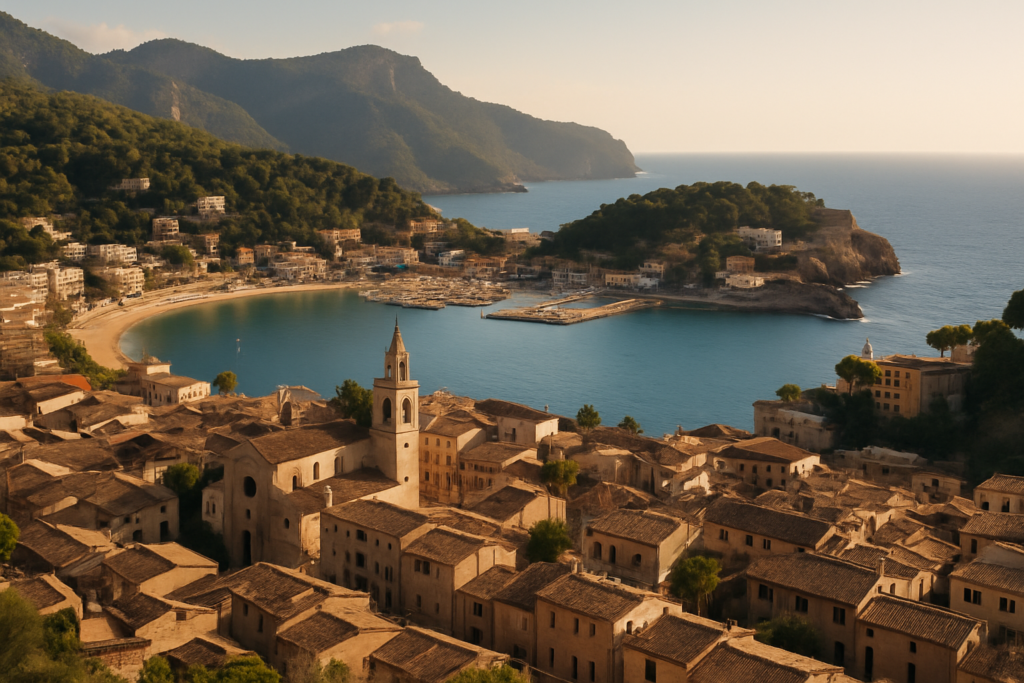
Sóller at a glance
- Set in a bowl-shaped valley cut into the Serra de Tramuntana; nearby hamlets include Biniaraix and Binibassi.
- About 3 km inland from Port de Sóller — the town connects to the harbour by the classic Tranvía de Sóller tram.
- Linked to Palma by the historic Ferrocarril de Sóller (completed in 1911) and by road through a tunnel.
- Main square: Plaça Constitució, a natural meeting point with cafés and the church of Sant Bartomeu.
- Economy driven by tourism plus traditional citrus and olive agriculture.
- Population roughly 14,000 — compact, walkable centre but geographically isolated by mountains.
- Local festivals: the Sa Mostra folklore festival (May–July) and the Firó, commemorating the 1561 pirate attack.
Things to do in Sóller
The town’s strengths are tangible and specific: a vintage railway, an old tram, a handsome baroque church opening on a lively square, a botanical garden on the outskirts and immediate access to mountain walking and the small harbour. It’s best enjoyed at an easy pace — stroll, ride the tram or train, and pick two or three sights rather than trying to cram everything into one day.
| Attraction | What it is | Price/entry | Best for |
|---|---|---|---|
| Ferrocarril de Sóller | Historic railway linking the town and Palma (completed 1911) | – | Railway enthusiasts, scenic transit |
| Tranvía de Sóller | Street tram that runs between the town and Port de Sóller | – | Families, short scenic rides |
| Jardí Botànic (botanical garden) | Botanical garden on the town’s outskirts | – | Plant lovers, peaceful walks |
| Sant Bartomeu church & Plaça Constitució | Baroque-interior church opening onto the main square | – | Culture seekers, architecture |
| Port de Sóller | Small harbour and coastal access, about 3 km away | – | Beachgoers, seafood dining |
Plaça Constitució and Sant Bartomeu
The main square is the social heart of the town. Plaça Constitució sits directly in front of the church of Sant Bartomeu, whose interior features baroque structural elements. Expect cafés spilling into the square; this is where locals gather and where you’ll sense the town’s rhythm. Walk here in the morning for a quieter experience or evening when the square livens up.
The Ferrocarril and the Tranvía: travel as attraction
One of the town’s unmistakable charms is that transport doubles as sightseeing. The Ferrocarril de Sóller, completed in 1911, is a historic line that provides a direct rail link toward Palma. Within the valley, the Tranvía de Sóller tram gives a short, evocative ride between the town centre and Port de Sóller; both are as much about atmosphere as they are about getting you from A to B.
Botanical garden and the outskirts
A renowned botanical garden lies on the town’s outskirts. It’s the right stop when you want quiet, plant-focused walking away from the square. The garden complements the valley’s agricultural landscape of citrus and olives, offering a calmer counterpoint to the town’s tourist activity.
Best beaches in the area
While the town itself is inland, the nearby harbour and coast are close enough for a half-day or afternoon trip. The harbour’s beach is the local seaside option and the most convenient beach access from town.
| Beach | Character | Facilities / Blue Flag |
|---|---|---|
| Port de Sóller | Harbour and small sandy/pebble beach, close to restaurants and harbour facilities | – |
Sóller with kids
The town is family-friendly in tangible ways: short tram rides, an engaging historic train, and compact streets that are easy to navigate on foot. Children normally enjoy the wooden carriages and the short coastal excursion to Port de Sóller. The botanical garden provides a relaxed half-day outing away from traffic and cafes.
How to get to the town and get around
Geography shapes access here: the town sits in a valley enclosed by the Serra de Tramuntana, which makes the approaches scenic but also means travel routes are concentrated. There are two memorable transport links that double as experiences — the heritage railway and the tram to the harbour — plus a road tunnel that connects the valley with Palma by highway.
| From | By | Approx time |
|---|---|---|
| Palma | Historic Ferrocarril de Sóller or road via the tunnel | – |
| Town centre to Port de Sóller | Tranvía de Sóller (tram) | – |
Where to stay
Think small and central or quiet and coastal. Choose based on the kind of trip you want.
- Town centre (around Plaça Constitució): best for cafés, restaurants and easy access to the church and the train.
- Port de Sóller: suits anyone prioritising beach access, seafood restaurants and a harbour atmosphere.
- Outlying hamlets (Biniaraix, Binibassi) and nearby Fornalutx: quieter stays, closer to rural walks and olive/citrus landscapes.
Best time to visit
Festival dates and the valley setting are the main timing considerations. The Sa Mostra folklore festival runs between May and July, creating a lively cultural draw in late spring and early summer. The Firó commemorative festival is another highlight, rooted in the town’s 16th-century history.
| Season | Months | What to expect |
|---|---|---|
| Late spring to early summer | May–July | Sa Mostra folklore festival and warm weather for outdoor wandering |
| Summer | July–August | Busier with tourists; convenient beach access at Port de Sóller |
| Autumn / winter | September–February | Quieter; valley isolation becomes more pronounced with fewer visitors |
History of the town
The town’s history is readable in its streets and festivals. Built within a bowl-shaped valley of the Serra de Tramuntana, it has long combined agriculture — notably citrus and olives — with a later focus on tourism. A decisive moment is remembered in the Firó festival, which commemorates the 1561 sacking by Moorish pirates. The arrival of the Ferrocarril de Sóller in 1911 established a direct rail link that remains central to the town’s identity.
Practical info
- Parking: the historic centre is compact and best explored on foot; expect to use public parking or hotel-arranged parking if driving in.
- Connectivity: the town is linked to Palma by a historic railway and by road through a tunnel — these are the principal approaches in and out of the valley.
- Local economy and services: tourism and agriculture (citrus and olive groves) are the backbone of services and local produce; amenities reflect the town’s size and tourist traffic.
- Accessibility: narrow streets and hillside lanes are typical; plan accordingly if mobility is limited.
Worth it for: lovers of historic transport (the 1911 railway and the tram), visitors who want a compact town with cafés and a lively square, people seeking a base for short coastal trips and Tramuntana walks, and anyone intrigued by local festivals. Less so if: you want a big-city cultural programme, long sandy beaches directly on the town’s doorstep, or a wide range of nightlife — the area is small and more relaxed than urban Palma.
How we assess this guide
This guide brings together verified, cross-checked facts about local sights, transport links and festivals. We flag historical events and current infrastructure that affect visits (the 1911 railway, the tram link to the harbour, and festival windows). We haven’t invented opening hours, prices or external links; where those specifics matter, check local providers directly before you travel.
Frequently asked questions
How do I get from Palma to Sóller?
There are two primary links: the historic Ferrocarril de Sóller railway and the road route that passes through a tunnel to the valley. The railway is also an attraction in its own right.
Is Sóller expensive to visit?
Costs align with a small tourist town: cafés, restaurants and tourist services are common, and the local economy mixes tourism with citrus and olive agriculture. Expect standard tourist pricing for central services and dining.
Which beach is closest to the town?
The nearest coastal access is Port de Sóller, about 3 km from the town centre. It functions as the local harbour and beach area.
How many days should I spend here?
One full day gives a solid introduction — train or tram rides, the main square and a botanical garden visit. Two or three days allow a more relaxed pace, time for the harbour and a mountain walk or exploration of nearby hamlets like Biniaraix and Binibassi.
Is Sóller suitable for families?
Yes. Children usually enjoy the vintage railway and the short tram trip to the port. The compact centre and nearby botanical garden provide family-friendly activities.
Can I get around without a car?
Yes. The town centre is walkable, the tram connects to the port, and the historic railway links to Palma; local footpaths and short distances make a car optional for many visitors.
Is parking available in the centre?
Expect to find public parking options outside the pedestrian core; many visitors walk once they reach the main square and streets. Hotels sometimes offer parking arrangements.
What are good rainy-day options?
Visit the church of Sant Bartomeu and its baroque interior, spend time in cafés around Plaça Constitució, or explore the botanical garden if showers are light. The railway and tram rides can also be enjoyed in drier spells.
When is Sa Mostra held?
The Sa Mostra international folklore festival takes place between May and July; this period is best for those wanting to catch local and international folk performances.
What is the Firó festival about?
The Firó commemorates the town’s sacking by Moorish pirates in 1561. It’s a community festival rooted in that historical episode and reflects local tradition.
Is the historic train still operating?
The Ferrocarril de Sóller — completed in 1911 — remains a defining transport link and attraction. It continues to be part of the town’s transport network.
Are there good walking routes nearby?
Yes. The bowl-shaped valley and surrounding Serra de Tramuntana create immediate access to countryside walking and to nearby traditional villages such as Fornalutx, Biniaraix and Binibassi.
Where is the main square?
The social and civic centre is Plaça Constitució, directly in front of the church of Sant Bartomeu. It’s the natural place to orient yourself and find cafés and shops.
Does the town still rely on agriculture?
Yes. Today the local economy combines tourism with traditional agriculture, particularly citrus and olive groves.
How isolated is the town?
Geographically it’s enclosed by the Serra de Tramuntana, which gives the area a distinctly valley-bound feeling and concentrates the main approaches through specific routes.
Plan the wider trip
- Palma de Mallorca city guide
- Manacor guide
- Valldemossa guide
- Formentera guide
- Mahón (Menorca) guide
- Alaró: Mallorca mountain town below its castle
Soller on the map
This place is part of our Balearic Islands Guide: Mallorca, Menorca, Ibiza & Formentera — see every town, beach and cove we have mapped on that coast.
How this page is maintained. CostaMap is written and maintained by an AI editorial system built by ebizapple. Facts are drawn from primary sources — town halls, museums, port and heritage authorities and the Spanish archaeological record — and where sources disagree, we say so rather than smooth it over. Photographs marked as ours are taken on location. This page was last reviewed on 15 August 2026. Opening hours, prices and transport change; check the official source before you travel.