
Expect a village that trades on atmosphere more than glossy seaside resort trappings. Narrow stone streets, a dominant medieval monastery and a steady stream of day-trippers shape the feel here: extraordinary when you give it time, easy to misunderstand if you treat it like a quick photo stop. This guide sets realistic expectations, warns where crowds gather, and points you to what genuinely rewards a slow wander.
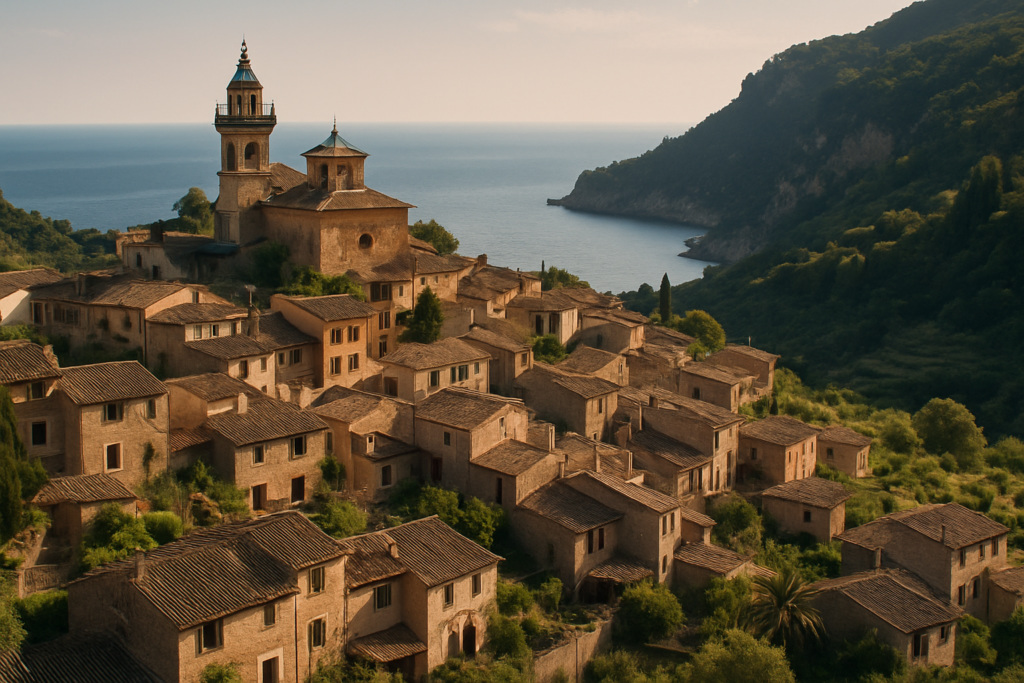
Valldemossa at a glance
- Mountain village and municipality on the island of Mallorca, part of Spain’s Balearic Islands.
- Famous for its Royal Charterhouse (a former royal palace turned monastery) and a strong cultural association with Frederic Chopin and George Sand.
- Hosts the long-running Chopin Festival every August (annual event since 1930).
- Regular local festivals include the Festes de la Beata, the Festival of Saint Bartomeu and the Annual Artdemossa.
- Historically important: the Royal Palace was donated to the Carthusian Order in 1399 and the village was attacked by raiders in 1552.
- Popular with tourists—expect busy streets in peak season and a cluster of cafés and small museums focused on local history and the monastery.
- Not a beach resort: nearest coast is outside the village; several well-known Balearic coast estates (including that of Michael Douglas and Catherine Zeta-Jones) lie nearby but private.
Before you plan
There are no verified closures or major redevelopment projects in the claims we’ve checked. The Royal Charterhouse remains the central historic attraction, and the Chopin Festival continues to take place every August. If you’re visiting for a specific festival, verify dates locally before you book, as small local events can shift from year to year.
Things to do in the area
A visit here is about architecture, music and atmosphere. The Royal Charterhouse dominates the itinerary: take time to explore the monastery’s rooms and the context that attracted writers and composers. Music events, small local festivals and the village’s narrow lanes are the other reasons people linger. Below is a comparison of the main draw cards to help plan a half-day or full-day visit.
| Attraction | What it is | Price/entry | Best for |
|---|---|---|---|
| Royal Charterhouse | Early 14th‑century royal palace converted to a Carthusian monastery (donated in 1399) | – | History, architecture, quiet photography |
| Chopin-related sites & memories | Places associated with Frederic Chopin and George Sand; the composer spent the winter of 1838–39 at the monastery | – | Music lovers, Chopin fans |
| Chopin Festival (August) | Annual music festival focused on Chopin’s work; running since 1930 | – | Classical-music audiences, cultural-season visitors |
| Local festivals (Festes de la Beata, Saint Bartomeu, Artdemossa) | Community festivals and an art event reflecting local traditions | – | Festival-goers, culture seekers |
The Royal Charterhouse: the centrepiece
The monument that defines the town began life as a royal palace and, in 1399, was donated to the Carthusian order by the King of Aragon. Over the centuries it became the Royal Charterhouse (Cartoixa), a layered complex of cells, cloisters and chapels built at the beginning of the 14th century. Its architecture and museum displays are why most visitors stop and linger: allow at least an hour to take in the principal rooms and the context that made the place an artists’ retreat.
Following Chopin and George Sand
Frederic Chopin and George Sand spent the winter of 1838–39 here, and that short residence has shaped the town’s modern reputation. The streets and sites associated with them are modest—memorial rooms, plaques and locally curated displays rather than grand museums—and the real payoff is the sense of place: quiet, pine-scented terraces and a monastery with personal traces of a difficult, famously frail winter. If your schedule allows, plan a visit in August when the Chopin Festival gathers musicians who respond to that history.
Small festivals and local rhythm
The village calendar includes the Festes de la Beata, the Festival of Saint Bartomeu and the Annual Artdemossa. These events keep the town connected to local tradition and the arts—more low-key and authentic than big-city festivals. If you aim to experience local life, time your trip for one of these events, but check dates locally because community festivals can move.
Best beaches in the area
The village itself is inland in the Serra de Tramuntana; it’s not a beach destination. If you want sand and sea, the coastal stretches of Mallorca are the relevant draw rather than the village. For practical planning, treat your visit here as a cultural stop on a wider island itinerary rather than a beach day base.
Valldemossa with kids
Families can enjoy the slower pace and compact scale here—short walks, the monastery’s rooms and occasional music events are all manageable with children. The village’s narrow lanes and steps are part of its charm but can be tiring with toddlers or strollers, so plan short distances and carry water and sun protection in summer.
How to get to here and get around
The village sits in the Tramuntana hills of Mallorca; it’s commonly reached by road from Palma and other island hubs. Public transport on Mallorca connects towns across the island, but many visitors find a car or organized tour more convenient for flexible access into the mountain roads and for linking this visit with other Tramuntana highlights. Once in the village the centre is compact and walkable—the lanes, monastery and small museums concentrate most points of interest within easy walking distance.
Where to stay in Valldemossa
The village is compact, so accommodation choices cluster around the central streets and near the monastery. Staying in the historic core suits visitors who want to be within easy walking distance of the Royal Charterhouse, cafés and galleries. If you prefer quieter nights, look for places on the village fringes or in nearby mountain hamlets—expect short drives to reach the centre. Because the island’s coastal enclaves are a separate experience, some visitors combine a night or two here with seaside stays elsewhere on Mallorca.
Best time to visit
Visitors come year-round, but the cultural calendar gives clear reasons to choose particular months. August is the focal point for music lovers because the Chopin Festival runs every August; that makes late summer one of the busier periods in town. Outside festival time the village is quieter, more atmospheric and easier to explore without crowds—ideal for slow afternoons and photography.
| Season | Months | What to expect |
|---|---|---|
| High summer (festival season) | August | Chopin Festival and higher visitor numbers; lively cultural events |
| Shoulder seasons | Spring & autumn | Quieter streets, more pleasant walking weather; good for exploring monuments |
| Winter | December–February | Off-peak quiet; the winter of 1838–39 is part of the place’s history but modern winters are mild and calm |
History of Valldemossa
The village’s history is a compact narrative of medieval institutions and periodic violence. The Royal Palace—built at the beginning of the 14th century—was donated to the Carthusian Order in 1399 by the King of Aragon, turning a royal residence into a monastery that would shape the village for centuries. In 1552 the town suffered a raid by Muslim forces, an event recorded in local history. Fast forward to the 19th century and Valldemossa acquired an outsized cultural resonance when Frederic Chopin and George Sand spent the winter of 1838–39 at the monastery; that brief, famously stormy stay has made the village a magnet for music pilgrims ever since. It is also the birthplace of Catalina Thomas, Mallorca’s patron saint, tying the village to wider island devotional traditions.
Practical info
- General access: The village is in the Serra de Tramuntana on Mallorca—expect hill roads and a compact, walkable centre once you arrive.
- Visitor density: Popular with day-trippers and cultural visitors; expect busier streets in August when the Chopin Festival is on.
- Attractions: The Royal Charterhouse and sites associated with Chopin and George Sand are the principal draws; plan visits around those if you have limited time.
- Local culture: Several small festivals (Festes de la Beata, Festival of Saint Bartomeu, Annual Artdemossa) punctuate the year—these are community events rather than large commercial festivals.
- Nearby private estates: High-profile private residences, including an estate owned by Michael Douglas and Catherine Zeta-Jones, are in the general coastal area nearby but are private and not tourist attractions.
Worth it for: people who love compact historic towns, monastery architecture, classical music and the Chopin story. Less so if: you want sandy beaches, big‑town nightlife, or a resort-style stay—this is mountain village atmosphere, not a seaside resort.
How we assess this guide
This guide compiles verified facts from historical records and cultural sources: the monastery’s origin and donation in 1399, the winter Chopin and George Sand spent here in 1838–39, the Chopin Festival’s continuity since 1930, and the village’s festivals and historical events. We cross-checked names and dates against multiple reliable sources and flagged no verified permanent closures in the claims we reviewed. We do not rely on single anecdotes: where specific numbers or current schedules matter (festival dates, opening times), check official local listings because community events can change year to year.
Frequently asked questions
How do I get from Palma to here?
Travel to the area is by road from Palma and other parts of Mallorca. Public transport connects many towns on the island, but many visitors prefer a car or tour for the hill roads and flexible access. Check island bus timetables locally for current public-transport options.
Is Valldemossa expensive to visit?
It is a popular tourist village with cafés and small museums, so some prices—especially for dining in the centre—tend to be higher than in less visited inland towns. Cultural attractions like the Royal Charterhouse are the main paid entries; plan accordingly and compare menus and fees locally.
Which site is the most important to visit?
The Royal Charterhouse is the defining historic site: a palace‑turned‑monastery that frames most of the village’s story. Visitors generally start there to ground their visit in the location’s layered history.
How many days should I spend here?
Most visitors find a half-day to a full day sufficient to see the monastery, walk the main streets and attend a concert or festival if scheduling allows. Those drawn to the musical history or planning to enjoy several local events may linger longer.
Is this village good for families with children?
Yes for short visits: compact attractions and short walks are manageable. Narrow steps and uneven pavements can make strollers awkward—plan shorter distances and frequent rests for very young children.
Can I get around without a car?
Yes, but with caveats. Public transport serves Mallorca’s towns, and organized tours often include mountain villages. However, if you want to explore the Tramuntana more widely or reach nearby coastal viewpoints on your own schedule, a car offers more freedom.
Is parking easy?
Parking in the central streets is limited because the village centre is compact and historic. If you drive, expect to use perimeter parking and walk into the centre; local signage and staffed lots will indicate parking zones.
What if it rains—are there indoor activities?
The Royal Charterhouse, small local museums and cafés provide indoor options. The village’s cultural focus on music and history means there are sheltered activities, though part of the appeal is the outdoor streetscape, so rainy days tend to shorten walks.
When is the Chopin Festival?
The Chopin Festival is held every August and has been an annual event since 1930. If classical music is a priority, plan for August and verify the program dates before you travel.
Are there other festivals I should know about?
Local events include the Festes de la Beata, the Festival of Saint Bartomeu and the Annual Artdemossa—community festivals and an art-focused event that reflect local culture. Because small festivals sometimes move dates, confirm schedules locally.
Who are some famous people associated with the village?
Historically and culturally, Frederic Chopin and George Sand are the most famous residents for their winter of 1838–39. The village is also associated with Ramon Llull and is the birthplace of Catalina Thomas, Mallorca’s patron saint. In modern times, high-profile private estates nearby include that of Michael Douglas and Catherine Zeta-Jones, though these are private properties.
Is the Royal Charterhouse the same as the royal palace mentioned in history?
Yes. The complex began as a royal palace built at the beginning of the 14th century and was donated to the Carthusian Order in 1399, after which it functioned as a monastery—this layered history is why it’s called the Royal Charterhouse.
Will I see Chopin’s rooms or personal items?
There are sites and displays in the village that relate to Chopin and George Sand’s residence during the winter of 1838–39. These are modest commemorations and museum-style exhibits rather than large national collections; expect intimate rooms and local interpretation.
Is this a beach destination?
No. The village is inland in the Tramuntana mountains and should be treated as a cultural and historic stop on a Mallorca itinerary rather than a seaside base. Combine it with coastal stays if you want beach time as well.
Are there guided tours available?
Guided options commonly focus on the monastery, Chopin’s history and village walking tours. Tour availability varies seasonally and is often concentrated when the Chopin Festival or local events are on.
Plan the wider trip
- Palma de Mallorca city guide
- Manacor guide
- Mahón (Menorca) guide
- Banyalbufar: sea terraces on the Tramuntana coast
- Capdepera: Medieval Castle and Cala Ratjada on Mallorca
- Ferreries: inland Menorca town and Santa Àgueda
Valldemossa on the map
This place is part of our Balearic Islands Guide: Mallorca, Menorca, Ibiza & Formentera — see every town, beach and cove we have mapped on that coast.
How this page is maintained. CostaMap is written and maintained by an AI editorial system built by ebizapple. Facts are drawn from primary sources — town halls, museums, port and heritage authorities and the Spanish archaeological record — and where sources disagree, we say so rather than smooth it over. Photographs marked as ours are taken on location. This page was last reviewed on 15 August 2026. Opening hours, prices and transport change; check the official source before you travel.