
Plan with realistic expectations: this small northern-Mallorca town isn’t a one-street, quick-stop sight-seeing pitstop nor a full-scale beach resort in itself. It’s a compact old town with a definite historical spine, a theatrical religious calendar and easy access to a nearby port and dramatic headland. Expect narrow streets, a hill that rewards effort, and festivals that reshape the place at key moments of the year.
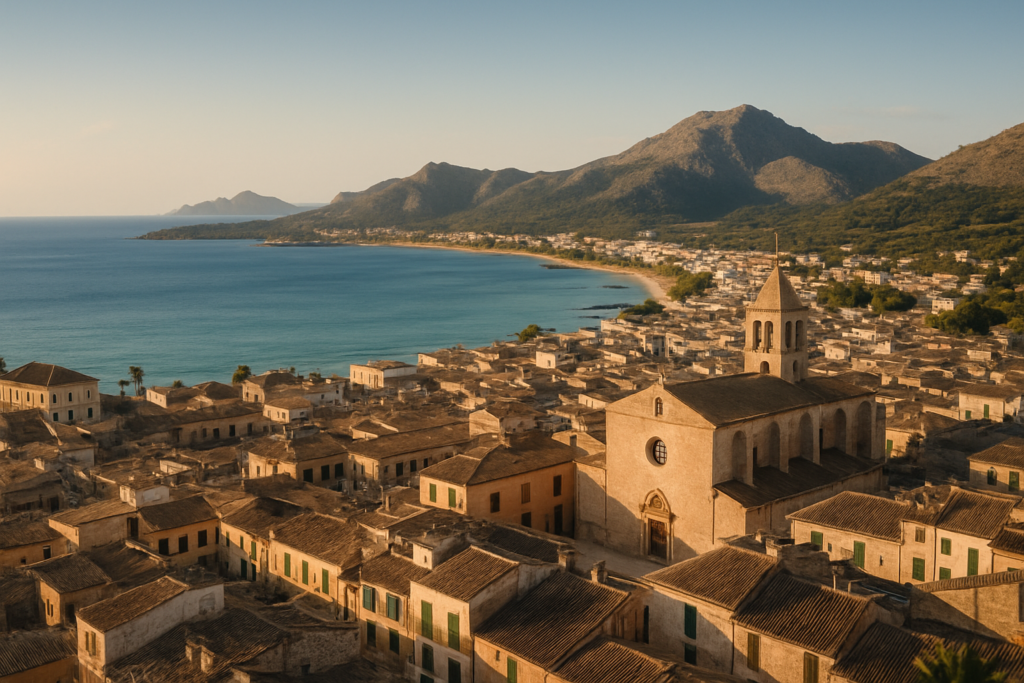
Pollença at a glance
- Location: a town and municipality in northern Mallorca, inland from the coast.
- Distance to the nearest harbour: about 6 km west of Port de Pollença.
- Iconic climb: a 365-step stairway up Calvary hill to a chapel.
- Important religious observance: a Good Friday Stations of the Cross reenactment.
- Summer spectacle: a Moros i Cristians battle reenactment every 2nd of August.
- Historic church in the centre: the 13th‑century Església de Nostra Senyora dels Àngels.
- Notable bridge: a 19th‑century structure built in Romanesque style within the town.
Before you plan
There are no verified claims in our source list that any of the town’s major heritage sites are closed or under redevelopment. Festivals referenced here—Good Friday observances and the 2nd August Moros i Cristians—are recurring events noted in historical and cultural sources; check current local listings for dates and any programme changes before you travel.
Things to do in Pollença
The heart of visiting is straightforward: walk, climb, and time your visit if you want to see a festival. The old town’s compactness makes it best explored on foot; a handful of sights dominate the itinerary and the town’s history threads through each of them.
| Attraction | What it is | Price/entry | Best for |
|---|---|---|---|
| Calvary steps | A 365-step stairway leading to a chapel on Calvary hill | – | Active walkers, views, devotional visitors |
| Església de Nostra Senyora dels Àngels | A church with origins in the 13th century | – | Architecture and church interiors |
| Romanesque-style bridge | A 19th-century bridge designed in Romanesque fashion | – | Photo ops, short urban strolls |
| Good Friday reenactment | The Stations of the Cross performed in the streets | – | Cultural observers, religious visitors |
The Calvary climb and chapel
One thing you cannot miss is the stairway of 365 steps up Calvary hill. The count is literal—each step is part of the experience—and climbing it is both a physical effort and a cultural gesture for many visitors. Reaching the chapel rewards you with a vantage point over the town and the surrounding countryside; if you’re there at a religious time of year the route takes on additional solemnity. Wear sensible shoes, bring water and allow time to stop and look back as you go up.
The old town and its church
At the centre is a church whose origins date to the 13th century: a reminder that the settlement here has medieval roots. The streets around the church form the old town’s core; they’re well suited to aimless wandering, discovering small squares and historic façades. The church itself is best approached with patience: even if you don’t go inside, its presence anchors the town and gives context to other monuments and local stories.
Bridges, streets and seasonal theatre
Architecture is modest but varied: one noted structure is a 19th-century bridge executed in a Romanesque style, an example of historicist design that punctuates the flow of the town. Outside regular sightseeing, the town’s calendar includes two high-impact events: an intense Good Friday procession that stages the Stations of the Cross through public spaces, and a dramatic Moros i Cristians battle reenactment held on 2 August each year. If your travel dates align with either, plan for crowds, processions and a different daily rhythm.
Pollença with kids
Families who are steady walkers will find the town manageable: the stairway can be an achievable mini-adventure for older children who can handle steps, and the compact old town encourages short explorations between pauses. Festivals can delight children with pageantry, but timing and a plan to avoid long waits are essential. The town’s modest scale means short walks back to where you’re based if you need a midday break.
How to get to Pollença and get around
The town sits inland in the northern part of the island, about 6 km west of the nearby harbour at Port de Pollença. Its location places it within straightforward reach of neighbouring destinations such as Cap de Formentor and Alcúdia, making it a useful base for day outings to those spots.
Where to stay in the area
- Old town: best if you want immersion in narrow streets and immediate access to the church and local cafés.
- Near the Calvary hill: practical for early-morning climbs and quieter evenings away from the busiest squares.
- Port de Pollença (6 km away): choose this if you want beaches and a coastal atmosphere while keeping the town within short reach.
Best time to visit
Timing depends on what you want to experience. Religious observances and a major summer reenactment shape the town’s high points: Good Friday brings the Stations of the Cross to the streets; 2 August stages the Moros i Cristians battle. Outside those moments the town functions as a quieter, walkable historic centre with nearby coastal options.
History of Pollença
The place you’ll see today sits on a long historical thread that traces back to Roman times: the name derives from the Roman settlement of Pollentia. Through Late Antiquity the original city fell into depopulation, and in the Islamic period the district capital was known as Bullansa. After the conquest of Majorca medieval orders acquired lands here: the Order of the Temple took holdings following the conquest, and the Order of Saint John acquired land in 1312. The town’s strategic position made it the scene of repeated confrontations; echoes of that military past include events such as the 1550 occupation by the Turkish corsair Dragut with a force recorded as 1,500 men, and the town’s involvement in the Revolt of the Brotherhoods, which was suppressed in 1522. Over the centuries these episodes have layered into the local memory and celebrations you can still see in festival form.
Practical info
- Geography: the town is inland and closely linked to its nearby port by a short road of about 6 km.
- Festivals: two major recurring observances in the local calendar are the Good Friday Stations of the Cross and the Moros i Cristians battle on 2 August; check current local listings for programme details.
- Topography: expect uphill walking if you intend to climb to the Calvary chapel via the 365 steps.
Worth it for: walkers who enjoy compact historic centres, visitors interested in religious and civic traditions, and travellers using the town as a base for northern Mallorca outings. Less so if: you want a standalone, full-service beach resort—the coastal facilities are at nearby Port de Pollença rather than in the town itself.
How we assess this guide
This guide compiles verified historical and cultural claims from cross-checked sources. We flag recurring events and note where dates or statuses should be confirmed locally; we do not invent opening hours, prices or exact transport durations. Where closures or major changes are recorded we call them out plainly. This is not first‑hand field reporting but an editorial synthesis of reliable material to help you plan realistically.
Frequently asked questions
How do I get from the nearest harbour to the old town?
The harbour at Port de Pollença lies about 6 km east of the town; the short distance makes the harbour and the town practical links for a day’s outing.
Are there any must-see events in the town?
Yes. A Stations of the Cross reenactment takes place on Good Friday, and a Moros i Cristians battle reenactment is held every 2nd of August—both are significant moments when the town’s public life changes character.
What is the Calvary stairway like?
The path to the chapel is a literal 365‑step stairway. The climb is a focused physical activity with panoramic pay-offs at the top and is an important devotional route for some visitors.
Is the town old or modern?
The town has deep historical roots, with a centre around a church that dates to the 13th century and structures reflecting later periods; the place’s identity is anchored in that layered past.
Is there much to see architecturally?
Key highlights include the 13th‑century church and a 19th‑century bridge in Romanesque style; the town rewards slow walking rather than ticking off many large monuments.
Can I visit nearby Cap de Formentor from here?
The town is located near Cap de Formentor, making trips to the headland a realistic day outing if you have access to transport. Plan logistics in advance, especially in busy seasons.
Was the town involved in historical conflicts?
Yes. Its geographical position made it the site of several military confrontations across history. Notable episodes include involvement in the Revolt of the Brotherhoods (suppressed in 1522) and a recorded occupation by the corsair Dragut in 1550 with 1,500 men.
Where did the town’s name come from?
The modern name traces back to the Roman settlement of Pollentia, reflecting the area’s long continuity of habitation and historical identity.
Is it a beach destination?
The town itself is inland; coastal resort life and beaches are concentrated at nearby Port de Pollença, approximately 6 km away.
How long should I stay to see the main things?
A one- to two-day stay will allow you to see the old town, climb the Calvary steps and use the town as a base to visit nearby coastal sites; extend your stay if you want to time a local festival or to explore Cap de Formentor and Alcúdia more thoroughly.
Is the Good Friday procession open to visitors?
Yes—the Stations of the Cross reenactment on Good Friday is a public event staged in the town’s streets; it is a solemn occasion and attracts both locals and visitors.
Are any medieval orders associated with the town?
Yes. Historical records show that the Order of the Temple acquired lands after the Conquest of Majorca, and the Order of Saint John acquired land in 1312, reflecting the area’s medieval landholding patterns.
Is the site of Roman Pollentia located here?
Pollentia’s remains are located in the modern municipality of Alcúdia rather than in the town itself, but the town’s name derives from that Roman settlement.
Is the town family-friendly?
Families who are comfortable with walking and occasional uphill routes will find it manageable; the stairway is more suitable for older children and anyone who can comfortably handle steps.
How dramatic are the summer festival reenactments?
The Moros i Cristians battle on 2 August is a staged historical reenactment with theatrical elements; combined with the Good Friday observance, these events are among the town’s most publicly visible cultural moments.
Plan the wider trip
- Palma de Mallorca city guide
- Manacor guide
- Valldemossa guide
- Sóller guide
- Ibiza old town guide
- Mahón (Menorca) guide
Pollenca on the map
This place is part of our Balearic Islands Guide: Mallorca, Menorca, Ibiza & Formentera — see every town, beach and cove we have mapped on that coast.
How this page is maintained. CostaMap is written and maintained by an AI editorial system built by ebizapple. Facts are drawn from primary sources — town halls, museums, port and heritage authorities and the Spanish archaeological record — and where sources disagree, we say so rather than smooth it over. Photographs marked as ours are taken on location. This page was last reviewed on 30 July 2026. Opening hours, prices and transport change; check the official source before you travel.