
Expect an old fortified core that dominates the skyline, layered history that reaches back to the Phoenicians, and a compact modern spine where locals live and work. The town’s charms are concentrated — a walkable Dalt Vila, archaeological gems and a coastline within reach — but it’s not only about white sand and late nights; much of the appeal is cultural and historical. Read on to set realistic expectations and plan an itinerary that avoids the usual tourist traps.
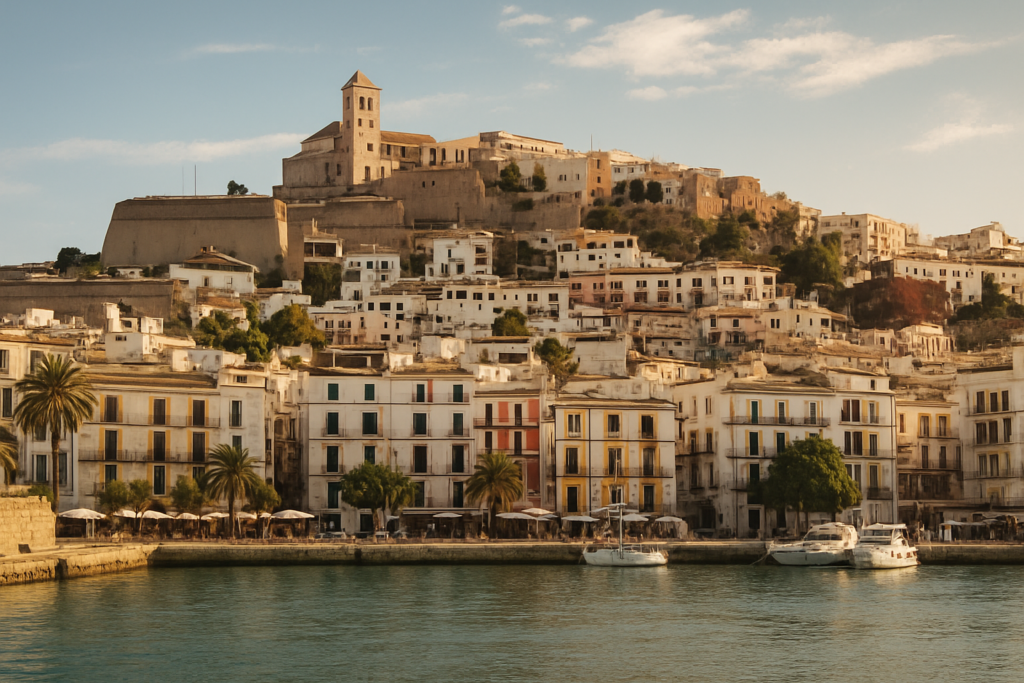
Ibiza at a glance
- UNESCO World Heritage Site since 4 December 1999 — the old town and its monuments are the protected core.
- Two clear halves: the medieval hilltop Dalt Vila and the flatter, modern Eixample where day‑to‑day life happens.
- Deep history: first inhabitants were Phoenicians; later Roman, Vandal and Byzantine occupations.
- Official city title granted in 1782 by King Charles III of Spain.
- Small resident population (50,643 as of 2021) — the town feels compact outside peak season.
- Warmest month on average: August, with an average temperature of 26.3 °C.
Before you plan
Most of the city’s principal monuments are part of the UNESCO protected area; they remain public attractions. There are no verified claims in our source set about closures or major redevelopment that would affect visiting the old town or archaeological sites, but always check local listings for temporary works or restricted access before travel.
Things to do in Ibiza
The core experience is compact: explore the citadel, see ancient burial grounds, and take in panoramic viewpoints. Rather than packing too many dispersed activities into a short stay, plan a balanced loop of Dalt Vila, a visit to the Punic necropolis and a short excursion to a nearby monument for variety.
| Attraction | What it is | Price/entry | Best for |
|---|---|---|---|
| Dalt Vila (old town) | Walled medieval citadel with ramparts and narrow streets | – | History walkers, photographers |
| Cathedral of Santa Maria d’Eivissa | Cathedral perched at the top of the old town | – | Architecture and sea views |
| Punic necropolis of Puig des Molins | Archaeological burial site from Phoenician/Punic periods | – | History and archaeology enthusiasts |
| Sagrat Cor de Jesus monument | Monument located a short distance north of the town | – | Short excursions, viewpoints |
Dalt Vila — the fortified old town
The medieval citadel is the town’s focal point: concentric ramparts, cobbled lanes and tightly packed buildings give the area a distinct historic atmosphere. The cathedral sits at the summit, anchoring views back toward the port and out to sea. Walk the outer walls where public access is permitted and read the explanatory panels; the layout reflects centuries of defensive thinking layered over older remains.
Punic necropolis of Puig des Molins
Puig des Molins is one of the most important archaeological sites on the island and an essential stop for anyone interested in ancient Mediterranean cultures. The necropolis preserves burial monuments and funerary contexts that link directly to the town’s earliest Phoenician inhabitants and their successors. Expect a sober, slow-paced visit that rewards curiosity about pre-Roman history.
The cathedral and the summit of the old town
The cathedral of Santa Maria d’Eivissa crowns the citadel and marks the spiritual centre that developed as the town evolved. Its elevated position also makes it a practical focal point for sweeping views across the port and the outer harbour. Combine a visit here with a circuit of nearby streets to appreciate the layered urban fabric.
Short excursion: Sagrat Cor de Jesus
Located roughly 3.1 miles north of the town, the Sagrat Cor de Jesus monument provides a nearby option for a half-day outing that contrasts with the dense urban experience. It’s a manageable excursion by car or local transport for those who want a change of scene without leaving the immediate area.
Ibiza with kids
The town suits families who prefer compact sightseeing and doseable history rather than long beach days or nightlife-focused programmes. Archaeological sites such as the Puig des Molins can be engaging for older children interested in ancient stories, while the ramparts of the old town offer safe, defined walking routes where you can control distance and timing.
How to get to Ibiza and get around
The city is located on the southeast coast of the island, making it a natural hub for exploring nearby beaches and towns. Arrivals typically come via ferry or the island’s airport (services and exact transfer times should be checked seasonally). Within the town the two-part layout — Dalt Vila and the Eixample — keeps many sights within walking distance, and short local trips are practical by taxi or public transport where available.
Where to stay in Ibiza
Accommodation choices concentrate around a few well-defined areas:
- Dalt Vila — for history lovers and those who want direct access to the old town’s atmosphere and evening views.
- Eixample — the modern district better suited to practical daytime shopping, local restaurants and a more residential feel.
- Port area — convenient for ferry arrivals and people who prefer being near the harbour and maritime activity.
Best time to visit Ibiza
Summer is the warmest period, with August recording the highest average temperature in the year. If your priorities are heat and long daylight, that month delivers. If you prefer milder conditions for walking and sightseeing, consider shoulder seasons when the heat is reduced and the town is less crowded.
| Season | Months | What to expect |
|---|---|---|
| High summer | August (warmest) | Hot weather suited to beach days and late sunsets; busiest period |
| Shoulder months | Spring and autumn | Cooler, more comfortable for walking and sightseeing; fewer crowds |
History of Ibiza
The town’s history is long and layered. Its first inhabitants were Phoenicians, and the settlement later became known in antiquity by variants such as Aiboshim, founded in the 7th century BC. It was incorporated into the Roman Republic as Municipius Flavius Ebusus in 70 AD, leaving material traces in local archaeology. During the early medieval centuries the island saw successive occupations: the Vandals took control in 424, followed by Byzantine rule in 535. In the medieval reconquest period Guillem de Montgrí conquered the town for King James I of Aragon in 1235, and centuries later the settlement was officially granted city status by King Charles III in 1782. Recognition on the international stage came when UNESCO declared the old town a World Heritage Site on 4 December 1999, highlighting its cultural and historical significance.
Practical info
- Population: the municipality counted 50,643 residents in 2021, which contributes to the town’s compact, easy-to-walk character outside peak tourist months.
- Access on foot: the old town’s steep streets and cobbles mean sensible footwear and a comfortable pace are required; steeper ramps are not always suitable for pushchairs or mobility aids without assistance.
- UNESCO protection: parts of the historic core are conserved under World Heritage status, so redevelopment is limited and conservation rules affect access and works.
- Local administration and modern services are concentrated in the Eixample and port districts; if you need supermarkets or practical amenities, plan to spend time there rather than solely in the citadel.
Worth it for: visitors who prioritise layered history, walkable medieval streets and compact cultural highlights. Less so if: your trip is solely about long beach days or island-wide beach-hopping without interest in archaeological and urban history.
How we assess this guide
This guide compiles verified facts from cross-checked sources focused on the town’s history, status and key sites. We flag UNESCO designation and historical milestones, and we avoid presenting unverified claims about operating hours, prices or temporary closures. We do not claim on-the-ground, contemporary reporting; readers should check local operators and official sites for current opening information and seasonal timetables before travel.
Frequently asked questions
How far is the cathedral from the main ramparts?
The cathedral of Santa Maria d’Eivissa stands at the top of the Dalt Vila and forms the summit of the walled area, so it is a short walk from the outer ramparts within the citadel complex.
Is the old town a UNESCO World Heritage Site?
Yes. The old town was declared a UNESCO World Heritage Site on 4 December 1999, reflecting its historical and cultural significance.
Who conquered the town in the medieval reconquest?
Guillem de Montgrí conquered the area for King James I of Aragon in 1235 during the medieval reconquest period.
Was Ibiza ever part of the Roman Republic?
Yes. The settlement was incorporated into the Roman Republic and became Municipius Flavius Ebusus in 70 AD, leaving archaeological layers from that era.
Who were the first inhabitants?
The first recorded inhabitants were Phoenicians, and the town’s early name associated with that era was Aiboshim, founded in the mid‑first millennium BC.
Is the town suitable for families with children?
Families can enjoy compact walks in the citadel and visits to accessible archaeological sites such as Puig des Molins. Steep streets should be considered when travelling with pushchairs or very young children.
Does the town have a modern district with shops and services?
Yes. The Eixample is the more modern part of the town where day‑to‑day services, shops and residential areas are concentrated.
When is the hottest time to visit?
August is the month with the highest average temperature, registering the warmest conditions of the year.
Was the town declared a city long ago?
Yes. The settlement was granted the title of city by King Charles III of Spain in 1782.
What are the key archaeological sites to see?
Puig des Molins, the Punic necropolis, is a principal archaeological site in the area and provides direct insight into Phoenician and Punic funerary practices.
Are there panoramic viewpoints near the town?
Yes. The summit of the old town and nearby monuments such as the Sagrat Cor de Jesus — located roughly north of the town — provide elevated outlooks over the harbour and surrounding landscape.
How big is the permanent population?
The municipality had a recorded population of 50,643 in 2021, which helps explain the town’s relatively compact feel outside peak tourist times.
Is the island’s turbulent early medieval history visible today?
Traces of successive occupations — Roman, Vandal and Byzantine — appear through the archaeological record and the stratified fabric of the town, though much of what is visible today reflects later medieval and post‑medieval development.
Can I walk the defensive walls?
Public access is available in parts of the ramparts and the citadel; walking routes around the outer defences are a standard part of exploring the old town. Specific access can vary with conservation works, so check local notices.
How many days should I plan to see the main sights?
A focused 1–2 day visit covers the highlights: a circuit of Dalt Vila including the cathedral, time at the Punic necropolis and a short excursion to a nearby monument. Extend your stay if you want to include extended island exploration or longer beach time.
Plan the wider trip
- Palma de Mallorca city guide
- Manacor guide
- Valldemossa guide
- Formentera guide
- Mahón (Menorca) guide
- Arta: Medieval Town and Untouched Coast in Northeast Mallorca
Ibiza City on the map
This place is part of our Balearic Islands Guide: Mallorca, Menorca, Ibiza & Formentera — see every town, beach and cove we have mapped on that coast.
How this page is maintained. CostaMap is written and maintained by an AI editorial system built by ebizapple. Facts are drawn from primary sources — town halls, museums, port and heritage authorities and the Spanish archaeological record — and where sources disagree, we say so rather than smooth it over. Photographs marked as ours are taken on location. This page was last reviewed on 15 August 2026. Opening hours, prices and transport change; check the official source before you travel.