
Expect a place that lives on its sunsets and its nights: this western Ibiza port town is best-known for late-afternoon crowd pull—sunset terraces, daily boat departures and a nightlife strip that rarely pauses. If you come hoping for quiet, deserted coves right off the promenade, you’ll be surprised; if you come for lively bars, regular ferry connections and a local identity shaped by mass tourism since the mid-20th century, you’ll be comfortable. This guide tells you what genuinely matters so you can plan without disappointment.
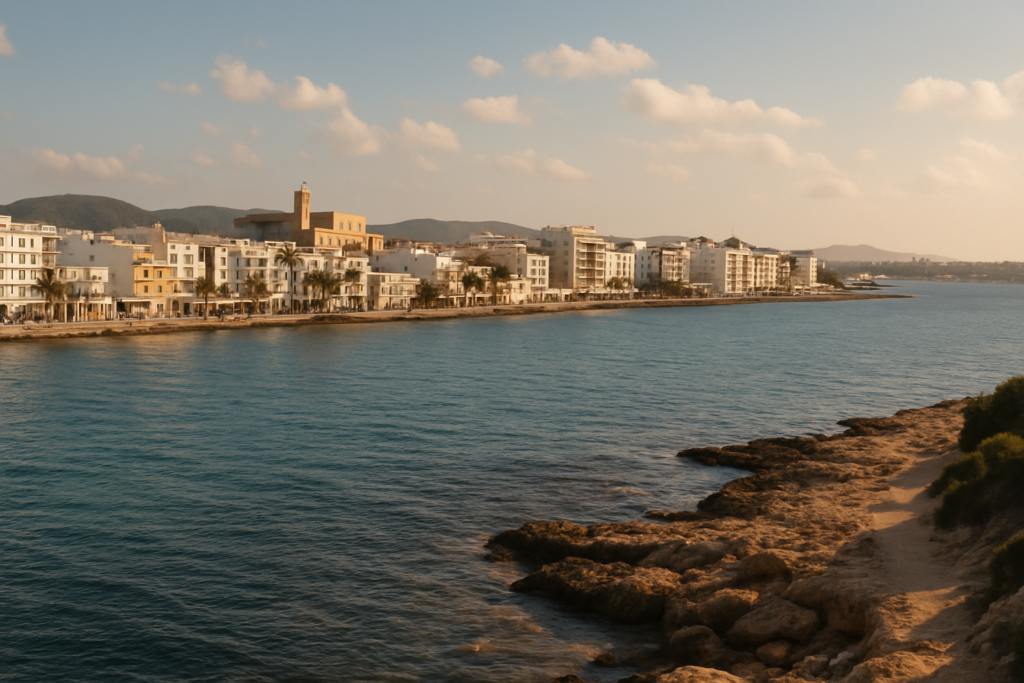
Sant Antoni de Portmany at a glance
- Western Ibiza port town on Sant Antoni Bay, and the island’s second-largest town.
- Part of Spain’s Balearic Islands autonomous community.
- Passeig de ses Fonts: palm-lined promenade with large fountains; hosts a fireworks display on 24 August.
- Regular ferry departures connect the harbour with nearby beaches; there’s a weekly ferry to Formentera.
- Sunset Strip: famous bars such as Café del Mar and Café Mambo draw crowds every evening.
- The West End (Carrer de Santa Agnès) is the compact nightlife quarter full of bars.
- Tourism-driven expansion began in the late 1950s; most summertime visitors have been British tourists since the 1980s.
Things to do in the town
Start with the harbourfront, then choose between sunset terraces, people-watching promenades and late-night streets. Below is a quick comparison of the main visitor draws so you can prioritise time without chasing attractions that don’t match your expectations.
| Attraction | What it is | Price/entry | Best for |
|---|---|---|---|
| Passeig de ses Fonts | Palm-lined promenade with rubber plants, large fountains and decorative planting; local focal point for the town’s seafront appearance. | – | Strollers, families, evening promenades |
| Sunset Strip | Seafront terrace area known for bars such as Café del Mar and Café Mambo where people gather for sunset views and music. | – | Sunset seekers, chill-out music fans |
| The West End (Carrer de Santa Agnès) | Concentrated nightlife street with many bars packed into a compact area. | – | Partygoers, late-night bar crawls |
| The Egg statue | Public sculpture linked to a local claim about Christopher Columbus’s birthplace; a quirky, photo-friendly feature. | – | History-curious visitors, photography |
| Ferry departures | Daily boat trips from the harbour to nearby beaches; weekly ferry service to Formentera. | – | Beach-hoppers, boat-excursion planners |
Passeig de ses Fonts — seafront walking and evening rituals
The town’s promenade was deliberately developed in the early 1990s to tidy and modernise the waterfront; today it’s where locals and visitors cross paths. Wide paths, palm trees and prominent fountains make it an easy, low-effort place for a post-beach stroll. If you time it right, the promenade is also the setting for the town’s biggest annual fireworks display on 24 August—expect crowds and a celebratory atmosphere on that date.
Sunset Strip — rhythm and ritual
The Sunset Strip is the social magnet for evenings: terraces and seafront bars create a ritualised ritual of gathering for the light show. Two internationally recognised venues—Café del Mar and Café Mambo—anchor the strip and have turned sunset-watching here into a ritual for many visitors. Don’t expect solitude; expect curated ambience, DJ-tinged soundtracks and a steady flow of people arriving in time for golden hour.
The West End — compact nightlife core
For a denser, louder contrast, head to Carrer de Santa Agnès, the spine of the West End. It’s a short, concentrated area of bars where the night’s tempo increases after sunset. This is the place for bar-hopping rather than late-night clubbing; the street rhythm is quick, loud and social.
The Egg and local lore
The Egg is a small public statue that references a local claim linking the town to Christopher Columbus’s birthplace. It’s not a major museum piece, but it’s emblematic of the town’s local stories and makes for a quick, interesting photo-stop if you’re cataloguing the town’s oddities.
Sant Antoni de Portmany with kids
Families should plan around the town’s strengths: promenades, short harbour boat trips and organised evenings that are more scenic than wild if you stick to the seafront. Passeig de ses Fonts offers safer, wide walking spaces for children and families, and daytime ferry departures let you reach nearby beach destinations without complex transfers. The West End is not family-focused—avoid it late at night—but the harbour and promenade are fine for daytime family activities.
How to get to the town and get around
The harbour is the transport hub for coastal movement; ferries leave daily for nearby beaches and there is a weekly ferry to Formentera. Once you’re here, the town is compact enough that walking covers the core leisure areas—passeig, sunset terraces and the West End are all close to one another. If your plans revolve around beach-hopping or island-hopping, consult local ferry timetables because departures are a central part of how visitors move from this harbour.
| From | By | Approx time |
|---|---|---|
| Sant Antoni harbour → nearby beaches | Ferry (daily departures) | – |
| Sant Antoni harbour → Formentera | Ferry (weekly service) | – |
Where to stay
Choose your base according to the rhythm you want:
- Passeig / harbourfront — best for easy access to sunsets, ferries and family-friendly promenades.
- Sunset Strip area — pick this if you want to be close to the classic sunset terraces and the atmosphere they bring each evening.
- The West End / Carrer de Santa Agnès — stay here if you prioritise being steps from the busiest bar scene; not ideal if you need quiet nights.
- Outskirts of the town — quieter and often cheaper, suitable if you want day trips and a more sedate return in the evening.
Best time to visit
Summertime is when the town truly pulses: crowds, terraces and a particularly international scene define the season. If you prefer busier social life and regular ferry services to beaches, visit during the height of summer. For quieter streets and a gentler tempo, aim for shoulder periods outside that peak—but expect some venues to follow seasonal opening patterns.
| Season | Months | What to expect |
|---|---|---|
| Summer | Summertime | Peak crowds and activity; regular ferry departures; the town attracts many British visitors and lots of sunset crowds; fireworks on 24 August. |
History of the area
The modern visitor profile here is a twentieth-century story. The town expanded rapidly once hotels and tourist resorts were built in the late 1950s, transforming a modest port into a tourism centre. Local civic improvements continued into the late twentieth century—the beachfront was purposefully redeveloped in the early 1990s (Passeig de ses Fonts) to improve the seafront’s look and amenity. Over recent decades the settlement became culturally identified with a mix of sunset culture and nightlife, and since the 1980s a majority of its summertime visitors have been British tourists. These layers—traditional port, mass-tourist boom, and sunset-nightlife identity—explain why the place feels both well-trodden and ceremonially beautiful at dusk.
Practical info
- Harbour services: Daily ferry departures serve nearby beaches; there is also a weekly ferry to Formentera—ferry timetables and ticketing are central to day-trip planning from the seafront.
- Promenade features: Passeig de ses Fonts includes palm trees, rubber plants and large fountains and was developed to enhance the town’s appearance.
- Nightlife geography: Sunset Strip hosts signature sunset venues and terraces; the West End (Carrer de Santa Agnès) is the town’s compact nightlife street.
- Cultural notes: The Egg statue is a local monument tied to the town’s claim about Christopher Columbus’s birthplace—an example of local myth-making rather than a formal historic site.
- Visitor profile: Since the 1980s, British tourists have formed the majority of summertime visitors, a fact that shapes services, signage and seasonal entertainment.
Worth it for: people who prioritise sunsets, lively seafront terraces and compact nightlife; travellers planning short boat trips to beaches or onward island visits. Less so if: you want a secluded, low-key holiday right on the promenade, or quiet streets after dark—the town’s identity skews social and busy in season.
How we assess this guide
This guide brings together verified place-level facts from cross-checked sources. We highlight the town’s ongoing public features (promenade, fireworks date, ferry services and nightlife streets) and its recent development history. We flag closures and redevelopment when sources indicate them; this article does not include original, on-the-ground reporting—our role is to synthesise reliable published information so you arrive with accurate expectations.
Frequently asked questions
How do people get from the harbour to nearby beaches?
Daily ferry departures operate from the harbour to nearby beaches; check local ferry operators for timetables and ticketing because the harbour is the primary launch point for short coastal trips.
Is there a ferry to Formentera from here?
Yes—there is a weekly ferry service to Formentera from the harbour. Frequency beyond that weekly link varies by operator and season, so verify schedules before planning.
Which place is best for watching the sunset?
The seafront Sunset Strip is built around sunset-watching: terraces and bars—anchored by long-standing venues—make sunset time a social ritual. Expect crowds and a lively atmosphere.
Where is the main nightlife area?
The West End, concentrated along Carrer de Santa Agnès, is the town’s primary late-night bar area. For a sunset-to-dusk transition, the Sunset Strip is where people gather before the West End’s tempo rises.
When is the big fireworks event?
The town holds a notable fireworks display on 24 August along the promenade and seafront; it’s a local highlight with strong attendance.
Is the promenade family-friendly?
Passeig de ses Fonts was developed to improve the seafront’s appearance and offers wide walking areas, fountains and planting—making it one of the better family-friendly public spaces in town.
What’s the story of the Egg statue?
The Egg is a public statue that commemorates a local claim linking the town to Christopher Columbus’s birthplace. It’s a small, interpretive civic landmark rather than a major historical monument.
Has the town always been tourist-focused?
The town’s major growth as a tourism destination began with hotel and resort construction in the late 1950s. Subsequent decades consolidated its role as a mass-tourism focal point.
Are most summer visitors British?
Since the 1980s, the majority of summertime visitors have been British tourists; this shapes the seasonal culture and the offer in bars, restaurants and entertainment.
Can you walk everywhere in town?
The centre is compact: the harbour, promenade, Sunset Strip and the West End are within easy walking distance of each other, so strolling is the most convenient way to move around central areas.
Is the nightlife suitable for families?
Not generally at night. The West End is a dedicated adult nightlife street; families should stick to daytime harbour and promenade activities and avoid the nightlife streets late in the evening.
Are the seafront venues historical institutions?
Some sunset terraces and bars have longstanding reputations and anchor the Sunset Strip’s identity, but the seafront itself was deliberately modernised in the early 1990s as part of civic improvement works.
What should I expect from the harbour services?
The harbour runs daily ferry departures to beaches and a weekly ferry to Formentera, making it a practical hub for short boat trips and island connections; services and frequency can be seasonal so confirm times with operators.
How many days should I spend here?
If you want a taste of sunset culture, a harbour-side afternoon and an evening in the West End, one to two full days covers the essentials. Add days if you plan on multiple beach or island boat trips from the harbour.
Where can I find quieter evenings?
Stay away from Carrer de Santa Agnès after dark; choose accommodation on the harbour outskirts or outside the Sunset Strip if you prefer quieter nights. The promenade itself is calmer earlier in the day and can be quieter than the West End at night.
Plan the wider trip
Sant Antoni De Portmany on the map
Places worth knowing near Sant Antoni De Portmany
How this page is maintained. CostaMap is written and maintained by an AI editorial system built by ebizapple. Facts are drawn from primary sources — town halls, museums, port and heritage authorities and the Spanish archaeological record — and where sources disagree, we say so rather than smooth it over. Photographs marked as ours are taken on location. This page was last reviewed on 13 August 2026. Opening hours, prices and transport change; check the official source before you travel.