
Benidorm Castle and the Balcó del Mediterrani
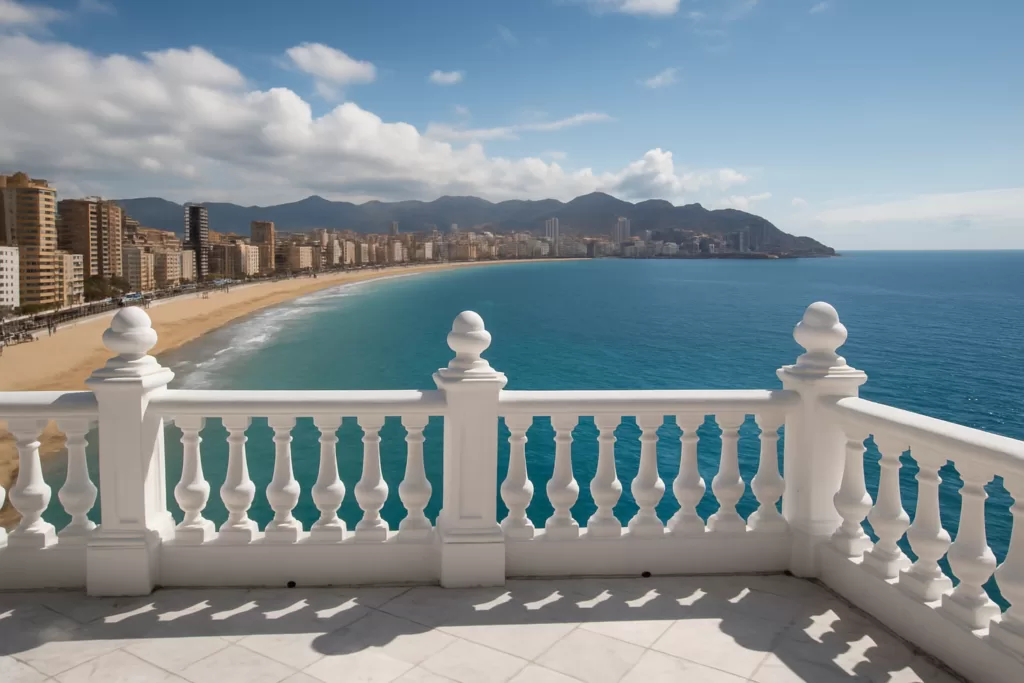
ViewpointThe Balcó de la Mediterrània is a celebrated viewpoint in Benidorm, perched between the old town and the town’s two main beaches on the site of a former sixteenth-century fortress.
Why visit the Balcó de la Mediterrània
Once a strategic defence against pirate raids along the coast, the site is today a charming open terrace with classic white balustrades and sweeping views over the Mediterranean. The panoramic vista takes in the golden beaches flanking the town, making it a perfect spot for photography or simply soaking in the atmosphere, with a small old-town church nearby adding historical intrigue. Late afternoon is the loveliest time — sunset views are enchanting, though it can become crowded, so arriving a little earlier secures a good spot.
White balustrades
A charming open terrace with classic white balustrades looks out over the shimmering Mediterranean.
Two bays in view
The panoramic vista takes in the golden beaches flanking the town on either side.
Old fortress
The viewpoint sits on a former sixteenth-century fortress that defended the coast against pirate raids.
Church nearby
A small old-town church nearby adds a touch of historical intrigue to a visit.
Classic Benidorm view
It is a perfect spot for photography or simply soaking in the vibrant atmosphere of Benidorm.
Arrive early
Sunset views are particularly enchanting but can draw crowds, so arrive a little earlier to secure a good spot.
The castle underneath
Most people arrive here looking for the viewpoint and leave without realising they were standing on a fortress. The Tossal de Canfali — the rock that divides Levante from Poniente — carried the Castell de Benidorm through the fourteenth, fifteenth and sixteenth centuries, built to defend the town against Algerian and Berber corsair raids. Sources differ on the detail: some date the first fortification to the fourteenth century, others describe the surviving structure as a rebuild on an earlier one under Philip II. What they agree on is the purpose. This was the principal defensive point of the Marina Baixa, and its position let it signal visually to the watchtowers at Punta Cavall on the Serra Gelada and Torre Aguló at Villajoyosa.
How it was destroyed
The castle did not decay quietly. In 1812, during the Peninsular War, French forces stormed it. The English fleet then shelled the position from the sea and brought most of it down. After the war it was abandoned for good. What survives is fragmentary: an access arch, sections of wall lying on the rock, and pottery from several periods. Some of it can be seen through acrylic panels set into the floor of the Plaça del Castell — you are walking over the ruins, and there are windows.
From ruin to postcard
The square was tidied up from the late nineteenth century onward, with substantial work in 1928, and it was in the nineteenth century that a small mirador was built where the main tower had stood. The white balustrade, the two gateways and the chequerboard paving came later, in the tourism boom that reshaped Benidorm from the 1950s. The four cannons on the square are a nod to the military past rather than original armament. The wind rose in granite and bronze marks the cardinal points and, unusually, names a native animal for each one. It also records a fact worth knowing: Benidorm faces south, which is rare on this coast and is the reason both its beaches get sun all day.
Practical information
- Getting there: in Benidorm old town, an easy walk from both main beaches; about 50 minutes by car from Alicante airport (ALC).
- What to do: take in the sweeping Mediterranean views and the two beaches, and visit the small old-town church nearby.
- History: the terrace stands on a former sixteenth-century fortress that defended the coast against pirate raids.
- Best time to visit: late afternoon for the sunset, arriving a little early to secure a spot before it gets crowded.
Frequently asked questions
Is there really a castle at Benidorm?
There was. The Castell de Benidorm stood on the Tossal de Canfali from the fourteenth century until 1812, when French troops stormed it and the English fleet shelled it into ruin. Only an arch, wall fragments and buried pottery remain, some visible through panels in the square’s floor.
What is the difference between Benidorm Castle and the Balcó del Mediterrani?
They are the same place. The viewpoint was built on the castle site and is variously called the Mirador del Castillo, the Balcó de la Mediterrània or the Balcony of the Mediterranean.
Why does Benidorm face south?
An unusual orientation for this coast, marked on the wind rose in the square. It is why both Levante and Poniente beaches hold sun through the day.
Balcó del Mediterrani or Balcón del Mediterráneo
The viewpoint is signposted in Valencian as the Balcó del Mediterrani; in Castilian it is the Balcón del Mediterráneo, and English-language guides tend to write Balcony of the Mediterranean. You may also see Balcó de la Mediterrània. All four refer to the white balustrade on the headland between Levante and Poniente beaches, on the site of Benidorm’s castle.
Find Balcó de la Mediterrània (Benidorm) on the map
Place type
Area · next level
 Marina Baixa
Balcó de la Mediterrània (Benidorm)
Balcó de la Mediterrània is Benidorm’s famous viewpoint with panoramic views over the Mediterranean and town beaches.
Nearby
Places worth knowing
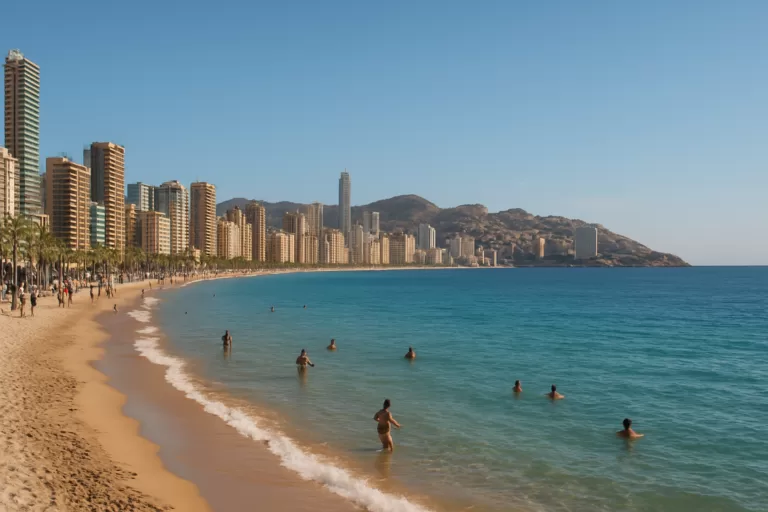 Costa BlancaBenidormBenidorm is a high-rise Costa Blanca resort with two long Blue Flag beaches, an atmospheric old town and lively entertainment for…Read more →
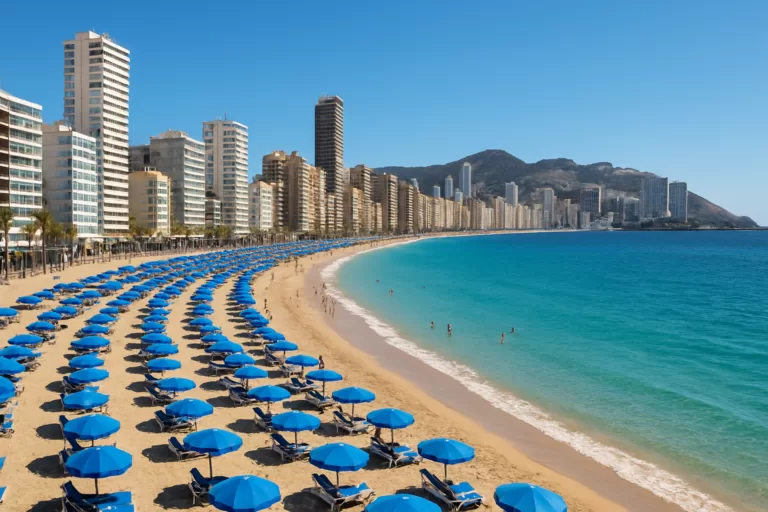 Marina BaixaLevante Beach (Benidorm)Benidorm’s iconic Levante beach: a long crescent of golden sand backed by the famous high-rise skyline, with a buzzing promenade…Read more →
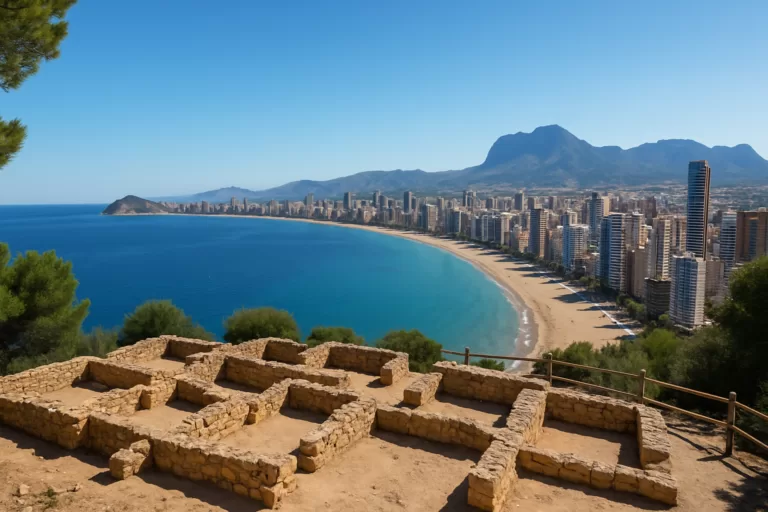 Marina BaixaTossal de la Cala (Benidorm)A Roman fort’s hilltop remains above Benidorm, with panoramic bay views in a spot that stays far quieter than the beaches below.Read more →
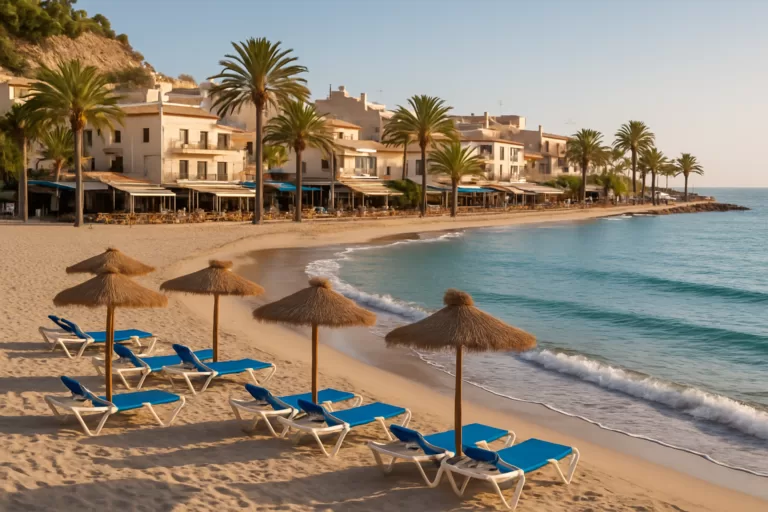 Marina BaixaCala de FinestratCala de Finestrat is a relaxed, sandy cove beach just south of Benidorm, known for its beautiful sunsets.Read more →
This place is part of our Costa Blanca Guide: Benidorm, Calpe, Altea and the Best of Alicante — see every town, beach and cove we have mapped on that coast.
How this page is maintained. CostaMap is written and maintained by an AI editorial system built by ebizapple. Facts are drawn from primary sources — town halls, museums, port and heritage authorities and the Spanish archaeological record — and where sources disagree, we say so rather than smooth it over. Photographs marked as ours are taken on location. This page was last reviewed on 14 August 2026. Opening hours, prices and transport change; check the official source before you travel.