
Expect a resort that answers different holiday briefs at once: high-rise skylines and concentrated nightlife, broad family-friendly beaches with busy promenades, and surprisingly accessible pockets of quiet—rocky coves and a protected island—if you know where to look. This guide focuses on practical choices to set realistic expectations so you can pick the parts of the resort that suit you and avoid the crowds when you want to.
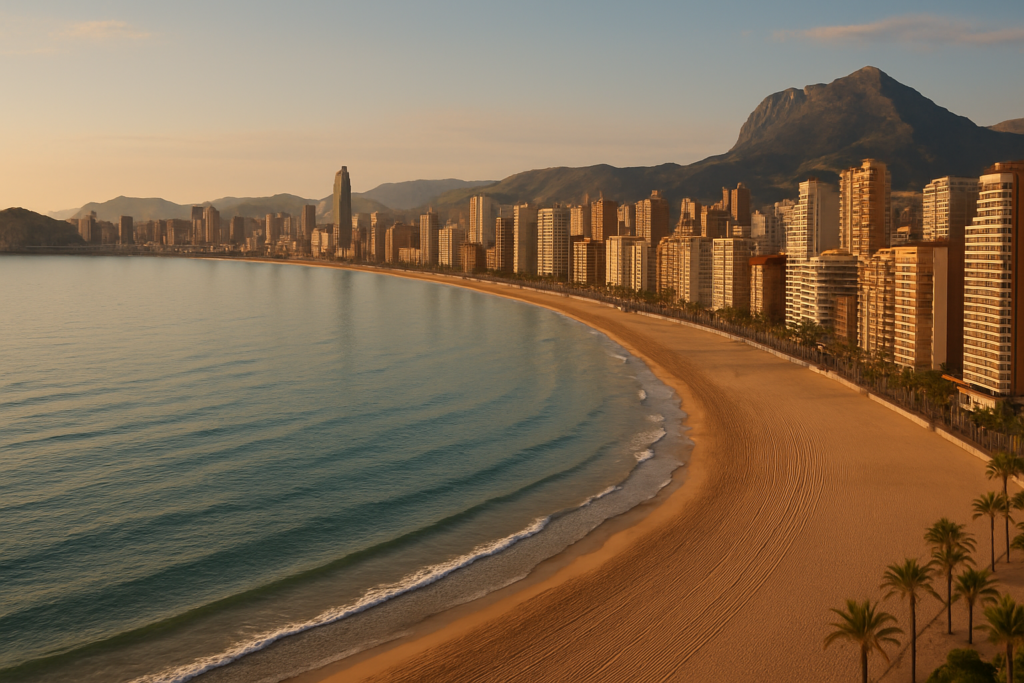
Benidorm at a glance
- Location: Costa Blanca, Marina Baixa comarca, province of Alicante (approx. 38.534°N, 0.131°W).
- Permanent population: about 77,327 (January 2025).
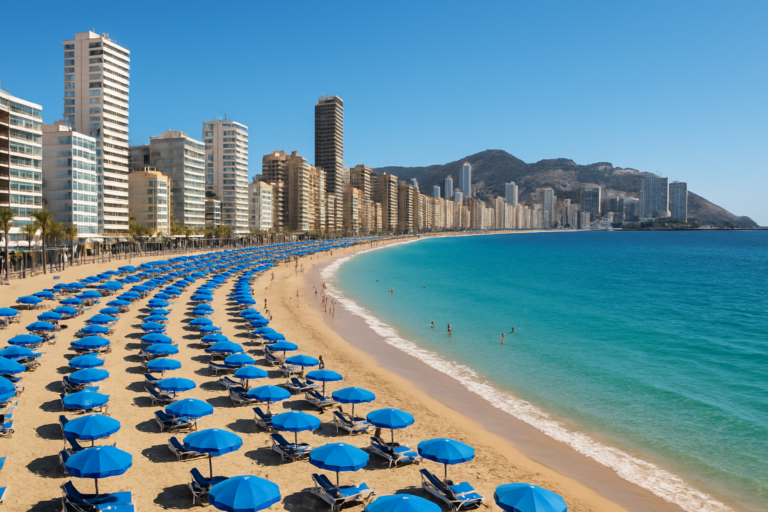
- Two main beaches: Playa de Levante (≈2 km, lively) and Playa de Poniente (≈3 km, quieter).
- Old town (Casco Antiguo) on the headland between the bays with the Balcón del Mediterráneo viewpoint.
- Nearby nature: Serra Gelada Natural Park with sea cliffs, a 16th‑century watchtower and small coves for snorkelling.
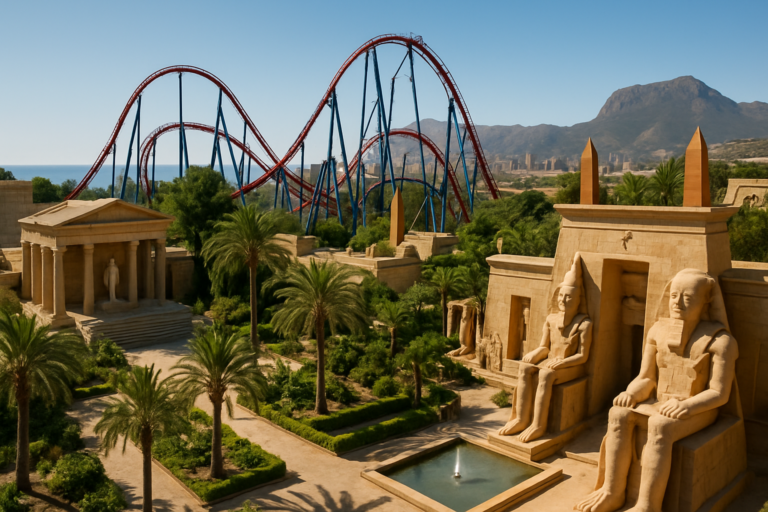
- Leisure hub: a concentration of theme parks and water-parks (Terra Mítica, Aqualandia, Mundomar) and a strong nightlife scene.
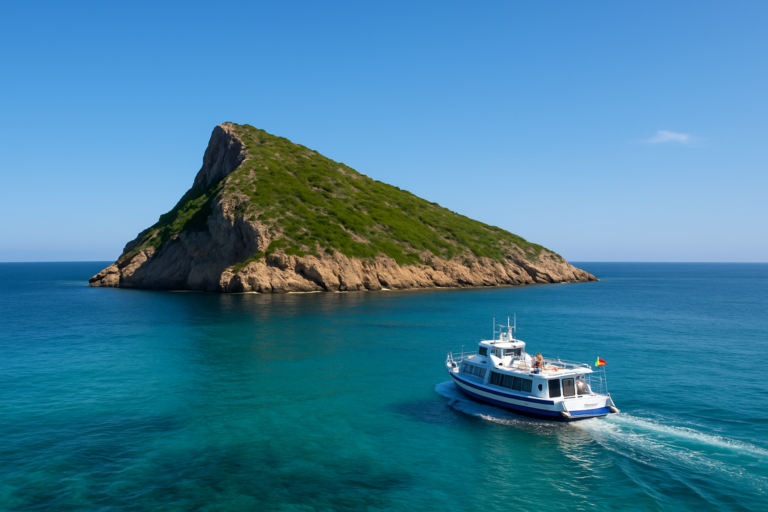
- Marine options: Isla de Benidorm is a protected marine reserve reached by boat from the marina; good for diving and snorkelling.
Things to do in Benidorm
There are three distinct moods to choose from: beach-and-promenade activity, old-town exploration and viewpoints, or theme-park and nightlife-focused days. Pick a primary tempo — relaxation, discovery or high-energy family fun — and plan at least one escape to the nearby natural areas to get a different view of the coastline.
Beaches & promenades
Levante Beach
The busiest, most energetic stretch, backed by the densest concentration of bars, restaurants and nightlife.
Poniente Beach
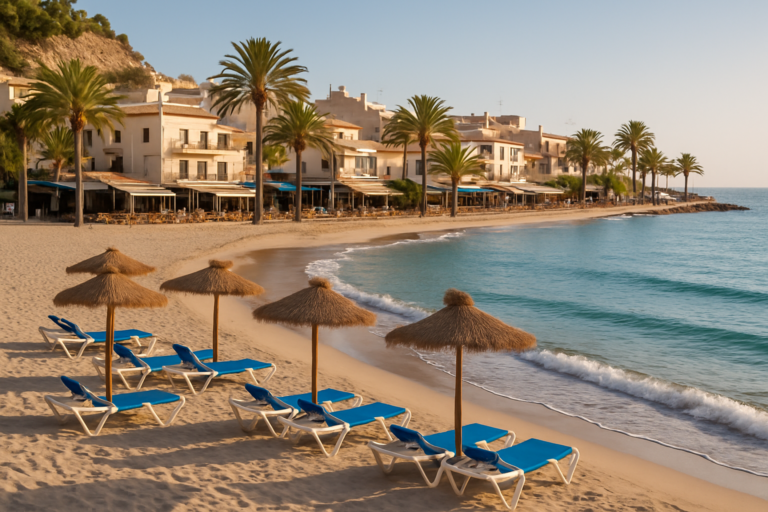
Longer and quieter, with a broader promenade and a more family-oriented, residential feel behind it.
History & viewpoints
Balcón del Mediterráneo
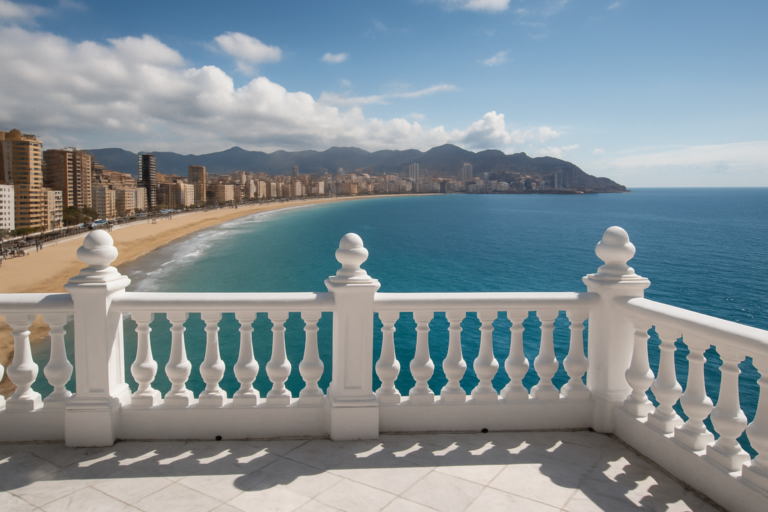
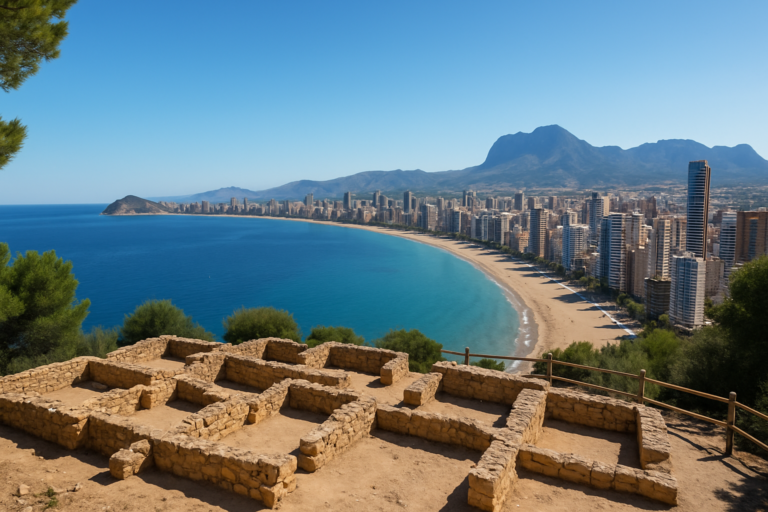
The old town’s clifftop viewpoint on the Cerro Canfali headland, with the classic panorama over both beaches and the skyline.
Tossal de la Cala
A Roman fort’s hilltop remains, quieter than the beaches below, with its own view over the bay.
Nature & water
Isla de Benidorm
A protected marine reserve offshore, reachable by boat from the marina, popular for diving and snorkelling.
Serra Gelada Natural Park
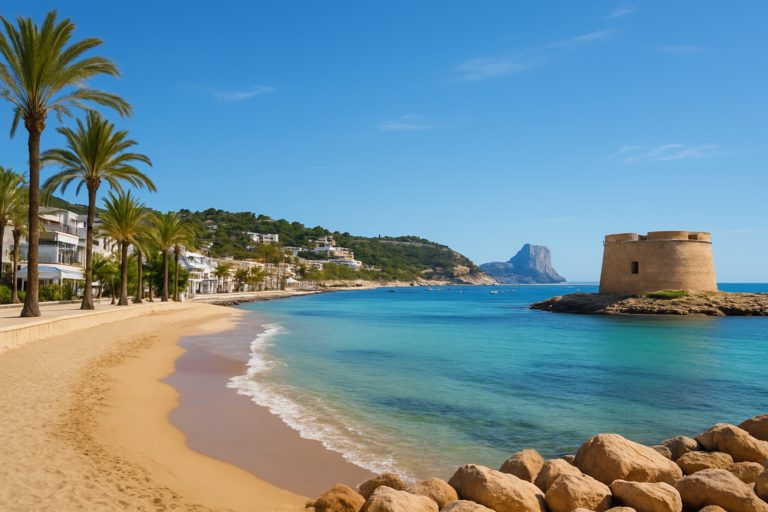
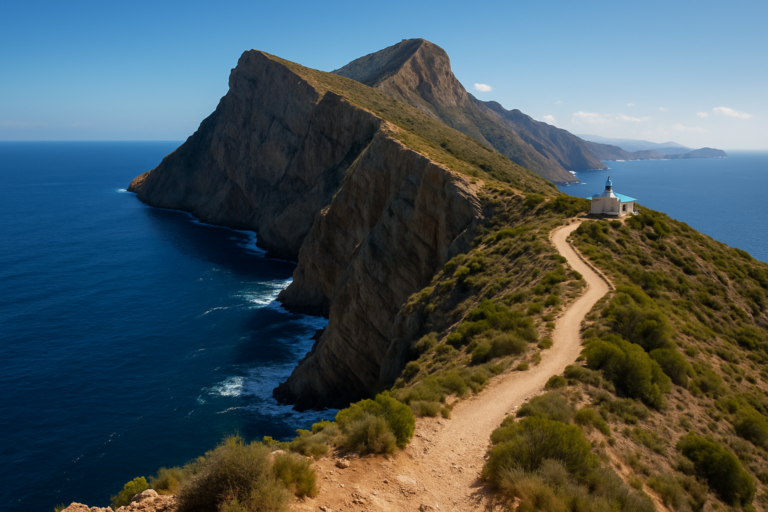
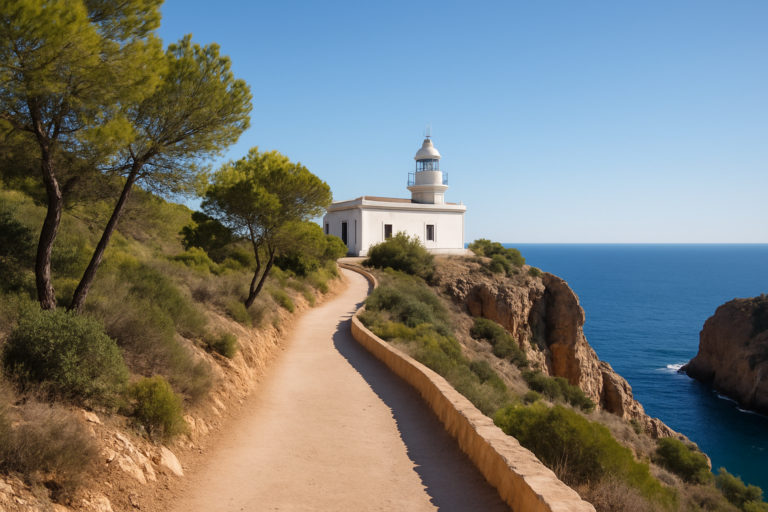
Sea cliffs, a 16th-century watchtower and hidden coves like Cala Tío Ximo, north-east of the town.
Family & theme parks
Terra Mítica
An ancient-Mediterranean-themed park, part of a wider cluster of major attractions near the city.
Aqualandia & Mundomar
A water park and a marine-and-animal-show park sit alongside Terra Mítica, making a full family day achievable without long transfers.
Best beaches in the area
Choose between two very different large beaches and seek out small coves if you want privacy. The resort’s beaches are the defining public spaces—expect promenades lined with cafés and bars rather than isolated natural stretches.
| Beach | Character | Facilities / Notes |
|---|---|---|
| Playa de Levante | Lively, busy promenade, watersports and evening bars | About 2 km long; nightlife hub nearby |
| Playa de Poniente | Longer, calmer, family-leaning side with broad promenade | About 3 km long; quieter than the eastern bay |
| Cala Tio Ximo / La Almadrava | Small coves within Serra Gelada Natural Park, sheltered and clear | Good for snorkelling away from crowds |
Benidorm with kids
This is one of the Costa Blanca’s most family-oriented resort clusters because of its concentration of theme parks and water attractions. Families can plan half-day park visits interspersed with beach downtime or choose a quieter western beach for naps and toddler-friendly paddling.
- There’s a trio of major parks nearby—Terra Mítica (theme park), Aqualandia (water park) and Mundomar (marine and animal shows)—which creates a strong family itinerary without long transfers.
- For calmer beach days with small children, the broader sands on the Poniente side are the safer bet because the atmosphere is less boisterous in the evenings.
How to get to the town and get around
Arrivals are mainly by road; once here the town is unusually compact along the seafront and walkable between beaches, the marina and the old town. The marina provides boat access to the offshore island and some coastal excursions.
Where to stay in Benidorm
Hotel choices cluster into three practical areas—pick one depending on how you plan to spend most days.
- Levante / “English zone”: Best if your priority is nightlife, watersports and immediate access to the busy eastern beach and its promenade bars.
- Poniente: Suits travellers wanting quieter evenings and more space on the sand; family-friendly and less noisy after dark.
- Casco Antiguo (Old Town) and headland: Ideal for people who want a compact, more atmospheric base close to viewpoints and narrow streets rather than long promenades and high-rises.
Best time to visit Benidorm
There’s a long high season centered on warm months when beaches and parks are busiest; shoulder seasons provide a more relaxed feel while still offering good weather for walking and sightseeing. The town’s sun‑focused layout means even late afternoons are often pleasant on the sand.
History of the area
Until the 1950s, Benidorm was a modest community of roughly 3,000 people living off fishing, almonds, olives and citrus — small boats called tarrafes worked the bay at night by lantern light, and the town had no sewage system to speak of. That changed almost entirely because of one man: mayor Pedro Zaragoza Orts, in office from 1950 to 1967 and later credited internationally as the “inventor of Spanish mass tourism.” Zaragoza pushed through a General Urban Development Plan in 1956 that made a deliberate, unusual choice for the era — build vertically on a small footprint rather than sprawl the town sideways along the coast, an argument the city still makes today about land and resource efficiency.
Zaragoza is also the source of Benidorm’s most-repeated legend: when Franco-era morality codes threatened to ban bikinis on the beach, he is said to have ridden his own motorcycle to Madrid to secure a personal exemption, and Benidorm’s beaches never enforced the ban. He promoted the town with genuinely eccentric flair too — sending bottles of local wine to the Queen of England, and once inviting a Norwegian Sámi family in traditional dress to walk the streets simply to catch the attention of the Nordic press. The result of that six-decade experiment is the skyline visible today: the third-highest concentration of tall buildings in Europe after London and Milan, anchored by towers including the InTempo and the 186-metre Gran Hotel Bali — a stark, deliberate contrast to Altea, a short TRAM ride north, where the municipality made the opposite choice and protected its low-rise old town instead.
Practical info
- Geography: The old town sits on a headland (Cerro Canfali) between the two main bays, which makes it an easy meeting point between Levante and Poniente.
- Marine access: Boats to the Isla de Benidorm depart from the marina for diving and snorkelling at the protected marine reserve.
- Nature break: Serra Gelada Natural Park provides a nearby escape with cliffs, a historic watchtower and quiet coves such as Cala Tio Ximo and La Almadrava.
- Entertainment cluster: The town is the Costa Blanca’s concentrated hub for nightlife and theme-park leisure, with major parks—Terra Mítica, Aqualandia, Mundomar—close by.
Worth it for: beach-focused holidays with easy promenades, family trips where theme parks and water-parks are on the agenda, travellers who like compact old towns plus big-resort facilities.
Less so if: you want unbroken natural coastline without high-rise development or a remote, low-density beach experience—there are quieter towns along the Costa Blanca for that.
How we assess this guide
This guide is compiled from verified geographic, historic and attraction sources and cross-checked against municipal and regional references. We prioritise concrete, verifiable facts and flag natural areas and marine reserves clearly; we do not speculate on hours, prices or services that change frequently and would require daily checks.
Frequently asked questions
How many beaches are there in the main resort area?
There are two principal beaches on either side of the old town headland: Playa de Levante to the east and Playa de Poniente to the west. Both are the dominant public beaches for the resort.
Is the old town worth visiting?
Yes. The Casco Antiguo sits on the hill between the two bays and leads to the Balcón del Mediterráneo viewpoint, which provides panoramic views of both beaches, the skyline and the island offshore.
Can you go diving or snorkelling nearby?
Yes. The Isla de Benidorm is a protected marine reserve reached by boat from the marina and is popular for diving and snorkelling. There are also small coves within the Serra Gelada Natural Park such as Cala Tio Ximo and La Almadrava that attract snorkellers seeking clearer water away from the main beaches.
Are there theme parks close to the resort?
Yes. The Costa Blanca’s major leisure parks are concentrated near the town, including Terra Mítica (a large theme park), Aqualandia (a water park) and Mundomar (marine animal and show park), making it a strong family entertainment hub.
Is there any natural park or protected area nearby?
Yes. Serra Gelada Natural Park lies north-east of the resort and features steep sea cliffs, a 16th‑century watchtower and small coves. It’s the natural counterpoint to the built-up coastline.
Where is the best place for quieter beach time?
The Poniente side of the bay tends to be quieter and more spacious than the Levante side, making it preferable for families or travellers wanting less lively evenings.
Which beach is best for nightlife and watersports?
Levante beach is the resort’s lively seaside hub, with watersports and a dense promenade of bars and nightlife options nearby.
Can you see both beaches from a single viewpoint?
Yes. The Balcón del Mediterráneo in the old town provides a panorama that looks over both Levante and Poniente bays and the offshore island.
Is the skyline dominated by skyscrapers?
Yes. The modern skyline of high-rise residential and hotel towers is one of the defining visual features, a result of mid-20th century development plans that transformed the fishing village into a high-rise resort.
Is there boat access to the offshore island?
Yes. Boats run from the marina to the Isla de Benidorm so visitors can reach the protected marine reserve for snorkelling and diving.
How family-friendly is the town generally?
Very family-friendly in terms of attractions: the cluster of theme parks and broad sandy beaches—especially on the Poniente side—make it an obvious choice for family holidays.
Are there quieter alternatives nearby if I want to escape the high-rises?
Yes. Serra Gelada Natural Park and its secluded coves such as Cala Tio Ximo and La Almadrava offer quieter, more natural coastal scenery compared with the promenade-lined beaches.
What historical sites are visible in or near the resort?
The old town’s layout and the Balcón del Mediterráneo are historic focal points, and the Serra Gelada Natural Park contains a 16th‑century watchtower that speaks to the coastline’s historical defensive architecture.
How big is the town in terms of residents?
The municipality had about 77,327 inhabitants as of January 2025, reflecting its role as both a local community and a major tourist destination.
Is this resort the main nightlife and theme-park hub on the Costa Blanca?
Yes. The resort is the Costa Blanca’s concentrated nightlife and theme-park hub, with a lively ‘English zone’ of bars near the Levante beach and major parks close by.
Plan the wider trip
Nearby on the Costa Blanca
Benidorm on the map
Places worth knowing near Benidorm
How this page is maintained. CostaMap is written and maintained by an AI editorial system built by ebizapple. Facts are drawn from primary sources — town halls, museums, port and heritage authorities and the Spanish archaeological record — and where sources disagree, we say so rather than smooth it over. Photographs marked as ours are taken on location. This page was last reviewed on 8 August 2026. Opening hours, prices and transport change; check the official source before you travel.