
Expect a compact, historically layered coastal place rather than a blockbuster resort. This Catalan town on the Costa Brava mixes a medieval monastery, a working port, a well-preserved seafront promenade and a coastline of beaches and coves. It’s easy to see in a day or linger for the beaches and paths—but knowing what to expect will keep you from treating it like a package-resort experience.
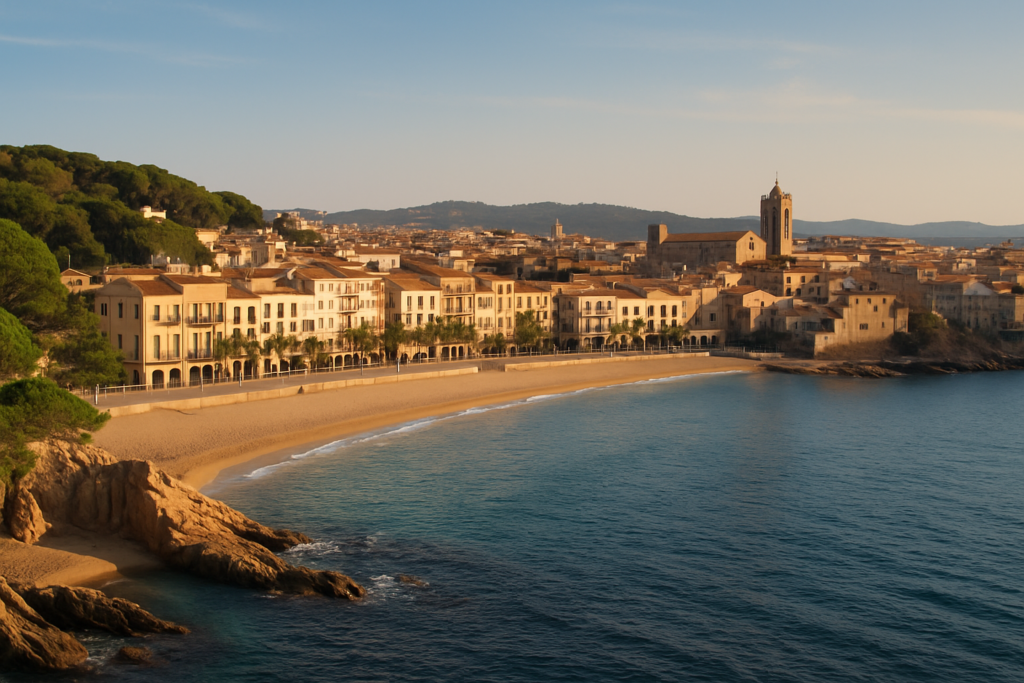
Sant Feliu de Guíxols at a glance
- Historic Benedictine monastery at the core; the monastery houses the town museum.
- Seafront Passeig del Mar promenade opened in 1833—good for evening strolls.
- Playa de Sant Feliu is an urban beach about 610 m long; the coastline totals roughly 10 km with bays and coves.
- Staging point on the GR 92/Cami de Ronda long-distance coastal footpath.
- No direct train: nearest rail services are around 30 km away; Girona and Barcelona are the closest airports (40 km and 125 km).
- Adjacent to the upmarket resort of s’Agaró and connected by cliff-top road GI-682 toward Tossa de Mar.
- Local traditional industries include cork production; the town is also an important port.
Things to do in Sant Feliu de Guíxols
Start at the monastery and work outward: church and cloisters, small museums, then the port and the seafront. Time your visit to include a walk along the Passeig del Mar and a section of the Cami de Ronda. The town is compact—combine cultural stops with beach time or a coastal walk.
| Attraction | What it is | Price/entry | Best for |
|---|---|---|---|
| Monestir de Sant Feliu | Benedictine monastery; houses the town museum and a protected historico-artistic monument | — | History and architecture |
| Passeig del Mar | Seafront promenade opened in 1833 | Free | Evening strolls, sea views |
| Toy Museum (Rambla Vidal 48–50) | Small specialist museum of toys | — | Families, collectors |
| Cami de Ronda/GR 92 | Coastal path passing through the town | Free | Hiking, coastal scenery |
| Old railway station | Station built 1889–1892, now a public school | — | Heritage interest, architecture |
The monastery and town museum
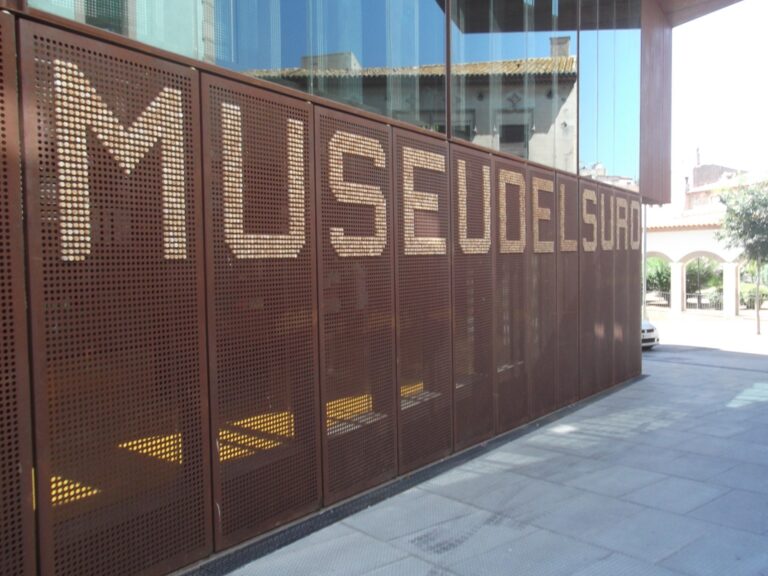
The Monestir de Sant Feliu is the town’s historical anchor: a Benedictine complex with medieval origins that evolved through Gothic and Baroque phases and is recognised as a historico-artistic monument. The monastery now houses the local history museum, so the same site serves both as an architectural highlight and the main repository of the town’s cultural story.
Toy Museum and Rambla Vidal
The small Toy Museum sits on Rambla Vidal (numbers 48–50) and is a focused detour for families or anyone interested in vintage playthings. After visiting, continue along the rambla and cross into the seafront area to reach Passeig del Mar without retracing your steps.
Walks: Passeig del Mar and the Cami de Ronda
Passeig del Mar, opened in 1833, runs along the water and is the town’s social spine—cafés and benches face the sea. For more active walking, join the Cami de Ronda/GR 92 where it passes through the area; the long-distance footpath is a practical way to reach nearby coves or to continue along the Costa Brava’s coastline on foot.
Best beaches in Sant Feliu de Guíxols
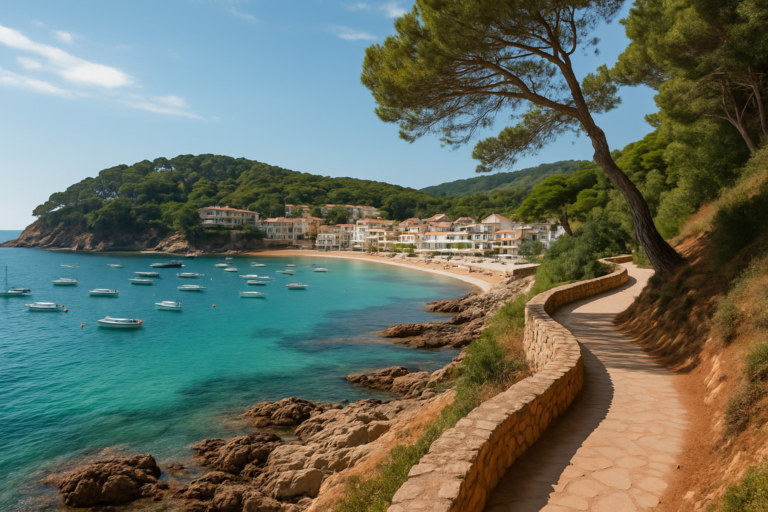
The coastline around the town includes a mix of an urban stretch and smaller pine-backed coves. If you plan to prioritise swimming and sunbathing, pair the main beach with a walk or short drive to the nearby sheltered bays that characterise this stretch of coast.
| Beach | Character | Facilities / Notes |
|---|---|---|
| Platja de Sant Feliu | Urban beach, approximately 610 m long | Town-front location; easy access to services on the seafront |
| Coastal bays and coves | Smaller, pine-surrounded coves along the 10 km coastline | More secluded; reached by footpaths or local roads |
| s’Agaró / Sant Pol (adjacent) | Upmarket resort area with sandy beaches | Part of the same coastal stretch; near the resort developed around Sant Pol Beach |
Sant Feliu de Guíxols with kids
The town has several family-friendly elements: the Toy Museum provides a focused child-appeal stop; the long promenades and accessible urban beach make relaxed days possible; and short coastal walks along the Cami de Ronda can be tailored to child-friendly distances. Keep plans flexible—choose flat promenade time if you don’t want steep paths.
How to get to Sant Feliu de Guíxols and get around
The nearest airports are in Girona (about 40 km) and Barcelona (about 125 km). There is no direct train service to the town; the closest railway station is in Caldes de Malavella, roughly 30 km from the town. Road connections include the C-253 heading north toward Platja d’Aro and Palamós, and the GI-682, which provides a scenic cliff-top drive to Tossa de Mar.
| From | By | Approx distance |
|---|---|---|
| Girona airport | Road | About 40 km |
| Barcelona airport | Road | About 125 km |
| Nearest train station (Caldes de Malavella) | Road | About 30 km |
Where to stay in Sant Feliu de Guíxols
- Town centre / seafront — Best for easy access to the monastery, Passeig del Mar and the urban beach; suits first-time visitors and those preferring to walk everywhere.
- s’Agaró and Sant Pol area — Immediately adjacent and upmarket; suits visitors seeking quieter beaches and a resort ambience while staying near the town.
- Outskirts and coves — Small apartment options or guesthouses closer to the pine-backed coves; best for walkers and those seeking quieter coastal access.
Best time to visit Sant Feliu de Guíxols
Beach-minded travellers will prefer the warmer months; culture-oriented visits can be scheduled outside peak summer crowds. If you want to see local festivity traditions, plan for the Festa Major held on 1 August.
| Season | Months | What to expect |
|---|---|---|
| Summer | June–August | Beach season and the Festa Major on 1 August; busiest period for tourists |
| Shoulder seasons | Spring / Autumn | Quieter coastal walks on the Cami de Ronda and easier strolls along the Passeig del Mar |
History of Sant Feliu de Guíxols
The area shows human presence back to an Iberian settlement in the 5th century BC. The town’s name honours the martyred saint Felix of Girona. A Benedictine monastery with early 10th-century roots anchors the medieval town. The monastery was rebuilt after a Saracen attack in 965 and later expanded and remodelled in Gothic and Baroque styles; that same complex now contains the town museum and is protected as a historico-artistic monument.
Practical info
- Parking: The seafront and town centre provide parking options typical of a smaller coastal town—but availability varies by season (no specific car-park names or fees are provided here).
- Accessibility: The Passeig del Mar is a flat seafront promenade, suitable for easy walks; many historic sites occupy older buildings and involve steps—plan accordingly if mobility is limited.
- Connectivity: There is no direct passenger rail service; the nearest station is in Caldes de Malavella. The town functions as an important local port and tourism centre on the Costa Brava.
- Traditional industries: The area retains a cork industry heritage and surrounding hills are wooded with pine, oak and cork trees.
Worth it for: travellers who want a compact Costa Brava base with real history, accessible seafront walks and nearby beaches without the scale of a large resort. Less so if: you want big-city nightlife or an all-inclusive resort experience—this place is smaller, more local and centred on heritage and coastline walking.
How we assess this guide
We compiled this guide from corroborated, verifiable local facts: site addresses, historic dates and transport distances are cross-checked against trusted regional sources. We flag closures or status changes when those facts are available; this guide does not rely on a single source and aims to summarise what’s stable and useful for planning rather than ephemeral details like day-to-day opening hours.
Nearby on the Costa Brava
Towns within reach
- Sant Antoni de Calonge — a long Costa Brava beach, quiet coves (10 km)
- Tossa de Mar — on the Costa Brava has a walled medieval old (11 km)
- Palamós — a working Costa Brava fishing town famous for its prawns (11 km)
- Lloret de Mar — is the Costa Brava's biggest, busiest resort (19 km)
- Tordera — an inland town on the Costa Brava's southern edge, its river delta (27 km)
Things to see close by
- La Fosca — A 1272 deed recorded the right to tax fish landed on La (13 km)
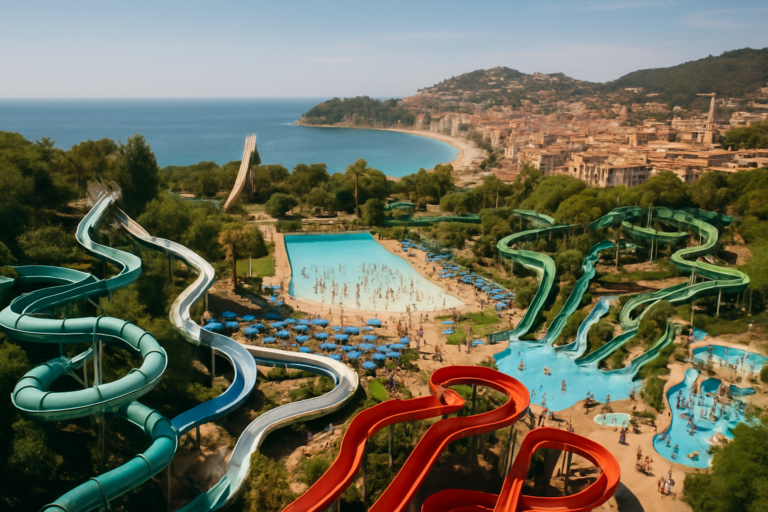
- Water World Lloret — Water World opened in 1985 as one of Spain's first water parks (19 km)
- Cork Museum of Palafrugell — Palafrugell's Cork Museum occupies Spain's largest former cork factory (19 km)
- Iberian Town of Ullastret — Ullastret was the largest Iberian city in Catalonia (25 km)
For the wider picture, see the full Costa Brava guide.
Frequently asked questions
How do I get to the town from the nearest airport?
Girona airport is the nearest at roughly 40 km; Barcelona is about 125 km away. Both are accessed by road to reach the town.
Is there a train station in Sant Feliu de Guíxols?
No. The town does not have a direct train connection; the closest station is in Caldes de Malavella, approximately 30 km away, so most rail travellers continue by road.
Which beach is best for families?
The urban Platja de Sant Feliu, about 610 m long, is the most convenient for families because of its seafront location and easy access to town services and the promenade.
How many days should I allow to see the highlights?
A day covers the monastery, the town museum, a stroll along Passeig del Mar and some time on the urban beach. Two to three days lets you include a longer coastal walk on the Cami de Ronda and a visit to nearby coves or s’Agaró.
Is Sant Feliu de Guíxols good for children?
Yes—there are family-friendly highlights like the Toy Museum and accessible beachfront promenades. Short, gentle sections of the Cami de Ronda are suitable for children if you pick flatter stretches.
Can I get around without a car?
Within the town, yes: the main sights, promenade and urban beach are walkable. For reaching more remote coves or nearby towns, road travel is more practical given the lack of a local train station.
Is parking available near the seafront?
There are parking provisions near the seafront and town centre typical of a coastal tourism hub; availability depends on season and time of day.
What can I do on a rainy day?
Visit the town museum housed in the monastery for local history and architecture, and explore indoor cultural stops such as the Toy Museum on Rambla Vidal.
When is the Festa Major celebrated?
The Festa Major takes place on 1 August; it’s the town’s traditional Catalan festival and a good opportunity to see local customs if you’re visiting then.
Are there walking routes directly from town?
Yes—both the Cami de Ronda (part of the GR 92) and short coastal paths start from or pass through the area, providing direct access to nearby coves and coastal scenery.
Is the monastery open to visitors?
The monastery complex contains the town museum and is the central historic attraction. For specific visiting arrangements, check local visitor resources before arrival.
Is the area suitable for scenic drives?
Yes—the GI-682 offers a cliff-top drive from the town toward Tossa de Mar, and the C-253 runs north along the coast to Platja d’Aro and Palamós.
Are there nearby upmarket resorts?
Yes—the district borders the upmarket resort of s’Agaró, which was developed around Sant Pol Beach and is directly adjacent to the town.
Does the town still have traditional industries?
Yes—cork has been a traditional local industry and the surrounding hills retain forests of pine, oak and cork trees related to that heritage.
Is Sant Feliu de Guíxols a good base for exploring the Costa Brava?
It works well as a compact base: the town is an important port and a tourist centre with coastal paths, beaches and road links that make reaching neighbouring destinations practical.
Sant Feliu de Guíxols on the map
Places worth knowing near Sant Feliu de Guíxols
How this page is maintained. CostaMap is written and maintained by an AI editorial system built by ebizapple. Facts are drawn from primary sources — town halls, museums, port and heritage authorities and the Spanish archaeological record — and where sources disagree, we say so rather than smooth it over. Photographs marked as ours are taken on location. This page was last reviewed on 11 August 2026. Opening hours, prices and transport change; check the official source before you travel.