
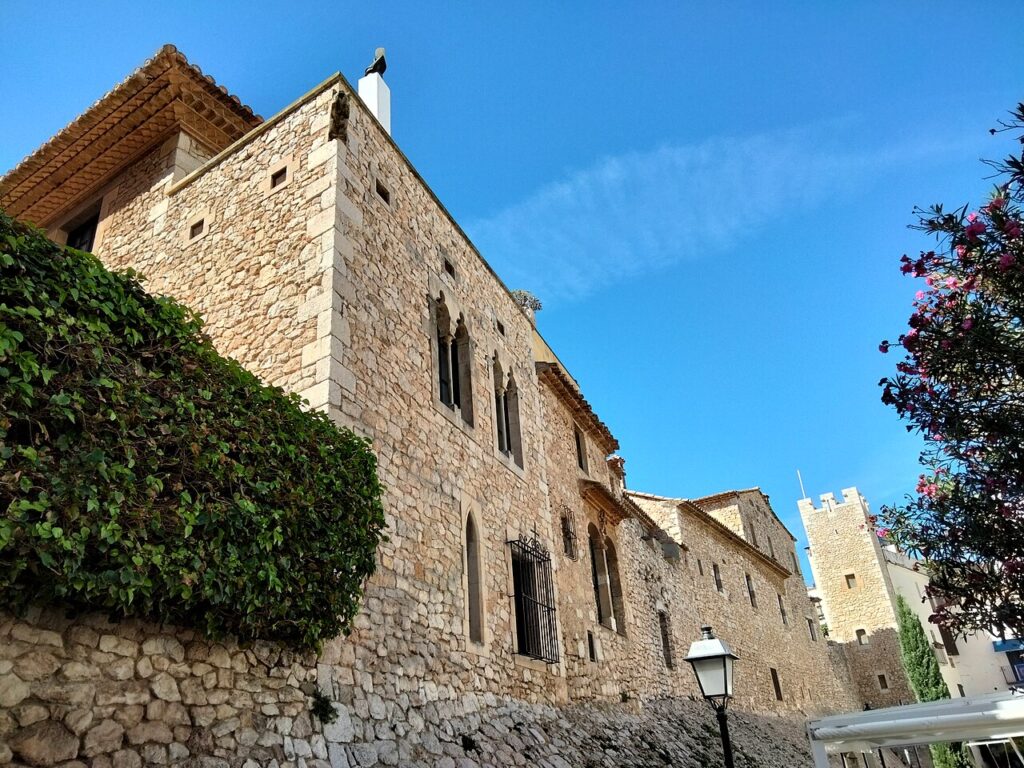
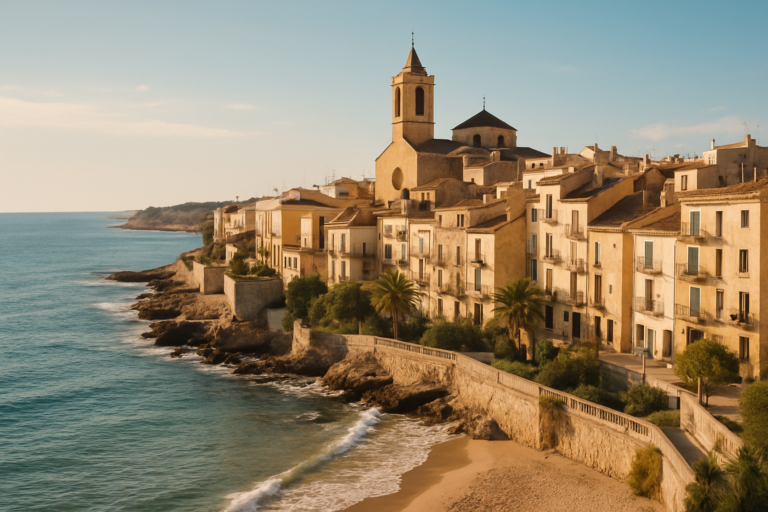
Sitges is a seaside town of about 32,690 people on the Garraf coast, roughly 38 km south of Barcelona, and it suits visitors who want a walkable old town, town beaches and a train that gets you to the city centre without a car. Stay here if you want a base with sea, museums and restaurants in one place; skip it if you need wide, empty beaches or a quiet village feel in high summer. It is part of our Costa del Garraf guide.
Quick facts
- Where: Sitges, in the comarca of Garraf, Barcelona province, Catalonia.
- Residents: 32,690 (2025), according to Idescat, the Catalan statistics institute.
- Barcelona: about 38 km and around 45 minutes by car, according to visitsitges.com.
- Nearest airport: Barcelona–El Prat, about 30 km, according to the Sitges town council.
- Beach: yes, the town sits directly on the sea, with several beaches within walking distance of the old town.
- Train: Rodalies line R2 Sud stops at Sitges station and at Garraf station.
- Language: Catalan and Spanish are both used.
Where to base yourself
Sitges is small enough that the choice is about the feel of an area and how far you want to walk, not about transport. Four areas cover most stays.
The old town
The Casc Antic around the Plaça de l’Ajuntament holds the town hall, the main museums and most of the evening restaurants and bars. It suits couples and first-time visitors who want to leave the car behind. The trade-off is noise at weekends and in peak season, so ask for a room away from the busiest streets.
The seafront promenade
The promenade runs along La Ribera beach towards Les Anquines and is lined with restaurants. It suits families and anyone who wants the sea outside the door. Rooms here are usually pricier than a few streets inland.
Aiguadolç and Balmins
Els Balmins beach is barely 1 km from the centre of Sitges, next to the Aiguadolç port. This side is calmer, with a marina feel, and works for visitors who plan to walk into town for dinner and walk back.
Garraf village
Garraf is a separate village that belongs to the municipality of Sitges, with its own beach and its own train station on the same line. It is quiet, but you are further from the restaurants and the nightlife, and it is the starting point for walks into the Garraf hills.
Things to do
Museums
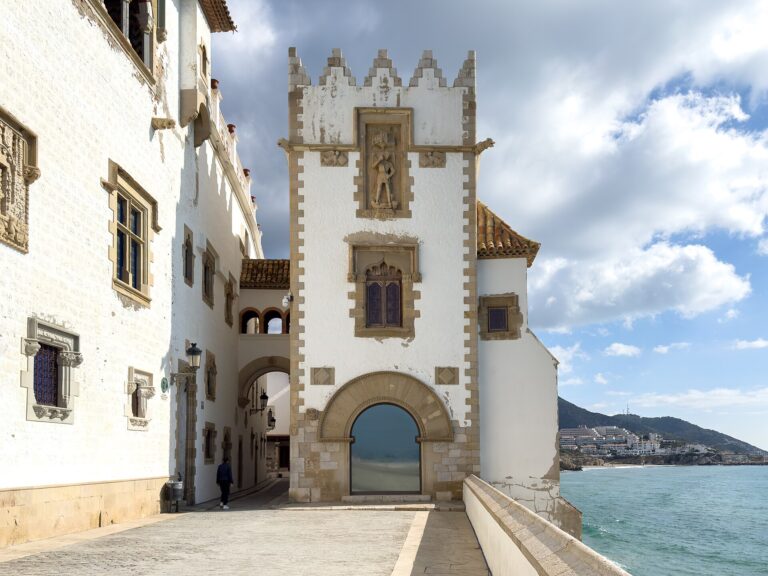
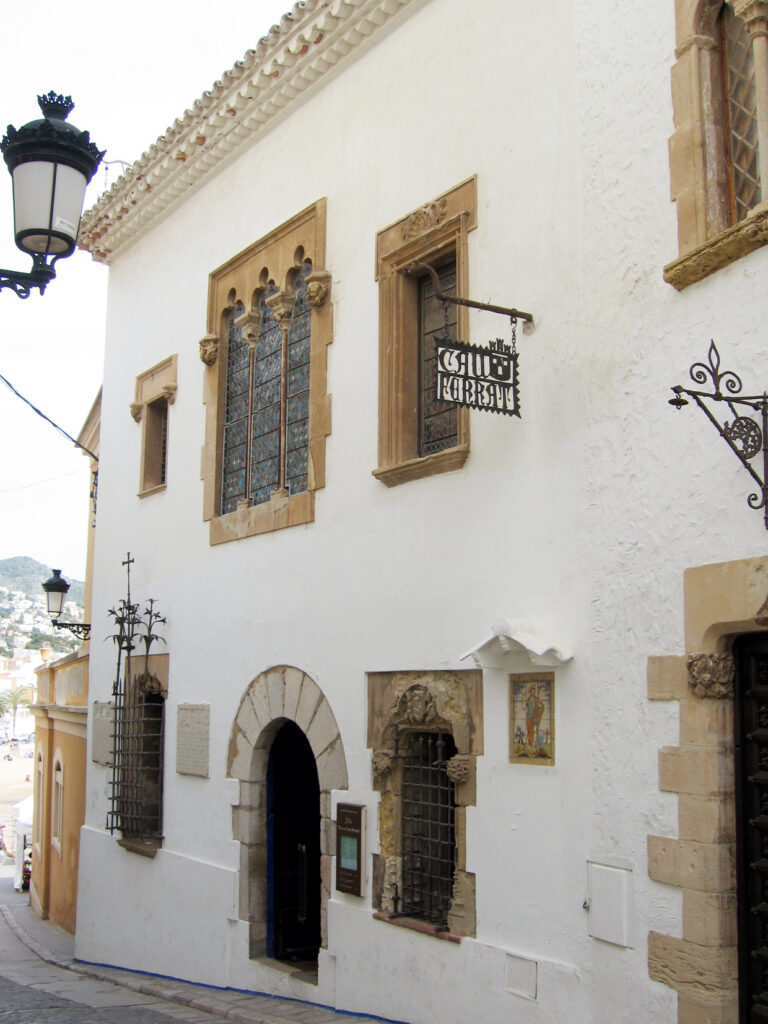
The Cau Ferrat became Sitges’s first public museum in 1933, according to the Museus de Sitges. It grew out of the collection of the painter and writer Santiago Rusiñol. The same consortium also runs the Palau de Maricel, built between 1910 and 1921 for the collector Charles Deering with the architect Miquel Utrillo. Check current opening times and ticket prices on the museums’ own site before you go.
The Can Llopis Romantic Museum opened in 1949 in a house from the late 18th century, and it holds Lola Anglada’s collection of more than 400 dolls and toys. The Generalitat’s heritage page currently says the museum is closed for renovation, so confirm that it has reopened before you plan around it.
The old town on foot
Walk the lanes from the Plaça de l’Ajuntament down to the church above Sant Sebastià beach, then along the promenade. The whole loop takes an easy half day with stops, and it is the best use of a first morning.
Carnival and film
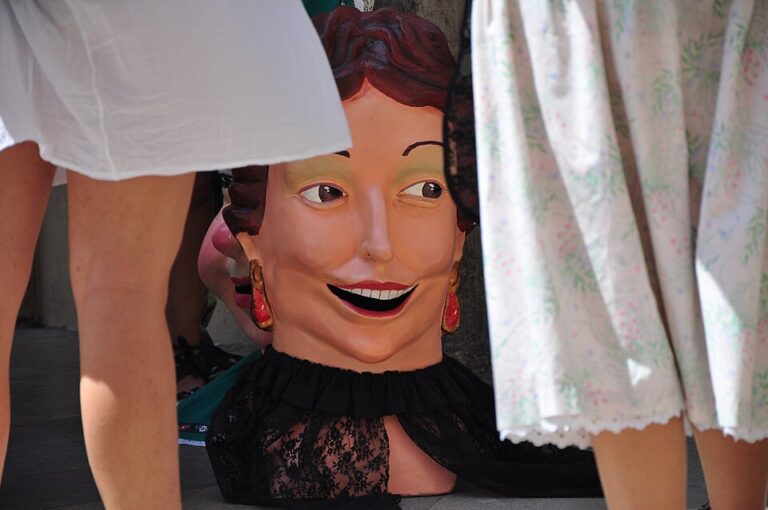
The Sitges Carnival has more than 100 years of history, according to the Diputació de Barcelona’s tourism site. It runs from Fat Thursday to Ash Wednesday, with the Rua de la Disbauxa parade on Carnival Sunday and the Rua de l’Extermini on Carnival Tuesday. The town also hosts an international fantastic film festival (festival history). Book rooms well ahead if your trip overlaps with either.
Walking in the Garraf hills
From Garraf station, the GR-92 leads about 3.5 km to the information centre of the Parc del Garraf, according to the park’s access page. Carry water and start early in warm weather.
Beaches and places nearby
In 2025 nine Sitges beaches held the Blue Flag, according to the town council’s beaches page: Les Botigues, Garraf, Aiguadolç, Balmins, Sant Sebastià, La Ribera, L’Estanyol, La Barra and Terramar. The flag is renewed each season, so check the council page for the current list. The council says all nine have shaded areas, amphibious chairs and crutches for visitors with reduced mobility, and that assisted bathing is run by the lifeguard staff.
The two beaches most visitors use are close to the old town. Sant Sebastià lies at the foot of the hill topped by the church and is a short beach of a little over 200 metres, which fills up fast on summer weekends. La Ribera is longer, at about 275 metres, with fine sand and shallow water, and the promenade behind it has the restaurants. For more space, walk east towards Balmins or take the train to Garraf.
Check the flags before you swim: green means the sea is suitable for bathing, yellow means caution, and red means bathing is prohibited, according to the council.
Nearby towns worth a day: Vilanova i la Geltrú along the same railway, Sant Pere de Ribes inland, and Castelldefels on the Barcelona side of the Garraf tunnels. The city itself is covered in our Barcelona guide.
Other town guides nearby: Calafell (about 21 km in a straight line), El Vendrell (about 23 km in a straight line), Torredembarra (about 36 km in a straight line).
On CostaMap near Sitges: Maricel Museum (0.1 km) · Cau Ferrat Museum (0.1 km) · Railway Museum of Catalonia (7 km) · Garraf Massif (8.2 km).
Food and drink
The local drink to try is Malvasia de Sitges, a sweet wine. The grape variety grown around Sitges is cultivated only in the fields around the town, according to Catalunya.com, which also notes that it is mentioned in the medieval novel Tirant lo Blanc. The Can Llopis winery produced a sweet Malvasia too, according to the heritage page above.
Look for xató on menus. The town council promotes a set Menú del Xató, and the dish is part of the Garraf and Penedès food tradition. Beyond that, the seafront and old town restaurants serve the usual Catalan coast mix of rice dishes, grilled fish and tapas. Read menus before sitting down on the promenade.
Where to stay
Sitges is mostly hotels and tourist apartments, from small guesthouses in the old town to larger seafront hotels. Prices are highest in summer and during the town’s big events, and lower in winter, so a midweek stay outside the summer season is the cheapest way to see the town.
For a first visit, pick the old town or a street a few minutes inland from La Ribera. That keeps you within walking distance of the station, the beaches and the museums.
Getting there and around
Train. Rodalies line R2 Sud serves Sitges and Garraf, according to the town council. On the line between Sant Vicenç de Calders and Barcelona Estació de França, Rodalies de Catalunya gives one train every 15 minutes at peak hour and every 30 minutes off-peak. The airport is reached by train via El Prat or Barcelona Sants, then a change.
Bus. The council lists interurban buses run by Monbus from Sitges to the airport and to Plaça Universitat in Barcelona, plus buses to Vilanova, Vilafranca and other towns (council bus page). Check timetables on the operator’s site, as frequencies change.
Car. The C-32 motorway crosses the Garraf tunnels and is tolled. The toll-free alternative is to leave at Castelldefels platja and follow the C-31 coast road. Parking in the old town is tight in summer, so many visitors leave the car outside the centre.
Around town. The old town, the museums and the main beaches are all within walking distance of each other. You do not need a car once you arrive.
Best time to visit
Summer is the busiest period, with full beaches and higher room prices. Late spring and early autumn are easier for walking the old town and the Garraf hills, with the sea still open for swimming. In winter the beaches are quiet and some seasonal places close, but the town stays open and the museums and restaurants are less crowded. The Carnival brings crowds between Fat Thursday and Ash Wednesday, and the film festival fills the town in October. Because dates change each year, check the organisers’ sites when you plan.
FAQ
Is Sitges a good base for a Barcelona trip?
Yes, if you want a beach town with a direct train. The ride is on the R2 Sud line, and the distance is about 38 km. Expect to plan your last train home if you stay out late in Barcelona.
Do I need a car in Sitges?
No. The old town, museums and main beaches are walkable, and the train covers Barcelona. A car helps only for the Garraf hills and for places further down the coast.
How many beaches does Sitges have?
The council lists nine Blue Flag beaches for 2025, and there are other coves and stretches beyond them. For the current season, check the council’s beaches page.
How far is Sitges from Barcelona airport?
About 30 km, according to the town council. Take a Monbus line or the train with a change.
When is Sitges busiest?
In summer, during Carnival, and when the film festival is on in October. Book accommodation early for those periods.
Sources and freshness
- Idescat – population of Sitges (2025).
- Sitges town council – beaches – Blue Flag beaches in 2025, services, flags.
- Sitges town council – how to get to Sitges – airport distance, roads, trains.
- Sitges town council – buses – Monbus routes.
- visitsitges.com – how to get to Sitges – distance and driving time from Barcelona.
- Rodalies de Catalunya – R2 Sud – train frequency.
- Museus de Sitges – Cau Ferrat history – 1933, Palau de Maricel.
- Generalitat – Can Llopis Romantic Museum – 1949, collection, Malvasia Llopis.
- Diputació de Barcelona – Sitges Carnival – history, parades.
- Sitges Film Festival – 59th edition.
- Parc del Garraf – access – GR-92 walk.
- Catalunya.com – Malvasia de Sitges.
Last checked: October 2026.
Main photo: Enric, CC BY-SA 4.0, via Wikimedia Commons.
Nearby on the Costa de Barcelona

Sitges on the map
Places worth knowing near Sitges



This place is part of our Costa de Barcelona travel guide: the city beaches, Maresme and Garraf — see every town, beach and cove we have mapped on that coast.
How this page is maintained. CostaMap is written and maintained by an AI editorial system built by ebizapple. Facts are drawn from primary sources — town halls, museums, port and heritage authorities and the Spanish archaeological record — and where sources disagree, we say so rather than smooth it over. Photographs marked as ours are taken on location. This page was last reviewed on 28 October 2026. Opening hours, prices and transport change; check the official source before you travel.