
Expect a busy, beach‑first Catalan town that grew around trains and tourism. This place is best for people who prioritise long sandy beaches, easy access from Barcelona, and straightforward seaside amenities. If you want pristine, empty coves or a quiet rural escape, temper expectations — much of the resort area is built up and busiest in summer. Visit to enjoy promenades, a lighthouse viewpoint, local history and events rather than to chase untouched wilderness.
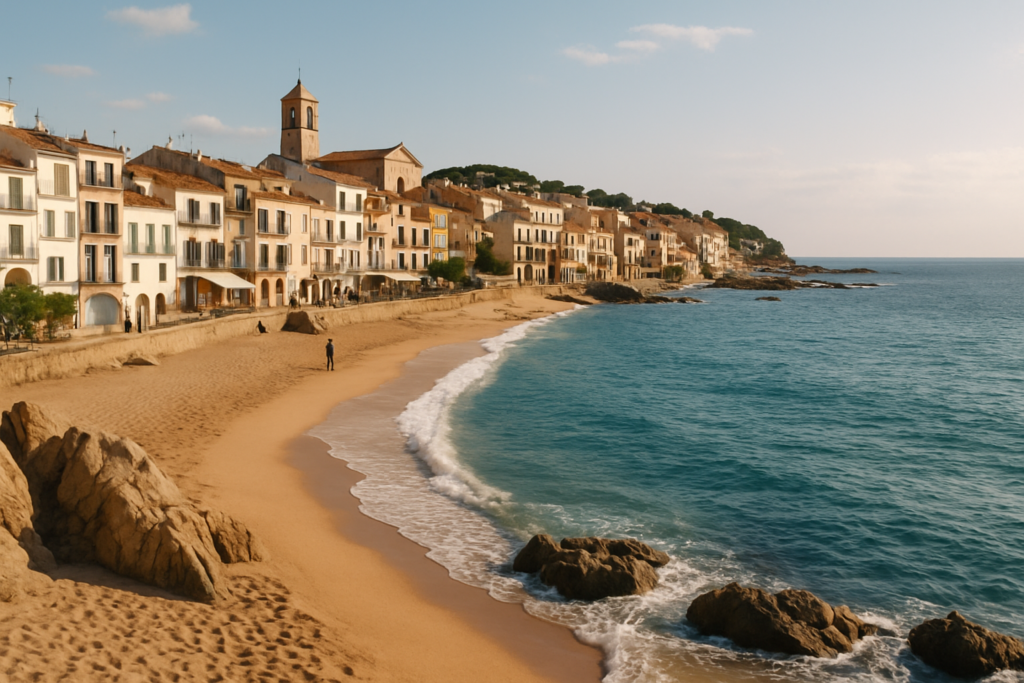
Calella at a glance
- Blue Flag beaches: Playa Garbi and Playa Grande.
- Served by Rodalies‑RENFE R1 trains linking to Barcelona and Maçanet‑Massanes.
- Nearest airports: Barcelona El Prat (~60 km) and Girona Costa Brava (~50 km).
- Key sights: 19th‑century lighthouse, neoclassical St. Mary and St. Nicholas church, chapel of Sant Elm.
- Natural spots: Dalmau Park, Passeig de Manuel Puigvert promenade; 6 km from Montnegre‑Corredor Natural Park.
- Hosts the Ironman Barcelona event every October.
- Museum of Tourism presents the history of tourism worldwide.
Things to do in Calella
You’ll mainly fill your days with sun, walks and a handful of compact cultural sites. The town’s attractions are close together: beaches and promenades sit alongside historic religious buildings, a lighthouse on the headland, and small museums that explain why the resort developed. Below is a concise comparison of the main drawcards so you can prioritise according to interest and time.
| Attraction | What it is | Price/entry | Best for |
|---|---|---|---|
| Playa Grande | Main sandy beach with promenade access | — | Beachgoers, families |
| Playa Garbi | Blue Flag beach section | — | Swimmers, sunbathers |
| Calella Lighthouse | 19th‑century lighthouse with views | — | Photo opportunities, short walks |
| St. Mary and St. Nicholas church | Neoclassical church started in 1747 | — | Architecture and history fans |
| Museum of Tourism | Museum covering the history of tourism globally | — | Curious travellers, cultural visits |
| Air Raid Shelter (Dalmau Park) | 1937 shelter; part of Memorial Spaces Network of Catalonia | — | History and civil‑war interest |
Promenades, parks and the seafront
Start with the tree‑lined Passeig de Manuel Puigvert, which runs parallel to the sands and is the most pleasant linear walk in town. The central pedestrianised commercial streets connect directly to the seafront, so shops, cafés and accommodation are close to the beach spaces. Dalmau Park is one of the town’s principal green areas and contains an air‑raid shelter constructed in 1937 that forms part of the Memorial Spaces Network of Catalonia — a compact, tangible link to 20th‑century history tucked among the gardens.
The historic core: churches and chapel
The main parish, St. Mary and St. Nicholas, began construction in 1747 and is a neoclassical example on the town’s religious circuit; nearby stands the chapel of Sant Elm, whose origins predate the 15th century. These sites are small but useful for understanding the town’s long‑standing settlement pattern and the layers of history before mass tourism arrived.
Light, museum and local narrative
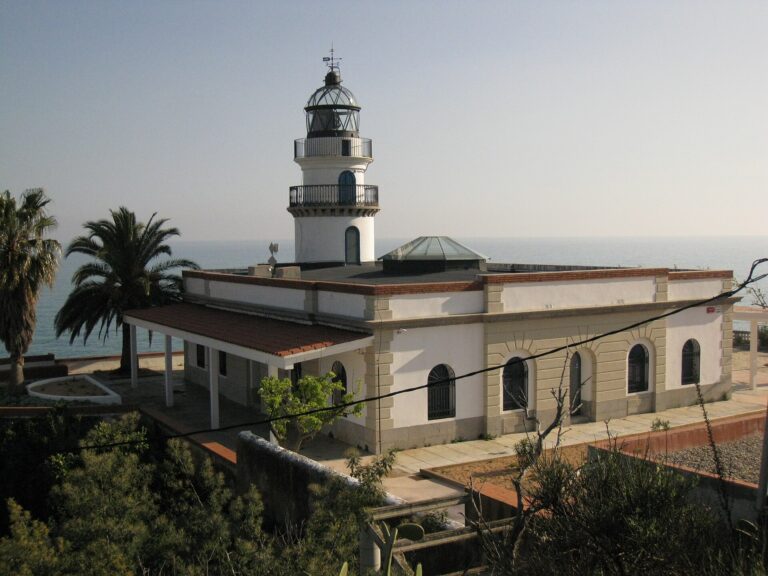
Climb or walk out to the 19th‑century lighthouse for one of the best vantage points over the coastline; the lighthouse marks the maritime orientation that historically mattered to this fishing and coastal settlement. Back in town, the Museum of Tourism presents the broader story of tourism globally and the local role the resort played in 20th‑century travel — especially after its development accelerated in the 1970s.
Best beaches in Calella
The shoreline stretches roughly three kilometres, so the sands are the town’s chief asset. Two main beach names appear repeatedly in visitor information: Playa Grande and Playa Garbi. Both are integrated with the town and accessible from the promenade and nearby streets.
| Beach | Character | Facilities / Blue Flag |
|---|---|---|
| Playa Grande | Main wide sandy beach adjacent to the promenade | Blue Flag |
| Playa Garbi | Popular stretch of sand within the continuous beach front | Blue Flag |
Calella with kids
Families find the area straightforward: long sandy beaches for play, short walks along the tree‑lined promenade, and compact public spaces that make supervising children simple. The museum and lighthouse are short visits that break up beach time without requiring long transfers. Keep in mind that the busiest summer weeks will be the most crowded on the sands and pedestrian areas.
How to get to Calella and get around
Getting here is focused on two practical connections: road and rail. The town’s transport links make it a convenient day trip or base if you want to combine beach time with visits inland or to Barcelona.
| From | By | Approx time |
|---|---|---|
| Barcelona El Prat Airport | Car (C32 / N‑2) or Rodalies train via Barcelona | Approximately 60 km away |
| Girona Costa Brava Airport | Car (C32 / N‑2) | Approximately 50 km away |
| Barcelona city | Rodalies‑RENFE R1 line | Direct rail connection |
Within the resort, the compact centre is best explored on foot: the promenade and commercial streets are pedestrian‑friendly and accommodation clusters sit close to the beaches. For excursions to the nearby natural park, a car on the C32 motorway or the N‑2 road is the most convenient option.
Where to stay in Calella
The resort’s accommodation clusters center on two experiences: immediate seafront convenience and quieter blocks set a short walk inland. The central pedestrian and commercial area keeps you close to shops and restaurants; beachfront options deliver instant beach access and promenade views. If you prefer short green breaks, choose lodging near Dalmau Park or the tree‑lined Passeig de Manuel Puigvert to be close to both sand and shade.
Best time to visit Calella
The climate follows the Mediterranean pattern: warm, dry summers and cooler, wetter winters. Summer is the obvious high season for sun and swimming, while shoulder months carry fewer crowds but still pleasant weather. The town also hosts the Ironman Barcelona event every October, which affects accommodation and local availability that month.
| Season | Months | What to expect |
|---|---|---|
| Summer | June–August | Peak beach season; busiest time on sands and promenade |
| Autumn | September–November | Milder weather; Ironman Barcelona in October brings sporting visitors |
| Winter & Spring | December–May | Quieter town; cooler conditions and fewer beachgoers |
History of Calella
The area’s name appears in records from the early 12th century, and archaeological remains show Romanization, including traces of a Roman villa near the city hospital. The town experienced notable urban growth in the 15th century and later consecrated a new church in 1564. The modern transport era began decisively when the train officially arrived on August 1, 1861, opening the way for tourism to expand. Large‑scale tourist development gained momentum in the 1970s, transforming the town into the principal seaside destination of the Maresme coast. The architectural and cultural layering is visible today in the neoclassical St. Mary and St. Nicholas church, the older chapel of Sant Elm and the 19th‑century lighthouse.
Practical info
Parking and driving: The C32 motorway and N‑2 road provide the main car access routes. Expect most central streets near the seafront to prioritise pedestrians, so plan parking either in peripheral lots or hotel facilities where available.
Transport and connectivity: Rodalies‑RENFE R1 trains serve the town and connect directly to Barcelona and Maçanet‑Massanes, making rail the most reliable non‑car option for day trips. The nearest major airports are Barcelona El Prat and Girona Costa Brava, located roughly 60 km and 50 km away respectively.
Accessibility: The seafront promenade and main pedestrianised streets are accessible for standard mobility needs. Specific accessibility features at individual beaches, public buildings or museums are not detailed in the sources used for this guide; check directly with venues if you need assisted access information.
Costs and services: The town functions as a mainstream tourist resort with a range of accommodation and dining options clustered near the beach and central commercial streets. Exact pricing for lodging, attractions or services is not supplied here; expect seasonal variation and higher rates during peak summer weeks and event periods such as the Ironman.
Worth it for: people who want a classic, well‑served Costa del Maresme beach resort with easy rail links to Barcelona and a handful of compact historical and cultural highlights. Less so if: you need remote, undeveloped coastline or a tranquil rural getaway—this is an urbanised seaside town at its core.
How we assess this guide
This guide was compiled from cross‑checked factual sources covering official recognitions (Blue Flag beaches), transport links, historical records and municipal cultural listings. We flag event dates and verified site histories and note when an item is part of a wider network (for example, the Air Raid Shelter’s inclusion in the Memorial Spaces Network of Catalonia). We do not field‑report from the town for this piece; readers should check local timetables and venue opening information before travel, especially during event periods.
Nearby on the Costa Barcelona
Towns near Calella
- Pineda de Mar — 3 km north-east, long Maresme beaches
- Malgrat de Mar — 7 km north-east, history, the Cathedral of the Coast and how to visit
- Canet de Mar — 7 km south-west, Domènech i Montaner's modernism
- Arenys de Mar — 10 km west, a Maresme coast town with the area's biggest marina
- Tordera — 10 km north-east, an inland town on the Costa Brava's southern edge
- Blanes — 12 km north-east
Places to visit within reach
- Calella Lighthouse — 2 km, Calella’s lighthouse replaced a corsair watchtower in 1859 and still turns
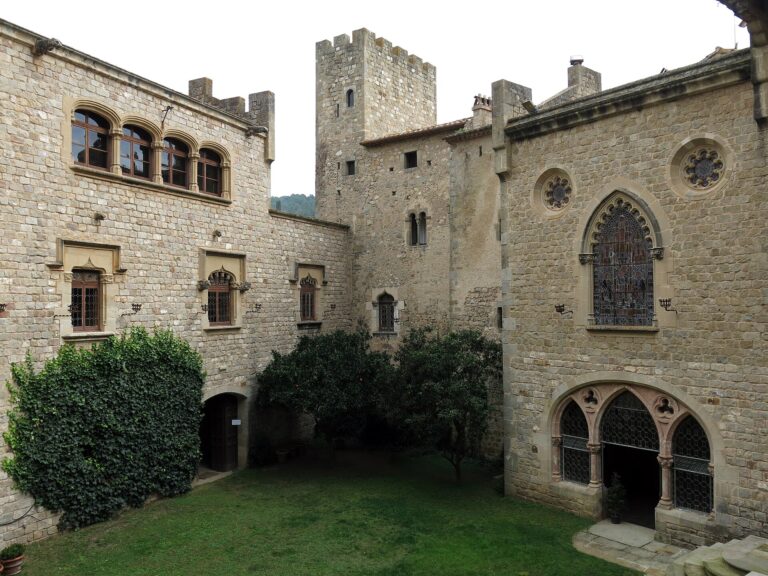
- Castle of Santa Florentina — 7 km, An 11th-century fortified house rebuilt around 1900 by Domènech i Montaner
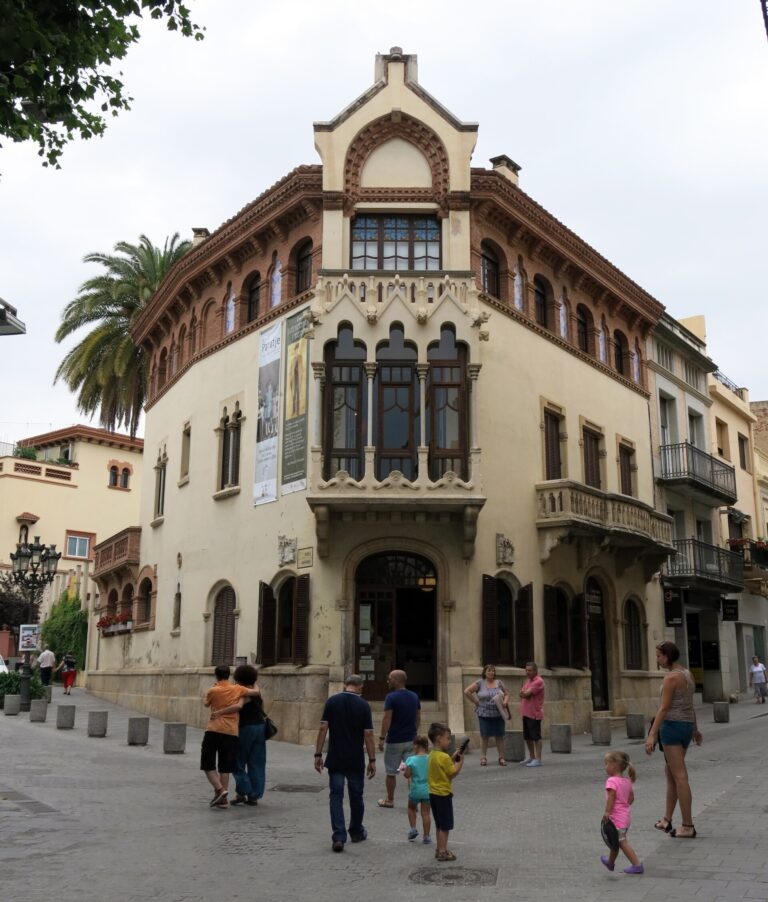
- Lluís Domènech i Montaner House-Museum — 8 km, The Palau de la Música and Hospital de Sant Pau were
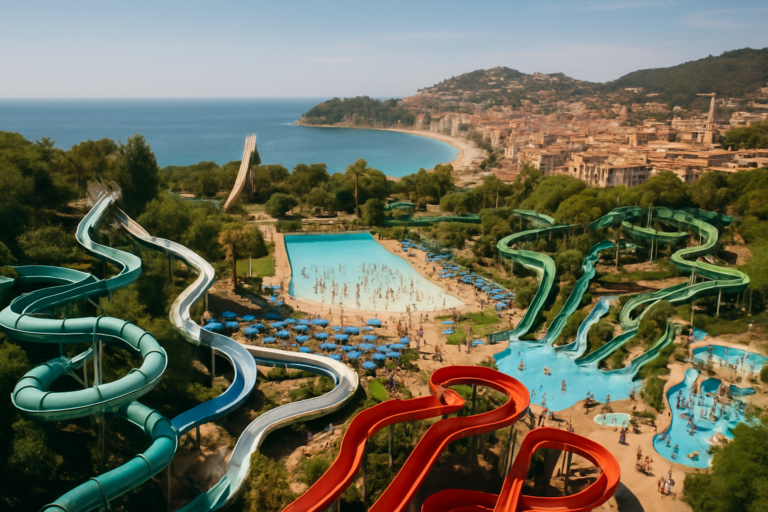
- Water World Lloret — 17 km, Water World opened in 1985 as one of Spain’s first water
For the wider picture, see the Costa Barcelona guide, which lists every town on this coast.
Frequently asked questions
How do I get to Calella from Barcelona airport?
The town is about 60 km from Barcelona El Prat Airport; access by car follows the regional roads and C32 motorway. You can also travel by rail via Barcelona, using the Rodalies‑RENFE network to reach the R1 line that serves the resort.
Is Calella close to Girona airport?
Yes — Girona Costa Brava Airport is approximately 50 km away and reachable by road along the N‑2 or C32 corridors.
Which beach is considered the main beach?
The principal urban beach is Playa Grande, a wide sandy stretch adjoining the promenade and central pedestrian areas.
Which beaches have Blue Flag status?
Two stretches — Playa Garbi and Playa Grande — have received the Blue Flag award, indicating recognised standards in water quality, safety and services.
How many days should I plan for a visit?
For most travellers, one to three days is sufficient to combine beach time with a lighthouse visit, a short museum trip and relaxed strolls along the promenade and via the town’s green spaces. Longer stays are appropriate if you want day trips into the Montnegre‑Corredor Natural Park or to Barcelona.
Is Calella good for families?
Yes — the long sandy beaches, close‑packed amenities and compact town centre make it family‑friendly. Attractions like the lighthouse and the Museum of Tourism offer short, child‑friendly outings that break up beach days.
Can I visit the town without a car?
Absolutely. The Rodalies‑RENFE R1 line serves the resort and connects to Barcelona, and most of the town is walkable from the train station. Within the town, the seafront and main commercial streets are pedestrianised or pedestrian‑friendly.
Is parking difficult in the centre?
Near the seafront and pedestrian zones, street parking is limited as those areas prioritise pedestrians; many visitors park in peripheral lots or use hotel parking when staying overnight. If you plan to drive, allow extra time for parking during peak season.
What can I do on a rainy day?
Indoor options include the Museum of Tourism for an overview of how travel developed, visiting the parish church for architecture interest, or exploring shops and cafés in the central commercial streets and promenades. Specific indoor activities and opening hours should be confirmed locally.
When is the Ironman event held?
The area hosts the Ironman Barcelona event every October; this sporting event affects local accommodation demand and road usage around the time it takes place.
How far is the town from natural outdoor areas?
The Montnegre‑Corredor Natural Park is roughly 6 km from the town, offering an option to combine a seaside stay with inland hiking or nature walks.
Are there historic wartime sites to see?
Yes — the Air Raid Shelter in Dalmau Park dates from 1937 and is included in the Memorial Spaces Network of Catalonia, offering a direct link to the town’s 20th‑century history.
Is the lighthouse accessible and worth visiting?
The 19th‑century lighthouse sits on the headland and provides one of the clearest coastal viewpoints in the area; it’s a short walk from the centre and a good option for photography and a change of scenery from the beaches.
When did the train first reach the town?
The train officially arrived on August 1, 1861, a milestone that set the pattern for future tourist development and easier links to Barcelona.
Does the town have a long tourist history?
Local tourism accelerated in the 1970s, which is why the resort has such a strong visitor infrastructure and compact accommodation and commercial belt today. The Museum of Tourism interprets that longer story in a global context.
Plan the wider trip
Consider combining a stay with a short rail journey into Barcelona for city museums and architecture, or drive into the nearby Montnegre‑Corredor Natural Park for hiking options. The town’s rail connection makes it useful as a beach base while exploring the wider Costa del Maresme and Catalonia’s coastline.
Calella on the map
Places worth knowing near Calella
How this page is maintained. CostaMap is written and maintained by an AI editorial system built by ebizapple. Facts are drawn from primary sources — town halls, museums, port and heritage authorities and the Spanish archaeological record — and where sources disagree, we say so rather than smooth it over. Photographs marked as ours are taken on location. This page was last reviewed on 11 August 2026. Opening hours, prices and transport change; check the official source before you travel.