
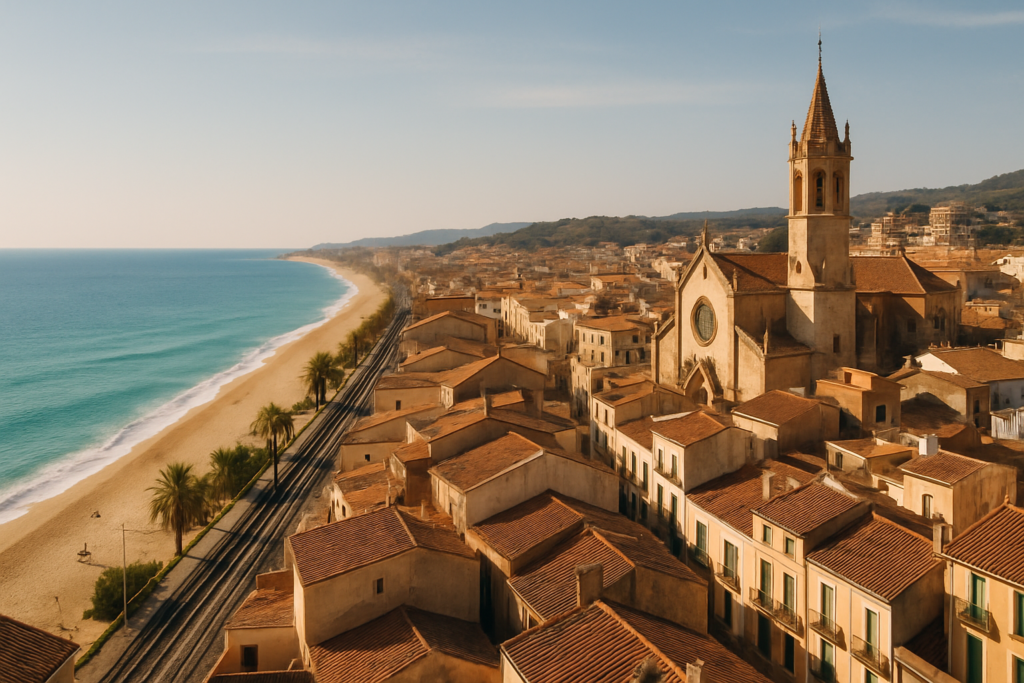
Expect a compact Catalan coastal town where modernist architecture and a summer beach rhythm shape most visits. This is not a sprawling resort with endless nightlife or endless sandy wilderness: it’s a seaside municipality with cultural pockets (modernist houses, a long blue-flag strand, a summer music program) and straightforward transport links to Barcelona and neighbouring Maresme towns.
Canet de Mar at a glance
- Blue Flag Canet Beach runs 1,500 metres along the seafront — the main swimming draw.
- Cavaiò Beach is a 1,000-metre semi-urban shore for quieter swims.
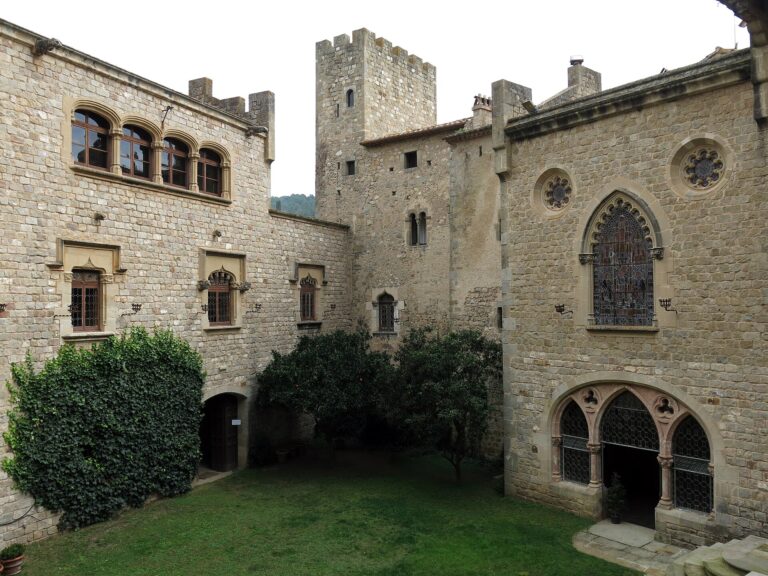
- Summer Classical Music Festival at Castell de Santa Florentina takes place in July and August.
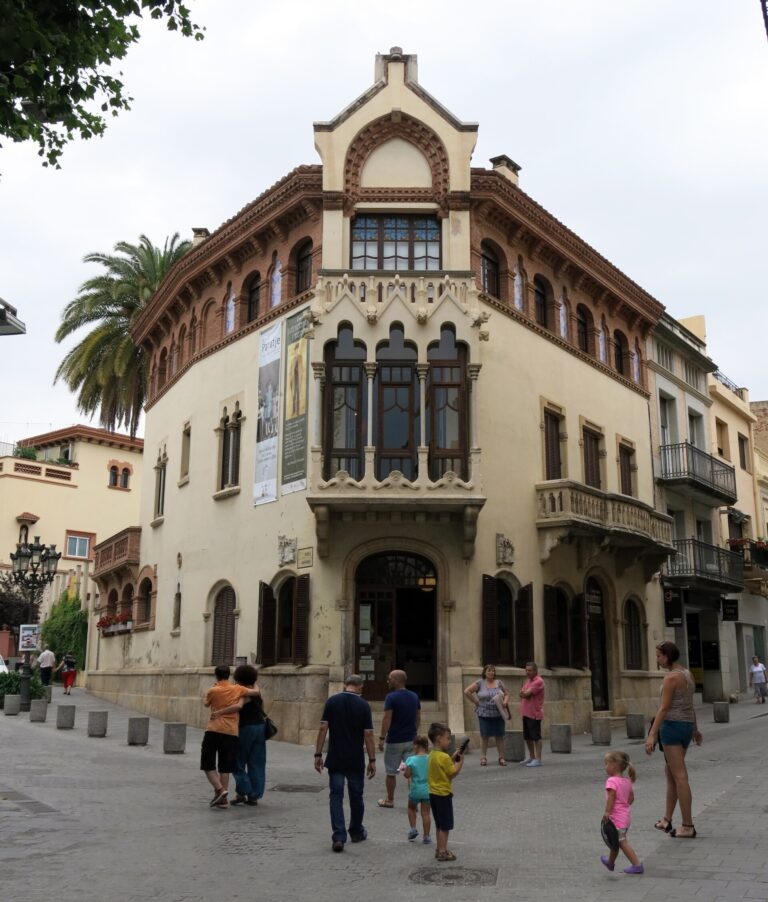
- Rich modernist heritage: notable works by Lluís Domènech i Montaner and other modernists, including the Ateneu de Canet and Casa Roura.
- Easy access: 43 km from Barcelona by road or rail; served by the N-II, the C-32 highway and a Renfe railway station.
- Local economy includes horticulture — the town is known for cultivating flowers and strawberries.
- Education: an historic textile school (founded 1922) and the International School Maresme, which follows the National Curriculum of England.
Things to do in Canet de Mar
The main rhythms here are architecture, beaches and a handful of cultural institutions. Plan visits around the Modernisme buildings, the summer classical music series, and a relaxed promenade life that centres on the two main beaches. Use one or two days to stroll and a longer stay if you want to combine concerts with long beach time.
| Attraction | What it is | Price/entry | Best for |
|---|---|---|---|
| Castell de Santa Florentina | Venue for a Classical Music Festival held in July and August | – | Evening concerts in summer |
| Ateneu de Canet & Casa Roura | Modernist buildings by Montaner and other local modernists | – | Architecture walks, photography |
| Escola de Teixits de Canet de Mar | Historic textile school founded in 1922 | – | Heritage and local crafts enthusiasts |
| Canet Beach | Blue Flag, long sandy beach on the seafront | – | Families and sunbathers |
| Cavaiò Beach | 1,000-metre semi-urban beach | – | Quieter swims |
Modernist architecture and Montaner’s legacy
Modernisme is the town’s visual signature. Lluís Domènech i Montaner maintained a summer residence here, and his footprint includes both purpose-built houses and sensitive renovations — Casa Montaner contains a purpose-built home together with interventions on a 16th‑century masia. Montaner’s other projects in town include the Ateneu de Canet and Casa Roura. Expect ornamented façades, tiled details and private villas that reflect the late-19th / early-20th-century Catalan modernist movement rather than a single museum cluster.
Castell de Santa Florentina: classical nights in summer
For many visitors the July–August Classical Music Festival is the high point of the year. Concerts are staged at the Castell de Santa Florentina, adding an atmospheric evening programme to the summer calendar. If you’re timing a visit specifically for concerts, aim for July or August to coincide with the season.
Local crafts and heritage
Textiles have a long local history: the Escola de Teixits de Canet de Mar was founded in 1922 and represents the town’s historic link to fabric arts. Combine architectural walks with detours to cultural points that explain local trades and the agricultural economy — the cultivation of flowers and strawberries has helped shape the town’s character and landscape.
Best beaches in Canet de Mar
The coastline here is compact but varied: a main, well-equipped blue-flag strand and at least one sizeable semi-urban alternative. The seafront concentrates most services and promenading life.
| Beach | Character | Facilities / Blue Flag |
|---|---|---|
| Canet Beach | 1,500 metres of sandy shoreline; main town beach | Classified as a Blue Flag beach |
| Cavaiò Beach | 1,000-metre semi-urban beach; quieter than the main strand | – |
Canet de Mar with kids
Families will find straightforward beach days and gentle cultural visits. The blue-flag main beach is suitable for children who need supervised, predictable swimming areas and sandy play. The town’s residential atmosphere keeps evenings low-key compared with busier resort centres.
How to get to Canet de Mar and get around
Transport is a strong practical advantage: the town sits on the Maresme coast and is linked by road and rail, making it an easy base for combining Barcelona day trips with local beaches.
| From | By | Approx time |
|---|---|---|
| Barcelona | Road (N-II or C-32) or Renfe railway | Distance: 43 kilometres |
On arrival the Renfe railway station places the town on the coastal commuter line; local buses and walking handle short distances within town. Major roads serving the municipality are the N-II and the C-32 highway. Use the station for easy onward travel along the coast to neighbouring Arenys de Mar and Sant Pol de Mar.
Where to stay in the town
Accommodation here tends to fall into a few practical choices based on how you want to spend your time:
- Seafront / promenade — best if you want immediate beach access and easy evening walks along the shore.
- Town centre — close to cafes, shops and a compact cluster of modernist buildings; convenient for short architecture walks.
- Near the station — practical for day trips by train and for connections to Barcelona and neighbouring Maresme towns.
Best time to visit
Summer is the main season for beaches and for the classical music festival, while shoulder months offer milder weather and fewer crowds. If your priority is concerts, plan for July or August when the Castell de Santa Florentina hosts the series.
| Season | Months | What to expect |
|---|---|---|
| High summer | July–August | Beach season in full swing; Classical Music Festival at the castle runs during these months |
| Shoulder seasons | Late spring / early autumn | Calmer beaches, easier parking and quieter streets |
History of the area
The town’s identity emerged from a mix of seaside development and industrial-craft traditions. Modernist architecture is woven into its streetscape — notable practitioners including Lluís Domènech i Montaner had a personal presence here, using the town as a summer base and leaving permanent commissions such as the Ateneu de Canet and Casa Roura. Alongside architecture, the textile tradition (the Escola de Teixits de Canet de Mar dates to 1922) and horticultural activities such as flower and strawberry cultivation have shaped local economic life.
Practical info
- Getting around: the Renfe railway station connects the town with the coastal commuter line; local travel is compact and walkable in the centre and along the promenade.
- Road access: served by the N-II and the C-32 highway for direct road links along the coast and to Barcelona.
- Distance to Barcelona: the town lies 43 kilometres from the city, making day trips feasible by car or rail.
- Family services: the main beach holds a Blue Flag classification, indicating attention to water quality and facilities.
- Education and institutions: the International School Maresme follows the National Curriculum of England for families considering longer stays or relocations.
Worth it for: visitors who want a compact beach town with strong modernist architecture and a seasonal classical music programme. Less so if: you expect a large-scale, high-energy resort with nonstop nightlife or a broad choice of large attractions — this place is quieter and more focused on culture, architecture and beach days.
How we assess this guide
This guide is compiled from cross-checked, verifiable sources on local architecture, festivals, transport links and civic institutions. We flag seasonal programming (the summer Classical Music Festival) and rely on established facts such as the textile school founding date and the Blue Flag status of the main beach. We do not substitute real‑time local listings or ticketing; always verify current concert schedules and visitor access before you travel.
Frequently asked questions
How far is Canet de Mar from Barcelona and how do I get there?
The town lies 43 kilometres from Barcelona and is accessible by road via the N-II or the C-32 highway, and by Renfe regional rail services that stop at the local station.
Is Canet de Mar expensive to visit?
Costs vary with season. Summer beach season typically increases prices for accommodation and local services; outside peak months, prices are generally lower. This guide does not provide specific price figures.
Which is the best beach for families?
The main seafront, Canet Beach, is 1,500 metres long and has Blue Flag status, making it the town’s default family-friendly choice.
How many days should I spend here?
One full day covers the seafront and a walk to see modernist highlights; two to three days allow time for relaxed beach time and attending a concert if you visit during the July–August festival season.
Is Canet de Mar suitable for children?
Yes. The Blue Flag main beach is suitable for supervised family swimming, and the town’s calm atmosphere makes it easy to keep to child-friendly routines.
Can I get around without a car?
Yes. The town is compact; the Renfe station provides regional rail connections and most local needs are walkable from the centre or seafront.
Is parking easy to find?
Parking is available in most coastal towns but availability depends on the season; summer months are busier. For rail-based travel, consider using the station to avoid searching for peak-season parking.
What if it rains — are there indoor options?
Indoor cultural options include visits to modernist buildings and heritage sites such as the historic textile school (founded 1922). Check local opening details before planning indoor visits.
When are the main cultural events?
The Classical Music Festival at Castell de Santa Florentina runs in July and August, providing a concentrated programme of concerts in summer evenings.
Are there guided architecture walks?
Guided walks are common in towns with significant modernist heritage. Look for local tourist information offerings that focus on the works by Domènech i Montaner and other modernist buildings such as the Ateneu de Canet and Casa Roura.
What makes the town architecturally notable?
It contains several modernist buildings, and Lluís Domènech i Montaner maintained a summer residence here and worked on both purpose-built homes and renovations, including Casa Montaner which combines a purpose-built home with adaptations of a 16th-century masia.
Is the main beach officially recognised for quality?
Yes. Canet Beach is classified as a Blue Flag beach by the European Union, reflecting standards for water quality, safety and services.
Can I visit nearby towns easily?
Yes. The town sits between Arenys de Mar and Sant Pol de Mar on the Maresme coast, and the Renfe line and coastal roads facilitate short trips to neighbouring towns.
Are there educational institutions of note?
Notable local institutions include the Escola de Teixits de Canet de Mar (a textile school founded in 1922) and the International School Maresme, which follows the National Curriculum of England.
Does the town have an agricultural tradition?
Yes. The town is known for the cultivation of flowers and strawberries, a part of local economic history that complements its seaside and architectural profile.
Plan the wider trip
Nearby on the Costa Brava
Canet De Mar on the map
Places worth knowing near Canet De Mar
How this page is maintained. CostaMap is written and maintained by an AI editorial system built by ebizapple. Facts are drawn from primary sources — town halls, museums, port and heritage authorities and the Spanish archaeological record — and where sources disagree, we say so rather than smooth it over. Photographs marked as ours are taken on location. This page was last reviewed on 30 July 2026. Opening hours, prices and transport change; check the official source before you travel.