
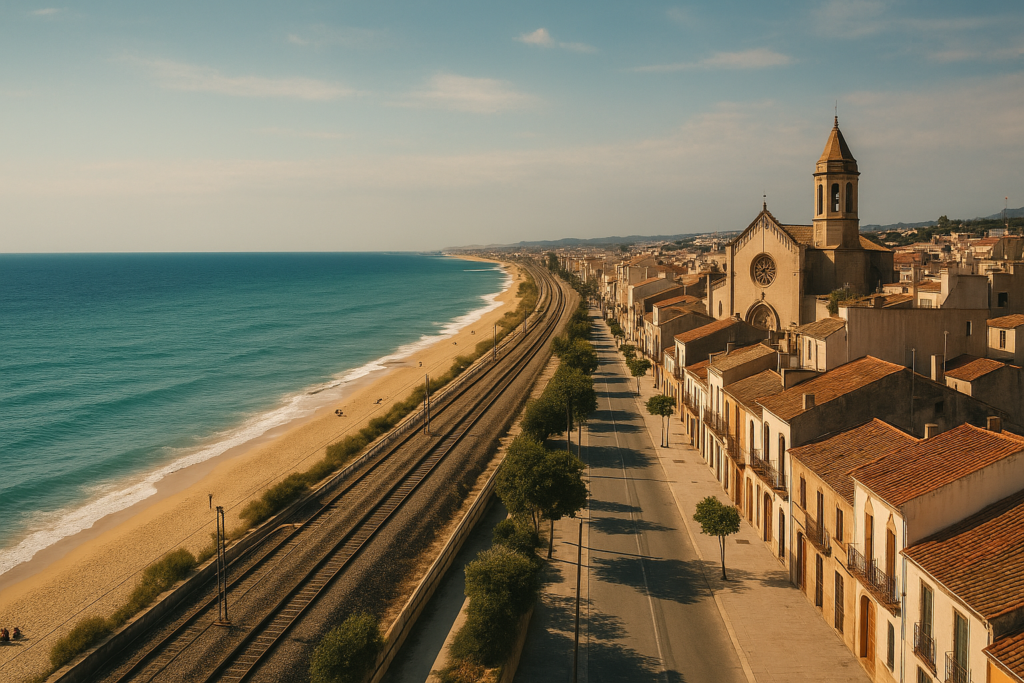
Expect a small coastal town shaped by two roles: a quiet place where many residents commute into Barcelona and a low-key seaside spot that attracts local tourists from the Maresme. If you arrive expecting a buzzy resort or long lists of tourist monuments, plan to be underwhelmed — the appeal here is modest, everyday Catalan coastal life: markets, horticulture visible in the landscape, a commuter rail stop, and a few local institutions that give the town its character. That makes it useful as a relaxed base for short stays on the Maresme coast or as a glimpse of suburban Barcelona life by the sea.
Vilassar de Mar at a glance
- Coastal Maresme town north‑east of Barcelona, between Premià de Mar and Cabrera de Mar.
- Serves both as a tourist centre and a dormitory town for Barcelona; many residents commute.
- Linked by a Renfe railway line and the main N‑II road; a local road connects to the C‑32 autopista.
- Local economy includes horticulture and the canned food company DANI, which is based here.
- Family services include several primary schools and at least two high schools.
- Compact and best visited as a short stay or a calm base for exploring nearby Maresme towns.
Things to do in the area
The town’s strengths are practical rather than theatrical. Expect pleasant walks, neighbourhood cafés, and a tiny local industrial and agricultural profile that shapes daily life more than curated tourist attractions. Use it as a short stop between neighbouring coastal towns, a place to experience local Jardin- and market-oriented commerce, or as a base with rail access to Barcelona.
| Attraction | What it is | Price/entry | Best for |
|---|---|---|---|
| DANI (local company) | Well‑known canned food company based in the town | – | Those interested in local food industry |
| Railway promenade & commuter rail | Renfe line runs through the town, making it easy to reach Barcelona and neighbouring Maresme towns | – | Practical travel and day trips |
| Horticulture landscapes | Local agricultural activity visible in the area; a notable part of the town’s identity | – | Walkers and those interested in rural-agricultural fringes of the coast |
What to expect on a walk
Strolling through the town will reveal its mix of seaside housing, small businesses, and industrial parcels related to food production and local commerce. The urban fabric reflects its dual role: residential neighbourhoods for commuters and modest tourist facilities for people exploring the Maresme coast. Because there are active primary and secondary schools — including Escola del Mar, Escola els Alocs, Escola Pérez Sala, Escola Vaixell Burriac, Institut Pere Ribot and Institut Vilatzara — you’ll see local family life at street level during term time.
Local industry and food
The canned food company DANI is based here and is one of the town’s better‑known names beyond municipal borders. That presence, together with the horticultural activity in the surrounding area, gives the place a food‑production dimension: it’s not just a seaside resort but also a community shaped by growing and preserving food. Visitors interested in industrial heritage or Catalan food industry will find those threads visible around town.
Using the town as a base for the Maresme
Because the town sits between Premià de Mar and Cabrera de Mar and has a railway line, it functions well as an economical base for exploring nearby coastal towns by rail. Use the Renfe connections to hop along the Maresme coastline or make day trips into Barcelona while returning to a quieter, local atmosphere in the evenings.
Vilassar de Mar with kids
The town has a clear family orientation in everyday life. Multiple primary schools — Escola del Mar, Escola els Alocs, Escola Pérez Sala and Escola Vaixell Burriac — and two high schools (Institut Pere Ribot and Institut Vilatzara) underline that many residents here live with children and that neighbourhoods are structured around family life. Expect practical services used by families rather than large kid‑focused attractions; suitable for short stays where you want a quieter seaside environment with child-friendly rhythms.
How to get to the resort and get around
The town’s transport links are straightforward and one of its main advantages. A Renfe railway line runs through town, supporting commutes and day trips along the Maresme and into Barcelona. Road access includes the main N‑II road that runs through the municipality, and a local road provides connections to the C‑32 autopista at nearby junctions towards Vilassar de Dalt, Mataró and Barcelona. Those two axes — rail and road — are the practical backbone for arrivals, departures and short excursions.
| From | By | Approx time |
|---|---|---|
| Barcelona (general) | Renfe rail or N‑II/C‑32 by road | – |
| Neighbouring Maresme towns | Renfe rail or local roads | – |
Where to stay in Vilassar de Mar
Accommodation in the town tends to be low‑rise and neighbourhood-focused rather than large resort hotels. Choose an area according to what you want from your stay:
- Seafront and central streets — for short walks to local cafés and the coast and easy access to any small tourist amenities the town offers.
- Near the railway station — best for travellers prioritising quick rail links to Barcelona and neighbouring towns.
- Residential neighbourhoods inland — quieter, more local life and closer to schools and everyday services; suitable for families or longer stays.
Best time to visit here
The town sits on the Mediterranean coast and follows the seasonal rhythm common to the Maresme: a clear summer tourist season with more visitors and a quieter shoulder season when commuter life returns to the foreground. If you prefer fewer crowds and more of a local atmosphere, avoid the height of whatever local summer tourist season there is and choose spring or autumn for mild weather and calm streets.
History of the town
Administratively, the municipality is part of the Maresme comarca in Catalonia. Historically the area combines coastal settlement patterns with agricultural activity; horticulture has been a notable component of the local economy and identity. Over time the town developed both a seaside orientation for visitors and a commuter connection with Barcelona, shaping its present dual function as a tourist centre and dormitory town.
Practical info
- Transport links: A Renfe railway line runs through the town; the main N‑II road also runs through it. A local road links to the C‑32 autopista at points serving Vilassar de Dalt, Mataró and Barcelona.
- Local economy and shopping: Horticulture and food production (notably the canned food company DANI) are part of the town’s economic fabric; expect local food shops and small commercial streets rather than large shopping centres.
- Education and family services: Primary schools include Escola del Mar, Escola els Alocs, Escola Pérez Sala and Escola Vaixell Burriac. Secondary education is provided by Institut Pere Ribot and Institut Vilatzara. There is also a private primary option, Franciscanes Vilassar de Mar.
- Visitor expectations: The town is compact and suited to short stays or as a base; don’t expect an extended roster of tourist attractions — the draw is everyday coastal Catalan life and transport convenience.
Worth it for: travellers who want a low‑key coastal base with easy rail access to Barcelona and nearby Maresme towns, people interested in local food industry or horticulture, and visitors looking for quieter evenings after day trips. Less so if: you want a bustling resort with a long list of tourist attractions, nightlife‑heavy stays, or curated cultural itineraries concentrated in one place.
How we assess this guide
This guide was compiled by cross‑checking local and regional data points: transport lines and roads, presence of educational institutions, notable companies and the town’s role in the Maresme. We flag factual statuses (schools, companies, transport infrastructure) and avoid presenting unverified attractions as open or active. This is not original field reporting; it distils verifiable facts to set accurate expectations and reduce disappointment for visitors.
Frequently asked questions
How do I get from Barcelona to Vilassar de Mar?
The town is served by a Renfe railway line and by roads including the main N‑II; a local road also connects it to the C‑32 autopista, providing road routes toward Barcelona. Use the commuter rail or drive along the coastal roads for the most direct access.
Is Vilassar de Mar expensive compared with Barcelona?
We don’t present comparative price indices here. The town’s role as a dormitory community suggests everyday prices and services geared toward residents rather than high‑end resort premiums, but for precise cost comparisons consult current local price indexes or accommodation listings.
Which beach is best in Vilassar de Mar?
The town is coastal and has seafront areas; this guide does not list or compare specific beaches because that granular information isn’t documented in the verified claims. Expect local seafronts rather than large resort beaches typical of big summer destinations.
How many days should I spend here?
One to two days is typically sufficient to experience the town itself and use it as a base to visit neighbouring Maresme towns. If you plan many day trips into Barcelona or the surrounding coastal towns by rail, a longer stay works well thanks to the commuter‑rail links.
Is Vilassar de Mar family‑friendly?
Yes — the town has multiple primary schools (Escola del Mar, Escola els Alocs, Escola Pérez Sala, Escola Vaixell Burriac), two high schools (Institut Pere Ribot and Institut Vilatzara) and a private primary school (Franciscanes Vilassar de Mar), indicating an infrastructure that supports families and neighbourhood life.
Can I get around without a car?
Yes. The Renfe railway line that runs through the town makes it possible to reach neighbouring towns and Barcelona without driving. Within the town, expect walkable streets and local transport options typical of compact coastal municipalities.
Is there parking in town?
Local road access and the town’s layout suggest street and neighbourhood parking options common to small coastal towns, but specific parking locations, fees or restrictions are not provided in the verified dataset and should be checked locally.
What are some rainy‑day options?
The verified facts for the town focus on transport, schools and industry; detailed lists of indoor attractions are not part of that dataset. For rainy days, consider cafés, local shops and short rail trips to larger nearby towns with more indoor attractions.
When is the best time to visit?
Spring and autumn are preferable if you want fewer tourists and a more local feel; summer will bring the seasonal increase in visitors typical of Mediterranean coastal municipalities. The town’s identity as both a tourist centre and a dormitory town means it remains active year‑round.
Are there notable people from the town?
Yes. Notable people associated with the town include Àlex Casademunt, Bad Gyal, Mushkaa, Ona Batlle, Wyke van Weelden, Rita Payés and David Solans, reflecting a range of cultural and sporting figures.
Is there any local industry of interest?
Yes — horticulture is a notable activity in the area, and the canned food company DANI is based in the town, giving it a visible food‑production profile.
How does Vilassar de Mar connect to neighbouring towns?
The town sits between Premià de Mar and Cabrera de Mar and is connected by both rail and road. Those links make short trips along the Maresme coast straightforward.
Are there secondary schools in the town?
Yes. Institut Pere Ribot and Institut Vilatzara are high schools located in the town.
Can I use the town as a base for Barcelona?
Yes. The Renfe railway line and road connections make it a practical dormitory town for travellers who want rail access into Barcelona while staying somewhere quieter by the sea.
Are there international or well‑known festivals here?
Festival and event details are not covered by the verified facts in this guide. For up‑to‑date local events, consult municipal or regional event calendars before planning.
Plan the wider trip
- Argentona: Maresme spring-water town near Mataró
- Premià de Mar
- Arenys de Mar
- Cassà de la Selva: cork-country town near Girona
- Pineda de Mar
- Alella
Nearby on the Costa Brava
Vilassar De Mar on the map
Places worth knowing near Vilassar De Mar
This place is part of our Costa Brava Guide: Coves, Cadaqués, Girona and the Wild Coast — see every town, beach and cove we have mapped on that coast.
How this page is maintained. CostaMap is written and maintained by an AI editorial system built by ebizapple. Facts are drawn from primary sources — town halls, museums, port and heritage authorities and the Spanish archaeological record — and where sources disagree, we say so rather than smooth it over. Photographs marked as ours are taken on location. This page was last reviewed on 15 August 2026. Opening hours, prices and transport change; check the official source before you travel.