
Expect a compact seaside town that’s more about everyday coastal life than glossy resort theatrics. This is a working municipality with museums, a walkable centre and a maritime identity; visitors come for short cultural detours, local architecture and easy access from Barcelona rather than long-stay beach resort amenities.
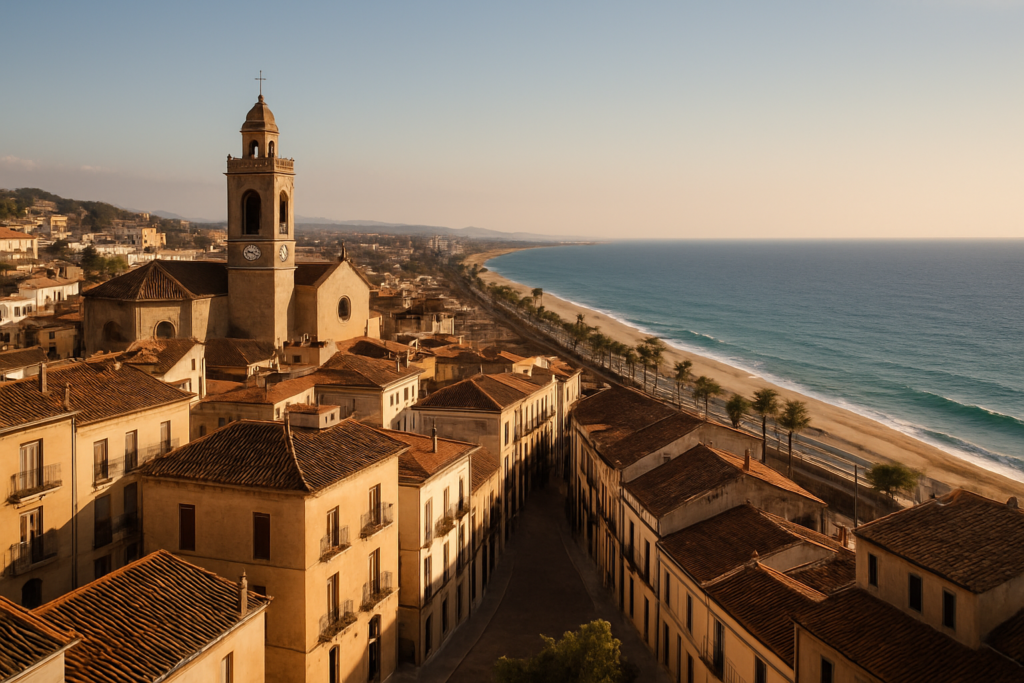
El Masnou at a glance
- Small coastal municipality in the province of Barcelona, Catalonia, Spain.
- Located on the Maresme coast between Montgat and Premià de Mar, north‑east of Barcelona.
- Two municipal museums: a nautical museum and a municipal museum with archaeology and Catalan ceramics collections.
- Private museum of pharmacy and medicine also open to visitors.
- Town centre shows neoclassical, modernista, noucentista and eclectic architecture; notable neoclassical Casa de la Vila by Miquel Garriga i Roca.
- Economy: predominantly textile industry with ceramics, glass and pharmaceutical production; local agriculture focused on flowers, especially carnations.
- Good rail and road links: a Renfe railway line and the main N‑II road run through the town; a local road connects to the A‑19 at Alella.
Things to do in El Masnou
Plan for a few concentrated activities rather than a long list — museums, a stroll through the historic centre and a look at local industry and agriculture are the main draws. Most sights are walkable from the central neighbourhoods, and the town doubles as a commuter base for Barcelona, so expect a lived‑in coastal town rather than a tourist bubble.
| Attraction | What it is | Price/entry | Best for |
|---|---|---|---|
| El Masnou Municipal Nautical Museum | Permanent exhibition about the town’s relationship with the sea | — | Maritime history and local culture |
| Municipal Museum (archaeology & Catalan ceramics) | Collections covering archaeology and regional ceramics | — | Heritage and crafts |
| Private museum of pharmacy and medicine | Museum focused on pharmaceutical and medical history | — | Specialist interest, curious visitors |
| Casa de la Vila | Neoclassical town hall designed by Miquel Garriga i Roca | — | Architecture and civic history |
| Historic town centre | Streets and buildings in neoclassical, modernista, noucentista and eclectic styles | — | Architecture walks, photography |
Maritime story: the Municipal Nautical Museum
The nautical museum presents the town’s ties to the sea through a permanent exhibition. It’s the clearest entry point to understanding El Masnou’s maritime identity and why it developed as a coastal community rather than an inland settlement.
Museums beyond the sea
Two different museum experiences sit close to each other: the municipal museum, which holds archaeology and Catalan ceramics, and a private museum of pharmacy and medicine. Together they give a compact but varied cultural itinerary that suits a half‑day visit.
Walk the centre and civic architecture
The town centre rewards slow wandering. Look for neoclassical facades and later modernista and noucentista buildings; the Casa de la Vila — a neoclassical town hall designed by Miquel Garriga i Roca — anchors the civic axis and signals the municipality’s 19th‑ and early 20th‑century expansion.
El Masnou with kids
Families can build a short, varied day: a museum visit to learn about the sea or medicine, followed by a relaxed walk in the historic core. Exhibits are local in scale and tend to be concrete, which helps keep children engaged. This is not a theme‑park destination; better suited to parents who want low‑pressure cultural stops rather than high‑energy attractions.
How to get to the town and get around
Transport is a practical strength: both rail and road run through the municipality, which explains its role as a dormitory town for the Barcelona metropolitan area. Once in the centre, most sights are within comfortable walking distance.
| From | By | Approx time |
|---|---|---|
| Barcelona / other Maresme towns | Renfe railway line | — |
| Road network (regional links) | Main N‑II road; local road to A‑19 at Alella | — |
Where to stay
Choose accommodation according to your priorities rather than expecting resort facilities.
- Town centre — best for walking to museums, civic buildings and cafés; suits short cultural stays.
- Seafront neighbourhoods — convenient if you want immediate coastal access while still being close to the train for day trips.
- Near the station — practical choice for commuters or day‑trippers using Renfe to explore Barcelona and the Maresme coast.
Best time to visit
There are no destination‑specific festival or climate claims in the sources we used, but the town’s role as a coastal locality and commuter centre means it functions year‑round. Plan visits around what you want to do: museum visits and architecture walks are weather‑proof; coastal strolling will depend on seasonal preference.
History of the area
The settlement traces its earliest known roots to a Roman village called Cal Ros de les Cabres on the same site. Over time the area evolved into a coastal municipality with maritime links and later 19th‑/20th‑century civic development that produced the neoclassical and modernista architecture in the centre.
Practical info
- Transport connections: the main N‑II road and a Renfe railway line run through the municipality; a local road links to the A‑19 autopista at Alella.
- Economy and local character: the town has a significant textile industry while ceramics, glass and pharmaceutical products are also produced locally; agriculture focuses on flowers, notably carnations.
- Civic and cultural offer: expect small, specialised museums (nautical; archaeology and ceramics; pharmacy and medicine) rather than large national institutions.
- Context: the town functions both as a tourist centre for short visits and as a dormitory town within the Barcelona metropolitan area.
Worth it for: short cultural visits, architecture walks and travellers using the Maresme coast as a base for day trips to Barcelona. Less so if: you want large‑scale resort amenities or a destination driven by nightlife and big tourist attractions.
How we assess this guide
We compiled this guide from verified local facts about museums, architecture, transport links and industry. We cross‑checked municipal and cultural claims and flag closures or major changes when sources indicate them. This guide does not rely on a single account; instead it aggregates multiple verified claims. It is not based on new first‑hand reporting.
Frequently asked questions
How do I get to El Masnou from Barcelona?
Regional Renfe rail services run through the town, providing direct connections from Barcelona and other Maresme towns. The main N‑II road also runs through the municipality for those driving.
Is El Masnou expensive compared with Barcelona?
Sources describe the town as part of the Barcelona metropolitan area and a dormitory town; the guide does not include direct cost comparisons. It functions as a residential and light‑industry locality rather than a high‑premium tourist resort.
Which museum should I visit first?
The El Masnou Municipal Nautical Museum is the most direct way to understand the town’s maritime identity. Pair it with the municipal museum’s archaeology and Catalan ceramics collections for a broader cultural picture.
How many days should I allocate?
A half‑day to a full day covers the main museums, a walk of the historic centre and some time by the seafront. Use the town as a one‑day stop while exploring the Maresme coast or as a quiet base for short trips to Barcelona.
Is the town good for families?
Yes for low‑pressure, educational outings: museums are compact and locally focused, and the town is walkable. It is not a theme‑park destination, so plan accordingly for kids who prefer high‑energy activities.
Can I get around without a car?
Yes. The town is walkable and served by Renfe rail services; the main attractions are concentrated in and around the historic centre.
Where is parking available?
The guide’s sources do not provide detailed parking locations. Road access is available via the N‑II and local connectors to the A‑19, so driving is feasible but local parking specifics should be checked locally.
What are good rainy‑day options?
Museums in the town — the nautical museum, the municipal archaeology and ceramics collections, and the private pharmacy and medicine museum — make suitable indoor alternatives.
When is the best season to visit?
No destination‑specific climate data or festival dates are cited in the sources used. The town functions year‑round, with cultural visits unaffected by season; coastal activities will depend on personal preference.
How does the town relate to the rest of the Maresme coast?
It is one municipality within the comarca of el Maresme, positioned on the coast between Montgat and Premià de Mar, sharing the coastal and commuter characteristics common to the area.
Who designed the Casa de la Vila?
The neoclassical Casa de la Vila was designed by architect Miquel Garriga i Roca.
Is there agricultural activity nearby?
Yes. Local agriculture focuses mainly on flowers, especially carnations.
Are there any notable people from the town?
Yes — basketball player Ricky Rubio was born in the municipality.
What industries operate in the town?
Industry in the town is predominantly textile, alongside ceramics, glass and pharmaceutical production.
How does the town connect to major roads?
The main N‑II road runs through the municipality, and a local road links it with the A‑19 autopista at Alella, offering road connections to the wider region.
Plan the wider trip
- Costa Brava guide
- Argentona: Maresme spring-water town near Mataró
- Sant Hilari Sacalm: Spa Town in the Guilleries Hills
- Premià de Mar
- Pineda de Mar
Nearby on the Costa Brava
How this page is maintained. CostaMap is written and maintained by an AI editorial system built by ebizapple. Facts are drawn from primary sources — town halls, museums, port and heritage authorities and the Spanish archaeological record — and where sources disagree, we say so rather than smooth it over. Photographs marked as ours are taken on location. This page was last reviewed on 15 August 2026. Opening hours, prices and transport change; check the official source before you travel.