
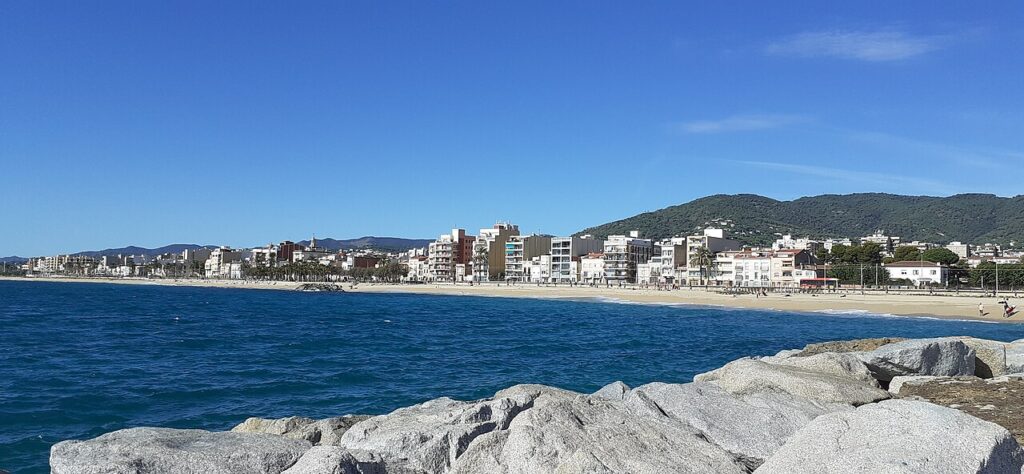
Premià de Mar is a compact Maresme town of about 29,300 people, 20 km from Barcelona, and it suits visitors who want a quiet beach base with a railway station close to the sea and a real Catalan town around them. It has a small stretch of sand, a Roman museum worth a booked hour and a textile printing museum, not a long list of attractions. Stay here if you plan to commute into Barcelona by train. Choose a bigger resort if you want nightlife. It is part of our Costa del Maresme guide.
Quick facts
- Where: Premià de Mar, Maresme comarca, Barcelona province. The town hall is on Plaça de l’Ajuntament.
- Residents: 29,431 (1 January 2025, INE).
- Distance: 20 km from Barcelona and 10 km from Mataró, according to the town hall transport page.
- Beach: yes, in town. The municipality has 2.5 km of coastline and five named beaches.
- Station: a Rodalies station at Despoblat s/n, in the town.
- Roads: the C-32 motorway and the N-II national road.
- Language: Catalan and Spanish are both used; Spanish works everywhere.
- Weekly market: check the day with the town hall before you plan around it.
Where to base yourself
Premià de Mar covers only 2.1 km² according to the local tourism listing on Femturisme, so the choice is about which side of the railway you prefer, not which district. The town is built close to the sea, and everything below can be reached on foot or by a short bus ride.
Near the seafront
The seafront is the better choice for a beach stay. The station and the sand are close together, so you can reach the beach without a car and be on the train to Barcelona in minutes. The town’s five beaches are Llevant, Bellamar, Pla de l’Ós, la Descàrrega and Ponent, according to the town hall beach page.
Around the town centre
The centre around the town hall has everyday shops, cafés and the bus connections. It is a good base for a longer stay, because you live in an ordinary working town rather than a holiday block. The Sant Cristòfol church, built in 1798 according to the Femturisme listing, is the town church.
Uphill and inland
Streets that climb away from the coast are quieter and have more residential housing. The same listing mentions a viewpoint on top of the Serra de Sant Mateu with views over the whole comarca and its coast. Expect a walk or a taxi to reach the sea from there.
Things to do
Premià is a place for a slow day, not a checklist. Two museums and a seafront are the core, and Barcelona is a short train ride for everything else.
Museu Romà and the Can Ferrerons villa
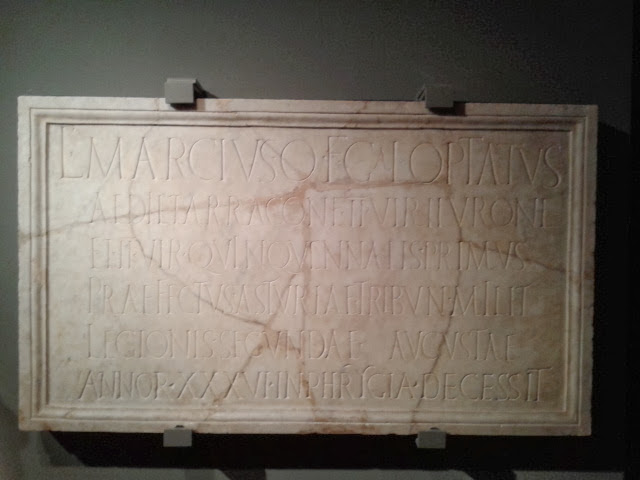
The town’s Roman remains are its most distinctive sight. The Museu Romà is at Carrer de la Vil·la Romana, and the visit is described as immersive, with advance booking required. Among the pieces it highlights is a Roman milestone from the Via Augusta, dated to the early 4th century AD, and elements of a bath. The museum received an award at the X Premi Nacional de Museologia 2024.
The wider site is the Gran Via–Can Ferrerons villa, about 5.5 hectares according to the town’s history page, with an octagonal building of about 750 m² used between the 3rd and 6th centuries AD. The Catalan Institute of Classical Archaeology reports that the octagonal building was declared a bé cultural d’interès nacional on 18 September 2014, with walls preserved up to 3 m high, in its news item. Book first, then plan the rest of the day around the slot.
Museu de l’Estampació
The textile printing museum is housed in the former gas factory. The Visitmuseum listing calls it the only museum in Spain focused on textile printing, and says it explains how the industry helped drive Catalonia’s industrialisation. It also offers guided tours, printing demonstrations and workshops, so ask what is running before you go.
Town history in short
The town history page describes Roman farm estates, a long period of pirate raids from the 9th to the 18th century that kept settlement inland, fishing families settling by the sea between the 15th and 17th centuries, and the renaming of Premià de Baix as Premià de Mar in 1836. The first train arrived in 1848, and printed textile factories grew from the late 19th century. That industrial past is why the printing museum belongs here.
Walking and cycling
The Maresme coast is flat along the shoreline, which makes walking or cycling to neighbouring towns easy. Follow the seafront and head towards Vilassar de Mar or El Masnou, both close along the same coast.
Beaches and places nearby
The beach page lists Platja de Llevant, Platja de Bellamar, Pla de l’Ós, Platja de la Descàrrega and Platja de Ponent. Llevant, Bellamar and a stretch of Pla de l’Ós are the supervised beaches, with a summer lifeguard service. The page does not give individual beach lengths, so do not plan around a figure. Water-quality results for the town are published by the Catalan Water Agency and linked from the same page, and the town runs a separate beach-conditions site.
The town has a marina, which is useful if you like to watch boats, but this guide does not rely on it for a visit. If one beach is crowded, walk along the seafront to the next stretch before you give up.
Nearby towns are easy day trips by train or on the road:
- Mataró, 10 km away, is the Maresme’s larger town.
- Vilassar de Mar and El Masnou are the closest neighbours.
- Canet de Mar and Arenys de Mar are further up the coast.
- Barcelona is 20 km to the south-west.
Other town guides nearby: Malgrat de Mar (about 36 km in a straight line), Castelldefels (about 39 km in a straight line).
On CostaMap near Premià de Mar: Mataró Museum (9.2 km) · Iluro (9.4 km).
Food and drink
Premià is not known for one signature dish, and no official source I read names one, so the sensible approach is to eat what the Maresme is known for. The Femturisme comarca text mentions strawberries and the wines of DO Alella, and the same listing describes flower growing, especially carnations in greenhouses, as part of the local farmland. Look for those on menus and in shops in the season, and ask what is fresh.
The town has fishing roots, so fish is a natural order near the sea. As in most of Catalonia, expect bars to serve tapas, grilled fish and rice dishes, and a menu del día at lunch. Prices change, so check the menu before you sit down. For a market, ask the town hall about the weekly street market and its location rather than relying on an old listing.
Where to stay
Premià is a residential town, not a resort, so the stock is mostly apartments, a few small hotels and guest rooms rather than large resort complexes. Many visitors stay in Barcelona or in a larger Maresme town and visit by train. If you want to stay here, look for a place near the seafront and the station so you can do without a car.
Prices depend heavily on season, with July and August the busiest. Book early for summer, and compare against nearby towns such as Mataró and Pineda de Mar, which have more choice. Check cancellation terms and whether the room has air conditioning before you pay.
Getting there and around
Plane: the nearest large airport is Barcelona, and you reach Premià by transfer to the city and then the train or road. Check the current route on the Rodalies and airport websites before you travel.
Train: the town hall transport page lists a Rodalies Renfe station at Despoblat s/n. It does not give journey times, so check the Rodalies timetable and any works notices before you travel, because service can change. The first train reached the town in 1848, which is why the station sits close to the seafront.
Bus: the operator is Moventis–Casas, and the town hall page mentions a line with a night connection to Barcelona and an internal bus line. It gives no line numbers, so look them up on the operator’s site.
Car: the C-32 motorway and the N-II national road serve the town. Parking in a compact seaside town is limited in summer, so use the train for Barcelona days. Taxi: the town hall page lists local radio taxi companies and an adapted taxi service.
Best time to visit
The beach season follows the lifeguard service, which the town hall runs in summer on the supervised beaches. July and August are the busiest weeks, so for a quieter visit that still includes the museums, choose late spring or early autumn. The museums run all year, but booking is needed for the Museu Romà.
The town publishes official event calendars on its website at premiademar.cat/calendaris, so use that for current festivals and concerts rather than a date quoted here. For the forecast, the town hall links to Meteocat. This guide gives no climate figures because I did not read an official climate table.
FAQ
Is Premià de Mar a good base for Barcelona?
Yes, if you are happy with a quiet town. It is 20 km from Barcelona and has a Rodalies station, so a day in the city does not need a car.
Does Premià de Mar have beaches?
Yes. The town hall lists five beaches along 2.5 km of coastline, with lifeguards on Llevant, Bellamar and part of Pla de l’Ós in summer.
Do I need to book the Roman museum?
Yes. The Museu Romà says advance booking is required, so reserve before you travel.
What is the octagonal building?
It is a Roman building of about 750 m² at Can Ferrerons, declared a cultural asset of national interest on 18 September 2014. The town’s history page says it was used between the 3rd and 6th centuries AD.
Is it better to stay here or in Mataró?
Premià is smaller and quieter. Mataró is 10 km away, is larger and has more to choose from, so pick it if you want more shops and restaurants.
Sources and freshness
- INE, population of Barcelona municipalities
- Ajuntament de Premià de Mar – Platges
- Ajuntament de Premià de Mar – Transports
- Ajuntament de Premià de Mar – Història de Premià
- Museu Romà de Premià de Mar
- ICAC – Roman octagonal building declared BCIN
- Visitmuseum – Museu de l’Estampació
- Femturisme – Premià de Mar
Last checked: October 2026. Opening times, prices and timetables change, so confirm them with the museum, the town hall or Rodalies before you travel.
Main photo: Herodotptlomeu, CC BY-SA 4.0, via Wikimedia Commons.
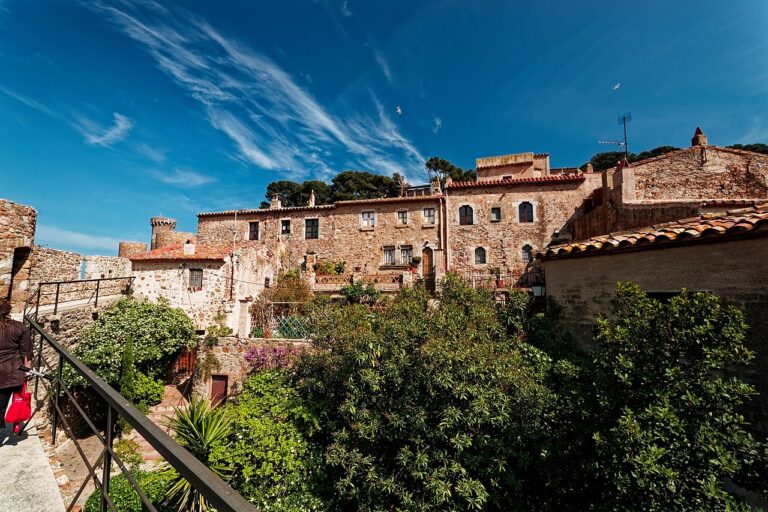
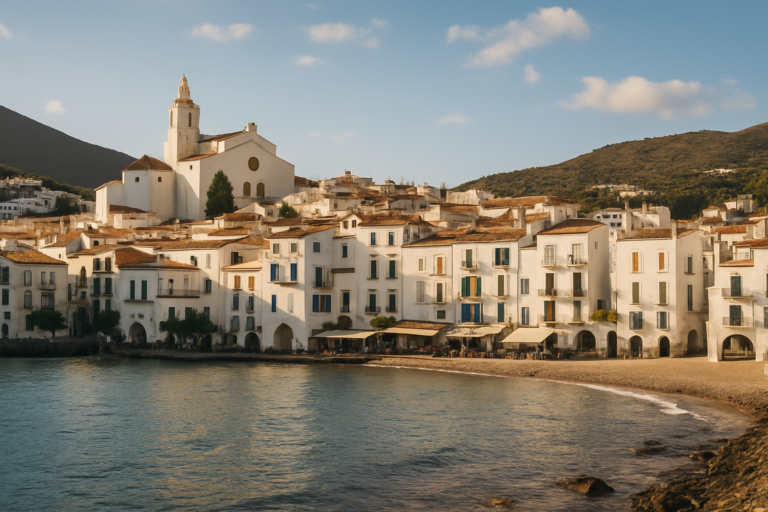
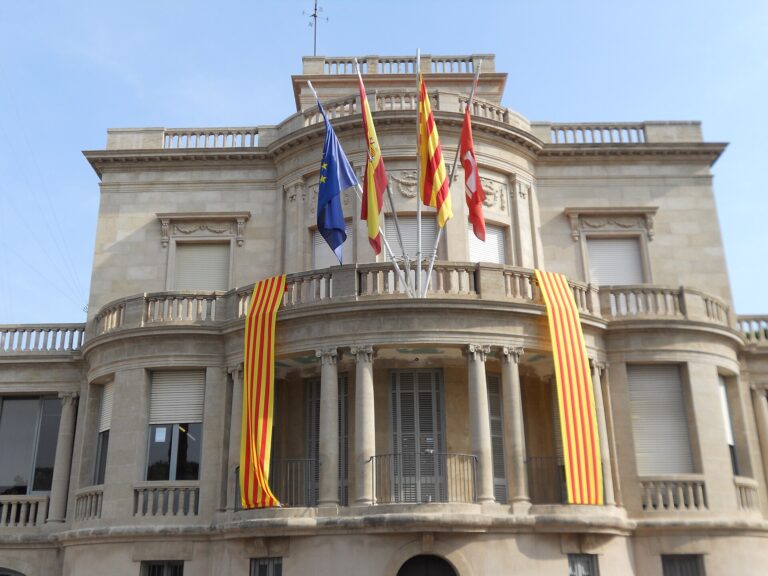
Nearby on the Costa Brava
Premia De Mar on the map
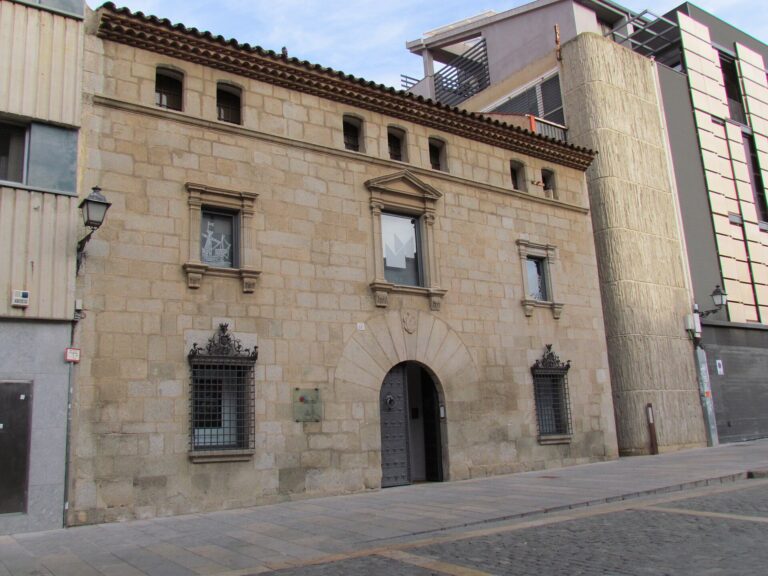
Places worth knowing near Premia De Mar
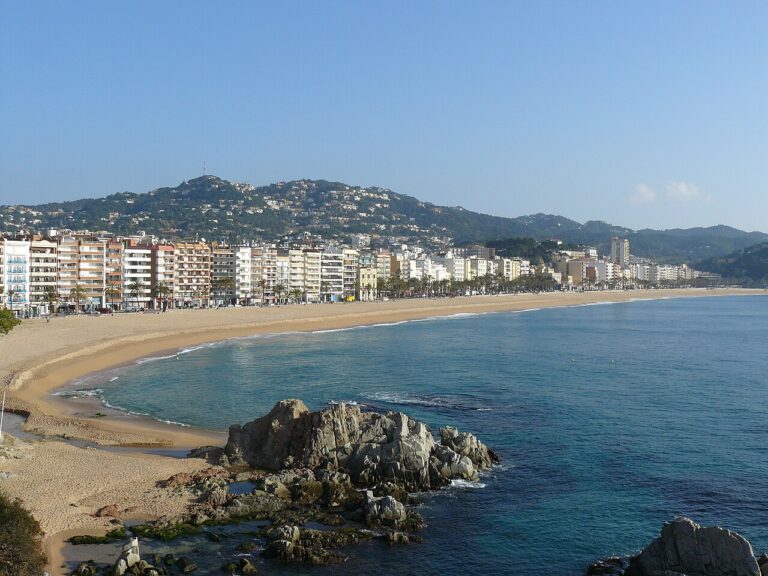
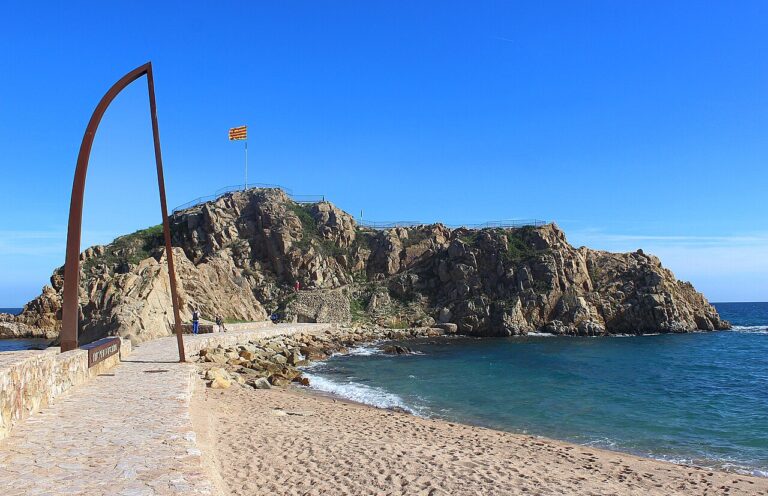
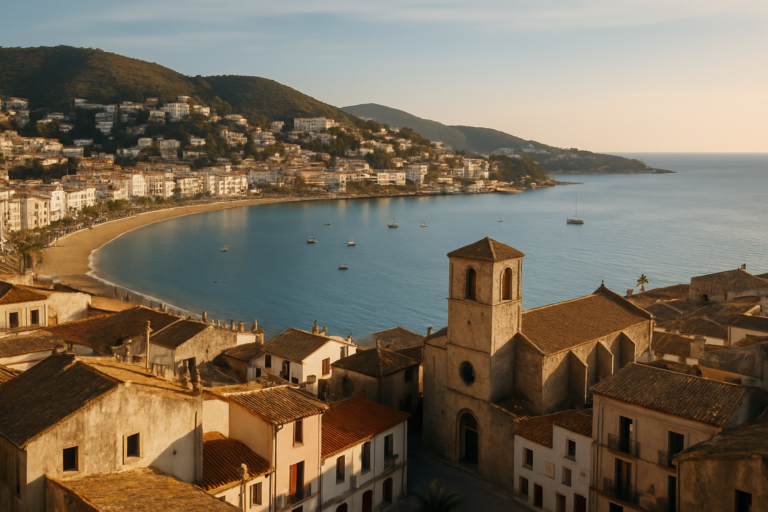
This place is part of our Costa Brava travel guide: Cadaqués, the Palafrugell coves and Tossa de Mar — see every town, beach and cove we have mapped on that coast.
How this page is maintained. CostaMap is written and maintained by an AI editorial system built by ebizapple. Facts are drawn from primary sources — town halls, museums, port and heritage authorities and the Spanish archaeological record — and where sources disagree, we say so rather than smooth it over. Photographs marked as ours are taken on location. This page was last reviewed on 29 October 2026. Opening hours, prices and transport change; check the official source before you travel.