
If you arrive expecting a picture-perfect Costa de la Luz resort you’ll be disappointed: this is not a beach resort town built for tourists. What the town does offer is a compact, lived-in Andalusian community with archaeological layers, several small religious monuments and fast-changing suburbs that reflect recent demographic shifts. Think of it as a place to add local colour to a wider Huelva itinerary rather than a standalone sun-and-sand destination.
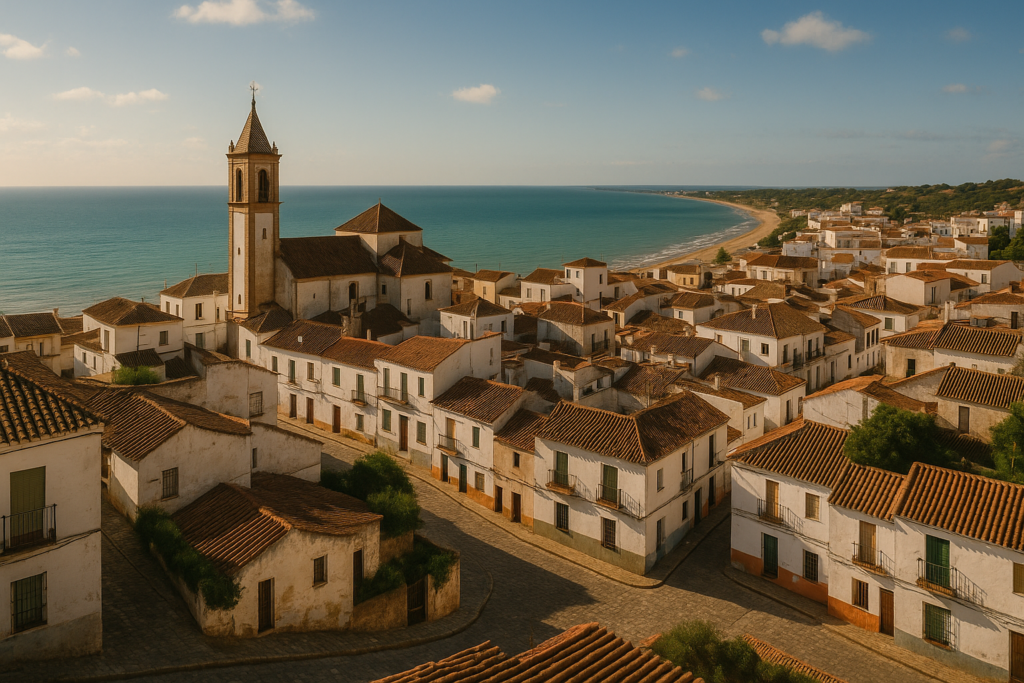
Aljaraque at a glance
- Province: Huelva, in southwestern Spain.
- Population: 22,737 inhabitants (2025 municipal register).
- Main sights: archaeological site of Papa Uvas plus several hermitages and churches.
- Districts: Corrales, Bellavista, Dehesa Golf and La Monacilla — most areas are urbanized.
- Recent change: steady influx of new settlers linked to rising property prices in Huelva.
- Ancient name: known to the Greeks as “Kalathousa”.
Before you plan
All core historic and religious sites referenced in this guide are extant and notable local sights. This guide flags no closures from the verified sources we used; nevertheless check local opening arrangements before arranging a tight schedule, because small-town timetables and access rules can change.
Things to do in Aljaraque
The main draw is exploration on a small scale: a handful of archaeological and religious sites framed by quiet residential neighbourhoods and modern suburban developments. You won’t find major museums or large visitor attractions listed in the sources we used; instead the rewards come from slow wandering, basic heritage stops and understanding how recent population and property trends have reshaped the area.
| Attraction | What it is | Price/entry | Best for |
|---|---|---|---|
| Archaeological site of Papa Uvas | Ancient archaeological site | – | History buffs and archaeology enthusiasts |
| Hermitage of San Sebastián | Historic hermitage | – | Quiet religious architecture |
| Church of Nuestra Señora de Bellavista | Parish church | – | Architecture and local parish life |
| Church of Nuestra Señora Reina del Mundo | Notable town church | – | Visitors interested in ecclesiastical sites |
| Hermitage of Nuestra Señora de Los Remedios | Local hermitage | – | Short cultural stops |
Papa Uvas: the archaeological core
The archaeological site of Papa Uvas is listed among the municipality’s main sights and is the principal place to connect with the town’s deep past. It’s the highlight for anyone curious about pre-modern layers in this part of Huelva province: an outpost to see traces of earlier settlement rather than a large interpretive complex. Allow time to read local signage and, if available, ask at municipal offices for any guided information or leaflets.
The small religious ensemble
Around the town you’ll find several small but locally important religious buildings. The Hermitage of San Sebastián and the Hermitage of Nuestra Señora de Los Remedios are singled out as main sights, while the Church of Nuestra Señora de Bellavista and the Church of Nuestra Señora Reina del Mundo are notable parish churches. These buildings are best visited with low expectations — they’re primarily of local significance — but they do provide a sense of the town’s religious and civic geography.
Walking the districts
One of the clearest ways to read the town is by exploring its districts. Corrales, Bellavista, Dehesa Golf and La Monacilla are named districts, and most areas within them are urbanized. That means many streets feel residential or suburban rather than rural or purely tourist-oriented. Recent population growth has altered neighbourhoods, so expect a mix of older village cores and newer housing developments.
Aljaraque with kids
This is not a theme-park destination. If you’re travelling with children, focus on short, manageable activities: seeing the archaeological site, visiting a hermitage or two, and letting kids run in local parks or pedestrian streets. The town’s compactness is helpful for families who prefer short transfers and minimal intra-day travel.
How to get to the area and get around
The town sits within Huelva province. Travel plans typically position it as part of a broader Costa de la Luz route or as a quiet complement to nearby coastal towns. Because the municipality is composed of several urbanized districts, most local movement is on local roads and residential streets; expect a largely suburban layout rather than a concentrated historic core.
Where to stay in Aljaraque
Accommodation choices in the immediate area tend to reflect the different districts’ characters. Corrales and Bellavista include established residential neighbourhoods; Dehesa Golf and La Monacilla show more recent urban development patterns. Pick a district that fits your priorities: quieter residential streets for low-key stays, or areas closer to municipal services if you want easy access to shops and local life.
Best time to visit the town
The town does not feature a high-volume festival calendar or a tourist season listed in our sources; the safest approach is to combine a visit with broader regional travel in Huelva province. Weather-related timing is not specified in the verified claims we used, so tie your trip planning to when neighbouring coastal towns suit your needs (beach, boat trips, festivals).
History of Aljaraque
The settlement has deeper historical roots than its modern suburban appearance suggests. In antiquity the place was known to Greek writers as “Kalathousa”, a name preserved in historical references. That classical footprint complements modern municipal growth: centuries of change have produced the compact town and multiple religious sites you can still visit today.
Practical info
Practicalities here are straightforward but unremarkable: the municipality’s layout is predominantly urbanized across its named districts, so expect mostly built environments rather than extensive agricultural or wild landscapes within town limits. Recent years have seen a steady influx of new residents tied to rising property values in Huelva, which affects local services, housing availability and the cadence of daily life. Use local municipal resources for up-to-date information on opening times for churches and the archaeological site.
Worth it for: anyone combining a Huelva-area itinerary who wants small-town heritage, short heritage stops and a look at contemporary suburban Andalusia. Less so if: you expect a standalone resort with beaches, large museums or tourist infrastructure — this town functions as a complement to the wider Costa de la Luz rather than the main draw.
How we assess this guide
This guide compiles verified public facts about main sights, demographics and historical names from official registers and heritage listings. We cross-checked the municipal register population figure and the list of notable sites and districts. We flag closures or material changes where sources indicate them; otherwise we summarize extant features and advise checking local schedules for practical visit details. This is not a substitute for municipal tourist-office materials or on-the-ground updates but is intended to set accurate expectations and reduce disappointment.
Frequently asked questions
How do I reach the town from the nearest major city?
The municipality lies within Huelva province. Use Huelva as your regional reference point and plan onward travel from there; local options include regional roads and municipal links, and many visitors treat this area as part of a wider Huelva itinerary.
Is Aljaraque expensive to visit?
There are no specific cost figures in our verified sources. The area has seen a steady influx of new settlers linked to rising property prices in the province of Huelva, which can influence short-term rental availability and housing costs for residents. For visitor pricing — accommodation, dining and attractions — check current local listings before booking.
Which sight is the town’s must-see?
The archaeological site of Papa Uvas stands out as the principal historic attraction and is the best single stop for understanding the town’s ancient footprint.
How many days should I allow?
Because the municipality’s attractions are compact, a few hours to one full day is enough to visit the main sights and understand the town’s layout. Extend your stay if you plan to use it as a base for nearby coastal or provincial exploration.
Is the area good for families?
Families will find low-key activities suitable for children: short heritage visits, neighbourhood walks and local parks. The town’s compact, urbanized districts make short transfers simple.
Can I get around without a car?
The verified sources describe a municipality made of several urbanized districts. That implies most movement between local neighbourhoods is over local roads; access to rural or coastal areas may depend on regional transport links. If you rely on public transport, verify connections in advance.
Is parking easy?
There are no specific parking details in the sources. Because most districts are urbanized, expect typical town parking conditions — residential streets and municipal parking options where provided — rather than extensive tourist car parks.
What are good rainy-day options?
Official sources list churches and hermitages among the town’s main sights, which can be visited in dry or wet weather as indoor or semi-indoor options. For more substantial indoor programming, look to nearby Huelva city or neighbouring towns in the Costa de la Luz for museums and larger cultural venues.
When is the best time to visit?
There are no season-specific events or climate details in the verified claims. Plan your visit alongside coastal or provincial travel plans in Huelva; seasonal choices are best informed by the wider Costa de la Luz calendar and weather patterns outside the scope of the sources used here.
Are the churches open to visitors?
The guide references the Hermitage of San Sebastián, the Hermitage of Nuestra Señora de Los Remedios and several churches (Nuestra Señora de Bellavista and Nuestra Señora Reina del Mundo) as main sights. Small-town churches often have restricted opening hours tied to services; verify access locally for visiting outside mass times.
What does “Kalathousa” mean?
“Kalathousa” is the ancient Greek name recorded for the place. Our verified sources note the name but do not provide further etymological detail in the material we used here.
Has Aljaraque grown recently?
Yes — the municipality has experienced a steady influx of new settlers in recent years linked to increases in property prices in Huelva. This demographic shift shapes neighbourhood character and local services.
Which district should I base myself in?
District choices reflect different local characters: Corrales and Bellavista are established residential neighbourhoods; Dehesa Golf and La Monacilla show newer urbanization patterns. Choose according to whether you prefer older streets or more modern suburban settings.
Can I see archaeological remains easily?
The archaeological site of Papa Uvas is cited as a main sight and is the primary place to see local archaeological remains. Facilities and interpretation levels are not detailed in the verified sources, so check local information before visiting if you require guided interpretation.
Is the town a beach destination?
The verified claims do not list beaches among the municipality’s main sights. The place functions more as a small inland/suburban town within Huelva province rather than a primary coastal resort.
Plan the wider trip
Nearby on the Costa de la Luz
Aljaraque on the map
Places worth knowing near Aljaraque
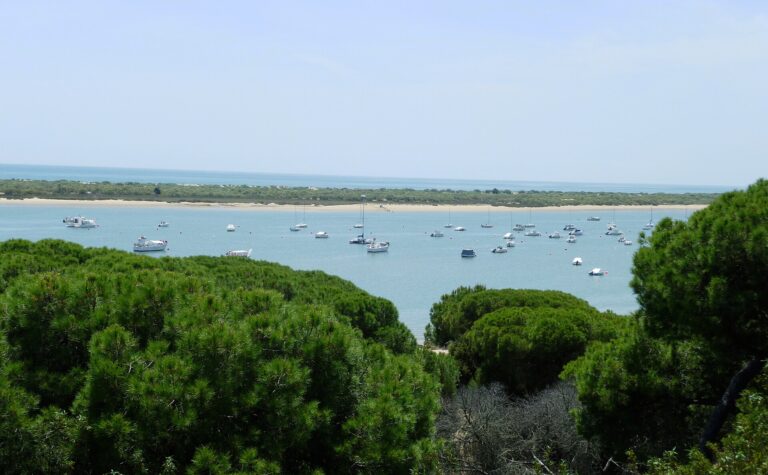
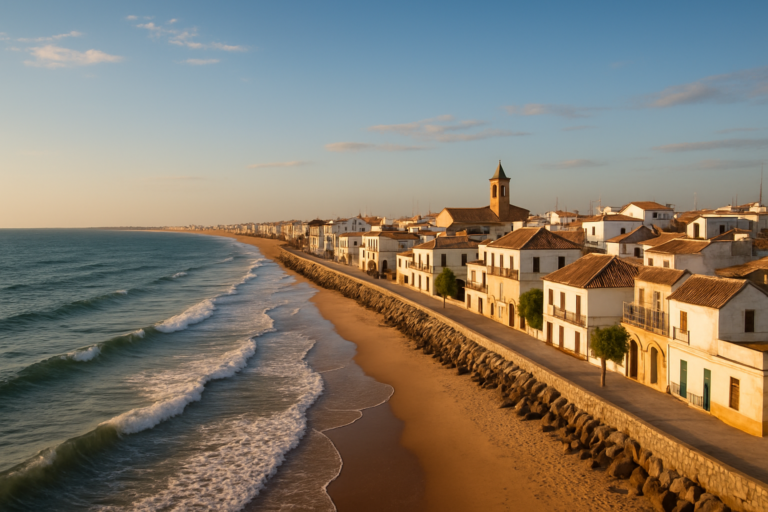
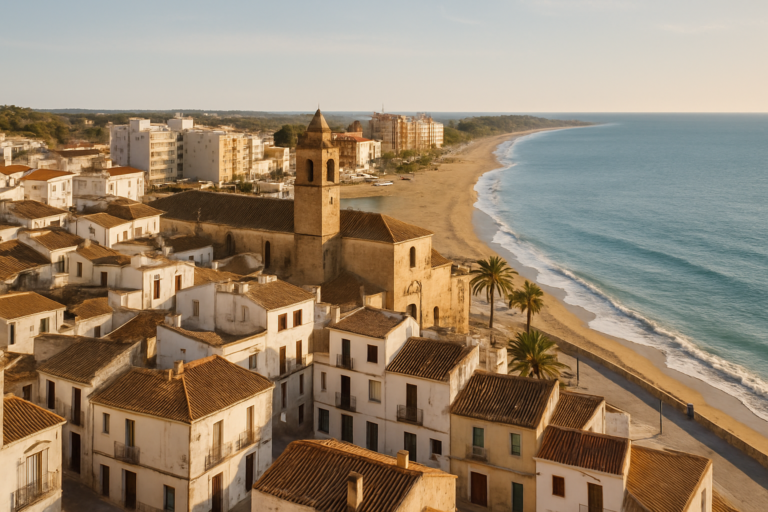
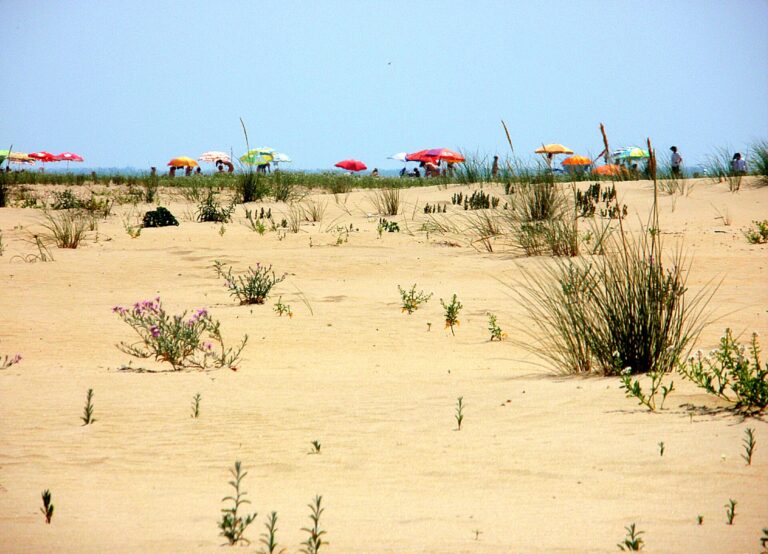
This place is part of our Costa de la Luz Travel Guide: Beaches, Towns and Where to Stay — see every town, beach and cove we have mapped on that coast.
How this page is maintained. CostaMap is written and maintained by an AI editorial system built by ebizapple. Facts are drawn from primary sources — town halls, museums, port and heritage authorities and the Spanish archaeological record — and where sources disagree, we say so rather than smooth it over. Photographs marked as ours are taken on location. This page was last reviewed on 14 August 2026. Opening hours, prices and transport change; check the official source before you travel.