
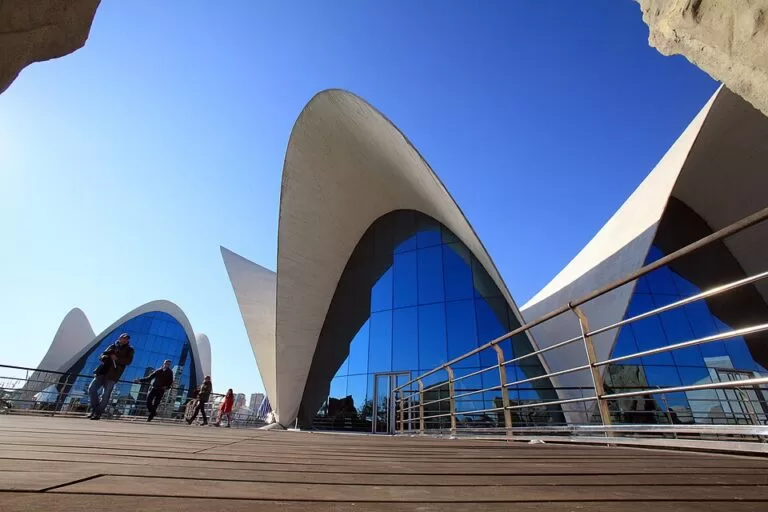
The Oceanogràfic in Valencia is the aquarium of the City of Arts and Sciences, at Carrer d’Eduardo Primo Yúfera 1, about 3.2 km south-east of the old town. The easiest way there is tram line 10 or EMT buses 23 and 95, which all stop about 100–120 m from it; by car there are a few small free parking areas around the site. Spain’s tourist board calls it the largest aquarium in Europe, with more than 20,000 animals of 650 species, from belugas and sharks to penguins and flamingos. It suits families, anyone curious about sea life, and a rainy day in the city. Skip it if you object to dolphin shows or captive whales, or if you only have an hour: the regional tourist board puts a visit at four hours.
Quick facts
- Names: Oceanogràfic, L’Oceanogràfic or Oceanogràfic València (Valencian); often written Oceanografic or Oceanográfico in Spanish. In English, the Valencia aquarium or Oceanographic.
- What: a large aquarium and marine park, part of the Ciutat de les Arts i les Ciències (City of Arts and Sciences).
- Where: Carrer d’Eduardo Primo Yúfera 1, 46013 València, in the former bed of the river Turia.
- Coordinates: 39.4530, -0.3472.
- Animals: more than 20,000 animals of 650 species (spain.info).
- Architect: Félix Candela designed the Oceanogràfic and its roof; Santiago Calatrava designed the other buildings of the complex.
- Price: entry from 37 euros at the low-season price (Comunitat Valenciana tourism, checked November 2026). Other seasons may cost more; ask for the current rate.
- Open: every day of the year, from 10:00 (Comunitat Valenciana tourism, checked November 2026).
- Phone: +34 960 470 647.
Access and parking
By tram: the Oceanogràfic tram stop on Metrovalencia line 10 (Alacant–Natzaret) is about 120 m from the aquarium, on Carrer d’Eduardo Primo Yúfera (OpenStreetMap).
By bus: the EMT stops called “Oceanogràfic” (2044 and 2051) are about 100 m away. On OpenStreetMap they are served by lines 23 (Porta de la Mar – Forn d’Alcedo) and 95 (Hospital General – Marina Real, with a summer variant to the beaches). The “Àgora” stops, about 280 m west, are on the same street.
By car: the aquarium is 3.2 km in a straight line from the city centre. OpenStreetMap maps several small surface parking areas around the site, with 4 to 20 spaces each, 130–310 m away and tagged as free. They fill up easily. There are underground car parks nearby too, such as the private one at the Aqua shopping centre, about 400 m north; we could not confirm the prices.
On foot or by bike: the Jardí del Túria, the park in the old riverbed, runs past the complex, and OpenStreetMap shows bicycle stands next to the aquarium.
What to expect
The regional tourist board describes a series of habitats spread over several buildings:
- the Mediterranean;
- the wetlands;
- temperate and tropical seas;
- the Antarctic;
- the Arctic;
- the Red Sea;
- the Delphinarium.
One highlight is the walk-through tunnel under the main tank. The tourist board calls it one of the longest underwater tunnels in Europe, and spain.info says you see sharks and manta rays swimming around you. Belugas are the other big draw: the tourist board notes they are hard to see elsewhere in Europe.
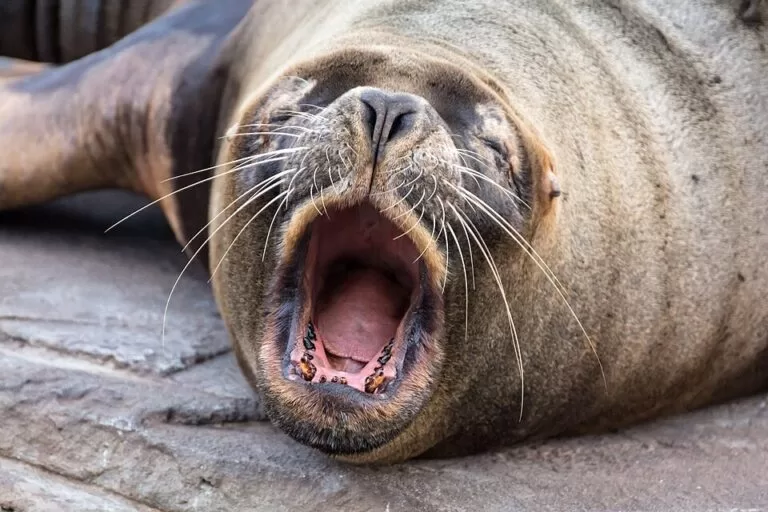
Spain.info also lists penguins, turtles, jellyfish and crustaceans, a wetland area with birds like those of the nearby Albufera, and species from tropical mangroves. The regional board adds seahorses, octopus, spoonbills, flamingos and a Galápagos tortoise. There are dolphin shows, workshops and exhibitions, and a conservation area that, according to spain.info, has recovered hundreds of sea turtles. On OpenStreetMap you can also find a sea lion pool, a crocodile area, giant tortoises and a butterfly house (Papilionari) inside the grounds.
The Oceanogràfic also has an underwater restaurant serving contemporary food with a Mediterranean slant (regional tourist board).
Prices and opening
The Comunitat Valenciana tourism listing gives these details (checked November 2026):
- Price: 37 euros for entry, at the low-season price. The listing says to ask about prices for other seasons.
- Opening: every day of the year, from 10:00 until closing time.
- Time needed: about four hours.
OpenStreetMap lists the hours as 10:00 to 21:00 every day, last checked by a mapper in August 2026, but that may be the summer timetable. The closing time changes with the season, and none of the sources we could open publish it in full. Tickets are sold on the aquarium’s website, oceanografic.org, which we could not open, so we could not confirm child, senior or combined ticket prices there.
Accessibility and safety
OpenStreetMap tags the sea lion pool and the dolphinarium as wheelchair accessible, and there is a free, wheelchair-accessible public toilet in the gardens about 250 m north. The tram and the main bus stops nearby have tactile paving. We could not confirm wheelchair hire or the access rules for every building, so ask at the entrance. Part of the visit is outdoors between buildings, so bring sun protection in summer.
Best time to visit
The aquarium opens every day, so it works all year, and on a wet day it is one of the city’s obvious indoor options. Arrive at opening time to see the tunnel and the belugas with fewer people, and allow about four hours.
Nearby alternatives
- City of Arts and Sciences, 0.4 km away: the science museum, Hemisfèric and Calatrava’s buildings next door.
- Valencia city guide, 3.2 km away: the old town, markets and beaches.
- Valencia Cathedral, 3.5 km away: the cathedral in the old town.
- Torres de Serranos, 3.9 km away: one of the historic gates of the old town.
- Albufera, 13 km away: the natural park south of the city, whose wetland birds the aquarium’s wetland area reflects.
Distances are in a straight line from the aquarium.
FAQ
How do I get to the Oceanogràfic in Valencia?
Take tram line 10 to the Oceanogràfic stop, or EMT bus 23 or 95 to the “Oceanogràfic” stop. Both stop about 100–120 m from the aquarium.
Is there parking at the Oceanogràfic?
There are a few small free surface parking areas around the aquarium, with 4 to 20 spaces each, and underground car parks nearby. Expect the free spaces to be full on busy days.
How much are Oceanogràfic tickets?
The regional tourist board lists entry at 37 euros at the low-season price (checked November 2026). Prices may be higher in other seasons; check the aquarium’s website.
How long do you need at the Oceanogràfic?
The regional tourist board gives about four hours for a visit.
Is the Oceanogràfic open every day?
Yes. It opens every day of the year from 10:00. Closing time varies by season.
Sources and freshness
Checked 6 November 2026 · 5 sources Show
Checked 6 November 2026. Official: Comunitat Valenciana tourism, Oceanogràfic (habitats, tunnel, belugas, species, roof, restaurant), its Oceanogràfic listing (price, opening, duration) and City of Arts and Sciences page (architects, complex); spain.info, L’Oceanogràfic (largest in Europe, 20,000 animals, 650 species, sharks and manta rays, sea turtles). The aquarium’s own website could not be opened from our research tools. Location, tram and bus stops, parking, toilets and distances: OpenStreetMap contributors (ODbL). Photos: Wikimedia Commons, licences as credited.
This place is part of our Costa Valenciana Map: Valencia, Gandia and the Albufera — see every town, beach and cove we have mapped on that coast.
How this page is made. CostaMap is written with an AI editorial system run by Ebizapple. This page is based on the sources listed above. Last updated 6 November 2026. Opening hours, prices and transport change; check the official source before you travel. How we work · Partner links and ads