
Expect a small, walkable town where literary history and late‑medieval monuments hold centre stage more than flashy tourist infrastructure. If you come looking for a quiet, culture‑first stop on a southern Spain itinerary—one that links a Nobel laureate’s life to the early voyages of Columbus—you’ll be well served. If you want buzzing nightlife or a picture‑perfect beach resort, plan to pair your visit with nearby coastal or natural areas rather than expecting them here.
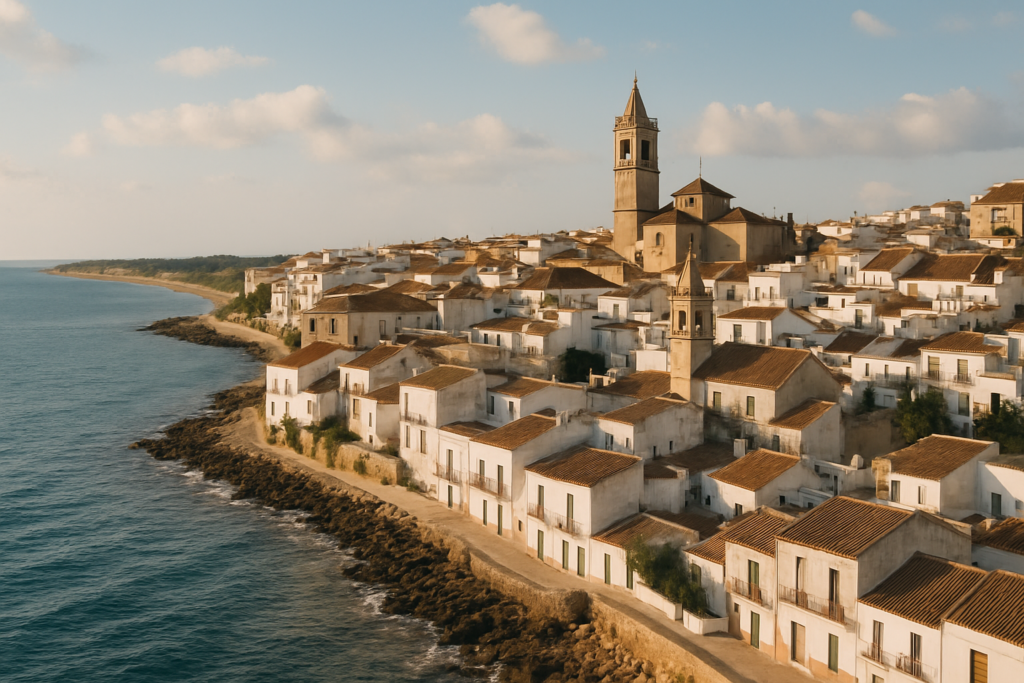
Moguer at a glance
- Birthplace of Juan Ramón Jiménez, Nobel Prize in Literature (1956); the town foregrounds his life and work.
- Home to the 14th‑century Monasterio de Santa Clara, a Mudéjar convent with a notable cloister and church.
- Casa Museo Zenobia y Juan Ramón Jiménez preserves the poet’s family home, manuscripts and personal belongings.
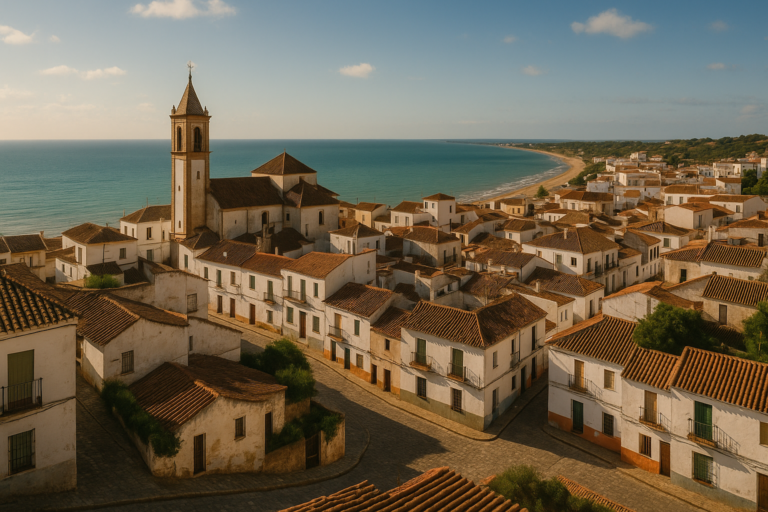
- Whitewashed historic‑artistic old town: compact and best explored on foot around churches and convents.
- Part of Huelva’s Lugares Colombinos, closely tied to Columbus’s first voyage of 1492 and easy to combine with other Columbian sites.
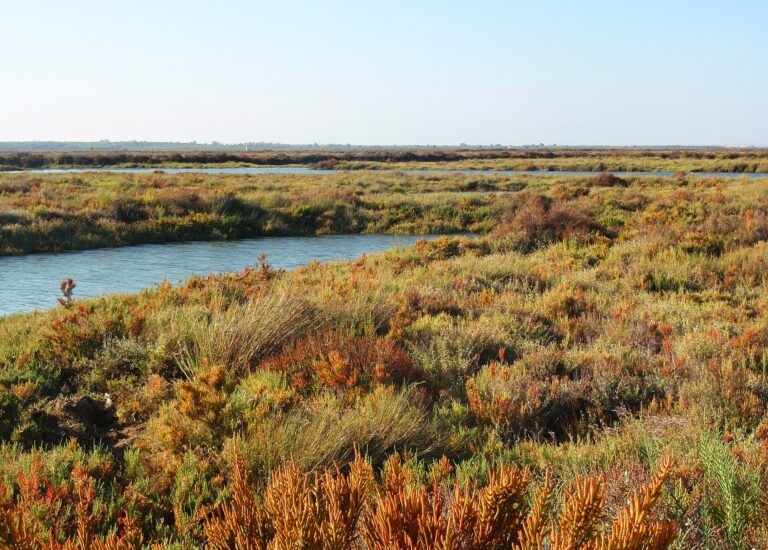
- Close to the Tinto river estuary and within reach of the Costa de la Luz beaches and the Doñana area.
- Surrounding countryside is a major producer of strawberries and other berries—agriculture shapes the local landscape and economy.
Things to do in Moguer
Most visits focus on history and literature: moor into medieval convents and churches, follow Jiménez‑related sites, and use the town as a quiet base for exploring nearby Columbian landmarks and coastal nature. The town’s compact centre is intentionally pedestrian‑friendly; allow time to wander lanes and soak up plaques and references to Platero y yo.
| Attraction | What it is | Price/entry | Best for |
|---|---|---|---|
| Monasterio de Santa Clara | 14th‑century Mudéjar convent with a cloister and church | — | Medieval architecture, quiet reflection |
| Casa Museo Zenobia y Juan Ramón Jiménez | The poet’s family home and museum preserving manuscripts and belongings | — | Literature lovers, biographical context |
| Convento de San Francisco | Historic religious complex in the monumental centre | — | Religious architecture, local history |
| Iglesia de Nuestra Señora de la Granada | Parish church with a bell tower likened to a smaller Giralda | — | Iconic town landmark, photography |
| Lugares Colombinos loop | Historic route linking Moguer with Palos de la Frontera and La Rábida | — | Columbus‑era history, combined day trips |
Monasterio de Santa Clara
The town’s most emblematic monument is the 14th‑century Monasterio de Santa Clara. Its Mudéjar elements and the cloister form a calm, historically resonant space; local tradition also links the convent to Columbus, who is said to have kept a night‑long vow of prayer there. This is where architecture and legend meet, and it rewards slow, unobtrusive visits.
Casa Museo Zenobia y Juan Ramón Jiménez
The poet’s former family home is curated to foreground manuscripts, personal items and the domestic setting that shaped his writing. Because the town is the setting of Platero y yo, the museum doubles as a literary anchor for walking the streets that inspired the prose poem; the town is dotted with references to Jiménez’s work, so a visit here helps decode those plaques and memorials.
The Columbian connections
Moguer is one of the Lugares Colombinos—sites in Huelva tied to Columbus’s first voyage—and it sits close to the Tinto river estuary. That makes the town a logical stop on a Columbus‑themed itinerary that includes Palos de la Frontera and La Rábida. The town’s sailors and provisions historically helped supply Columbus’s ships, and visitors interested in the Age of Discovery can weave Moguer into a broader historical loop rather than treating it as a standalone Columbus museum.
Before you plan
There are no verified closures or redevelopments among the town’s principal historical sites in our source set. Still, schedules and access at religious complexes can vary with services and conservation work—check local listings or cultural‑office notices before timing a visit strictly around interior access.
Best beaches in Moguer
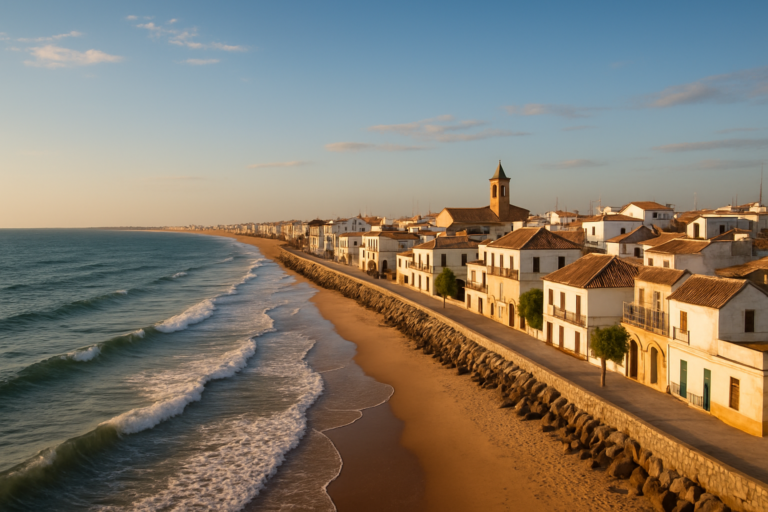
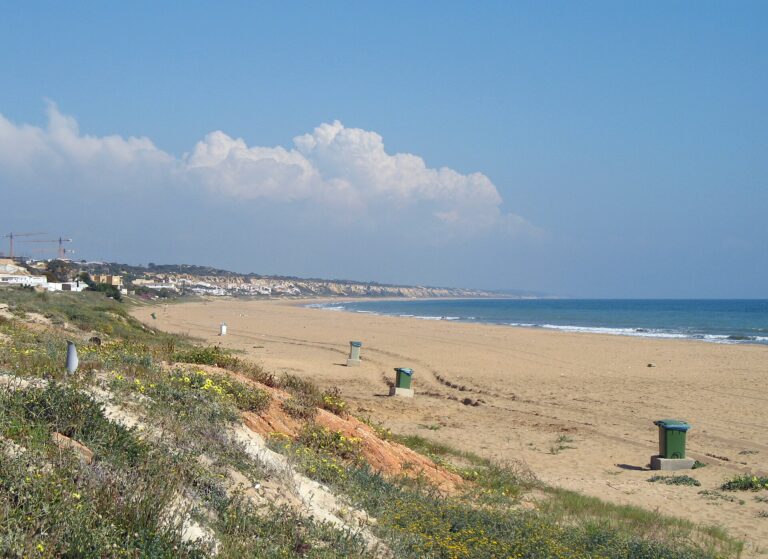
The town itself is inland but lies within reach of the Costa de la Luz and the coastal ecosystems associated with Doñana. Use the town as a calm cultural base and head to the coast for sand and surf on a day trip.
| Beach / Coast | Character | Facilities / Blue Flag |
|---|---|---|
| Costa de la Luz | Wide sandy stretches along southwestern Andalusia, popular for sunbathing and long walks | — |
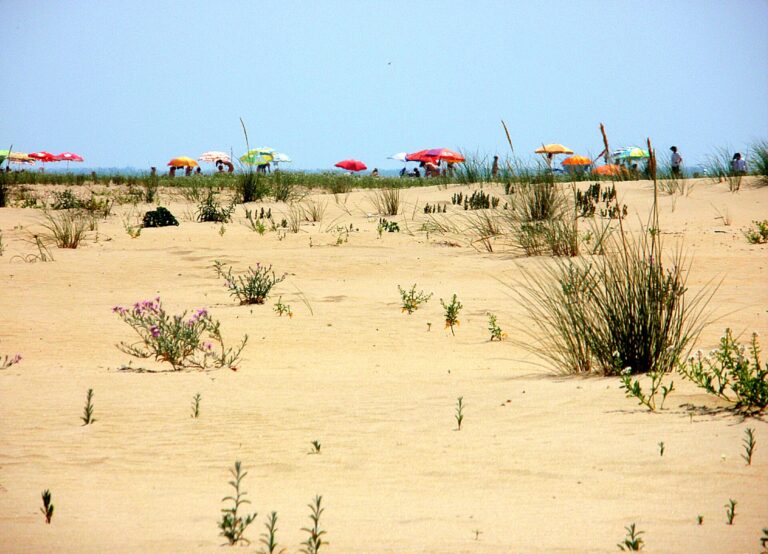
| Doñana‑area beaches | Coastal dunes and nature‑rich shorelines linked to Doñana’s protected landscapes | — |
Moguer with kids
Families that enjoy gentle cultural learning and easy walking will find the town manageable. The Casa Museo offers a tangible literary narrative and the old town’s compactness keeps transfers between sights short. While there are no major theme parks listed among the grounded claims, the nearby estuary and coastal day‑trip options let families combine indoor museum time with outdoor nature exploration—helpful for children who need variety.
How to get to Moguer and get around
The town is best experienced on foot: its whitewashed old town has been declared a historic‑artistic site and is easily explored by strolling between churches, convents and museums. For regional linkages, Moguer lies close to the Tinto river estuary and to other Lugares Colombinos, so it slots naturally into multi‑stop itineraries that include nearby Columbian sites and coastal areas.
Where to stay in Moguer
Accommodation choices centre on a few logical areas, each with a clear purpose:
- Old town (historic centre) — Best for history and walking access to the Monasterio de Santa Clara, Casa Museo and major churches.
- Near the Tinto estuary — Suited to visitors prioritising nature and who plan day trips into the river landscapes or neighbouring Columbian sites.
- On the town outskirts — Practical if you want quieter, more modern lodging and easier road access to the Costa de la Luz beaches.
Best time to visit Moguer
The town’s cultural calendar revolves around its literary heritage: cultural events linked to Juan Ramón Jiménez are held regularly, keeping the literary legacy lively across the year. If you want to combine museums with a coastal day trip, pick a period when the coast is pleasant—check local seasonal weather before booking. Because our sources do not include precise festival dates or climate statistics, confirm event timings with local tourist offices.
History of Moguer
With medieval roots and a crystallised historic centre, the town’s past intertwines religious institutions and maritime commerce. Its 14th‑century Monasterio de Santa Clara and other convents anchor the medieval landscape. In the late 15th century Moguer played a practical role in Columbus’s first voyage: local sailors and provisions helped crew and supply the ships, and tradition holds that Columbus himself once held a long night of prayer at the Monasterio de Santa Clara. Centuries later the town’s identity was broadened by the life and work of Juan Ramón Jiménez; his writing, including the prose poem Platero y yo, is rooted in the town and continues to shape cultural memory and local events.
Practical info
- Getting around: The historic centre is compact and most monuments are walkable from one another; expect to explore by foot between sites.
- Cultural focus: The town foregrounds literature and religious heritage rather than coastal resort services—plan to pair with nearby coastal or natural areas if you want beaches.
- Food and landscape: Surrounding farmland is known for strawberries and berries; agricultural activity characterises the wider countryside.
- Columbus itinerary: As one of the Lugares Colombinos, the town is a convenient addition to a tour of Palos de la Frontera and La Rábida and sits near the Tinto river estuary.
Worth it for: anyone with an interest in Juan Ramón Jiménez, Mudéjar convent architecture, quiet historic centres and weaving literary and Columbian history into a broader Andalusian itinerary. Less so if: you want a standalone beach resort, lively nightlife or theme‑park facilities—combine this visit with nearby coast or Doñana for those experiences.
How we assess this guide
This guide compiles verified claims from cultural and historical sources: monument identifications, museum holdings and the town’s documented role among the Lugares Colombinos. We flag known institutional links and traditions (for example, Columbus and the Monasterio de Santa Clara) and note ongoing cultural events connected to Juan Ramón Jiménez. We have not relied on first‑hand field reporting; instead, we cross‑checked site statuses and historical facts and flag where visitor access details (hours, prices) should be confirmed with local authorities or cultural offices.
Nearby on the Costa de la Luz
Towns near Moguer
- Palos de la Frontera — 7 km south-west, the port where Columbus sailed
- Punta Umbría — 15 km south-west, a sandy spit between ocean and estuary
- Aljaraque — 16 km west, On the edge of the Odiel marshes biosphere reserve
- Cartaya — 28 km west, the sandbar beaches of El Rompido
- Almonte — 28 km east, gateway to Doñana National Park and the El Rocío pilgrimage
- Lepe — 32 km west, a Huelva strawberry town on the Costa de la Luz
For the wider picture, see the Costa de la Luz guide, which lists every town on this coast.
Frequently asked questions
Is Moguer the birthplace of Juan Ramón Jiménez?
Yes. The town is the poet’s birthplace and celebrates his life; the Casa Museo Zenobia y Juan Ramón Jiménez preserves his family home, manuscripts and belongings.
What is Platero y yo and how is the town related?
Platero y yo is a beloved prose poem centred on a writer and his silver‑grey donkey. The town is the setting for the book and is dotted with references to the work.
What are the main monuments to visit?
Key monuments grounded in the town’s heritage include the Monasterio de Santa Clara—a 14th‑century Mudéjar convent with a notable cloister and church—the Convento de San Francisco, and the Iglesia de Nuestra Señora de la Granada with its bell tower often compared to a smaller Giralda.
Does Moguer have a museum dedicated to Jiménez?
Yes. The Casa Museo Zenobia y Juan Ramón Jiménez preserves the poet’s family home and related manuscripts and personal items.
How is the town linked to Columbus?
The town is one of the Lugares Colombinos and historically provided sailors and provisions for Columbus’s ships; local tradition also ties Columbus to the Monasterio de Santa Clara, where he is said to have kept a night‑long vow of prayer.
Can I visit beaches from Moguer?
Yes. The town sits within reach of the Costa de la Luz beaches and the Doñana area; many visitors combine cultural time in town with day trips to coastal sand or protected coastal landscapes.
Is the old town walkable?
Yes. The whitewashed old town has been declared a historic‑artistic site and is easily explored on foot around its churches and convents.
Are there cultural events connected to the poet?
Yes. The town regularly holds cultural events linked to Juan Ramón Jiménez, which keep his literary heritage central to public life.
Is Moguer good for families?
Families that enjoy literary and low‑key cultural experiences will find the town suitable: the Casa Museo and the compact old town work well with children who like short walks and museum visits. For outdoor variety, combine the visit with a coastal or estuary day trip.
Does the town have a notable church tower?
Yes. The Iglesia de Nuestra Señora de la Granada has a bell tower often compared to a smaller version of Seville’s Giralda, and it is one of the town’s more photographed landmarks.
What agricultural products is the surrounding countryside known for?
The countryside around the town is a major producer of strawberries and other berries; agriculture plays a significant role in the local economy and landscape.
Should I include other Lugares Colombinos on the same trip?
Yes. The town lies close to other Lugares Colombinos such as Palos de la Frontera and La Rábida; visitors interested in the Age of Discovery will typically combine several of these sites into a single itinerary.
Is there a route or loop that connects the town’s historical sites?
While no single, numbered route is claimed in our sources, the town’s historic‑artistic centre is walkable and monuments—convents, churches and the Casa Museo—are concentrated enough to be visited on a single walking loop.
Are the convents open to visitors?
Key convents and churches, including the Monasterio de Santa Clara and the Convento de San Francisco, are principal monuments of the town. Access can vary with religious services and conservation; check local listings for interior visiting hours.
How central is literary heritage to the town’s identity?
Extremely central: the town is the poet’s birthplace, houses his family museum, is the setting for Platero y yo, and regularly programs cultural events tied to his legacy.
Plan the wider trip
- Costa de la Luz guide
- Bollullos Par del Condado: Wine Capital of the Condado de Huelva
- Arcos de la Frontera: Clifftop White Town
- Chipiona: Lighthouse, Beaches and Moscatel Wine
- Huelva
- Ayamonte
Moguer on the map
Places worth knowing near Moguer
How this page is maintained. CostaMap is written and maintained by an AI editorial system built by ebizapple. Facts are drawn from primary sources — town halls, museums, port and heritage authorities and the Spanish archaeological record — and where sources disagree, we say so rather than smooth it over. Photographs marked as ours are taken on location. This page was last reviewed on 15 August 2026. Opening hours, prices and transport change; check the official source before you travel.