
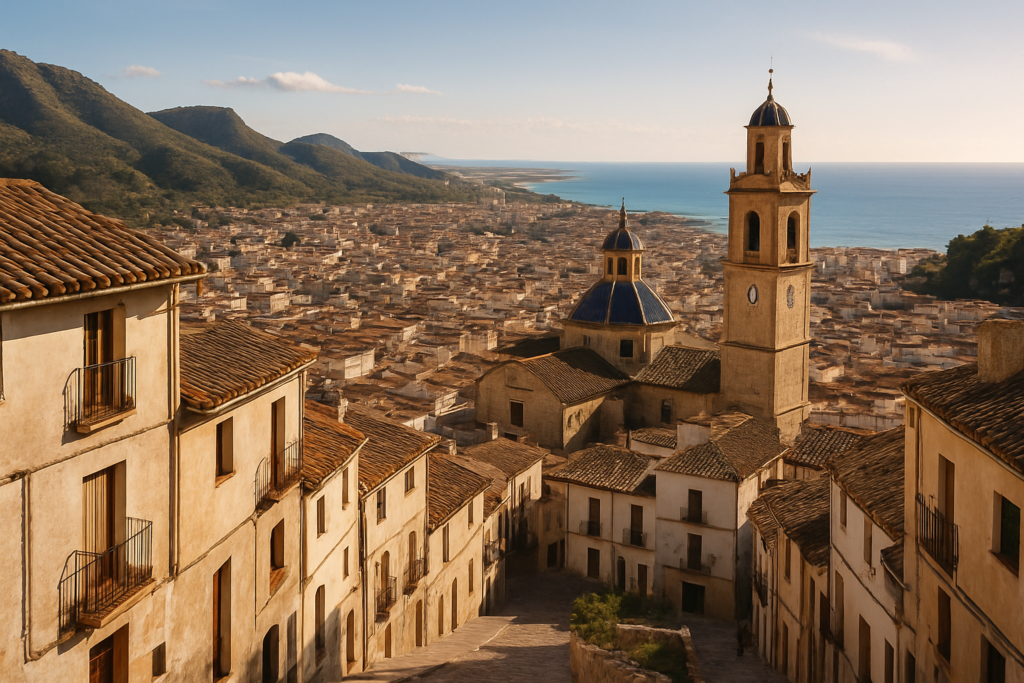
La Vall d’Uixó is best approached with modest expectations: its headline attraction is geological and atmospheric rather than glamorous. The real draw is the subterranean river and cave system—an experience that’s cool, slightly otherworldly and family-friendly—but the town itself is a working inland Spanish community with hiking nearby, local festivals and scattered archaeological traces rather than a purpose-built tourist complex.
La Vall d’Uixó at a glance
- Home to the Coves de Sant Josep, Europe’s longest navigable underground river explored by small tourist boats.
- Easy excursion from the Costa de Azahar coastal towns such as Castellón and Vila-real.
- Family-friendly site: landscaped picnic areas and walking paths around the caves.
- Cool cave interior provides relief from summer heat on nearby beaches.
- Good base for hiking in the cork‑oak hills of the Serra d’Espadà (Sierra de Espadán).
- Local cuisine follows inland Valencian traditions — rice dishes and mountain produce.
Before you plan
At the time of our latest cross-check, the caves and their visitor areas operate as a tourist attraction with boat rides and walking paths. If you need current opening arrangements, seasonal schedules or accessibility details, check the attraction’s official pages before you travel.
Things to do in La Vall d’Uixó
The primary reason most visitors come is obvious: the Coves de Sant Josep. But the town and its surroundings reward a slow day of exploration combining geology, short walks, local food and low-key cultural life. Below is a compact comparison of what to expect so you can prioritise.
| Attraction | What it is | Price/entry | Best for |
|---|---|---|---|
| Coves de Sant Josep | Subterranean river and cave chambers visited by small boats and short walks | – | Families, geology fans, photographers of dramatic interiors |
| Surrounding picnic and walking zones | Landscaped areas around the caves with paths and picnic facilities | – | Families, relaxed day-trippers |
| Serra d’Espadà foothills | Cork‑oak covered natural park popular for short hikes | – | Hikers, nature lovers seeking shade and short trails |
| Iberian and Roman archaeological sites | Scattered heritage in surrounding hills showing pre-Roman and Roman presence | – | History enthusiasts, quiet walkers |
| Local festivals | Traditional Valencian celebrations including Moros y Cristianos and patronal fiestas | – | Visitors who want cultural immersion |
Coves de Sant Josep: the main attraction
The caves are the feature that defines visits here. Visitors ride small boats along a subterranean river and walk short sections between chambers, passing dramatic stalactite and stalagmite formations that are lit for tours. The river inside the cave system is notable: it is the longest navigable underground river in Europe, and galleries are illuminated for the visitor experience. The cave’s cool interior is a tactical advantage in high summer, offering a welcome break from the heat of the coast.
Picnic zones, short walks and family time
Immediately around the cave complex, landscaping focuses on accessible, family-friendly use: there are picnic zones and walking paths that make the site easy to enjoy as a day trip for mixed-age groups. That combination—brief underground boat ride plus an outdoor area for snacks—explains why the attraction has been a local favourite for decades.
Hiking and natural scenery in the foothills
At the foot of the Serra d’Espadà, the town connects quickly to cork‑oak country. The range is popular for hiking and provides shady trails and a different, more terrestrial side to your visit after the caves. Expect typical interior Valencian landscape: woodland, limestone features and routes suitable for half‑day walks.
La Vall d’Uixó with kids
If you’re travelling with children, the site layout and activities map well to a family day out. The caves combine a short, memorable boat ride with easy walking sections; outside, landscaped picnic zones give parents a place to ground the visit without trekking far. The cave interior’s cool temperature is also more comfortable for youngsters than sweltering outdoor attractions during peak summer.
How to get to La Vall d’Uixó and get around
The town occupies an inland position near coastal centres such as Castellón and Vila‑real, which makes it straightforward to reach as an excursion from the Costa de Azahar. The cave entrance and the immediate visitor areas are concentrated and designed for short on‑foot exploration; once in the town, the main attractions are close to each other.
Best time to visit La Vall d’Uixó
The caves are a year‑round draw because of their constant coolness, which makes summer particularly appealing if you want an escape from coastal heat. Spring and autumn offer comfortable outdoor conditions for hiking in the Serra d’Espadà and for wandering archaeological sites. Traditional Valencian festivals—Moros y Cristianos and patronal fiestas—add cultural sparkle if your visit coincides with them.
| Season | Months | What to expect |
|---|---|---|
| Summer | – | Caves provide cool relief; the town serves as a short inland escape from the coast |
| Spring & Autumn | – | Good conditions for hiking the Serra d’Espadà and enjoying outdoor picnics |
| Winter | – | Cave visits remain appealing; outdoor trails are quieter |
History of La Vall d’Uixó
The modern town coalesced from several small hamlets that later merged into a single municipality. Archaeological traces in the nearby hills point to Iberian and Roman presence, indicating the area has been occupied and strategically relevant for millennia. The subterranean river near the town has long been a local landmark and the caves have been a tourist draw for decades.
Practical info
- Site layout: the cave complex includes visitor paths and picnic zones, so much of your visit unfolds on foot within a compact area.
- Family facilities: landscaped picnic areas and short walking paths make the attraction suitable for families with children.
- Climate advantage: the cave interior remains cool, which can be a practical consideration for hot-weather visits from nearby coastal resorts.
- Culinary note: local food follows inland Valencian traditions—expect rice dishes and mountain produce rather than seafood‑heavy menus typical of the coast.
Worth it for: visitors who want a memorable natural spectacle (a boat ride inside a subterranean river), families seeking a low‑effort day trip, hikers who want a mix of cave and cork‑oak hill scenery. Less so if: you seek sun‑and‑sand resort life, nightlife or a town built around tourism rather than a working inland community.
How we assess this guide
This guide summarises verified, cross‑checked claims about the caves, town history, landscape and visitor facilities. We flag changes that would materially affect planning (such as closures or major redevelopment). It is not based on single-source field reporting but on consolidated, authoritative information about the site and its setting.
Nearby on the Costa del Azahar
Towns near Uixó
- Nules — 7 km north-east, its beach and the walled village of Mascarell
- Burriana — 15 km north-east, the wide Arenal beach, a lively marina
- Burriana — 15 km north-east
- Onda — 16 km north, the Castle of the 300 Towers
- Canet de Berenguer — 16 km south
- Sagunto — 16 km south, What Sagunto is really like
Places to visit within reach
- Castelló Co-Cathedral — 25 km, Castelló’s bell tower stands entirely separate from its cathedral
- Aquarama Water Park — 35 km, Aquarama sits directly on the Mediterranean, home to The Devil’s Drop
- Desert de les Palmes Natural Park — 37 km, Desert de les Palmes isn’t actually a desert
- Torres de Serranos — 40 km, Torres de Serranos survived Valencia’s demolished city walls largely because it
For the wider picture, see the Costa del Azahar guide, which lists every town on this coast.
Frequently asked questions
How do I get from the coast to the caves?
The town sits inland near coastal centres such as Castellón and Vila‑real, making it an easy excursion from the Costa de Azahar. Travellers commonly combine a coastal stay with a half‑day or full‑day trip inland to see the caves.
Are the caves suitable for children?
Yes. The attraction was developed with family visits in mind: visitors ride small boats on the subterranean river, walk short sections and can use the landscaped picnic zones and paths outside the cave complex.
What makes the caves special?
The Coves de Sant Josep contain the longest navigable underground river in Europe; visitors experience it by boat through illuminated galleries and pass chambers with dramatic stalactite and stalagmite formations.
Is it possible to visit the caves on a hot day?
Absolutely. The cave interior is noticeably cool, which is a common reason visitors choose the site during hot summer days on the nearby coast.
Are there hiking opportunities nearby?
Yes. The town lies at the foot of the Serra d’Espadà, a cork‑oak covered natural park that is popular for hiking and short walks.
Can I combine the visit with other cultural sites?
The surrounding hills have Iberian and Roman archaeological heritage, so you can combine a cave visit with quiet historical exploration in the area.
Does the town have traditional festivals?
Yes. The town celebrates traditional Valencian festivals including Moros y Cristianos and local patronal fiestas.
Is La Vall d’Uixó a good base for exploring the Costa de Azahar?
While the town itself is inland, its position near Castellón and Vila‑real makes it an easy day trip from Costa de Azahar beaches, so it fits well into a coastal itinerary.
Are there picnic and rest facilities at the caves?
Yes. The area around the caves is landscaped with picnic zones and walking paths, designed for day‑trip use.
How long does a typical visit to the caves take?
Visitor experiences centre on a boat ride along the subterranean river and short walking sections; the site is set up for a compact visit that fits into a half‑day outing when combined with outdoor picnic time.
Is the cave accessible for people with limited mobility?
The attraction mixes boat rides and short walks inside the cave and landscaped areas outside. For specifics about accessibility arrangements, consult the attraction’s official information before you travel.
What kind of food can I expect in the town?
Local cuisine reflects inland Valencian traditions, favouring rice dishes and mountain produce rather than coast-style seafood menus.
Should I expect crowds?
The caves have been a long‑standing tourist attraction and can attract families and day‑trippers, particularly during summer. Outside the main attraction, the town and surrounding countryside are generally low‑key.
How many days do I need to visit?
A single day can cover the caves plus some outdoor walking or archaeology in the surroundings; pair it with a coastal stay if you want beach time and to break up the inland visit.
Plan the wider trip
- Costa de Azahar guide
- Almenara: Beaches and Castle Hill near Sagunto
- Cervera del Maestre: Castle Village of the Maestrat
- Càlig: Wine Village of the Baix Maestrat
- Peñíscola
- Benicàssim
La Vall Duixo on the map
How this page is maintained. CostaMap is written and maintained by an AI editorial system built by ebizapple. Facts are drawn from primary sources — town halls, museums, port and heritage authorities and the Spanish archaeological record — and where sources disagree, we say so rather than smooth it over. Photographs marked as ours are taken on location. This page was last reviewed on 15 August 2026. Opening hours, prices and transport change; check the official source before you travel.