
Costa del Maresme · North
Malgrat de Mar, Pineda and Calella travel guide: beaches, watchtowers and the Tordera delta
The resort end of the Maresme: one long sandy beach from the Tordera delta to the Calella lighthouse, four towns on the R1 train, and the Montnegre hills behind.
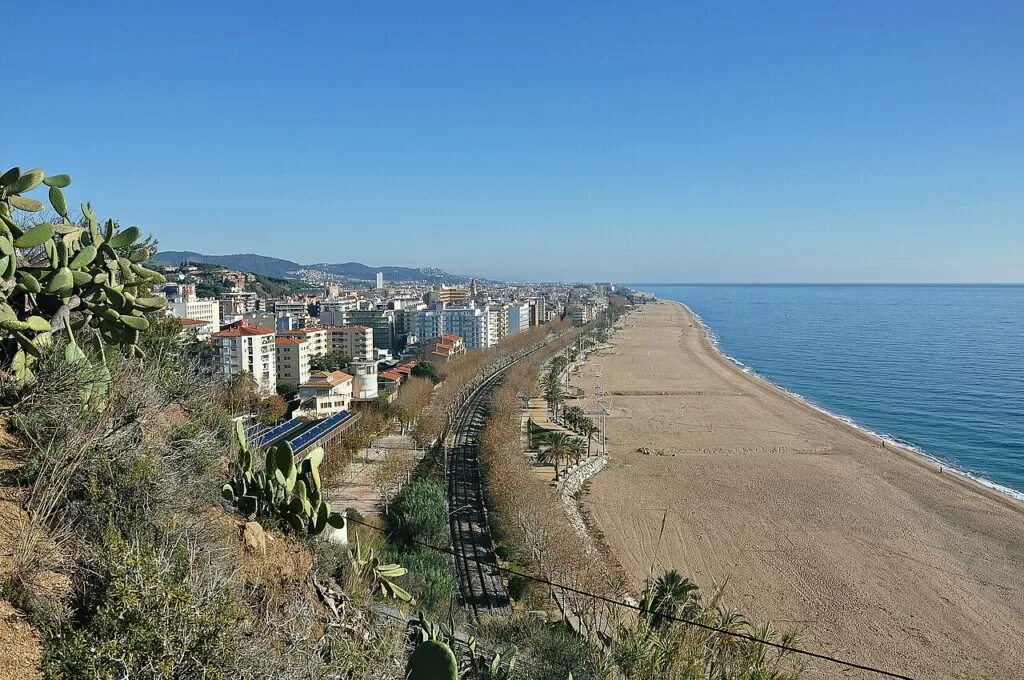
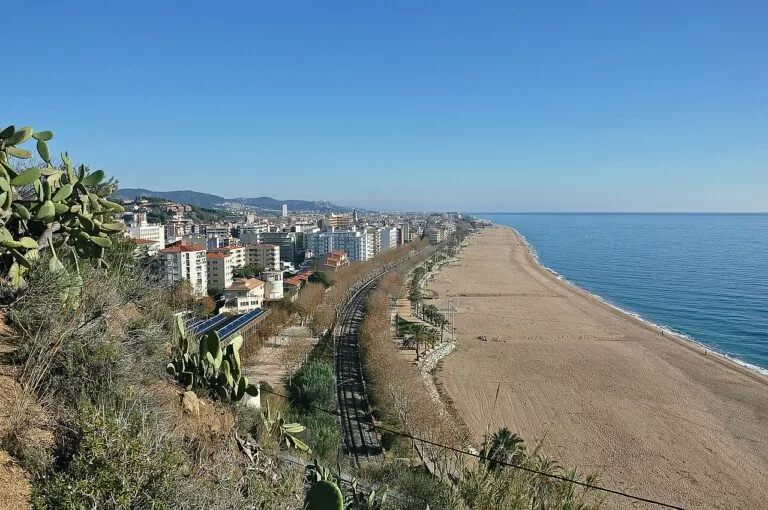
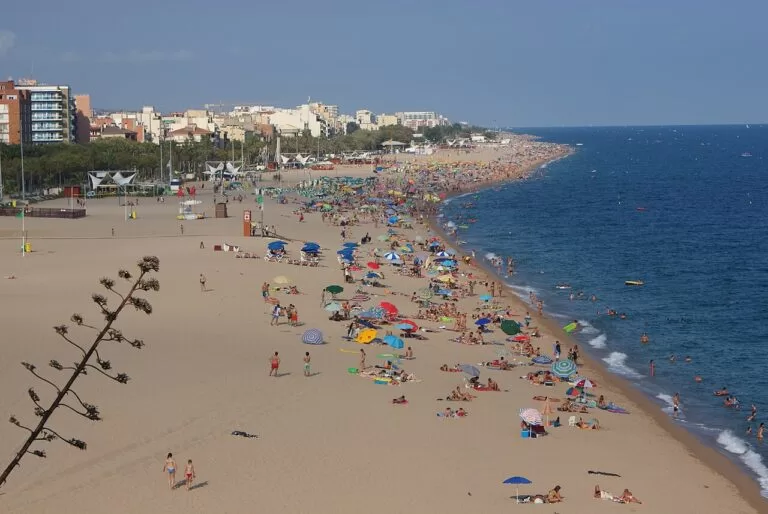
Calella from the lighthouse hill · Photo: Alberto-g-rovi, CC BY-SA 4.0
Part of the Costa del Maresme guide · North: Malgrat de Mar to Calella
Malgrat de Mar, Pineda and Calella are the three resort towns of the northern Costa del Maresme, the Alt Maresme, on about 11 km of almost unbroken sand, in a straight line, from the mouth of the Tordera river to the Calella lighthouse, with Santa Susanna in the middle and the Montnegre hills behind. The R1 coast train stops in every town, about 60 km north-east of Barcelona, and Calella, Malgrat and Pineda are the Maresme towns with the most hotel activity (Catalunya.com).
At a glance
- Where the north of the Maresme comarca, Barcelona province: from the Tordera delta on the border with Blanes and the Costa Brava to the Calella lighthouse and the coves of Les Roques, next to Sant Pol de Mar.
- Towns Malgrat de Mar, Santa Susanna, Pineda de Mar and Calella on the coast; Palafolls and Tordera just inland on the Tordera river.
- Best for family beach holidays, water sports, campsites by the sea, watchtowers and old towns, and walks or rides in the Montnegre.
- Getting there the R1 train from Barcelona stops at Calella, Pineda de Mar, Santa Susanna and Malgrat de Mar. Girona airport is about 30 km away and Barcelona airport about 60–67 km, in a straight line.
- On CostaMap town guides to Malgrat de Mar, Pineda de Mar, Calella and Tordera, the Calella Lighthouse, three campsites and new guides to Punta de la Tordera and Roca Grossa.
Map of Malgrat de Mar, Pineda and Calella
The map shows the places on this stretch that have a CostaMap page. Tick a place type to filter, and click a marker to see the place in the panel.
Place type
Area · next level
 Area map
Malgrat de Mar, Pineda and Calella
Click a marker to see the place here. The northern Maresme, from the Tordera delta at Malgrat to the Calella lighthouse.
Towns and villagesTowns and villages
From north-east to south-west, starting at the Tordera. The four coastal towns share one long beach, separated from the streets by the N-II road and the railway, so you reach the sand through underpasses. Descriptions are from Catalunya.com, the official tourism site of Catalonia, and spain.info; populations are as Catalunya.com gives them.
Malgrat de Mar
Malgrat is the last coastal town of the Maresme, on the alluvial plain of the Tordera delta, between the Maresme coast and the Costa Brava (Catalunya.com). It has 18,504 inhabitants and, according to spain.info, more than 4.5 km of white sand beaches; it carries the Family Holiday Destination brand. It grew around a 14th-century watchtower, whose remains stand in the Castell park with views over the coast. The church of Sant Nicolau, built between 1761 and 1783, is called the cathedral of the coast for its 45 m nave. See our Malgrat de Mar guide.
Palafolls
Palafolls lies just inland on the right bank of the Tordera, with 9,027 inhabitants. Its main sight is the ruined castle on a ridge above the river, which Catalunya.com calls one of the most important medieval works preserved in Catalonia; it was the centre of a barony that included Malgrat, Santa Susanna and part of Blanes (Catalunya.com). The town also has the Palauet sports hall by Arata Isozaki, built in 1997, and a library by Enric Miralles. On the road between Malgrat and Palafolls is the Marineland marine zoo and water park.
Tordera
Tordera, with 18,022 inhabitants, sits in the valley of the Tordera river at the north-eastern end of the Maresme, between the coast and the Montnegre massif, and borders Blanes and Palafolls (Catalunya.com). Its Sunday market is one of the largest and best known in Catalonia, and Catalunya.com says it draws visitors from all over the region from April to November. The Parc Fluvial follows the river with paths and picnic areas. See our Tordera guide.
Santa Susanna
Santa Susanna, between Malgrat and Pineda, is the smallest town of the stretch, with 2,939 inhabitants, and one of the main tourist destinations of the Maresme (Catalunya.com). Its beach of about 2 km is backed by pine groves (spain.info), and it has a nautical station for water sports on Les Dunes beach. The town is known for its watchtowers, built against pirates from the 15th to the 18th centuries: spain.info counts seven, of which two can be visited and one houses the railway station. Santa Susanna has no CostaMap town guide yet.
Pineda de Mar
Pineda de Mar is the largest town of the stretch, with 28,840 inhabitants, and nearly 3 km of beach; the long beach continues into Santa Susanna (Catalunya.com). It is a certified family tourism destination. An inscription on the church of Santa Maria recalls the Turkish corsair attack of 1545. The Fundació Tharrats d’Art Gràfic, in the Can Comas building, holds the graphic work of Joan Josep Tharrats and more than five hundred pieces from his collection, with works by Miró, Dalí and Tàpies (Catalunya.com). Above the town are the ruins of Montpalau castle and remains of the Roman aqueduct of Can Cua. Poblenou, the district on the Calella side, has its own beach. See our Pineda de Mar guide and the seafront Càmping Bellsol.
Calella
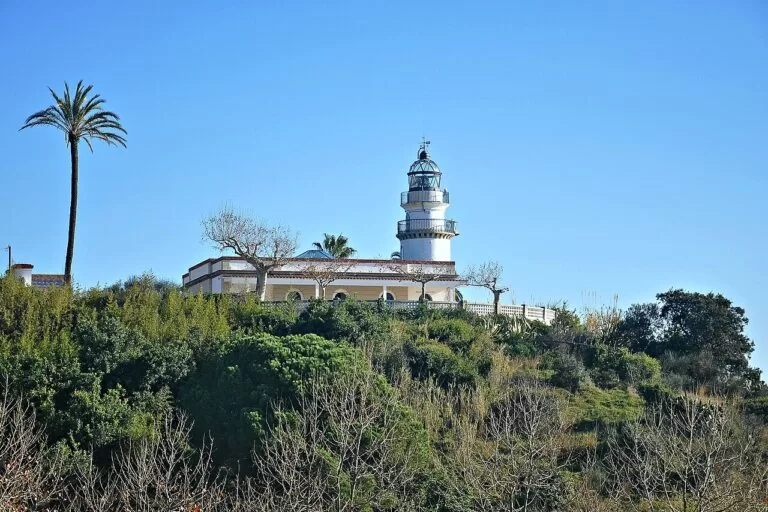
Calella, with 18,529 inhabitants, is the holiday capital of the Costa del Maresme in spain.info’s words, and for many years it was a favourite destination of German visitors (Catalunya.com). The old town keeps its narrow, straight streets around the neoclassical church of Santa Maria i Sant Nicolau,. The Parc Dalmau, designed by Jeroni Martorell, covers more than ten hectares, and a Civil War air-raid shelter from 1937 beside it can be visited. At the south end, the lighthouse of 1859 and the Les Torretes optical telegraph towers stand above the coves. See our Calella guide and the Calella Lighthouse.
Beaches and coves
Coarse sand and a railway line behind almost every beach. Facts are from Catalunya.com’s beach pages; Catalunya.com lists Malgrat Centre and the beaches of Pineda de Mar among the Blue Flag beaches of the Costa Barcelona, without a year, so check the flag on arrival.
Punta de la Tordera
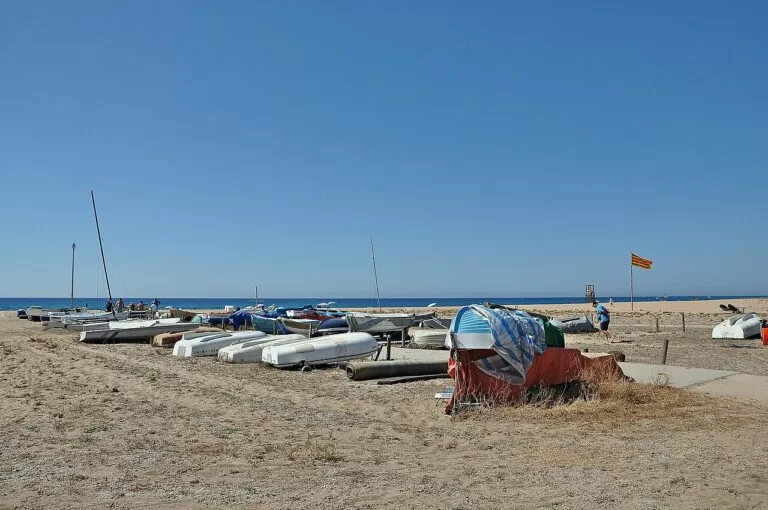
More than a kilometre of coarse sand from the Camí de la Pomereda to the mouth of the Tordera, with dunes, a pine wood, a nudist sector and frequent wind for kitesurfing (Catalunya.com).
See the Punta de la Tordera guide →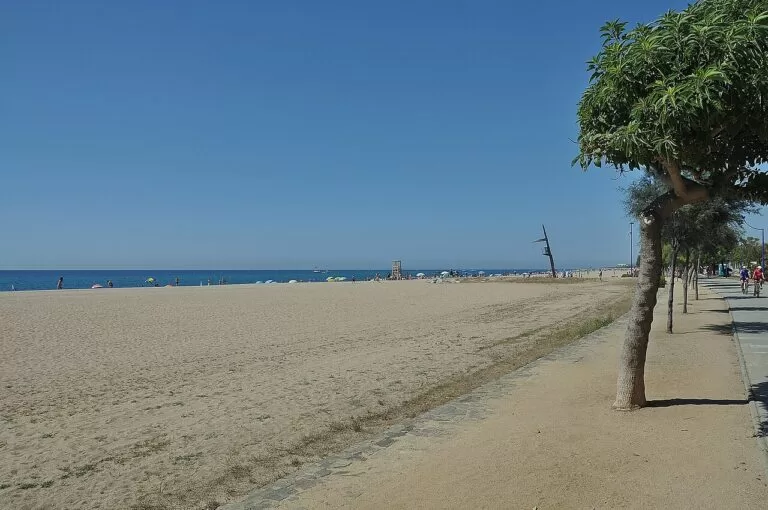
Malgrat Centre and L’Astillero
Malgrat Centre is the main town beach, 900 m of coarse sand with a gradual entry, reached through underpasses under the railway (Catalunya.com). L’Astillero, 1 km long, faces the hotel area and has a children’s miniclub in July and August (Catalunya.com).
Les Dunes, Els Pins and Els Pescadors
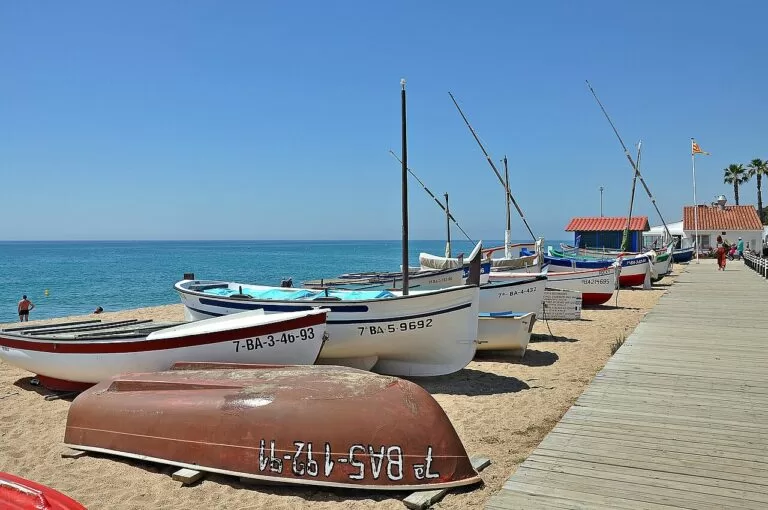
Les Dunes in Santa Susanna is 1,200 m long, quieter than the hotel beach, with the nautical centre’s base (Catalunya.com). In Pineda, Els Pins has a small pine wood and a shallow entry, and Els Pescadors, opposite the station, has the most adapted facilities (Catalunya.com).
Platja Gran and Garbí
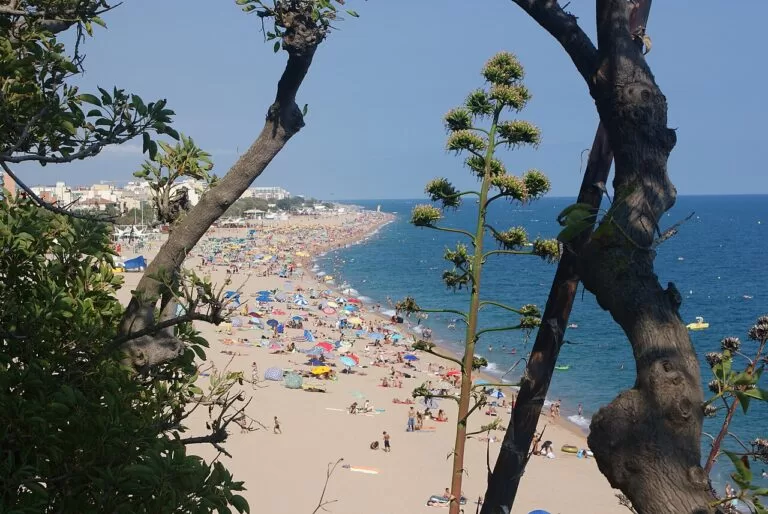
Platja Gran is almost 1.5 km long and about 70 m wide, the busiest beach of the area, with wooden walkways to the shore (Catalunya.com). Garbí, about 1 km long between the Capaspre stream and the lighthouse, was the first beach in Catalonia with the Q quality certificate (Catalunya.com).
Les Roques and Roca Grossa
South of the lighthouse, the coves of Rocapins, La Vinyeta, Cala d’en Pere and Roca Grossa sit between pines and cliffs, unlike the open beaches elsewhere (Catalunya.com). Roca Grossa is about 130 m long, split by rocks into a family half and a nudist half, and good for snorkelling.
See the Roca Grossa guide →Other beaches on the stretch: Pla de Grau, Malgrat’s long northern beach among farmland, which ends at the Tordera; Malgrat Nord, which Catalunya.com calls ideal for windsurfing; La Riera in Pineda, a little over half a kilometre with a shallow entry (Catalunya.com) and Poblenou (Catalunya.com). Catalunya.com names Calella, Santa Susanna and Pineda de Mar as Family Tourism Destinations.
Things to do
History: lighthouse, watchtowers and castles
Santa Susanna keeps the most watchtowers of the Maresme; a tour of the towers is offered locally, though some are private (Catalunya.com). The Calella lighthouse stands where a watchtower once was; its interpretation centre explains maritime signals and optical telegraphy, and you can climb to the top (Catalunya.com).
Nature: the Tordera delta and the Montnegre
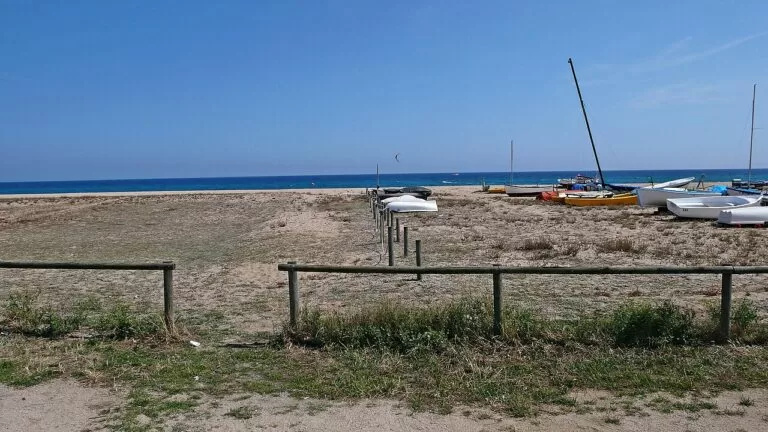
At the mouth of the Tordera a lake, cut off from the sea by a bar of sand and pebbles, is a resting place for migratory birds; the lower river and its small lakes are a protected natural area (Catalunya.com). Behind the towns rise the Montnegre and El Corredor, a protected area of 15,010 ha, more than 95% of it forest, with holm oak, cork oak and chestnut woods (Catalunya.com). The Santa Susanna–Montnegre centre has signposted mountain-bike routes.
Food: ganxet beans, strawberries and market days
The local bean is the mongeta del ganxet, grown in Malgrat, Palafolls and the Tordera plain; Malgrat holds autumn food days around it (Catalunya.com). Calella’s greenhouse strawberries are well known, and Calella holds a strawberry fair in May (Catalunya.com, Maresme). On Sundays, the Tordera market is the big one.
Where to stay by town
We do not name hotels. Catalunya.com names Calella, Malgrat de Mar and Pineda de Mar as the towns with the most hotel activity in the Maresme; all four coastal towns have R1 stations.
Calella
The liveliest base, with a pedestrian shopping centre, the most nightlife and the lighthouse coves within walking distance; the closest to Barcelona.
Nightlife, a first visit
Pineda de Mar and Santa Susanna
Family tourism towns with long beaches, water sports at Les Dunes, campsites by the sea and the Montnegre close behind.
Families, water sports
Malgrat de Mar
Long beaches, a row of campsites near the Tordera delta and the shortest trip to Blanes and the Costa Brava.
Camping, beaches and birdsCampsites with a CostaMap page: Camping del Mar in front of the beach in Malgrat, Càmping Bellsol on the seafront in Pineda, and inland Vila Village in Hostalric, about 15 km up the Tordera valley; see also our Hostalric guide.
Getting there and around
By train
The R1 Rodalies line runs along the whole Maresme coast with frequent stops (Catalunya.com). On this stretch it stops at Calella, Pineda de Mar, Santa Susanna and Malgrat de Mar, then at Blanes; Tordera also has an R1 station. We could not confirm current timetables.
By air
Girona airport is about 29–33 km away in a straight line, Barcelona airport 60–67 km.
By car and locally
The N-II runs along the coast through every town, and the C-32 motorway runs parallel inland. Locally, Santa Susanna has the Cuc tourist train every thirty minutes and a minibus from the station on weekdays (Catalunya.com); Palafolls has buses to Blanes and Malgrat. The promenades are flat and good for walking and cycling.
A two-day route
By train and on foot, with a night in Pineda de Mar or Calella.
Day 1
Malgrat, the Tordera delta and Santa Susanna
Take the R1 to Malgrat de Mar and see the church of Sant Nicolau and the Castell park. Walk or cycle north along the beaches to the Punta de la Tordera and the river mouth to look for birds. In the afternoon return to Santa Susanna for a swim at Les Dunes or a water-sports session at the nautical centre, and ride the Cuc train past the watchtowers.
Day 2
Pineda, Calella and the lighthouse coves
See the Tharrats foundation in Pineda’s Can Comas in the morning, then follow the seafront to Calella: the old town around Santa Maria, the Parc Dalmau and its air-raid shelter. In the afternoon climb to the lighthouse and Les Torretes, and finish with a swim and snorkel at Roca Grossa before the train back from Calella or Sant Pol de Mar.
FAQ
Which is better, Calella or Pineda de Mar?
Calella for a livelier town with more nightlife, a pedestrian centre and the lighthouse coves; Pineda de Mar for a certified family destination with long, slightly quieter beaches. They are next to each other on the same beach and train line.
How far is Calella from Barcelona?
About 48 km from the city centre in a straight line. The R1 coast train runs from Barcelona through Mataró to Calella and on to Malgrat de Mar and Blanes.
Which airport is closest to Malgrat de Mar?
Girona airport, about 29 km away in a straight line. Barcelona airport is about 67 km away and has more flights.
Is there a nudist beach near Calella?
Yes. The coves south of the Calella lighthouse include La Vinyeta and Cala d’en Pere, which Catalunya.com lists as nudist, and part of Roca Grossa. In Malgrat, the Punta de la Tordera beach has a nudist sector near the river mouth.
Are the beaches good for children?
Many are. Catalunya.com describes a shallow entry at Els Pins and La Riera in Pineda, a gradual entry at Malgrat Centre, and a children’s miniclub at L’Astillero in July and August.
Other areas of the Costa del Maresme
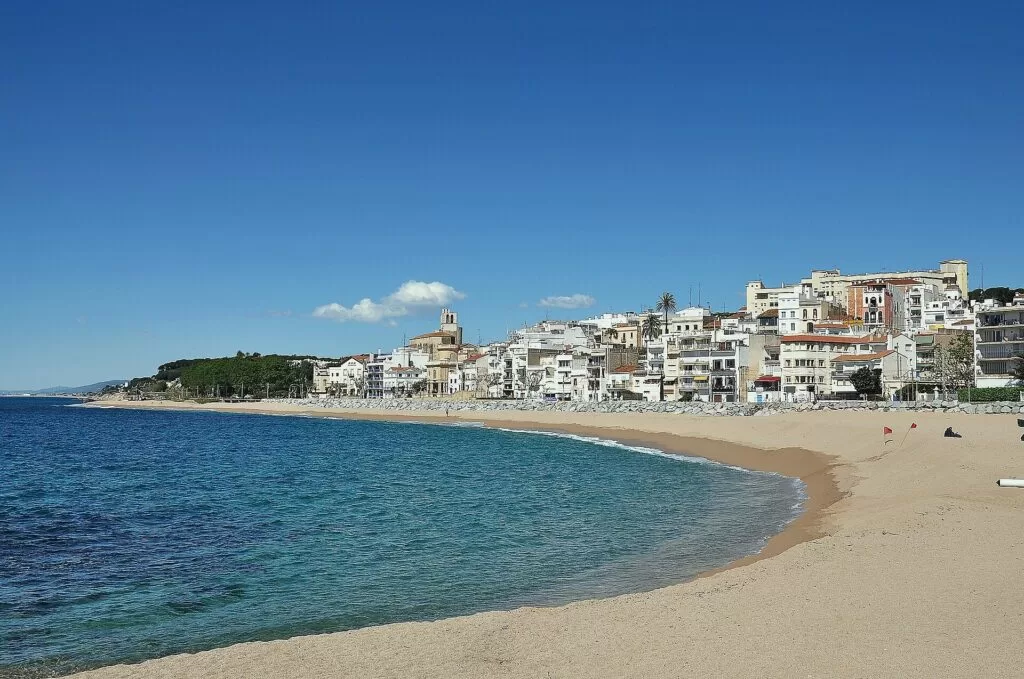
Costa del Maresme
The whole Maresme coast from Malgrat de Mar to El Masnou, with the map, the three areas and the inland day trips.
Costa del Maresme guide →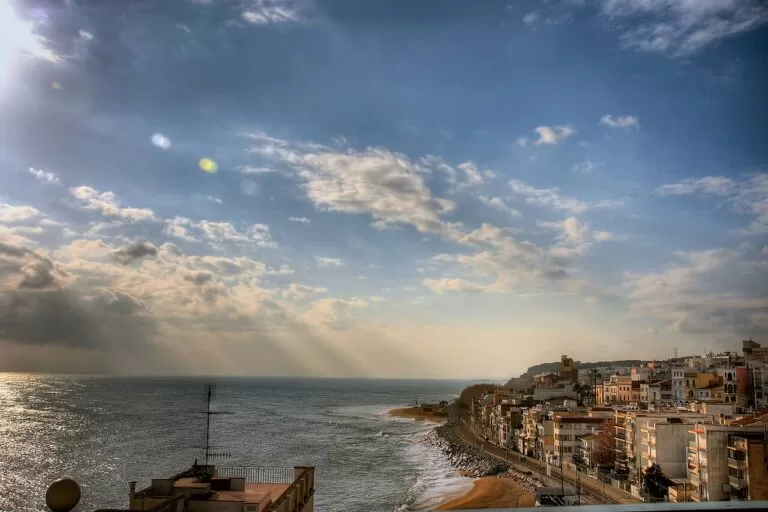
Sant Pol de Mar to Caldes d’Estrac
Smaller towns: the white houses of Sant Pol, Modernisme in Canet, the fishing port of Arenys and the thermal baths of Caldes d’Estrac.
Sant Pol to Caldes d’Estrac guide →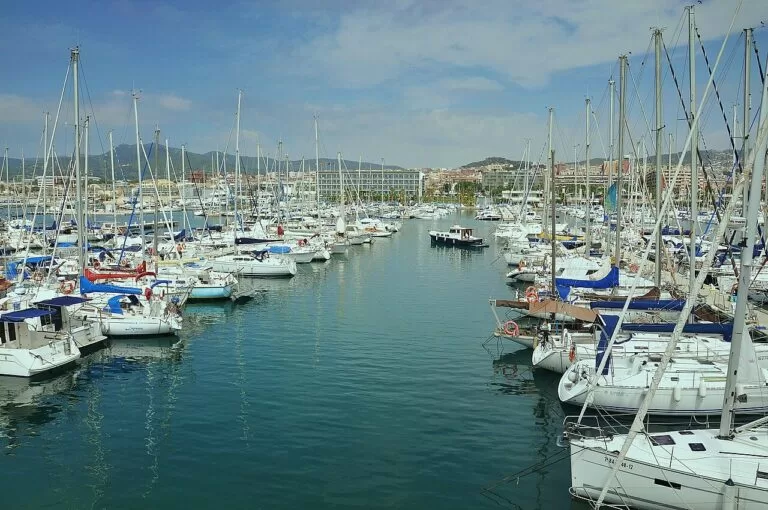
Mataró to El Masnou
Mataró, the capital of the comarca, then the marinas and the DO Alella vineyards on the way towards Barcelona.
Mataró to El Masnou guide →Across the Tordera, the Costa Brava begins at Blanes, with the Marimurtra Botanical Garden about 4 km from the river mouth.
Sources and freshness
Checked 9 November 2026. Catalunya.com (Agència Catalana de Turisme) on the Maresme and the towns of Malgrat de Mar, Palafolls, Tordera, Santa Susanna, Pineda de Mar and Calella; the beaches La Punta de la Tordera, Malgrat Centre, L’Astillero, Les Dunes, Els Pins, Els Pescadors, La Riera, Poblenou, Platja Gran, Garbí, Les Roques and Roca Grossa; the Riu i Estanys de Tordera and Montnegre-El Corredor protected areas; the Tharrats foundation, Sant Nicolau church, Parc Dalmau, the Calella lighthouse and the Santa Susanna watchtowers. Spain.info on Calella, Malgrat de Mar, Santa Susanna and the Costa Barcelona; Catalunya.com on the Costa de Barcelona (hotel activity, Blue Flag and family labels). Stations, roads and straight-line distances: OpenStreetMap (ODbL). Not confirmed: train timetables, C-32 toll rules, Blue Flag status for 2026, lifeguard hours, Marineland’s current shows and opening. The town hall sites, Turisme Maresme and Rodalies could not be reached when we checked. Photos from Wikimedia Commons, not altered except for cropping: Calella from the lighthouse hill by Alberto-g-rovi (CC BY-SA 4.0); Malgrat de Mar, three photos, by Alberto-g-rovi (CC BY 3.0, CC BY 3.0, CC BY 3.0); Torre Bombai, Malgrat de Mar, by Alberto-g-rovi (CC BY-SA 4.0); Pineda de Mar by Alberto-g-rovi (CC BY 3.0) and by marek7400 (CC BY 3.0, CC BY 3.0); Calella by Mari0T (CC BY-SA 3.0, CC BY-SA 3.0); Calella lighthouse by Alberto-g-rovi (CC BY-SA 4.0); Sant Pol de Mar by Alberto-g-rovi (CC BY-SA 4.0) and by miki (CC BY-SA 3.0); Mataró by Alberto-g-rovi (CC BY 3.0).