
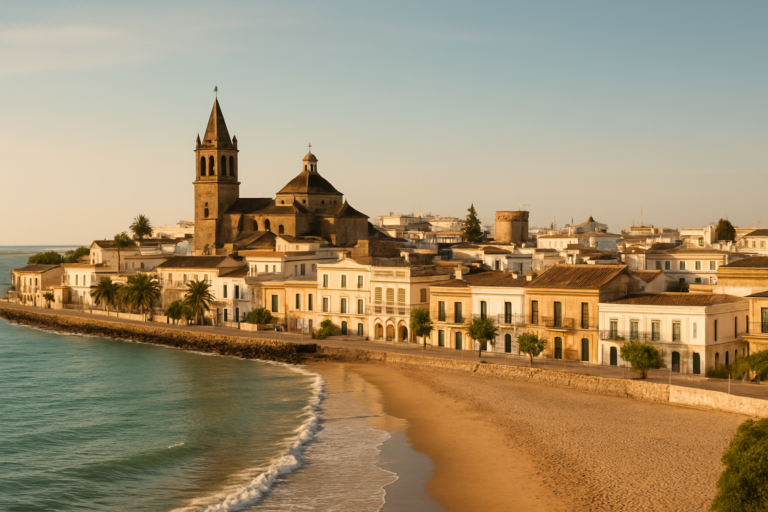
Expect a town where naval history and everyday Andalusian life sit cheek by jowl. This is a place shaped by the sea and by 19th‑century liberal politics rather than glossy tourist façades: expect museums, military monuments, working streets, a vast dune-backed beach and strong local traditions, especially flamenco and carnival. If you want palm‑tree promenades and non‑stop nightlife, you may prefer neighbouring Cádiz; if you enjoy layered history, fresh seafood and long, low‑tide beaches, this island town rewards a slower, curious pace.
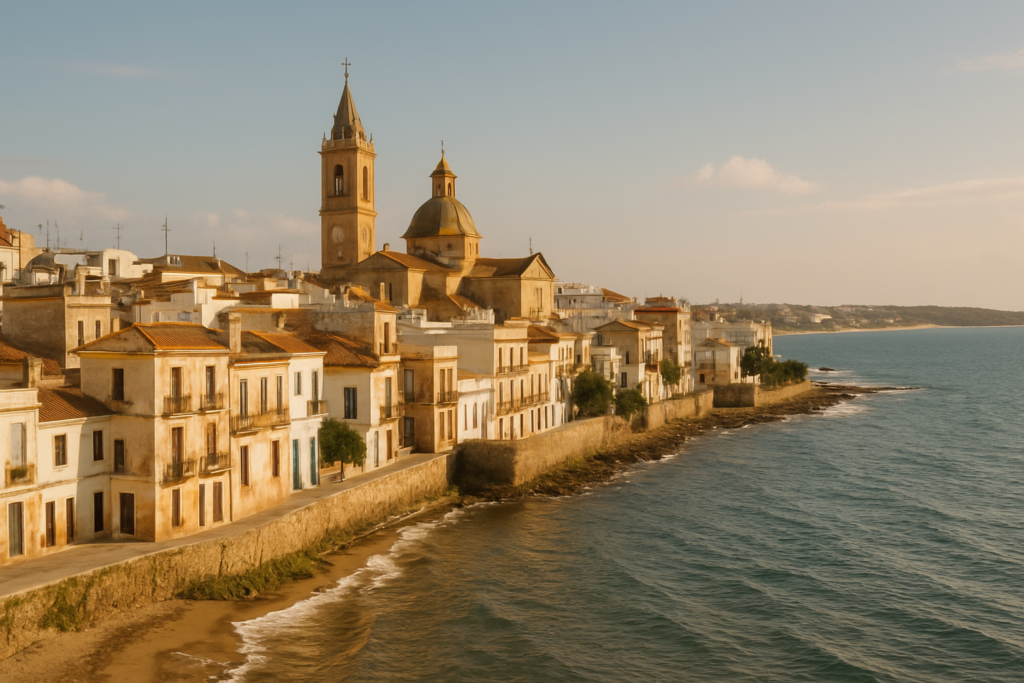
San Fernando at a glance
- Historic naval town on the Isla de León, province of Cádiz, Andalusia, Spain.
- Deep naval heritage: La Carraca arsenal, the Royal Naval Observatory and a Naval Museum reflect an 18th‑century military presence.
- Important site in Spain’s constitutional history — the Cortes prepared the first liberal constitution (La Pepa) here during 1810–1812.
- Long Calle Real is the neoclassical spine with white houses, lattice balconies and the Town Hall.
- Playas and nature: Playa de Camposoto is a long, Blue Flag beach backed by dunes and dramatic low‑tide scenery; the town is ringed by the Bahía de Cádiz Natural Park.
- Strong cultural traditions: birthplace of flamenco legend Camarón de la Isla and a lively Carnival tied to Cádiz’s festival calendar.
- Local cuisine focuses on seafood — notable dishes include tortillitas de camarones and bienmesabe.
Things to do in San Fernando
There’s a compact itinerary here for history buffs, seaside walkers and food lovers. Start with the naval and constitutional landmarks, stroll Calle Real to feel the town’s classic spine, and save time for the dunes and long beach. The attractions are best taken at an unhurried pace: museums and fortresses tell the story of an island that has been strategically important for centuries.
| Attraction | What it is | Price / entry | Best for |
|---|---|---|---|
| La Carraca arsenal | Historic naval arsenal reflecting the town’s military role since the 18th century | – | Naval history and architecture |
| Royal Naval Observatory | Naval observatory tied to the town’s maritime tradition | – | Maritime heritage interest |
| Naval Museum | Museum exhibiting the naval role of the town since the 18th century | – | Families and history buffs |
| Castillo de San Romualdo | Islamic‑origin fortress housing the Municipal Historical Museum | – | Local history and museum displays |
| Teatro Cómico | Historic theatre that was a meeting place for the Cortes of Cádiz deputies in 1810 | – | Constitutional history and architecture |
| Panteón de Marinos Ilustres | Monument and pantheon dedicated to illustrious mariners | – | Maritime memorials and monuments |
| Playa de Camposoto | Long, unspoilt Blue Flag beach backed by dunes | – | Beach walks, low‑tide scenery, windsurfing/kite activities (where available) |
Naval heritage trail
The town’s naval identity is unavoidable. Visit the La Carraca arsenal, the Royal Naval Observatory and the Naval Museum to trace Spain’s maritime and military history from the 18th century onwards. These institutions collectively explain why the town grew as a naval support centre and why so many monuments and civic buildings reflect a seafaring elite. Expect regimented, purpose‑built architecture rather than baroque showpieces.
Constitutional sites and 19th‑century history
San Fernando played a direct role in Spain’s struggle against Napoleonic occupation: deputies preparing the first liberal constitution (La Pepa) met here during the Peninsular War. The Teatro Cómico was a meeting place for those deputies, and local museums and civic spaces point back to that constitutional legacy. The town’s historical narrative is tied to resistance during the siege of Cádiz — an important context for understanding its public monuments and commemorations.
Castillo de San Romualdo and the Municipal Historical Museum
The Castillo de San Romualdo, of Islamic origin, anchors the town’s museum circuit. Its chronological exhibition rooms present local history within the fortress walls; the building itself is as instructive as the displays. Nearby civic streets and plazas make it easy to combine the castle visit with a stroll along Calle Real.
Where people go to feel the sea
Walks out to the salt flats and marshes of the Bahía de Cádiz Natural Park give a sense of the landscape that shaped the town: tides, birds, salinas and flat vistas. The park’s marshes and dunes are part of the town’s identity — bring binoculars if you birdwatch, and expect expansive, windy horizons rather than sheltered coves.
Best beaches in the area
The shoreline here is linear and dramatic at low tide, with sandy stretches backed by dunes rather than built promenades. The principal beach is long, natural and tends to be wind‑shaped rather than palm‑lined.
| Beach | Character | Facilities / Blue Flag |
|---|---|---|
| Playa de Camposoto | Long, unspoilt sandy strand backed by dunes; dramatic at low tide | Blue Flag; natural dunes |
San Fernando with kids
Children respond well to the mix of outdoor play and accessible museums. The Naval Museum and the Municipal Historical Museum in the Castillo de San Romualdo offer tangible displays that help bring history to life, and the long beach is an obvious space for running and exploration when conditions are calm. Keep expectations realistic: this isn’t a purpose‑built family resort with entertainment complexes, but it offers safe, open places for active kids.
How to get to the town and get around
The town sits on the Isla de León, adjacent to Cádiz and surrounded by the Bahía de Cádiz Natural Park. Once here, the centre is walkable: Calle Real is the main axis and links many civic landmarks. Connections to nearby cities make day trips straightforward, and the local urban layout suits walking, short taxi rides or local buses for longer hops.
Where to stay in San Fernando
Accommodation tends to cluster in a few walkable neighbourhood types rather than large resort zones:
- Calle Real / historic centre — best for first‑time visitors who want immediate access to museums, Town Hall and cafés.
- Near the naval installations and Panteón de Marinos Ilustres — suits history and naval‑heritage interest.
- Close to Playa de Camposoto — for beach access and dune walking; quieter and more outdoors‑oriented.
Best time to visit
Festival and outdoor rhythms shape a visit. The Carnival in February, tied to Cádiz’s famous celebration, is a lively highlight and can transform the town into a busy, colourful place. Otherwise, much of the appeal is seasonal — beach and marsh walks suit calm, drier months, while museums are a fallback in unsettled weather.
| Season | Months | What to expect |
|---|---|---|
| Winter | December–February | Carnival in February is a lively local highlight; town life remains year‑round |
| Spring–Autumn | March–November | Good for beach and marshland walks; museums and historic sites are open throughout this period |
History of the town
The town’s story is maritime and constitutional. Its naval installations and observatory tie it to Spain’s 18th‑century naval expansion; La Carraca and other naval institutions mark its strategic role. During the Peninsular War the town and nearby Cádiz were never occupied by the French, and deputies used local venues while preparing Spain’s first liberal constitution — La Pepa — between 1810 and 1812. The Teatro Cómico figures in that era as a gathering place for deputies. The Panteón de Marinos Ilustres and various monuments commemorate a long maritime tradition, while the town’s identity as La Isla and its local nicknames (Cañaíllas, Isleños) reflect that island and seafaring heritage. Contemporary culture retains strong links to flamenco: the town is the birthplace of Camarón de la Isla, an artist who revolutionised the genre.
Practical info
- Local names: residents are known locally as “Cañaíllas” or “Isleños,” and the town is also called “La Isla.”
- Cuisine: local food centres on the sea — look for tortillitas de camarones, bienmesabe and local crab specialties in tavernas and tapas bars.
- Civic layout: Calle Real is the main neoclassical thoroughfare and a convenient spine for walking between sights.
- Natural spaces: the town is ringed by the Bahía de Cádiz Natural Park and includes salt flats (salinas) and dune systems that shape the shoreline and birdlife.
- Notable people: flamenco singer Camarón de la Isla, dancer Sara Baras, politician Magdalena Álvarez and singer Abraham Mateo all have roots here.
- International links: the town is twinned with Montigny‑le‑Bretonneux, France.
Worth it for: people who love maritime history, constitutional-era monuments, authentic local cuisine and long, wild beaches. Less so if: you expect a non‑stop resort scene, flashy beachfront promenades or large tourist complexes — those are more typical of neighbouring coastal cities.
How we assess this guide
We compile this guide by cross‑checking municipal, historical and cultural sources to flag closures, confirm institutional histories and verify festivals and notable people. We do not conduct first‑hand reporting for every detail, so we emphasise verifiable facts and call out current statuses where they materially affect a visitor’s plans.
Frequently asked questions
How did the town contribute to Spain’s first constitution?
During the Peninsular War (against Napoleonic forces), deputies preparing Spain’s first liberal constitution — known as La Pepa — used meeting places in the town while Cádiz was besieged. The town was a seat of constitutional activity between 1810 and 1812.
Is there a notable naval or maritime museum to visit?
Yes. The Naval Museum and nearby institutions such as the La Carraca arsenal and the Royal Naval Observatory are central to understanding the town’s maritime and naval role dating from the 18th century.
Which beach should I visit?
Playa de Camposoto is the principal beach: a long, unspoilt Blue Flag strand backed by dunes and known for dramatic low‑tide scenery.
When is Carnival and is it worth planning around?
The town’s Carnival in February, part of the Cádiz carnival tradition, is one of the liveliest times locally. Visitors seeking festival atmosphere will find February an especially engaging time to visit.
Was Camarón de la Isla from here?
Yes. Camarón de la Isla, the flamenco singer who revolutionised the genre, was born in the town.
Are there historic fortifications to explore?
The Castillo de San Romualdo is a fortress of Islamic origin that now houses the Municipal Historical Museum, offering both architecture and chronological exhibitions about local history.
Is the town kid‑friendly?
Yes. Families can combine museum visits (Naval Museum, Municipal Historical Museum) with outdoor time on the long beach and walks in the nearby natural park.
Can I visit salt flats and marshes nearby?
Yes. The town is ringed by parts of the Bahía de Cádiz Natural Park, where marshes, salinas and dunes form a large natural landscape open for walks and birdwatching.
What street should I walk to get a feel for the place?
Calle Real is the town’s neoclassical spine — lined with white houses, latticework balconies and the Town Hall — and is the best place for a first walk.
Who are some other notable people from here?
Besides Camarón de la Isla, other notable figures with roots in the town include Sara Baras, Magdalena Álvarez and Abraham Mateo.
Is the town easy to walk around?
Yes. The historic centre is compact and walkable, with Calle Real acting as the main artery linking museums, civic buildings and cafés.
Is the town twinned with any foreign city?
Yes. The town is twinned with Montigny‑le‑Bretonneux, France.
How many people live here?
The town is home to more than 97,500 inhabitants.
Were the town and Cádiz occupied by the French during the Peninsular War?
No. During the Peninsular War, the town and Cádiz were never occupied by the French, which helped make Cádiz and its surroundings a centre for liberal deputies and constitutional activity.
Plan the wider trip
- Costa de la Luz guide
- Cádiz
- Chiclana de la Frontera
- El Puerto de Santa María
- Jerez de la Frontera
- Algeciras
Nearby on the Costa de la Luz
How this page is maintained. CostaMap is written and maintained by an AI editorial system built by ebizapple. Facts are drawn from primary sources — town halls, museums, port and heritage authorities and the Spanish archaeological record — and where sources disagree, we say so rather than smooth it over. Photographs marked as ours are taken on location. This page was last reviewed on 27 July 2026. Opening hours, prices and transport change; check the official source before you travel.