
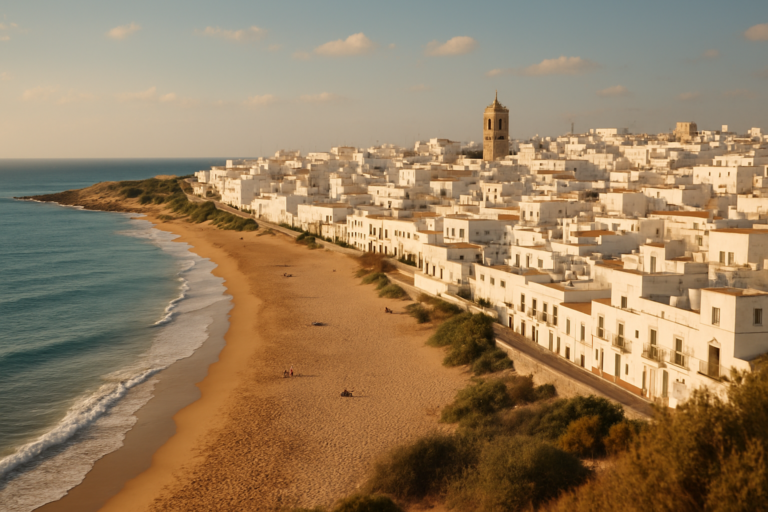
Set your expectations: this is a compact, whitewashed hill town where the skyline is dominated by a Moorish castle and a tangle of narrow lanes, not a sprawling resort. Travel here for atmospheric streets, strong local food—especially tuna from the Almadraba—and quick access to wild Atlantic beaches. The steep streets and medieval walls mean the old town rewards walkers but can be tiring for those with mobility limits.
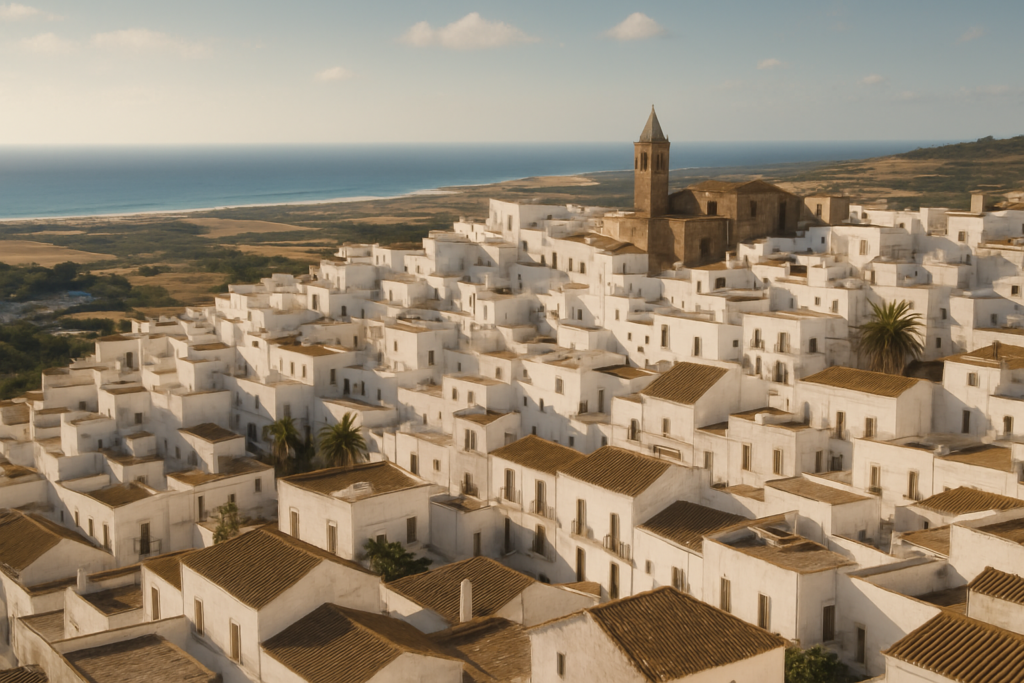
Vejer de la Frontera at a glance
- Hilltop white town a few kilometres inland from the Costa de la Luz with medieval walls and a maze of narrow streets.
- Historic castle on the highest point of the old town dates from the Moorish period.
- Excellent local tuna gastronomy: almadraba bluefin tuna from the Cádiz coast features on menus.
- Close to wild Atlantic beaches such as El Palmar (surfing, sunsets) and Zahara de los Atunes.
- Church of the Divino Salvador blends Mudéjar and Gothic styles and stands on the site of a former mosque.
- About 50 km southeast of Cádiz city along the coastal corridor near the N-340.
- Traditional culture visible in the historic cobijada costume and the town’s Jewish and Moorish quarters.
Things to do in the town
Vejer rewards a relaxed pace: wandering the white streets, stopping for tuna dishes, and climbing to viewpoints around the medieval walls. Use the village as a base for beach days on the Costa de la Luz or excursions to Roman ruins along the coast.
| Attraction | What it is | Price/entry | Best for |
|---|---|---|---|
| Vejer castle | Moorish-period fortress at the town’s highest point | – | Panoramic views, history lovers |
| Church of the Divino Salvador | Mudéjar-Gothic church built on a former mosque site | – | Architecture, religious history |
| La Judería & Moorish quarter | Historic neighbourhoods of narrow lanes and patios | – | Photographers, wanderers |
| Windmills ridge | Line of windmills recalling strong Levante and Poniente winds | – | Short hikes, coastal vistas |
| Baelo Claudia (excursion) | Roman site at Bolonia beach—easy coastal excursion | – | History buffs, beach + ruins day trips |
The castle and viewpoints
The fortress crowns the town and marks the high point of the old quarter. From the castle area you can take in sweeping views over the white houses, the medieval walls and the distant coastal plain. The defensive walls and surviving gateways concentrate the town’s medieval character around the Plaza de España, which features a tiled fountain at its centre.
Strolling the old town: La Judería and Moorish quarter
The town’s appeal is mostly visual and atmospheric: a maze of whitewashed streets, arches and flower-filled patios. The Jewish quarter (La Judería) and the Moorish quarter are where the layered medieval history is most obvious—with narrow alleys that open into small plazas and lookouts. Look for architectural details and the traditional cobijada costume as cultural markers around town.
Religious architecture: Church of the Divino Salvador
Sited on the footprint of an earlier mosque, the Church of the Divino Salvador is a blend of Mudéjar and Gothic styles. It stands within the old town and is a useful stop to see how Christian and Islamic building traditions interwove in Andalusia’s towns.
Best beaches in the area
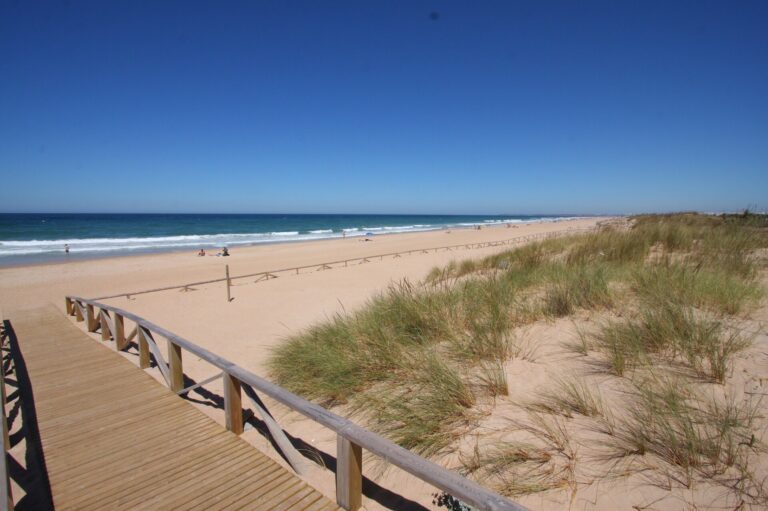
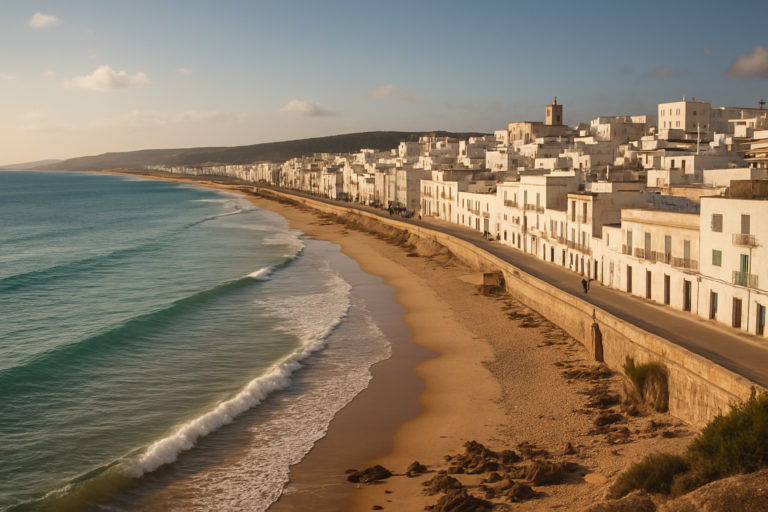
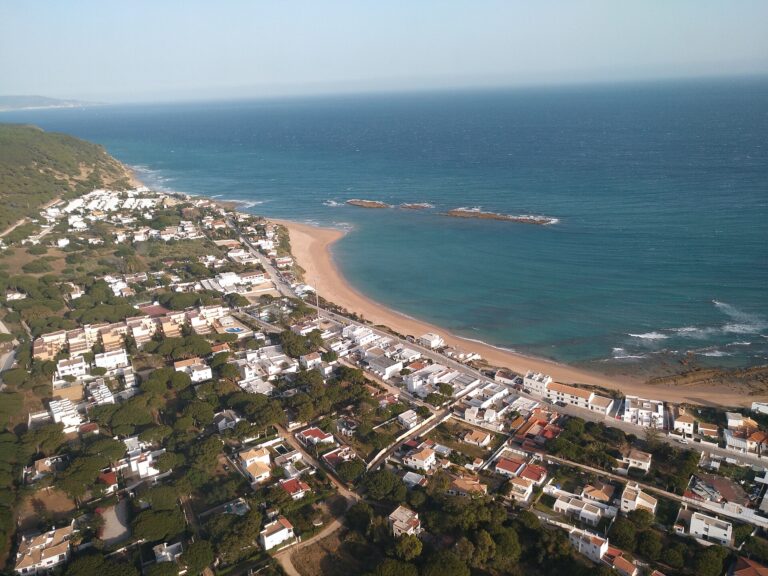
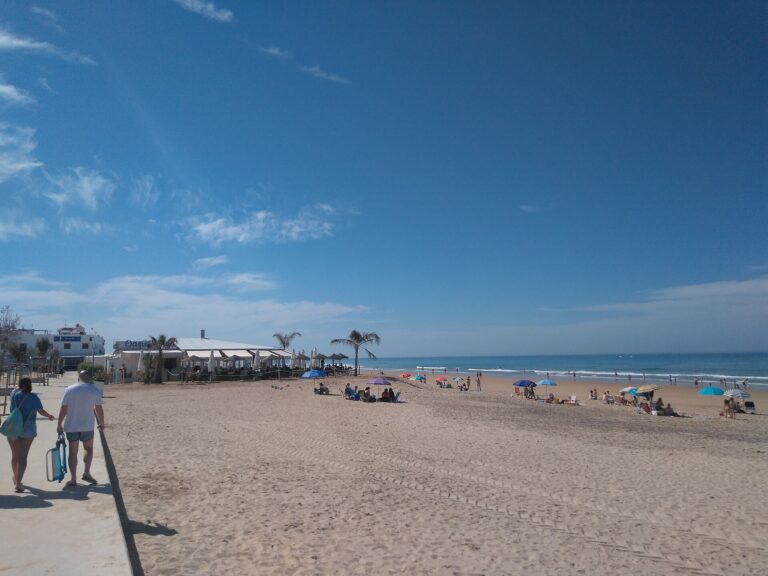
The coastline near the town belongs to the Costa de la Luz and favours wild Atlantic beaches rather than sheltered Mediterranean coves. Expect long sandy stretches, strong winds at times, and surf-friendly breaks.
| Beach | Character | Facilities / Blue Flag |
|---|---|---|
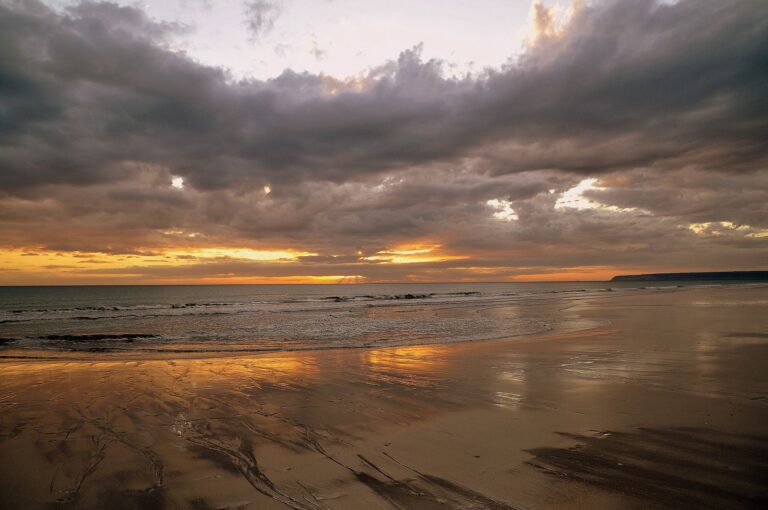
| El Palmar | Wild, sandy surf beach known for sunsets and consistent waves | – |
| Zahara de los Atunes | Beach resort on the Costa de la Luz with a long sandy shore | – |
| Bolonia | Sand dunes and Roman ruins nearby (Baelo Claudia); scenic and historic | – |
Vejer with kids
The town’s compact size makes it manageable for families who can handle short uphill walks and cobbled streets. Children tend to enjoy exploring narrow lanes, spotting windmills and spending beach days at nearby sands where there’s room to run. Keep in mind the climbs to viewpoints and the uneven paving in the historic centre.
How to get to the area and get around
The town sits a short drive inland from the Costa de la Luz and is accessed via the coastal corridor near the N-340 between Cádiz and Tarifa. Most visitors reach the town by car, making it a convenient base for exploring nearby beaches and coastal ruins.
| From | By | Approx time |
|---|---|---|
| Cádiz city | Car via coastal roads (N-340) | – |
| Coastal beaches (El Palmar, Zahara) | Car or local roads | – |
Where to stay in the town
- Old town (hilltop): Best for atmosphere, walking distance to historic sights and viewpoints; expect narrow streets and steps.
- Outskirts and countryside near the coast: Suits those who want quicker access to beaches and quieter lodgings while still being within easy driving distance of the town centre.
- Coastal villages and resorts: Use these if you prioritise long beach days and surfing; the town serves as an atmospheric evening destination from the shore.
Best time to visit
There’s no single perfect month provided in the verified facts, but the town functions well as a year-round base for combining hilltop exploration with Atlantic beach days. Winds (Levante and Poniente) are a local feature to be aware of, influencing beach and sea conditions.
History of the town
The settlement’s visible layers include Moorish and medieval elements: the castle dates from the Moorish period, and the old town grew within medieval walls with surviving gateways. The Church of the Divino Salvador occupies the site of a former mosque, reflecting the town’s transition after the Reconquest. Jewish and Moorish quarters survive in the street plan and place names, while windmills on nearby ridges signal the long-standing climatic character of the Cádiz coast.
Practical info
- Topography: The historic centre sits on a hill; expect steep, cobbled streets and steps that may challenge mobility and luggage-carrying.
- Road access: The town lies near the N-340 coastal route between Cádiz and Tarifa, making it convenient by car for coastal exploration.
- Culinary note: The area is famed for almadraba bluefin tuna landed off the Cádiz coast and served in local restaurants—this is a regional food highlight.
- Views & walking: The medieval walls and Plaza de España are focal points for strolling and viewpoints; pack sensible shoes for uneven paving.
Worth it for: walkers who enjoy whitewashed hill towns, panoramic viewpoints from a Moorish castle, and seafood—especially Almadraba tuna—plus easy access to wild Atlantic beaches. Less so if: you need a flat, fully accessible centre or prefer busy, built-up seaside resorts with extensive tourist infrastructure.
How we assess this guide
This guide collates verified claims about the town’s history, geography and notable features from multiple vetted sources. We flag cultural and status facts (for example, historic sites and local culinary specialties) and avoid making unverified claims about opening hours, prices or services. This is an editorial synthesis rather than on-the-ground reporting.
Nearby on the Costa de la Luz
Towns near Vejer de la Frontera
- Barbate — 8 km south-east, an Atlantic tuna port
- Conil de la Frontera — 11 km west, a white old town, Atlantic beaches
- Chiclana de la Frontera — 25 km north-west, What Chiclana de la Frontera is really like
- Puerto Real — 37 km north-west, a royal-founded town on the Bay of Cádiz
- Los Barrios — 43 km east, gateway to the Los Alcornocales cork forest and Palmones estuary
- El Puerto de Santa María — 46 km north-west, What El Puerto de Santa María is really like
For the wider picture, see the Costa de la Luz guide, which lists every town on this coast.
Frequently asked questions
How do I get from Cádiz city to the town?
The town sits about 50 km southeast of Cádiz city along the coastal corridor near the N-340. Most visitors travel by car or regional road connections that follow the coast; the drive places the town within convenient reach of Cádiz and other Costa de la Luz destinations.
Is the town expensive to visit?
We do not have verified price data in the sources used for this guide. The town’s attractions are concentrated and many highlights are public streets, viewpoints and historic exteriors. Dining out locally is notable for regional specialities such as almadraba bluefin tuna.
Which nearby beach is best for surfing and sunsets?
El Palmar is known for surfing and sunsets and is one of the wild Atlantic beaches near the town on the Costa de la Luz.
Can I combine a beach day with a visit to Roman ruins?
Yes. The Roman site of Baelo Claudia at Bolonia beach is an easy coastal excursion from the town, making it straightforward to pair sandy beaches with archaeological sightseeing.
How many days should I allow to see the highlights?
The town’s compact historic centre concentrates the main sights—castle, church, Plaza de España and the Moorish and Jewish quarters—so a short stay will cover the essentials. Use extra days to explore nearby beaches and Roman ruins along the coast.
Is the area family-friendly?
The town and nearby beaches are family-appropriate: the old town’s narrow streets and viewpoints appeal to children who like exploring, while the coast offers space and surf. Note the uphill cobbles and steps in the historic centre.
Can I get around without a car?
Walking covers the hilltop old town; however, to reach different beaches and coastal sites more efficiently—especially if you want to visit El Palmar, Zahara de los Atunes or Baelo Claudia—having a car or using local road transport is the usual approach.
Is parking available near the historic centre?
The verified facts note the town’s hilltop location and medieval walls. That terrain typically means parking lies on the outskirts with pedestrianised or stepped access into the heart of the old town; check local signage when you arrive.
What are rainy-day options?
Indoor attractions documented in the sources include the Church of the Divino Salvador and the atmospheric indoor spaces of the old town. Many enjoyable activities are walking and dining, but specific museums or their opening statuses were not provided in the verified claims.
When are the winds strongest?
Windmills on the nearby ridge recall the region’s strong Levante and Poniente winds; these winds shape coastal conditions and can be notable for beachgoers and sailors.
Are there any local cultural symbols to look out for?
The historic cobijada costume is a distinctive local cultural symbol; you may see references to it in cultural displays or interpretation around the town.
Which religious building should I visit?
The Church of the Divino Salvador is the principal religious building highlighted in the verified facts—important for its Mudéjar and Gothic mixture and its siting on a former mosque.
Is this town listed among Spain’s beautiful villages?
The town is regularly listed among Spain’s most beautiful villages for its maze of narrow whitewashed streets, arches and flower-filled patios, according to the compiled sources.
What makes the local cuisine noteworthy?
The area around the town is famous for almadraba bluefin tuna caught off the Cádiz coast and served in local restaurants; tuna gastronomy is a regional highlight.
Plan the wider trip
- Costa de la Luz travel guide
- La Línea de la Concepción
- Moguer: Nobel Poetry and Columbus History
- Olvera: White Village and Sierra Greenway
- Tarifa guide
- Chiclana de la Frontera guide
Vejer De La Frontera on the map
Places worth knowing near Vejer De La Frontera
How this page is maintained. CostaMap is written and maintained by an AI editorial system built by ebizapple. Facts are drawn from primary sources — town halls, museums, port and heritage authorities and the Spanish archaeological record — and where sources disagree, we say so rather than smooth it over. Photographs marked as ours are taken on location. This page was last reviewed on 15 August 2026. Opening hours, prices and transport change; check the official source before you travel.