
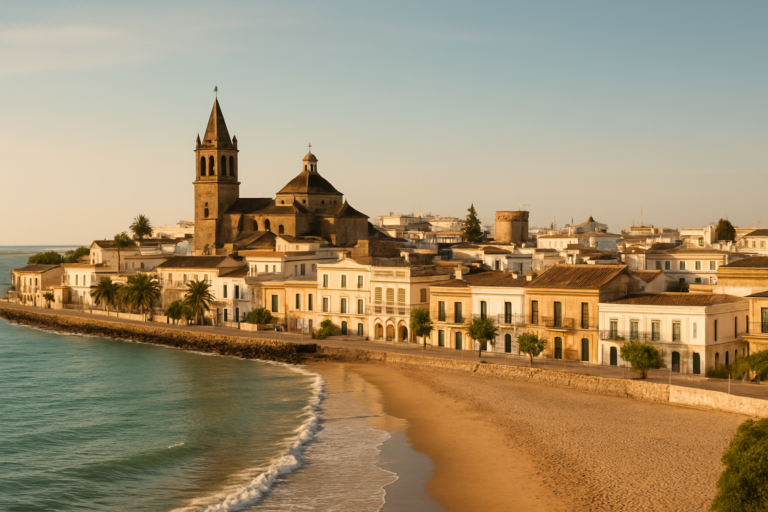
Expect a low-key, family-friendly Atlantic resort town where a dramatic lighthouse, a seaside sanctuary and wide sand beaches are the reasons people come. Chipiona isn’t a flashy luxury destination; it’s a working coastal community where fishing, viticulture and summer tourism coexist. If you want theatrical monuments or nonstop nightlife, you’ll leave underwhelmed—if you want long promenade walks, moscatel wine and beach time with kids, this delivers.
Chipiona at a glance
- Coastal town and summer resort on the Costa de la Luz, near the mouth of the Guadalquivir.
- Home to the Santuario de Nuestra Señora de Regla, a seaside monastery‑sanctuary and pilgrimage site.
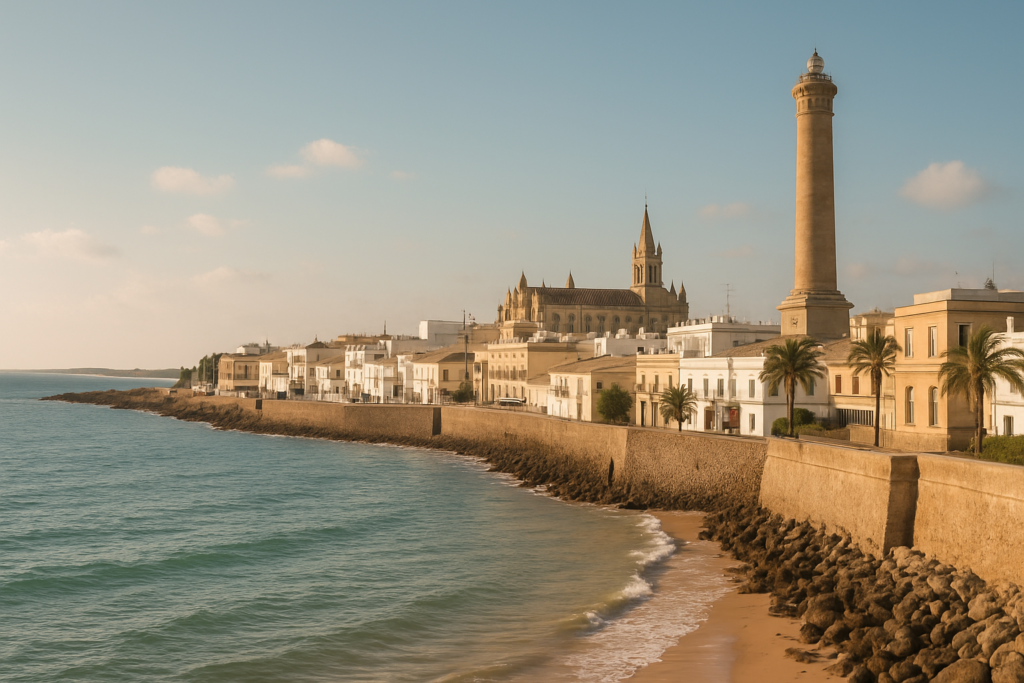
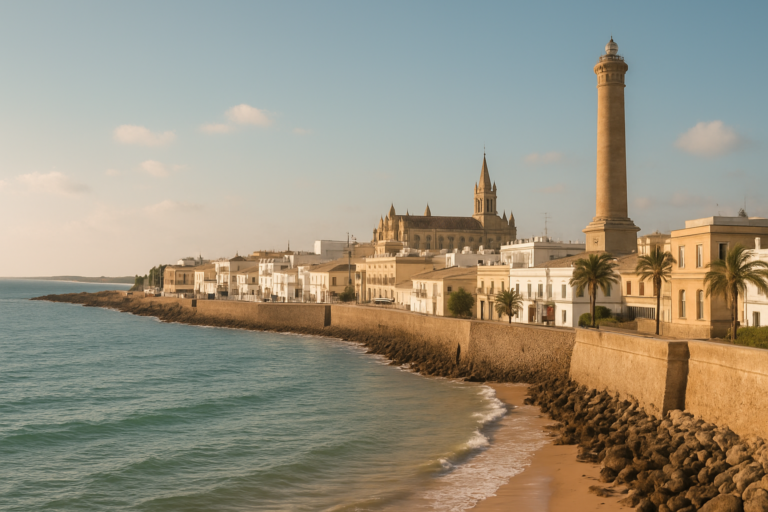
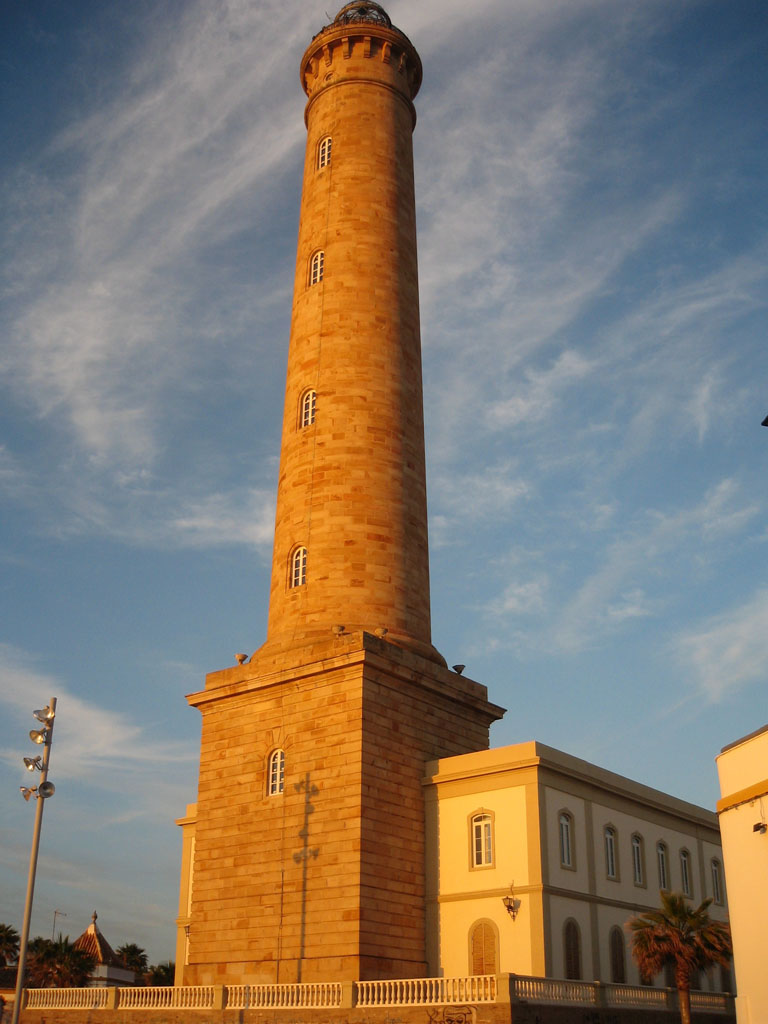
- Faro de Chipiona, the tallest lighthouse in Spain at about 62 metres, marks the shoreline.
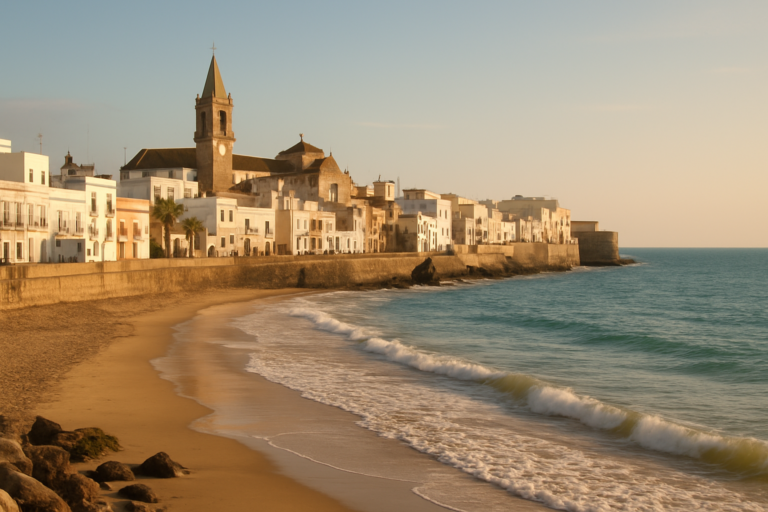
- Playa de Regla: the main long stretch of Atlantic sand backed by a promenade linking beach, lighthouse and sanctuary.
- Local economy mixes tourism, fishing and agriculture — note the town’s Moscatel sweet wine and surrounding vineyards.
- Corrales de pesca: ancient stone tidal fish traps are a protected coastal feature you’ll see along the shore.
- About 50 km northwest of Cádiz city and next to Sanlúcar de Barrameda; across the estuary from Doñana National Park.
Things to do in the area
Activities here revolve around the sea, simple cultural sites and local food and drink. Walk the promenade, visit the sanctuary and the lighthouse, sample Moscatel wine, watch traditional fishing features like the corrales, and take beach time—most visitors orient themselves to those few highlights rather than a long list of museums or attractions.
| Attraction | What it is | Price/entry | Best for |
|---|---|---|---|
| Santuario de Nuestra Señora de Regla | Seaside monastery‑sanctuary and pilgrimage site | – | History, religious architecture, coastal views |
| Faro de Chipiona | Tall coastal lighthouse (about 62 m) | – | Photography, coastal panorama |
| Playa de Regla | Main Atlantic beach, long sandy stretch with promenade | – | Swimming, families, long walks |
| Corrales de pesca | Ancient stone tidal fish traps lining the shore | – | Natural heritage, coastal history |
| Rocío Jurado memorials | Local commemorations to the town’s famous singer | – | Cultural interest, fans |
Santuario de Nuestra Señora de Regla
The sanctuary sits right by the sea and is the principal religious landmark; it’s a living pilgrimage site so expect regular visitors on religious feast days. Its position beside the water makes it a focal point for seaside processions and an atmospheric place for a short visit and photos—its importance to local identity is substantial.
Faro de Chipiona and the promenade
The lighthouse dominates the coastal skyline and is a natural endpoint for a seafront stroll. A seafront promenade links Playa de Regla with the lighthouse and the sanctuary, so you can combine beach time with a walk past these two sights without needing a car.
Coastal heritage: corrales de pesca
The corrales de pesca are visible along stretches of shore; these ancient stone tidal fish traps are protected features that tell the story of traditional small‑scale fishing on this stretch of Atlantic coastline. They’re best appreciated at low tide when shapes and patterns are most evident.
Best beaches in Chipiona
Beaches are the town’s main draw: wide, Atlantic sands and a promenade for evening walks. The climate tends to be mild, which is why families from nearby Andalusian towns make this a summer regular.
| Beach | Character | Facilities / Notes |
|---|---|---|
| Playa de Regla | Long, broad Atlantic sand beach backed by a promenade | Promenade connects beach with lighthouse and sanctuary |
With kids
The town’s wide sandy beaches and gentle promenade walking make it a straightforward family destination. The combination of seaside leisure and short, concentrated cultural stops (the sanctuary and the lighthouse are close together) keeps days simple and manageable for younger children. The area’s reputation as a popular summer spot for Andalusian families means services and rhythms in high season are oriented toward kids.
How to get to Chipiona and get around
Chipiona sits on the Costa de la Luz, about 50 km northwest of Cádiz city and adjacent to Sanlúcar de Barrameda. Its location at the mouth of the Guadalquivir and across from Doñana National Park situates it conveniently for day trips in the area. Once in town, the main sights are compact and linked by the seafront promenade; you can explore the beach, lighthouse and sanctuary on foot without a car.
Where to stay
Accommodation choices concentrate near the seafront and the main beach. Staying close to Playa de Regla keeps the promenade, lighthouse and sanctuary within easy walking distance and suits families and beachgoers. If you prefer quieter evenings, look for lodgings a short walk inland where the town’s everyday life continues without constant beachfront bustle.
Best time to visit the town
Summer is the obvious high season: the beaches fill and the town feels lively with Andalusian families and holidaymakers. The climate is generally mild, which stretches the viable visiting season compared with cooler Atlantic coasts further north.
| Season | Months | What to expect |
|---|---|---|
| Summer | – | Most popular time; beaches busy, town focused on tourism |
| Shoulder months | – | Quieter, still mild—good for walks and off‑peak visits |
History of Chipiona
The town’s identity is shaped by maritime and religious traditions: the sanctuary on the seafront has been a pilgrimage focus, while fishing techniques like the corrales de pesca reflect generations of coastal livelihoods. Viticulture, particularly the production of Moscatel sweet wine, ties the town to nearby agricultural land. In more recent cultural memory, Chipiona is known as the hometown of singer Rocío Jurado, whose legacy remains part of local commemoration.
Practical info
Parking and access: the seafront and promenade make walking the centre easy; many primary attractions are concentrated along the coast so short walks replace internal transfers. Economic life mixes tourism, fishing and agriculture, meaning some streets near working docks and vineyards retain a local, non‑touristic character. Connectivity: the town’s proximity to Cádiz, Sanlúcar de Barrameda and the Guadalquivir estuary makes it a simple base for exploring the Costa de la Luz or for combining beach time with visits to nearby towns and natural areas.
Worth it for: families after wide Atlantic beaches and a calm seaside promenade; visitors who want a compact coastal stop with a striking lighthouse and a seaside sanctuary; anyone interested in Moscatel wine and traditional coastal life.
Less so if: you want a high‑end resort with nonstop nightlife, or an urban cultural itinerary with many museums—Chipiona’s strengths are outdoors, local food and straightforward seaside leisure.
How we assess this guide
We compiled this guide by cross‑checking multiple factual sources for landmark status, geography and local economic activities. We flag major closures when verified and focus on travel‑useful facts (beaches, transport connections, key sights). This is not field reporting but a synthesis of verified claims to set realistic expectations and reduce visitor disappointment.
Frequently asked questions
How far is the town from Cádiz?
The town sits about 50 km northwest of Cádiz city, making it a reasonable day trip or a short drive along the Costa de la Luz.
Is Chipiona expensive?
Local life mixes tourism, fishing and agriculture; prices will be comparable to other Costa de la Luz resorts—expect typical seaside‑resort costs in high season and more moderate options off season.
Which beach is the best?
Playa de Regla is the main beach: a long Atlantic sand strand backed by a promenade and linked to the lighthouse and sanctuary, making it a convenient and popular choice.
How many days should I plan?
Two to three days is enough to see the lighthouse, sanctuary, enjoy beach time and sample local Moscatel wine; longer stays suit relaxed beach holidays or using the town as a base for nearby Doñana and Cádiz excursions.
Is the town good for families?
Yes—its wide beaches and promenade, combined with short walks between main sights, make it family‑friendly. It’s popular with Andalusian families in summer.
Can I get around without a car?
Yes for the main coastal sights: the promenade links Playa de Regla, the lighthouse and the sanctuary, so walking covers most visitor needs. For exploring vineyards or farther afield, a car or organised transport is useful.
Is parking easy near the beach?
Parking tends to be focused around the seafront; because the town is a working coastal community, expect a mix of tourist and local parking arrangements, especially in high season.
What can I do on a rainy day?
Indoor options are limited compared with larger cities; expect quieter cafés, local wine tasting and short cultural visits like the sanctuary or local commemorative sites tied to Rocío Jurado.
When is the best time to visit?
Summer is the busiest and warmest, drawing families to the beaches. Shoulder months are milder and quieter and work well for walks and off‑peak visits.
Is the Faro de Chipiona open to visitors?
The lighthouse is a defining landmark and a reason to walk the seafront; visitor access inside varies—check local sources once you’re planning travel for current access policies.
What is the Santuario de Nuestra Señora de Regla?
It’s a seaside monastery‑sanctuary and a landmark pilgrimage site, set by the sea and forming one of the town’s main cultural focal points.
What is special about the local wine?
The area is known for Moscatel sweet wine, produced from vineyards around the town; tasting local Moscatel links the maritime setting with nearby agricultural traditions.
Are there traditional fishing features to see?
Yes—the corrales de pesca (stone tidal fish traps) line sections of shore and are protected as part of the coastal heritage, best observed at low tide.
How close is the town to Doñana National Park?
The town lies across the Guadalquivir estuary from Doñana National Park, making it an accessible option for combining beach and nature visits.
Are there memorials to Rocío Jurado in town?
Yes—the town commemorates Rocío Jurado, who was from the town; local sites pay tribute to her cultural legacy.
Plan the wider trip
- Costa de la Luz guide
- Sanlucar de Barrameda
- Rota
- El Puerto de Santa Maria
- Cadiz
- Jerez de la Frontera
Nearby on the Costa de la Luz
Chipiona on the map
Places worth knowing near Chipiona
How this page is maintained. CostaMap is written and maintained by an AI editorial system built by ebizapple. Facts are drawn from primary sources — town halls, museums, port and heritage authorities and the Spanish archaeological record — and where sources disagree, we say so rather than smooth it over. Photographs marked as ours are taken on location. This page was last reviewed on 27 July 2026. Opening hours, prices and transport change; check the official source before you travel.