
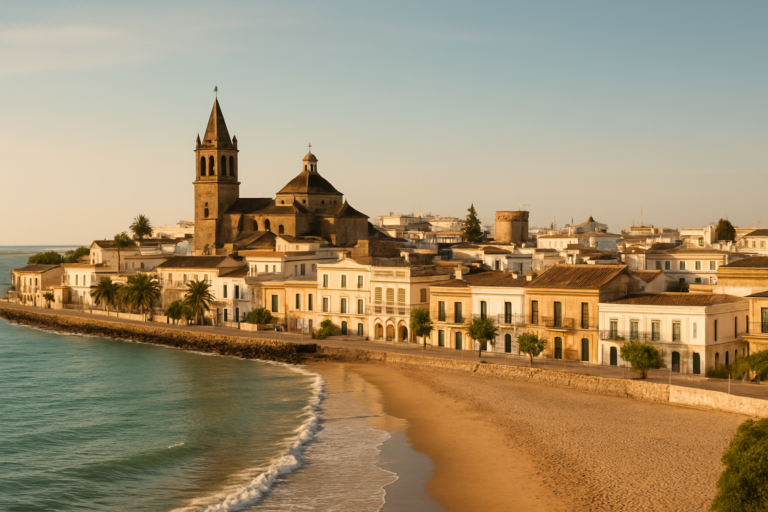
Expect a classic Andalusian coastal town with long sandy beaches, a shaded seafront promenade and a low-key old town. This place isn’t a theme-park resort—its strengths are swimming, seafood and short excursions into the surrounding sherry region—but if you arrive expecting buzzing nightlife or dramatic cliffs you’ll be disappointed. The waterfront and castle define the public face; much of the charm comes from small details: local food, tidal fish traps at low tide and a summer feria that celebrates the town’s specialty fish.
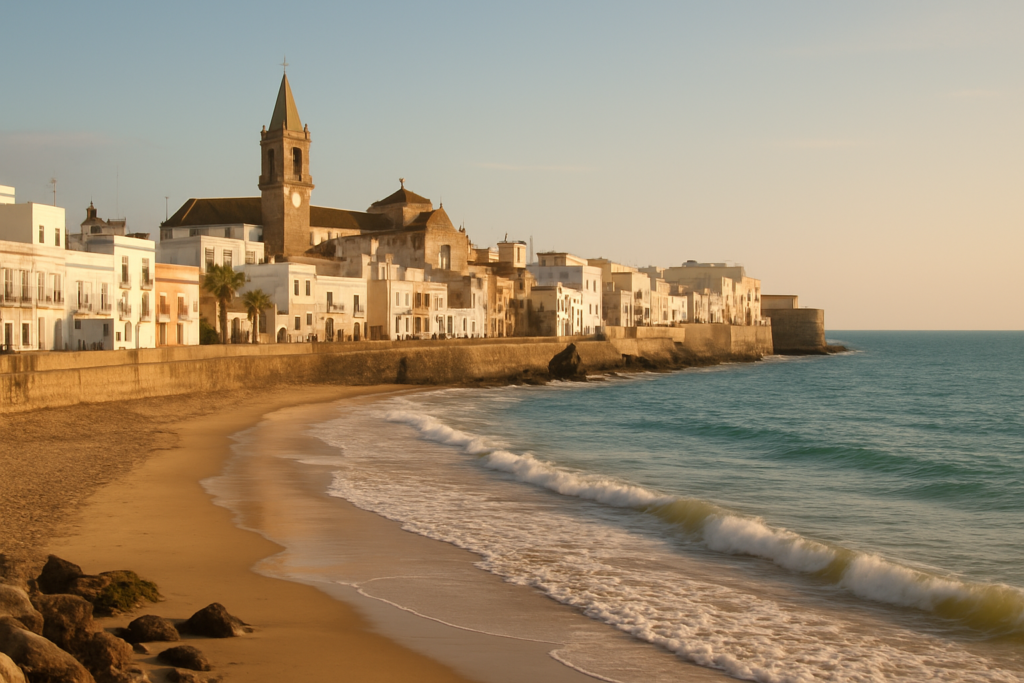
Rota at a glance
- Palm-lined seafront promenade links the main beaches with the historic centre.
- Coastal town on the Bay of Cádiz on the Costa de la Luz, in Cádiz province.
- Lies across the Bay of Cádiz from the city of Cádiz and close to El Puerto de Santa María.
- Hosts a major Spanish–American naval base shared by the Spanish Navy and the United States.
- Medieval Castillo de Luna in the heart of town now hosts cultural events and municipal offices.
- Local speciality: urta a la rotena (fish cooked with tomatoes and peppers); Feria de la Urta in August celebrates it.
- Within the sherry-producing region near Jerez de la Frontera and Sanlúcar de Barrameda.
Things to do in the town
Most visitors split time between the beaches, the paseo and the compact old town. Public sights are concentrated and easy to combine in a morning or afternoon stroll, and there are a few local highlights that reward slower exploration—especially if you like food, sea views and historic corners.
| Attraction | What it is | Price/entry | Best for |
|---|---|---|---|
| Seafront promenade | Palm-lined walkway linking main beaches with the historic centre | – | Beach walks, sunsets |
| Castillo de Luna | Medieval castle in the heart of town used for cultural events and municipal offices | – | History, events |
| Nuestra Señora de la O | Gothic-and-Baroque parish church in the old town | – | Architecture, quiet visits |
| Corrales de pesca | Ancient stone tidal fish traps visible at low tide along the coast | – | Low-tide walks, photography |
| Feria de la Urta | Annual August fair celebrating the local fish dish | – | Food, local culture (August) |
Walk the palm‑lined promenade
The seafront promenade is the town’s public spine: palms, cafes and continuous waterfront that connects the main town beach to quieter stretches north of the centre. It’s the easiest way to orient yourself, and ideal for a relaxed stroll at sunrise or sunset.
Visit Castillo de Luna and the old town
The medieval castle sits in the heart of town and is visible from several points along the paseo. It is used for cultural events and houses municipal offices, so it’s both a historic site and an active part of civic life. Nearby the Nuestra Señora de la O parish church displays Gothic and Baroque elements and anchors the old‑town streets.
Seek out coastal history: corrales de pesca
At low tide you can spot the corrales de pesca—ancient stone tidal traps—along the coast. They are distinctive features of the local shoreline and are best appreciated on a low‑tide walk when the pools and stonework are exposed.
Best beaches in Rota
The coastline is one of the town’s main draws. Long, sandy beaches backed by the promenade sit near the centre and quieter beaches lie to the north. Expect classic Costa de la Luz sand—wide, often gently sloping and suitable for family days.
| Beach | Character | Facilities / Notes |
|---|---|---|
| Playa de la Costilla | Wide town beach backed by the old centre | Promenade access; central location |
| Playa de la Ballena | Quieter beach north of the centre | Less built-up than the town beaches |
| Playa de Punta Candor | Another quieter beach to the north | Calmer stretches away from the main promenade |
Rota with kids
The town’s long sandy beaches and gentle seafront make it an easy family destination. Wide sands allow space for play and the promenade makes short transfers between beach, cafes and the old town straightforward. The quieter northern beaches are a good option if you want slightly fewer people than near the central paseo.
How to get to Rota and get around
The town sits on the Bay of Cádiz, across the water from the city of Cádiz and close to El Puerto de Santa María. That geographic position makes it convenient as a base for exploring the sherry triangle around Jerez de la Frontera and Sanlúcar de Barrameda. Within the town the seafront promenade and compact old town mean most visitors cover the main sights on foot.
Where to stay in the area
Accommodation choices cluster around a few clear zones—each suits a different kind of trip:
- Seafront and promenade: best for beach days, cafes and evening strolls; you’ll be close to Playa de la Costilla and the town’s main services.
- Old town: suits visitors who prioritise history, restaurants and short walks to the castle and church.
- North-coast beaches: quieter stretches north of the centre, preferred for a calmer seaside stay.
Best time to visit Rota
The local climate is mild and the long sandy beaches are the prime draw; summer brings beach crowds and the town’s main festival. If you want the Feria de la Urta attend in August for the food-focused celebrations. Shoulder seasons will be quieter on the beaches while still offering pleasant temperatures.
| Season | Months | What to expect |
|---|---|---|
| Summer | August (peak event month) | Busy beach season; Feria de la Urta takes place in August |
| Shoulder seasons | Spring / Autumn | Milder, fewer crowds on the beaches |
History of the town
Rota’s past is visible in its medieval core. The Castillo de Luna dates to the town’s medieval period and remains a focal point, now repurposed for cultural events alongside municipal functions. Religious architecture such as the Nuestra Señora de la O parish church combines Gothic and Baroque influences, reflecting the layered history typical of towns on this stretch of Andalusian coast. The coastline has long supported local fishing traditions, including the corrales de pesca stone traps that survive at low tide.
Practical info
- Naval presence: the town hosts a major Spanish–American naval base shared by the Spanish Navy and the United States; this is a prominent part of the local profile and can influence visible activity in port areas.
- Food and drink: the town is known locally for urta a la rotena, a fish dish cooked with tomatoes and peppers; the annual Feria de la Urta highlights this speciality.
- Location benefits: being on the Bay of Cádiz places the town close to Cádiz itself and to El Puerto de Santa María, and within the wider sherry-producing area around Jerez de la Frontera and Sanlúcar de Barrameda—useful for day trips.
- Getting around: the seafront promenade links beaches and the historic centre, so many visits are easily managed on foot.
Worth it for: beach lovers who want wide sandy shores and a calm seafront, seafood and local food culture, short excursions into the sherry-producing towns nearby. Less so if: you’re seeking dramatic natural landscapes, buzzing nightlife or a highly touristic resort atmosphere—this is a low-key Andalusian town rather than a party centre.
How we assess this guide
This guide is built from verified local facts about the town’s geography, cultural highlights, food traditions and coastal features. We cross-checked details such as the castle’s current civic use, the naval base presence and the timing of the Feria de la Urta. We flag major changes when sources indicate a venue is closed or under redevelopment; this article does not rely on first‑hand field reporting but on corroborated published information.
Frequently asked questions
How do I get from Cádiz to the town?
The town lies across the Bay of Cádiz from the city of Cádiz. Travel options include crossing the bay by road via the coastal network and short drives; proximity to Cádiz makes day trips feasible.
Is the town expensive to visit?
The guide does not present local price data. The town is known as a Costa de la Luz holiday base with long sandy beaches and local seafood traditions; costs will vary with season and accommodation choice.
Which beach is best for families?
Playa de la Costilla is the wide town beach backed by the old centre and promenade, making it a straightforward family choice. The quieter beaches to the north, such as Playa de la Ballena and Playa de Punta Candor, suit families seeking fewer crowds.
How many days should I spend here?
A few days allow time for beach relaxation, a walk around the old town (including the castle and the parish church) and perhaps a short trip into the nearby sherry-producing area. The town’s compact size makes short stays practical.
Is the town suitable for families with children?
Yes. Long sandy beaches and a continuous seafront promenade make it easy to manage with children, and quieter northern beaches are available if you prefer less crowded sand.
Can I get around without a car?
Yes. The seafront promenade links main beaches with the historic centre and most central attractions are within walking distance, so a car is not essential for a stay focused on beach and town sights.
Is parking available?
The guide does not provide spot-specific parking details. The town’s seafront and central areas typically serve visitors to beaches and the historic centre; availability will vary by season and location.
What are rainy-day options?
Indoor and sheltered options include visiting Castillo de Luna—used for cultural events and municipal offices—and the Gothic-and-Baroque Nuestra Señora de la O parish church in the old town. Local restaurants and cafes also provide shelter and the chance to sample signature dishes.
When is the Feria de la Urta?
The Feria de la Urta is celebrated in August; it honours the town’s local fish speciality, urta a la rotena.
Can I see traditional fishing structures here?
Yes. The coastline features corrales de pesca—ancient stone tidal fish traps—which are still visible at low tide and are a distinctive coastal feature.
Is there a naval presence I should be aware of?
The town hosts a major Spanish–American naval base shared by the Spanish Navy and the United States, which is a visible element of the local port and maritime activity.
Are there day-trip options to wine and sherry producers?
The town lies within the sherry-producing region near Jerez de la Frontera and Sanlúcar de Barrameda, making the area suitable for excursions to sherry-producing towns and wineries.
What local dish should I try?
Try urta a la rotena, the local fish dish cooked with tomatoes and peppers; it’s celebrated locally and during the Feria de la Urta.
How walkable is the old town?
The historic centre is compact, with the castle, church and streets easily explored on foot; the seafront promenade provides easy, level walking along the coast.
Is the coastline suitable for photography?
Yes. The combination of palm-lined promenades, the medieval castle and the exposed corrales de pesca at low tide provides varied coastal photo opportunities.
Plan the wider trip
- Costa de la Luz guide
- Setenil de las Bodegas: Cave Houses Under the Rock
- Bollullos Par del Condado: Wine Capital of the Condado de Huelva
- Cartaya: El Rompido and Atlantic Beaches
- Cádiz
- El Puerto de Santa María
Nearby on the Costa de la Luz
How this page is maintained. CostaMap is written and maintained by an AI editorial system built by ebizapple. Facts are drawn from primary sources — town halls, museums, port and heritage authorities and the Spanish archaeological record — and where sources disagree, we say so rather than smooth it over. Photographs marked as ours are taken on location. This page was last reviewed on 15 August 2026. Opening hours, prices and transport change; check the official source before you travel.