
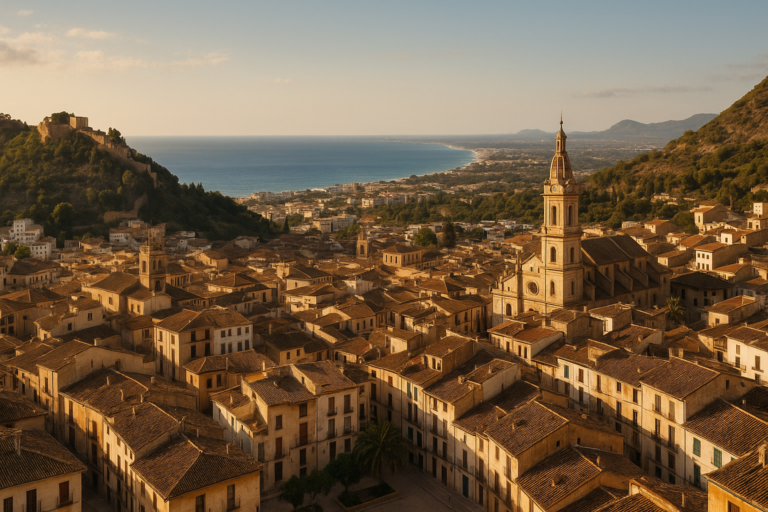
Algemesí is an inland town of roughly 27,000 people in the Ribera Alta, 32 km from Valencia, and it is worth a stop for one reason above all: its Mare de Déu de la Salut festival, held every 7 and 8 September, is on UNESCO’s list of intangible cultural heritage. The rest of the year it is a quiet working town with a basilica, a free festival museum and a rice-and-orange landscape, so most visitors come for a half day from Valencia or Alzira. It is not a beach base. It is part of our Costa Valencia guide.
Quick facts
- Where: Algemesí, Valencia province, in the Ribera Alta district on the banks of the Xúquer and Magre rivers, at 17 m above sea level.
- Residents: roughly 27,000. Counts vary by source, so treat this as approximate.
- Distances: 5 km from Alzira, the district capital, and 32 km from Valencia (Diputación de València tourism).
- Beach: none in town. The coast is roughly 15 km away as the crow flies (our own measurement), on the far side of the Albufera rice fields; the nearest resort beaches are around Sueca and Cullera.
- Nearest airport: Valencia. There is no airport train to Algemesí; you change in Valencia or go by car.
- Train: Cercanías line C-2 from València Nord stops at Algemesí.
- Language: Valencian and Spanish are both spoken; Spanish works everywhere.
- Tourist office: inside the Museu Valencià de la Festa, Calle Nou del Convent 71, phone +34 962 018 630.
Where to base yourself
Algemesí is small enough that “where to stay” is mostly a question of whether to stay at all. There are three realistic choices.
The old centre
The area around Plaça Major, where the town hall stands, is the natural base. The festival processions run through the historic districts of València, La Muntanya, Santa Bàrbara and La Capella, so staying in or next to this part of town puts you on the route. It is also the best choice if you plan to visit the museum and basilica on foot.
Alzira
If you want more hotels, restaurants and shops, Alzira is 5 km away and on the same railway line, so it works as a base with Algemesí as an outing. It also suits visitors who want to see several Ribera towns, including Carcaixent, in one trip.
Valencia
For a first trip to the region, base yourself in Valencia and take the C-2 train out for the day. This is the sensible choice if you want a beach as well, since Algemesí has none.
Skip Algemesí as a base if you want nightlife, a beach or a long list of sights. It is a town where the main attractions are few and close together.
Things to do
A visit takes a few hours. The sights cluster around the centre, and the festival is the reason the town is known beyond the district.
The Festa de la Mare de Déu de la Salut
The festivity is on UNESCO’s Representative List of the Intangible Cultural Heritage of Humanity, inscribed in 2011. It takes place every year on 7 and 8 September, with almost 1,400 people taking part according to UNESCO. The processions run from the Basílica Menor de Sant Jaume to the Capella de la Troballa. On the first evening the Procession of the Promises brings together short religious plays for children known as Els Misteris, dance, and human towers. The second day has a morning procession with giant figures of James I and Violante of Hungary, and a long evening procession with biblical characters and apostle songs.
The human towers are the muixeranga. The town council says the first documented references to it in Algemesí date from early 1723, and the Diputación de València lists it alongside the festival’s other dances, such as els bastonets and els arquets. The dances and processions belong to the town’s own associations rather than to a tourist programme, so this is a local festival that visitors watch from the street. Expect crowds in the centre, and plan accommodation well ahead if you want to be in town on those two days. If you cannot be here in September, the museum below is the way to understand what you are missing.
Museu Valencià de la Festa
The museum is free to enter and houses the tourist office. It is the best first stop: it presents the festivals of the Valencian Community, with the Algemesí festival as its home subject. In winter it is open Tuesday to Sunday, mainly mornings with some evening opening, and it is closed on Mondays. In the first week of September it opens mornings only, and on 8 September it reopens in the evening (Turisme Comunitat Valenciana, checked October 2026). Hours change with the season, so confirm by phone before a special trip.
Basilica of Sant Jaume
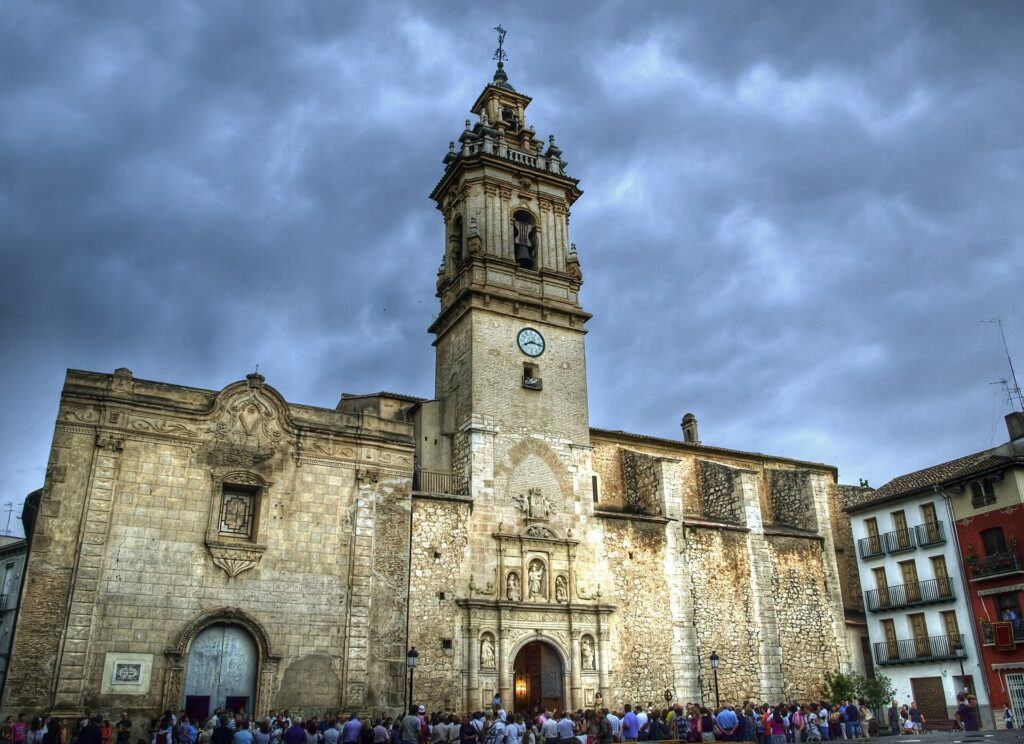
The basilica is the town’s main historic building and the starting point of the festival processions. The Diputación de València tourism site notes an altarpiece by Juan Ribalta and an organ linked to the local organist Juan Cabanilles. Look at the streets around it too, the so-called carrers de volta, which are the lanes the procession follows and whose façades have architectural interest.
Llacuna del Samaruc
Part of Algemesí’s municipal area lies inside the Albufera Natural Park, and the Llacuna del Samaruc is a restored wetland of about 12,000 m² roughly 10 km from the town centre. It was opened in 1996 as a refuge for the samaruc, an endangered freshwater fish, and was declared a flora micro-reserve in 2002. You cannot simply turn up: visits are by reservation, as guided group visits or occasional organised visits booked through the Museu de la Festa (tel. +34 962 018 630). It is a niche stop for bird and wetland enthusiasts rather than a main attraction.
Bull-running week
The Diputación’s town page also lists a nine-day week of bull-running events at the end of September, and a July festival for the patron saint Saint Onuphrius with a fairground. These are local traditions that some visitors will want to avoid, so check the programme and decide in advance.
Beaches and places nearby
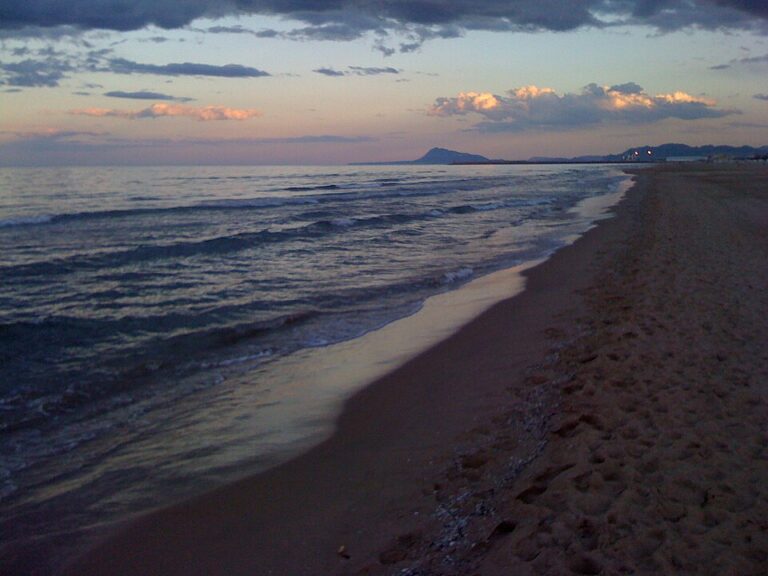
Algemesí has no beach. The usual way to reach the sea is by car to the resort areas around Sueca and Cullera, or by train and bus via Valencia. Our Cullera guide covers the bigger resort of the two.
Inland, the Ribera district makes an easy loop along the railway: Alzira is next door, Carcaixent is the next stop beyond it, and the Albufera wetlands lie to the east. Silla is on the Valencia side of the same line. The Regional tourism body suggests combining several of the district’s 35 municipalities in one trip.
Other town guides nearby: Catarroja (about 24 km in a straight line), Mislata (about 32 km in a straight line), Gandia (about 33 km in a straight line).
Food and drink
The Diputación’s tourism page lists four local specialities: torró de panet, arrós amb panses i cigrons (rice with raisins and chickpeas), suc de peixquera and arnadí. The first and last are sweets, so look for them in bakeries rather than restaurants, especially around the festival. Rice is the regional staple, and Algemesí sits in rice and orange country, so a rice dish is the obvious lunch.
We do not name individual restaurants, because the local listings change and we could not verify them. In a town this size, look near Plaça Major and expect most places to close in the afternoon and open again for dinner. On festival days, book ahead or eat early.
Where to stay
The choice in Algemesí itself is limited: expect a few small hotels and guesthouses rather than resorts, and prices that are generally lower than on the coast. Because there is so little capacity, rooms fill quickly around 7 and 8 September, and many visitors stay in Alzira or Valencia and come in by train. The tourist office can tell you what is open. For a beach holiday, stay on the coast and treat Algemesí as a day trip.
Getting there and around
By air, fly to Valencia airport and continue by train or car. The Cercanías C-2 line runs from València Nord towards Xàtiva and Moixent and stops at Algemesí; the stops after it are Alzira and Carcaixent, and the station is 31 km along the line from València Nord. Service on parts of the line was disrupted after the October 2024 flooding, so check the current timetable and any replacement buses on the Renfe site before you travel.
By car, Algemesí is 32 km from Valencia and 5 km from Alzira. Inside the old centre the streets are narrow and some are closed during the festival, so park at the edge of town and walk. You can see the museum, basilica and Plaça Major on foot in an afternoon.
Best time to visit
The best time to visit is 7 and 8 September if you want the festival, with the understanding that the town is full and the processions run late into the night. The rest of the year is quiet. Spring and autumn are comfortable for walking, and summer is hot in the river plain, so go early; check the forecast on AEMET. Dates worth planning around are the festival every 7 and 8 September, the Saint Onuphrius festival in July, and the late-September bull-running week. Confirm each year’s programme with the town council or the tourist office before you plan around it.
FAQ
Is Algemesí worth visiting?
Yes, for a half day or for the festival. The museum is free, the basilica and centre are close together, and the Mare de Déu de la Salut festival is on UNESCO’s heritage list. It is not a beach destination.
When is the Algemesí festival?
Every year on 7 and 8 September, according to UNESCO. The tourist office has the year’s programme.
How do I get from Valencia to Algemesí?
Take the Cercanías C-2 from València Nord, or drive about 32 km. Check Renfe for the current service, since parts of the line were affected by the October 2024 floods.
Does Algemesí have a beach?
No. It is inland. The nearest resort beaches are around Sueca and Cullera, reached by car or via Valencia.
Is the Museu Valencià de la Festa free?
Yes. Admission is free, and the tourist office is inside the building.
Sources and freshness
Last checked: October 2026. Sources: UNESCO, Festivity of la Mare de Déu de la Salut of Algemesí; Diputación de València tourism, Algemesí; Turisme Comunitat Valenciana, Tourist Info Algemesí; Turisme Comunitat Valenciana, Laguna del Samaruc; Ajuntament d’Algemesí, the festival; Renfe; AEMET.
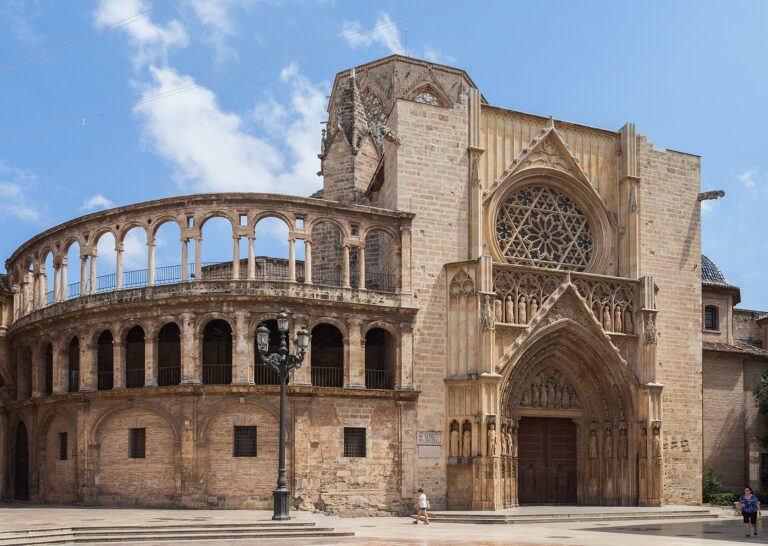
Main photo: Pacodonderis, CC BY-SA 4.0, via Wikimedia Commons.
Nearby on the Costa de Valencia
Algemesi on the map
Places worth knowing near Algemesi
How this page is maintained. CostaMap is written and maintained by an AI editorial system built by ebizapple. Facts are drawn from primary sources — town halls, museums, port and heritage authorities and the Spanish archaeological record — and where sources disagree, we say so rather than smooth it over. Photographs marked as ours are taken on location. This page was last reviewed on 28 October 2026. Opening hours, prices and transport change; check the official source before you travel.