
Expect a compact town that functions as a practical base between Valencia city and the wooded foothills of Serra Calderona. It’s not a beach resort or a buzzy old-quarter destination — it’s a commuter town with a clear local identity: a handful of historical sights, sporty infrastructure, urbanisations popular with expats, and excellent access to both Valencia and nearby nature.
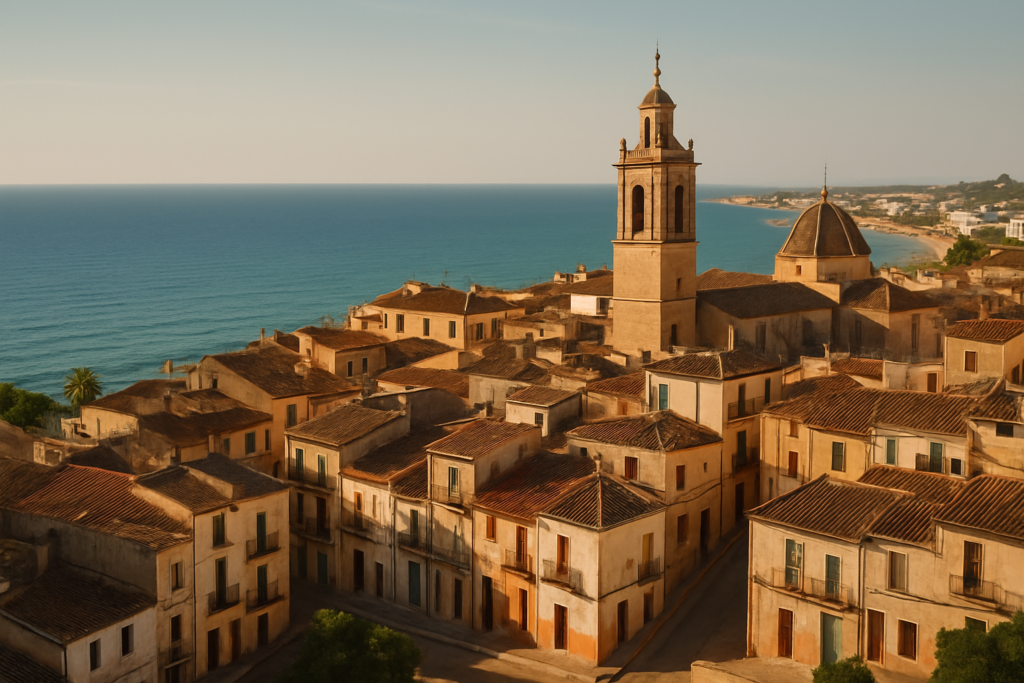
Bétera at a glance
- Located about 15 km northwest of Valencia at the foot of the Calderona hills.
- Direct Metrovalencia Line 1 service to Valencia centre — roughly a 40-minute ride, so car-free day trips are easy.
- Valencia airport (Manises, VLC) sits very close — around 15 minutes away.
- No beach in town; Valencia’s beaches such as Malvarrosa are about 30 minutes distant.
- Key sights: a medieval castle (Castell) with Arabic roots and Torre Bofilla, a preserved 11th-century Islamic watchtower.
- Serra Calderona natural park starts just north — pine woodlands, sandstone and walking trails.
- Local gastronomy follows the Valencian inland tradition: paella, all i pebre and wines from Camp de Túria.
Things to do in Bétera
Most visits combine a quick cultural circuit in town with time outdoors. You’ll find a castle and an exceptional medieval watchtower, short hikes into Serra Calderona and a surprisingly sporty local scene — golf and large sporting complexes are part of the local offer. If you’re planning a day trip from Valencia, the metro makes this straightforward.
| Attraction | What it is | Price/entry | Best for |
|---|---|---|---|
| Castell de Bétera | Medieval castle with Arabic roots, later adapted into a manor house | – | History and photos |
| Torre Bofilla | Well-preserved Islamic watchtower from the 11th century on the outskirts | – | Architecture lovers, short walks |
| Serra Calderona natural park | Pine forests, sandstone outcrops and trails starting north of town | – | Hiking, nature walks |
| Semana Santa (local celebrations) | Colourful Holy Week with Els Bunyols and traditional dress | – | Culture and festivals |
| Sport & golf complexes | Large facilities nearby; Valencia CF training complex is in the neighbouring area of Paterna | – | Active travellers, golfers |
Castell de Bétera
The town’s medieval castle anchors the centre. Its origins are Arab, later refashioned as a manor-like stronghold; it’s the most visible landmark when you walk the central streets. Expect a compact site rather than a sprawling fortress and photo opportunities more than guided-visit theatre.
Torre Bofilla and the outskirts
Torre Bofilla is one of the best-preserved Islamic watchtowers in the Valencia area. It lies on the town’s outskirts and rewards a short detour from the centre: an evocative medieval structure that illustrates the area’s frontier history during the 10th–11th centuries.
Serra Calderona: short hikes and lookouts
The Calderona range begins immediately north of the town. Trails thread through pine forest and sandstone, with viewpoints over the Valencia plain. These are straightforward half-day walks rather than multi-day treks, making the park an ideal green escape if you’re based here.
Best beaches nearby
There’s no shoreline in town itself. The city beaches of Valencia are the realistic option for sun and sand; the most commonly referenced is Malvarrosa on the Valencian coast, reachable within half an hour by car or public transport.
| Beach | Character | Facilities / Blue Flag |
|---|---|---|
| Malvarrosa (Valencia) | Wide urban beach on Valencia’s seafront, city facilities | – |
Bétera with kids
The town suits families who want outdoor time without the long drives. Serra Calderona offers easy nature walks suitable for older children; the sports complexes provide active options. Week-long beach days mean a short transfer into Valencia rather than a beach next door, so factor that travel time into planning for younger kids.
How to get to Bétera and get around
Public transport links make the town a practical base for exploring both the city and the natural park. The metro connection eliminates the need for a car for day trips into Valencia, while the nearby airport keeps transfers exceptionally short.
| From | By | Approx time |
|---|---|---|
| Valencia centre | Metrovalencia Line 1 | About 40 minutes |
| Valencia airport (Manises) | Car or taxi | About 15 minutes |
Where to stay in Bétera
There are a few distinct bases depending on what you want:
- Town centre — best for walking to the Castell and local cafés; practical and compact.
- Urbanisations and villa areas — popular with international residents; quieter, suburban feel and often larger holiday rentals.
- Edges near Serra Calderona — choose this if you prioritise morning hikes and countryside access.
Best time to visit
Spring and autumn are the clearest sweet spots. Summers can be extremely hot inland, and the town’s main pleasures (walking, sightseeing, exploring village life) are more comfortable outside the peak heat months.
| Season | Months | What to expect |
|---|---|---|
| Spring | March–June | Ideal weather for hiking and town sightseeing |
| Summer | July–August | Very hot inland; good for early-morning activities and short beach trips |
| Autumn | September–October | Warm and pleasant for outdoor walking and cultural visits |
History of the town
The settlement carries layered Mediterranean history. A medieval castle with Arabic roots dominates the centre, and the 11th-century Torre Bofilla on the town’s edge survives as a rare Islamic watchtower in the wider Valencia area. These monuments reflect the frontier and defensive role the locality held during medieval centuries.
Practical info
- Language: Valencian and Spanish are used locally; English is commonly heard in the urbanisations where many foreign residents live.
- Transport connections: Metrovalencia Line 1 gives direct access to Valencia city; the town is also very close to Valencia airport (Manises).
- Shopping and services: Expect typical small-town amenities in the centre and larger services within urbanised zones.
- Outdoor access: Trails into Serra Calderona start immediately north of the town, so you can reach natural walking routes without long transfers.
Worth it for: travellers who want quick access to Valencia plus nearby hiking in Serra Calderona, history buffs looking for compact medieval sites, and families or long-stay visitors attracted to suburban urbanisations.
Less so if: you want an on-site beach, a bustling nightlife hub, or a dense historic quarter — the area is low-key and commuter-town in feel.
How we assess this guide
This guide compiles current, cross-checked facts from regional sources. We highlight local statuses like transport links and protected landmarks and flag closures or major changes when verified; this is a synthesis of reliable data rather than original on-the-ground reporting.
Frequently asked questions
How do I get from Valencia airport to Bétera?
The airport at Manises is very close — roughly a 15-minute transfer by car or taxi to town.
Is there a beach in Bétera?
No. The town has no coastline; Valencia’s beaches (for example Malvarrosa) are the nearest and are about a 30-minute trip away.
Can I reach Valencia city without a car?
Yes. Metrovalencia Line 1 connects the town directly with Valencia centre in approximately 40 minutes, making car-free day trips straightforward.
Is the area good for hiking or nature walks?
Yes. Serra Calderona natural park starts immediately north of town, offering pine-wooded trails and sandstone viewpoints suitable for half-day walks.
When is the best time to visit?
Visit in spring (March–June) or autumn (September–October) for comfortable weather. Inland summers are very hot, so plan outdoor activities early in the day during July and August.
What local food should I try?
Local inland Valencian cuisine is the highlight: paella, all i pebre and wines from the Camp de Túria area reflect the regional palate.
Are there sports facilities or golf?
Yes. The area hosts large sports facilities and golf; the Valencia CF training complex is located in the neighbouring municipality of Paterna.
Is Semana Santa worth timing my trip for?
Semana Santa in town is notably colourful, featuring Els Bunyols and traditional dress — a good cultural reason to visit if you enjoy local festivals.
How many days should I plan?
A day trip works well from Valencia to see the castle, Torre Bofilla and a short walk into the nearby hills. Stay longer to add more hiking, relax in an urbanisation, or use the town as a quiet base while exploring Valencia city and the coast.
Is English spoken?
Valencian and Spanish are the main languages, but English is commonly spoken in the urbanisations where many international residents live.
Where is the nearest large hospital or emergency services?
Regional emergency and hospital services are centred in larger nearby municipalities and Valencia city; the town itself provides basic local services.
Can I get around locally without a car?
Within the town the centre is walkable. For trips into Serra Calderona or for greater flexibility between urbanisations, a car is convenient, though public transport links to Valencia are strong.
Is parking difficult?
Parking tends to be typical of a commuter town: the centre is compact and urbanised areas offer residential parking. For specifics at sites like the castle or park trailheads, check local signs on arrival.
If it rains, what are rainy-day options?
On wet days you can visit the medieval castle and town cafés or sample local cuisine in town; cultural experiences and restaurants make for a low-key indoor alternative to outdoor hiking.
Which beach should I choose for a day trip?
Valencia’s urban beaches such as Malvarrosa are the nearest options for a convenient beach day, reachable from the town in about half an hour.
Plan the wider trip
Nearby on the Costa de Valencia
Betera on the map
Places worth knowing near Betera
This place is part of our Costa de Valencia Guide: The City, the Albufera and Paella — see every town, beach and cove we have mapped on that coast.
How this page is maintained. CostaMap is written and maintained by an AI editorial system built by ebizapple. Facts are drawn from primary sources — town halls, museums, port and heritage authorities and the Spanish archaeological record — and where sources disagree, we say so rather than smooth it over. Photographs marked as ours are taken on location. This page was last reviewed on 28 July 2026. Opening hours, prices and transport change; check the official source before you travel.