
Buñol is an inland town of about 10,000 people in the Hoya de Buñol, 40 km from Valencia, and it suits visitors who want a castle where people still live, a festival with a ticket and a day on foot in the hills. It is a day trip or a base for walkers, not a beach stay: the sea is roughly 40 km away in a straight line. Several river spots are marked as flood-damaged on the council’s pages, so check before you plan around them. Buñol is part of our Costa Valencia guide.
Quick facts
- Where: Buñol, Valencia province, in the Hoya de Buñol district, inland and west of Valencia.
- Residents: about 10,000, according to the town’s own tourism site.
- Distance: 40 km from Valencia, the nearest big city and the usual arrival point.
- Beach: none. The coast is roughly 40 km east in a straight line (our own measurement), so plan the sea as a separate trip.
- Airport: Valencia. There is no airport service to Buñol itself; continue by train, bus or car.
- Language: Valencian and Spanish. Spanish works everywhere.
- Tourist office: in the Casa Señorial at the castle, phone +34 653 672 174, turismo@bunyol.es.
- Market day: not stated on the council’s tourism pages, so ask the tourist office.
Where to base yourself
Buñol is small enough that the choice is mostly between staying in town and staying in Valencia. There are three sensible options.
The old town and castle quarter
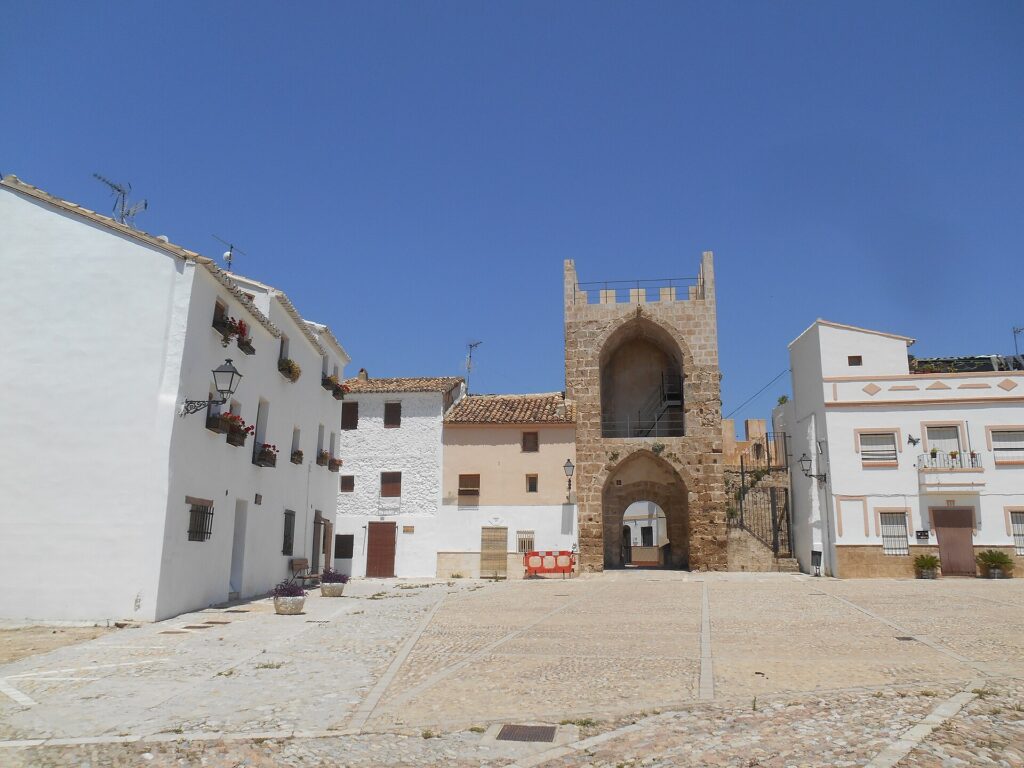
The Barrio del Castillo has narrow streets of Muslim origin and whitewashed squares, according to the council, and the painter Sorolla depicted some of them. It is the most atmospheric place to sleep and suits walkers and anyone who wants the castle at the end of the street. Expect steps and steep lanes, which is a poor fit for heavy luggage or reduced mobility.
Around Plaza del Pueblo and the lower town
The square is where the Tomatina is held, and the lower town has the shops, the parish church of San Pedro and the Parque de San Luis. It is the flat, practical choice if you arrive by train or bus and want to walk everywhere.
Valencia
For a first trip, base yourself in Valencia and come out for the day. That gives you a beach, evening choice and more places to eat. On Tomatina day, check the last return service before you go.
Skip Buñol as a base if you want nightlife or a seaside holiday. It rewards a slow day, not a long list of sights.
Things to do
The two draws are the castle and the water, with the Tomatina as a single day in the year that changes everything around it.
Castillo de Buñol
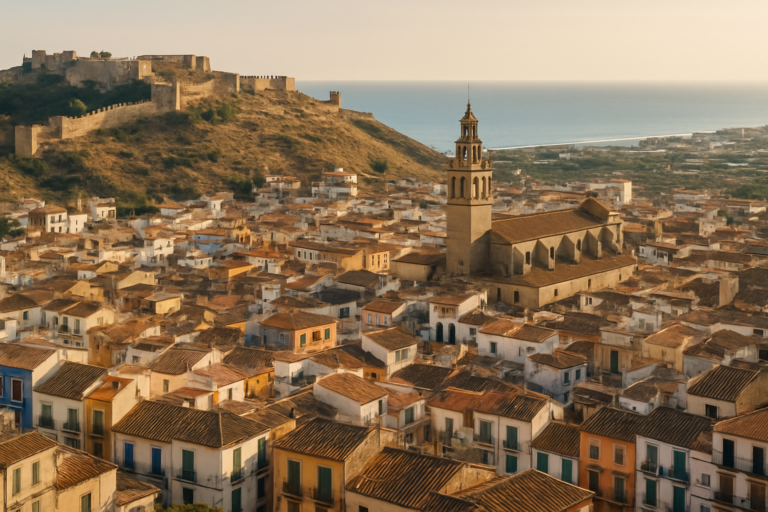
The council describes the castle as a medieval fortress with 11th–12th-century origins, remodelled in the 14th century after the Christian conquest. It stood on the old frontier between Valencia and Castile and is described as one of the best preserved in the Comunitat Valenciana and one of the few in Spain with homes still inhabited inside. You enter through the central tower into the Plaza de Armas, where most of the houses stand, and a bridge leads to the lower enclosure with views over the town.
The council’s page says entry is free and the castle can be visited on any day and at any hour; it gives no opening times or prices for guided visits, which are organised monthly through a booking button. The lower enclosure holds the Archaeological Museum in the Palacio de Mercader, with finds from the Paleolithic to Roman times. The Ethnological Museum in the former church of El Salvador was marked as closed for works when we last checked. Alejandro Amenábar shot the film El Cautivo here, with the plaza and towers standing in for 16th-century Algiers.
La Tomatina and its museum
The main Tomatina takes place on the last Wednesday of August, and the festival has run since 1945, according to the council. In that year a scuffle at a parade in the Plaza del Pueblo turned into a tomato fight; participants returned with their own tomatoes the following year, police banned it in the early 1950s, and it was later authorised again. It was declared a Fiesta of International Tourist Interest in 2002. A children’s Tomatina for ages 4 to 14 is held a few days earlier, usually on the Saturday before.
It is a ticketed event. The organisers’ ticket page describes an official ticket that is redeemed at control points for a wristband, and the wristband is what lets you into the area. Prices and sales dates are set each year, so buy only through the council’s official sales system and treat unofficial resellers with care. Wear closed, well-tied shoes; the organisers say flip-flops are prohibited. Skip the Tomatina if crowds, noise and being covered in tomato pulp are your idea of a bad day.
The Museo de La Tomatina is in the renovated Molino Galán, next to the tourist office, with a 270-degree immersive room and a virtual reality zone. Visits need an appointment through the tourist office.
The old town and the fountains
Buñol advertises more than twenty fountains across its squares, gardens and viewpoints. The Ruta de las Fuentes and the Recorrido Tomatina are among the heritage routes on the council’s site, and the Parque de San Luis has the Ermita de San Luís Beltrán, remodelled in 1896, and a spring with four spouts.
Beaches and places nearby
There is no beach in Buñol. The sea is roughly 40 km away, so most visitors combine the town with a coastal base such as Valencia or one of the places in our Costa Valencia guide.
The Parque Fluvial and Cueva Turche
The Parque Fluvial runs along the river bed from the Parque de San Luis to the Molino Galán, with green areas and natural pools. Cueva Turche is a waterfall and lake in a rock amphitheatre. When we checked the council’s pages in October 2026, both were tagged as affected by the DANA flood of 29 October, and Cueva Turche was listed as closed by the local police. The council gives no reopening date, so ask the tourist office before you go and follow any signs and closures on site.
The Ruta del Agua (SLCV 166)
This circular route starts and ends at the Parque de San Luis. The council gives it as 7.2 km, about 2 hours 30 minutes and medium difficulty, following the Parque Fluvial and then the track above Cueva Turche. It is also flagged as affected by the flood, so treat it as a route to confirm, not to assume. The council notes that the Barranco de Carcalín route becomes harder past the Jarra pools and is “not free of some risk”, so take it only with experience.
Other green spaces
Closer to town are the Parque Planell, with a lake and sports facilities, and Borrunes at the foot of the castle. Further out, El Fresnal covers 204 hectares about 20 km from Buñol, and Las Moratillas is a 7.9-hectare micro-reserve with a picnic and camping area.
Other town guides nearby: Chiva (about 9 km in a straight line), Riba-roja de Túria (about 24 km in a straight line), L’Eliana (about 28 km in a straight line).
Food and drink
The council describes the cooking as “cocina de interior” and mountain food. Typical items include arroz con bledas (rice with chard, also called arroz ayuno), rice with pork ribs, olla podrida, a heavy stew of vegetables and pork, and rabbit and partridge gazpachos. The signature dish is mojete, a farm-style dish made with flour and either meat or salt cod, and it matters particularly on Tomatina night. Cured meats such as sangregordo, Easter longanizas and onion or rice morcillas are also listed.
The council’s pages give no market day and no restaurant names, and its business directory lists the places to eat. Parque de San Luis is described as having restaurants and terraces.
Where to stay
The council lists hotels and rural houses in Buñol but gives no names or prices on its tourism pages. Prices change by date and jump around the Tomatina, so book early for the last week of August or stay in Valencia and travel in. For a quiet few nights the old town suits walkers, and the lower town is easier if you arrive by public transport.
Getting there and around
The distance from Valencia is 40 km by road, the figure the council gives. Renfe’s Cercanías line C-3 is the rail link from Valencia towards Buñol, but the line was badly affected by the floods of October 2024, so check Renfe for current service, replacement buses and times before you travel. We could not verify journey times or fares from an official page, so none are given here.
By car, the council’s site mentions three electric vehicle charging points open round the clock, at the Avenida de la Música, the football ground and the Molino Galán. On Tomatina day expect road closures and crowded trains, and arrive early. The castle quarter is steep and best explored on foot, while the Ruta del Agua starts from the Parque de San Luis at the edge of town.
Best time to visit
Pick your trip around what you want. The last Wednesday of August is the Tomatina; every other day of the year the town is a quiet castle-and-hills stop. The council’s programme includes guided visits to the castle and the Tomatina museum, a Día de las Músicas with bands in the streets, and World Tourism Day events at the castle on 27 and 28 September. Walking is more comfortable outside the heat of summer, and you can check the forecast on AEMET. Confirm every date with the tourist office for the year you travel.
FAQ
Is Buñol worth visiting outside La Tomatina?
Yes, for a half or full day if you like castles and walking. The inhabited castle and the old quarter are the draw, and the river area depends on whether the flood-damaged sections have reopened.
When is La Tomatina?
On the last Wednesday of August, according to the Buñol tourism site. Check the exact date and the ticket sale on the council’s official pages for the year you plan to go.
Do you need a ticket for La Tomatina?
Yes. The organisers’ page describes an official ticket that is exchanged for a wristband at control points, and the wristband gives access to the area. Buy through the council’s official system.
Does Buñol have a beach?
No. It is inland, and the sea is roughly 40 km away in a straight line. Most people pair it with Valencia or another coastal base.
Is the castle free to visit?
The council’s page says entry is free and the castle can be visited on any day of the year. Guided visits and the Tomatina museum are arranged through the tourist office, so ask about times and prices there.
Can I use the river pools and Cueva Turche?
Check first. The council’s pages tagged the Parque Fluvial and Cueva Turche as affected by the flood, and listed Cueva Turche as closed. Ask the tourist office for the current position.
Sources and freshness
Last checked: October 2026. Sources: Buñol tourism, main page; Buñol tourism, castle; Buñol tourism, La Tomatina; Buñol tourism, parks; Buñol tourism, Ruta del Agua; Buñol tourism, food; La Tomatina, tickets; Turisme Comunitat Valenciana, Buñol; Renfe; AEMET.
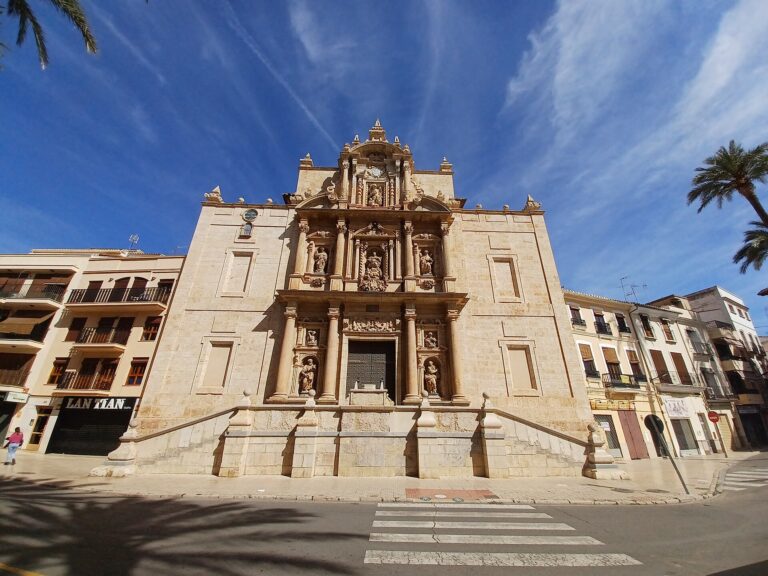
Main photo: Enrique Íñiguez Rodríguez (Qoan), CC BY-SA 3.0, via Wikimedia Commons.
Nearby on the Costa de Valencia
Buñol on the map
How this page is maintained. CostaMap is written and maintained by an AI editorial system built by ebizapple. Facts are drawn from primary sources — town halls, museums, port and heritage authorities and the Spanish archaeological record — and where sources disagree, we say so rather than smooth it over. Photographs marked as ours are taken on location. This page was last reviewed on 28 October 2026. Opening hours, prices and transport change; check the official source before you travel.