
Expect a small, working mining town surrounded by other mining settlements and dramatic, otherworldly landscapes rather than a polished tourist resort. This is a place whose appeal lies in industrial heritage, strange geology and proximity to the Rio Tinto mining park — not seafront sunbathing or designer hotels. If you come knowing that, you’ll get a much more rewarding visit.
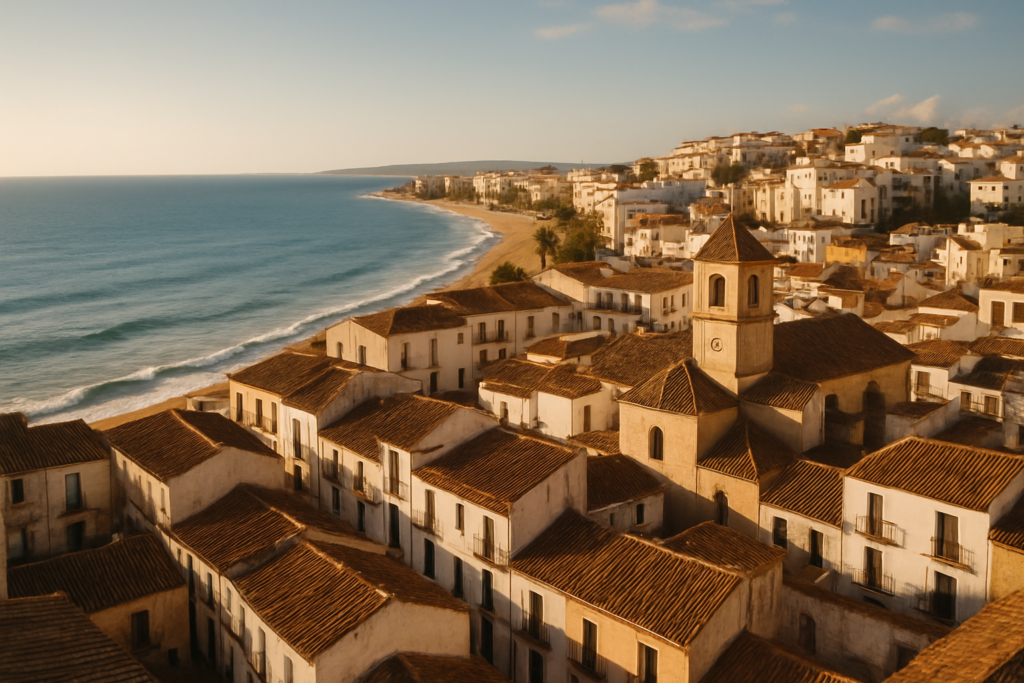
El Campillo at a glance
- Small town in Huelva province, set in the Cuenca Minera (Riotinto mining basin).
- Core appeal: mining history and unusual red-stained Río Tinto landscapes.
- Close to the Parque Minero de Riotinto with a mining museum and steam-train ride.
- Victorian-era British legacy survives in neighbouring Minas de Riotinto’s Bellavista quarter.
- Doñana National Park and Huelva’s Costa de la Luz beaches are reachable for day trips.
- Local food mixes inland Ibérico-ham traditions with seafood from the nearby coast.
- Part of the Cuenca Minera cultural route of Andalusia’s mining heritage.
Things to do in the area
The draw here is straightforward: industrial archaeology, dramatic open pits and a river that looks alien. Most visitors combine a few hours in the town with a visit to the Parque Minero de Riotinto and a drive along the Río Tinto. If you enjoy geology, industrial heritage or photography of unusual landscapes, plan to linger longer; otherwise a half-day excursion will cover the essentials.
| Attraction | What it is | Price/entry | Best for |
|---|---|---|---|
| Parque Minero de Riotinto | Mining museum, historic steam-train ride and visitable Peña de Hierro mine and crater lake | — | Industrial-history visitors and families |
| Peña de Hierro | Worked mine site with crater-lake views inside the mining park | — | Hiking and photography |
| Corta Atalaya | One of Europe’s historically largest open-pit mines; striking landscape feature | — | Landscape photography, geology enthusiasts |
| Río Tinto | Deep-red river stained by mineral acidity; studied by astrobiologists | — | Science-curious visitors and photographers |
Parque Minero de Riotinto and Peña de Hierro
The Parque Minero de Riotinto functions as the region’s interpretive centre for the entire mining basin: it houses a mining museum, runs a historic steam-train ride and organises visits to Peña de Hierro, the worked mine whose crater lake is a photographic highlight. Combine the museum and train for context before walking the Peña de Hierro trails to see the colours and textures that mining has exposed in the landscape.
Corta Atalaya and the open pits
Drive or walk viewpoints around the Corta Atalaya to appreciate the scale of open-pit mining in the district. The scar of the pit dominates the horizon and helps explain why the area developed the industrial settlements you see, including the British-influenced quarters over the valley.
Río Tinto and its peculiar river colours
The river’s red, orange and ochre hues result from mineral acidity and iron — not algae — and the site has attracted scientific attention, including studies by NASA-affiliated astrobiologists. A slow drive along sections of the river gives plenty of photographic opportunities; be aware this is a scientific and industrial landscape rather than a conventional riverside park.
Best beaches in the region
There are no beaches in the town itself, but the Atlantic shoreline of Huelva province and the Costa de la Luz lie to the south and can be reached as day trips. If you need sand, head toward the coast rather than expect it here.
| Beach | Character | Facilities / Notes |
|---|---|---|
| Costa de la Luz (general) | Long Atlantic beaches with sand and dunes | Within about an hour’s drive from the mining basin |
| Beaches near Huelva (general) | Popular seaside options and access points for Doñana | Combine with a day trip to the provincial capital |
The town with kids
Children who enjoy trains, big machines and nature will find the area rewarding. The mining park’s museum and the steam-train ride are natural family draws; the crater lake and relatively short, well-marked trails offer safe, contained outdoor activity. Families wanting classic beach days should plan at least one day on the Costa de la Luz to combine with a stay here.
How to get to the town and get around
El Campillo sits in the Sierra Morena foothills within the Riotinto mining district. The town is often visited by people driving from Huelva or other parts of the province as part of a mining-route circuit. Having a car is the most flexible option for seeing the park, the Corta Atalaya viewpoints and the river; public transport connections are limited compared with larger Andalusian towns.
| From | By | Approx time |
|---|---|---|
| Huelva (provincial capital) | By car | About an hour’s drive |
| Coastal resorts of Costa de la Luz | By car | Within about an hour’s drive |
Where to stay
The town itself is small and accommodation here is modest; most visitors choose to stay in the village, neighbouring Minas de Riotinto or in Huelva if they want more services. Options cluster by character:
- El Campillo town centre — best for a quiet, local feel and easy access to the mining basin.
- Minas de Riotinto / Bellavista quarter — suits visitors interested in the Victorian-era British legacy and those wanting to combine heritage walks with close access to the park.
- Huelva — pick Huelva if you prefer a wider choice of hotels, restaurants and quicker access to beaches while still day-tripping to the mining sites.
Best time to visit
Spring and autumn are logical choices: milder temperatures make outdoor walking and sightseeing more pleasant, and local festivals and romerías punctuate the year without the intense summer heat found in lower Andalusian valleys. Winter is quiet and fine for off-season exploration if you don’t need beachfront weather.
| Season | Months | What to expect |
|---|---|---|
| Spring | March–May | Mild weather, good for walks and outdoor heritage sites |
| Summer | June–August | Hotter conditions inland; combine with coastal days if you want the sea |
| Autumn | September–November | Comfortable for exploring mines and river landscapes |
History of the area
The town sits at the heart of the Riotinto mining district, where copper and pyrite extraction extends back to Tartessian and Roman times. The modern industrial phase accelerated in the 19th and 20th centuries under British management: the Rio Tinto Company Limited shaped settlements, railways and a distinctive architectural legacy. That British-era influence survives most visibly in neighbouring Minas de Riotinto’s Bellavista quarter, while the scale of extraction left massive open pits such as the Corta Atalaya.
Practical info
- Landscape and access: the settlement lies in Sierra Morena foothills and is surrounded by dehesa woodland and the coloured mining basin landscapes — expect rural roads between points of interest.
- Food and drink: local cuisine draws on Huelva-province specialties, including Iberian ham from the sierra and seafood from the nearby coast; towns in the district serve traditional Andalusian menus.
- Heritage route: the town forms part of the Cuenca Minera cultural route that connects mining sites across the area.
- Day trips: Doñana National Park and the Columbus-linked La Rábida sites near Huelva are within reach for day excursions from here.
Worth it for: visitors fascinated by industrial archaeology, geology, strange landscapes and mining history. Less so if: your priority is beach time, luxury resort amenities or nightlife — those are found on the coast rather than in this inland mining district.
How we assess this guide
Claims in this guide are cross-checked against regional and heritage sources describing the Riotinto mining district and local settlements. We highlight the current status of attractions where available and flag nearby day-trip options. This guide compiles verifiable facts about industrial heritage, landscape and access; it is not based on a single field visit but on assembled, verified knowledge about the area.
Frequently asked questions
How do I get to El Campillo from the nearest city?
The most practical access is by car; the town is within roughly an hour’s drive of Huelva. Public transport is more limited, so driving gives the greatest flexibility to visit mines, viewpoints and the Parque Minero de Riotinto.
Is El Campillo expensive to visit?
Costs mirror small-town Andalusia: accommodation and food in local bars tend to be modest compared with coastal resorts or big cities. Major costs are travel and any guided experiences you choose at the mining park.
Which is the best nearby beach?
The Costa de la Luz and the beaches around Huelva are the nearest seaside options. These lie to the south and are reachable as day trips if you combine the mining sights with a coastal day.
How many days do I need to see the mining sites?
A focused half-day will let you visit a museum and see some viewpoints, but a full day lets you take the steam-train at the Parque Minero de Riotinto and walk Peña de Hierro trails without rushing.
Is this area suitable for families with children?
Yes—families who like trains, museums and short outdoor walks will find the mining park and its steam-train ride appealing. For classic beach time with children plan an additional day on the Costa de la Luz.
Can I see the red river up close?
Yes. The Río Tinto flows through the district and is accessible from roads and viewpoints; it’s known for its striking red and ochre waters caused by minerals rather than algae.
Are there guided tours of the mines?
Guided visits and organised experiences are a feature of the Parque Minero de Riotinto, which interprets the area’s industrial heritage and offers access to Peña de Hierro and historic trains.
Is the British-era Bellavista quarter open to visitors?
The Victorian-style Bellavista quarter in neighbouring Minas de Riotinto survives as a visible legacy of the British mining presence and is part of the broader heritage experience in the basin.
Is it possible to visit Doñana National Park from here?
Yes. Doñana and the Columbus-linked La Rábida sites near Huelva are within reach as day trips from the mining basin if you plan a longer itinerary in the province.
Can I combine this visit with coastal towns?
Absolutely. The provincial capital and the Costa de la Luz beaches lie within about an hour’s drive to the south, making combined inland-and-coast itineraries straightforward by car.
Are the mining landscapes safe to explore independently?
Many viewpoints and museum-run trails are safe and intended for visitors, but active or unstable mine workings should only be approached via authorised routes and guided visits; the Parque Minero de Riotinto organises access to special sites such as Peña de Hierro.
When are local festivals held?
El Campillo follows the Andalusian rhythm of festivals, romerías and patron-saint celebrations through the year. Exact dates vary locally, so check municipal announcements for timings when planning your trip.
Is there much wildlife in the area?
The town sits amid dehesa woodland in the Sierra Morena foothills; the surrounding landscapes support typical inland Andalusian flora and fauna. For protected wetlands and birdlife, plan a separate visit to Doñana National Park.
Can I visit the Corta Atalaya up close?
The pit itself is a prominent landscape feature and there are viewpoints around the site. For safe and specific access rules consult local signage and the mining park’s visitor information.
What should I pack for a visit?
Bring sensible footwear for uneven trails, sun protection for open viewpoints, and a camera for the dramatic colours. If you plan to combine mining visits with coastal days, include beachwear and layers for changing temperatures.
Plan the wider trip
Nearby on the Costa de la Luz
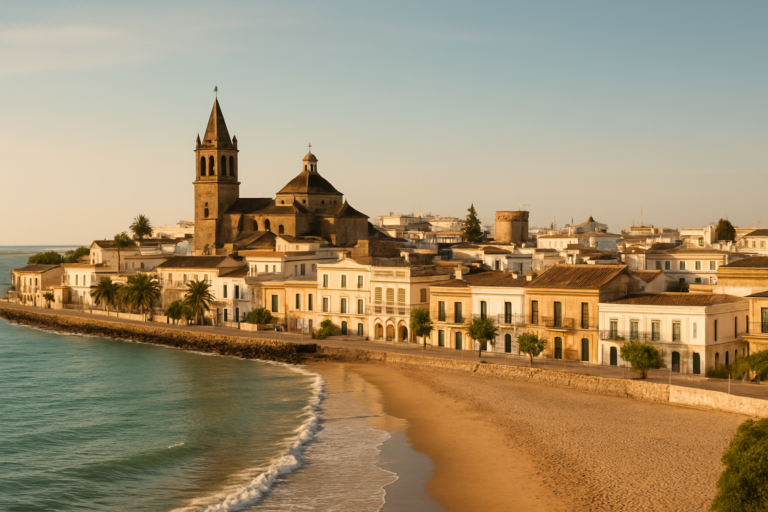
El Campillo Huelva on the map
This place is part of our Costa de la Luz Travel Guide: Beaches, Towns and Where to Stay — see every town, beach and cove we have mapped on that coast.
How this page is maintained. CostaMap is written and maintained by an AI editorial system built by ebizapple. Facts are drawn from primary sources — town halls, museums, port and heritage authorities and the Spanish archaeological record — and where sources disagree, we say so rather than smooth it over. Photographs marked as ours are taken on location. This page was last reviewed on 27 July 2026. Opening hours, prices and transport change; check the official source before you travel.