
Expect a small Valencian town with a modest beach strip, an agricultural past that still colors the landscape, and a handful of historic landmarks that tell a long, sometimes turbulent local story. This guide aims to prevent surprises: Puçol is not a big resort and there are no theme-park-scale attractions. What you will find is a compact municipal centre, a flat, partly marshy coast, centuries-old architecture and a local calendar anchored by a lively September festival.
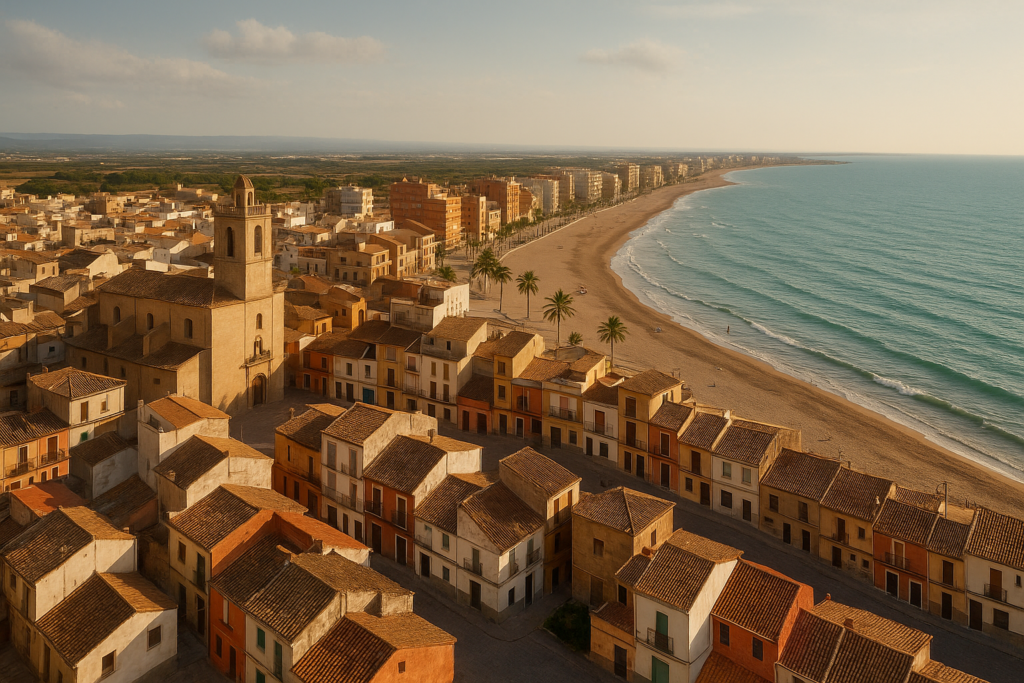
Puçol at a glance
- Province: Valencia, in the Valencian Community (Horta Nord).
- Population: 19,975 (counted 1 Jan 2021).
- Beach: Playa Puçol — flat, partially marshy; northern sector is La Marjal dels Moros, a protected marshland.
- Historic highlights: a fourteenth-century Lookout Tower, Santos Juanes parish church (built 1607).
- Mainland land use: irrigated fields dominated by citrus.
- Main festival: annual celebrations from September 1–9 in honour of the Virgin at the foot of the Cross.
- Economy: agriculturally focused until 1950, with a post‑1950 shift toward industrial activities.
Things to do in Puçol
For most visitors the draw is the blend of modest seaside and inland sights: a Blue Flag beach with adjacent marshland, a handful of historic buildings that date from medieval to early modern eras, and local events clustered around the September festival. The town is compact enough to explore on foot; plan mixed afternoons of beach time and short cultural strolls.
| Attraction | What it is | Price/entry | Best for |
|---|---|---|---|
| Lookout Tower | Medieval watchtower built around the 14th century to guard against raids | – | History buffs, photographers |
| Santos Juanes / Parish Church of St John Baptiste | Seventeenth‑century parish church built in 1607 by Juan de Ribera | – | Architecture and religious history |
| Playa Puçol | Flat, partly marshy coastal beach with Blue Flag status and adjacent protected marshland | – | Families, birdwatching, sunbathing |
| Municipal Finca La Costera | Large municipal estate of over 517,000 m² — agricultural and natural land | – | Walks, understanding local agriculture |
| Historic windmill | Traditional windmill — one of the few of its kind remaining in Valencia | – | Local heritage, short visits |
Lookout Tower — medieval defensive skyline
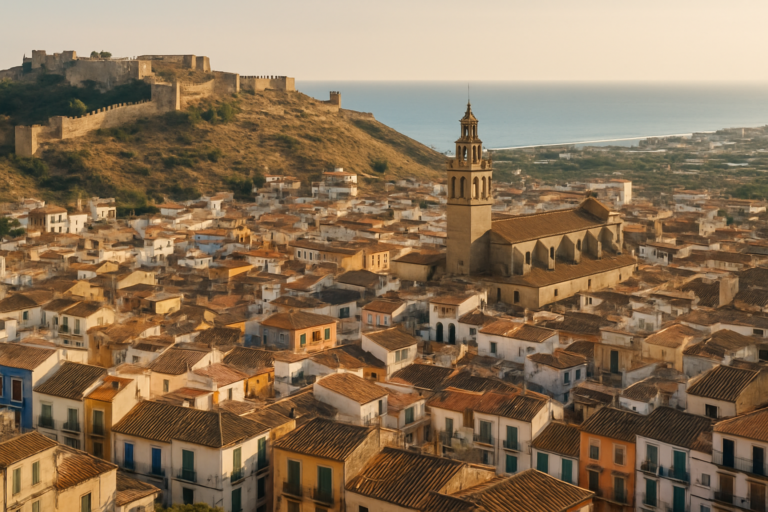
The town’s Lookout Tower dates to around the fourteenth century and was part of the coastal defensive network designed to warn of seaborne threats and “Moro” rebellions. It’s a concise example of medieval coastal military architecture; combined with views across the plain it rewards only a brief stop rather than a long guided tour.
Santos Juanes / St John Baptiste — a 1607 parish
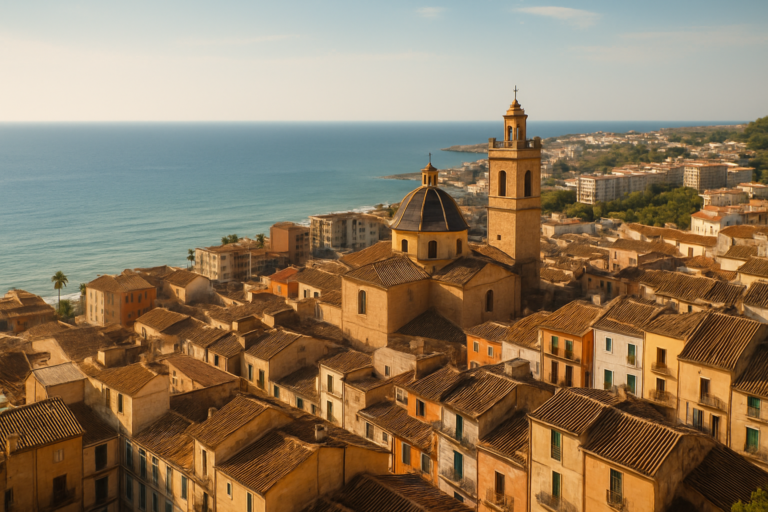
The main parish church was built in 1607 under the aegis of Juan de Ribera. Often referenced as Santos Juanes or the parish of St John Baptiste, the building anchors the town’s religious life and is the focal point for processions during the annual festival in September.
Playa Puçol and La Marjal dels Moros
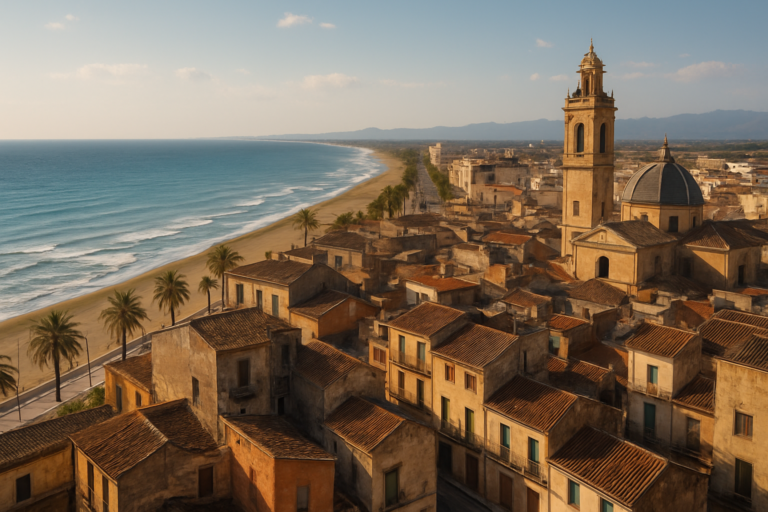
The beach is a low, flat stretch with a partly marshy character on the northern side. The northern sector’s protected marshland — La Marjal dels Moros — is environmentally significant and creates a different coastal feel than the broad, sandy Mediterranean beaches further south. Park a towel on the drier stretches and take short walks if you’re interested in coastal wetlands and birdlife.
Municipal Finca La Costera and the windmill
La Costera is a substantial municipal estate (517,245 square metres of municipal ownership) that preserves agricultural land close to the town. Much of the irrigated land around the town is given over to citrus — the local agricultural staple — and the finca offers a clear view of how horticulture shapes the landscape. Nearby, a traditional windmill — one of the few remaining in the province — serves as a tangible link to earlier rural economies.
Best beaches in Puçol
There’s a single principal coastline to know: the local playa behaves more modestly than major resort strips. The beach’s Blue Flag recognition signals service and environmental standards, but expect a low-profile seaside rather than a fully commercial promenade.
| Beach | Character | Facilities / Blue Flag |
|---|---|---|
| Playa Puçol | Flat, partly marshy coastal zone with a quieter atmosphere; northern sector is protected marshland (La Marjal dels Moros) | Blue Flag — indicates recognised quality and services |
Puçol with kids
Families will find straightforward, low‑stress options: shallow shoreline areas for paddling, open spaces for picnics and short, manageable cultural visits. The beach’s Blue Flag status helps reassure parents about basic services. However, this is not a place for large-scale children’s attractions; plan to alternate beach time with relaxed town walks and simple nature exploration in the marshy northern sector.
How to get to Puçol and get around
The town sits on the Valencian coast within the Horta Nord. It borders El Puig to the south and Sagunt to the north, which makes it a logical stop if you are exploring nearby coastal towns. The urban centre is compact and easy to cover on foot. Local roads radiate outward to neighbouring municipalities; for exploring inland fields or the municipal finca, a short drive or local taxi is the practical option.
Where to stay
Accommodation in the area clusters around a few obvious choices depending on what you want from your stay:
- Town centre — best for cultural access: close to Santos Juanes church, shops and municipal services; practical base for short walks.
- Beachfront / coastal area — best for beach days: easy access to Playa Puçol and the marshland fringes; expect a quieter seaside vibe rather than large resorts.
- Rural outskirts / near La Costera — best for peace and to experience citrus landscapes: convenient if you want to see agricultural land and traditional windmill sights.
Best time to visit Puçol
Summer brings beach weather and the usual seaside season; the highlight of the local calendar is the festival from September 1–9 in honour of the Virgin at the foot of the Cross, which concentrates community life and events. Outside those windows the town is quieter and better for off‑season walks and heritage visits.
| Season | Months | What to expect |
|---|---|---|
| High summer | June–August | Beach activity and typical seaside energy; busiest time for sunbathing and local services |
| Festival period | September 1–9 | Local religious and community celebrations centred on the Virgin at the foot of the Cross |
| Off‑season | Autumn–spring | Quieter streets, agricultural activity visible in citrus groves, good for short cultural walks |
History of Puçol
The settlement has medieval roots and links to the wider history of the Valencian plain. Jaume I figures in the early story of the area, and defensive needs produced a Lookout Tower erected around the fourteenth century to watch for seaborne threats and uprisings. The parish church dedicated to St John Baptiste was constructed in 1607 under Juan de Ribera. The locality was the scene of the Battle of Sagunto (also called the Battle of Puçol) on October 25, 1811, reflecting the area’s strategic importance during the Napoleonic era. For much of its long history the economy revolved around agriculture — irrigated lands dominated by citrus — until a mid‑twentieth‑century shift toward industrial activities after 1950.
Practical info
- Administrative region: part of the Horta Nord in the province of Valencia within the Valencian Community.
- Population snapshot: 19,975 inhabitants as of 1 January 2021.
- Natural protections: the northern part of the beach area is La Marjal dels Moros, a protected marshland — respect conservation signs and access restrictions.
- Beach quality: the main beach holds Blue Flag recognition, indicating certain standards in environmental management and services.
- Local economy and landscape: irrigated lands produce citrus as the primary crop; municipal landholdings include Finca La Costera (517,245 m²), which preserves agricultural space and local open land.
- Neighbouring municipalities: El Puig lies to the south; Sagunt to the north — useful if you plan short excursions along the Horta Nord coastline.
Worth it for: travellers who want an authentic, small Valencian coastal town with easy beach access, modest heritage sites and a clear agricultural landscape. Less so if: you want flashy resort amenities, major attractions or nightlife on a scale of bigger coastal cities — this is low‑key and local rather than built for mass tourism.
How we assess this guide
This guide compiles verified municipal, historical and environmental claims from authoritative local records and regional sources. We cross‑checked details such as population, protected natural areas, festival dates, and historic building dates. We flag closures or material changes when present; this entry contains no such closures. Note: this is a synthesis of verified sources rather than fresh on‑the‑ground reporting.
Frequently asked questions
How do I reach the town from nearby cities?
The town sits on the Valencian coast within the Horta Nord and borders El Puig to the south and Sagunt to the north. If you are in the provincial area, travel routes between neighbouring municipalities make the town an easy coastal stop; local roads connect the centre with adjacent towns. For precise public transport timetables consult regional transit operators.
Is Puçol an expensive place to visit?
The local economy historically centred on agriculture and moved toward industry after 1950. Expect a small‑town pricing reality: modest local businesses rather than premium tourist pricing. There are no claims of luxury resort prices in the verified data.
Which beach should I go to?
Playa Puçol is the principal beach: a flat, partly marshy coastal zone with Blue Flag status. The northern part of the beach transitions into La Marjal dels Moros, a protected marshland, which offers a quieter, more natural setting than a crowded promenade.
How many days should I plan?
A short visit of one to two days is appropriate if you aim to combine a couple of beach hours, a walk through the town centre to see Santos Juanes church and the Lookout Tower, and a glance at the municipal finca and windmill. Use an extra day for a relaxed festival‑timed visit in early September.
Is the town good for families?
Yes — families find the Blue Flag beach and calm coastal areas suitable for children, and town walks to the church or windmill are manageable with kids. There are no claims of large family attractions, so families seeking major amusement facilities should look elsewhere in the region.
Can I get around without a car?
The centre is compact and walkable for day‑to‑day needs. Trips to the municipal finca or to explore broader citrus landscape or neighbouring towns will be easier by car or taxi. Public transport options exist regionally; check local schedules for specific routes.
Is parking available?
The guide does not include verified specifics about parking infrastructure. In small coastal towns like this one, expect a mix of on‑street parking and small public lots near the beach and town centre; for exact locations check local municipal information.
What are good rainy‑day options?
Historic and cultural visits — such as to the parish church (Santos Juanes) and the Lookout Tower — offer indoor or semi‑sheltered experiences. The town’s compact nature makes short museum‑style visits or cafes practical alternatives when the weather turns.
When is the best time to visit?
For beach weather, summer months are natural; for cultural immersion aim for the festival from September 1–9, which concentrates local traditions around the Virgin at the foot of the Cross.
What is the main local festival?
The town celebrates its main festival from September 1–9 in honour of the Virgin at the foot of the Cross. This period is the local highlight and brings community processions and events to the centre.
Are there protected natural areas to see?
Yes — the northern part of the beach is a protected marshland called La Marjal dels Moros. It represents a coastal wetland environment adjacent to Playa Puçol and is important for local biodiversity.
What crops dominate the countryside?
Irrigated lands around the town are mainly used for citrus production; citrus is the primary crop in these fields.
Does the town have notable historical battles?
Yes — the Battle of Sagunto (also called the Battle of Puçol) occurred here on October 25, 1811, marking the town’s involvement in Napoleonic‑era conflicts.
Who are any notable people from here?
One of the town’s known figures is José Claramunt, the former Valencia CF footballer, who was born here.
Are there any surviving traditional structures?
Yes — besides the Lookout Tower and the 1607 parish church, the town preserves a traditional windmill, noted as one of the few mills of its type remaining in Valencia.
Plan the wider trip
Nearby on the Costa de Valencia
Pucol on the map
Places worth knowing near Pucol
This place is part of our Costa de Valencia Guide: The City, the Albufera and Paella — see every town, beach and cove we have mapped on that coast.
How this page is maintained. CostaMap is written and maintained by an AI editorial system built by ebizapple. Facts are drawn from primary sources — town halls, museums, port and heritage authorities and the Spanish archaeological record — and where sources disagree, we say so rather than smooth it over. Photographs marked as ours are taken on location. This page was last reviewed on 14 August 2026. Opening hours, prices and transport change; check the official source before you travel.