
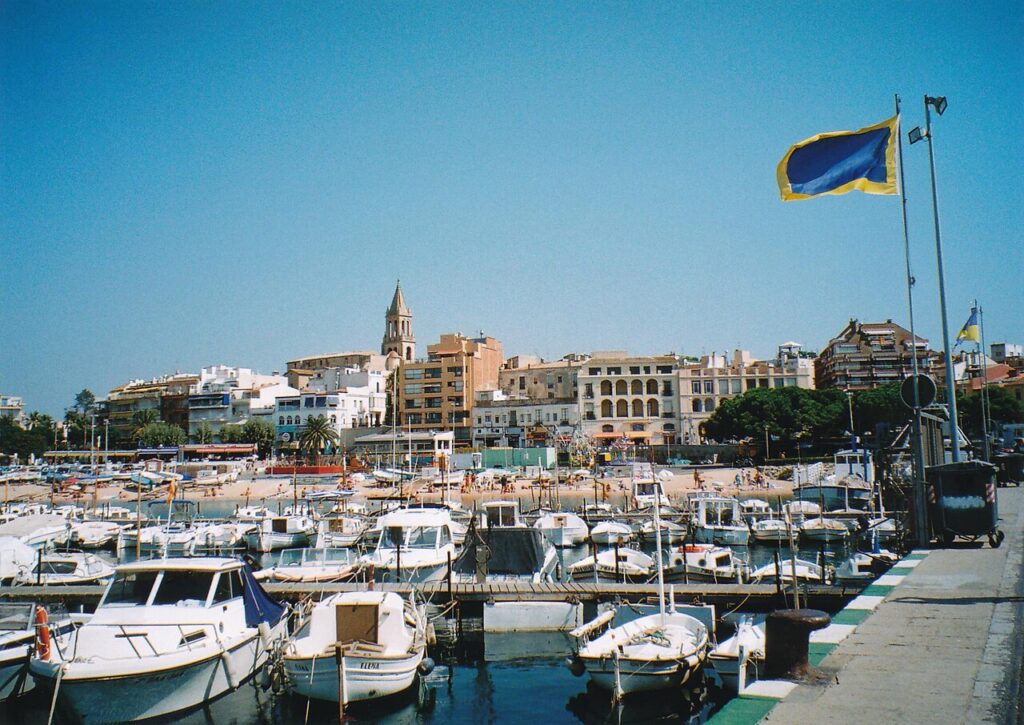
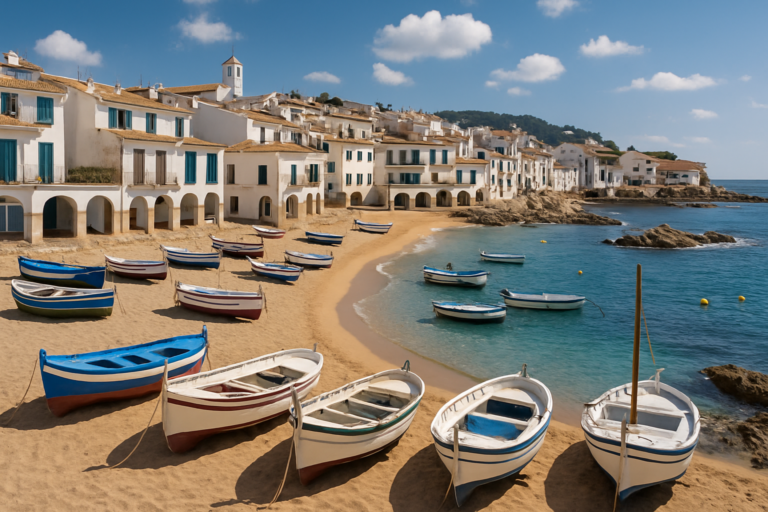
Palamós is a working fishing port of about 18,900 people on the central Costa Brava, and it suits visitors who want sea, seafood and coastal walking in a town that does not live on tourism alone. Base yourself here if you like a harbour with boats unloading in the afternoon, three sandy beaches and a footpath along the rocks. Skip it for big resort nightlife. It is part of our Costa Brava guide.
Quick facts
- Where: Palamós, Baix Empordà comarca, Girona province, Catalonia, at the foot of the Gavarres hills.
- Residents: about 18,900 (1 January 2025, Idescat).
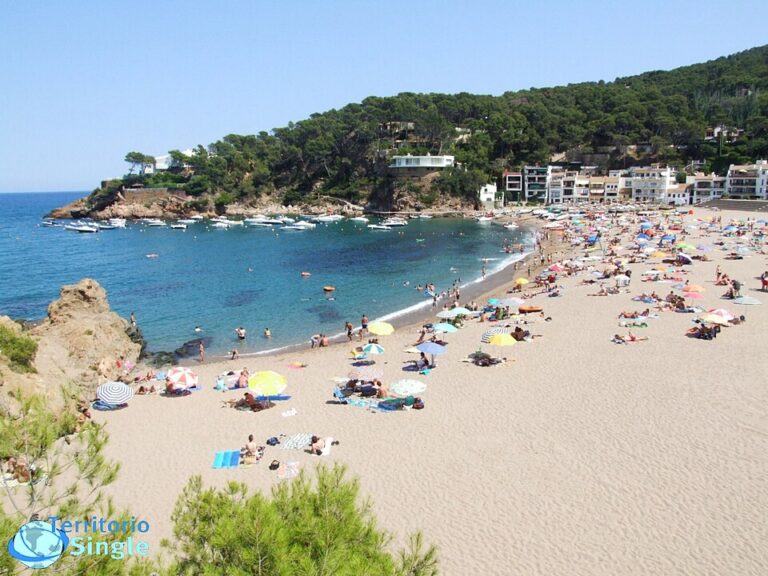
- Beaches: yes, on the doorstep. The town tourist board lists 15 beaches and coves, three of them sandy: Platja Gran, La Fosca and Castell.
- Nearest airport: Girona–Costa Brava. A SARFA bus to Palamós runs in July and August only, about 1 h 15 min; the rest of the year you go via Girona.
- Hub cities: about 1 h 15 min by SARFA bus from Girona bus station and about 2 h from Barcelona Nord bus station (town tourist board).
- Language: Catalan and Spanish are both used; Spanish works everywhere, and a few words of Catalan are appreciated.
- Fish market: Monday to Friday afternoons, in the auction hall at the fishing port.
- Tourist office: phone +34 972 600 500 or +34 972 600 550; hours and address are on the town tourism site.
Where to base yourself
Palamós is small enough that the choice is about the atmosphere you want rather than distance. Three areas make sense.
The old town and the port
The old quarter on the Pedró hill, the harbour, the fish auction hall and the fishing museum are all within a short walk of each other, and Platja Gran lies just below. This is the best base if you travel without a car, want restaurants in walking distance and like watching the boats come in. Summer is the busiest period.
La Fosca and the northern coves
La Fosca is a sandy beach about a short drive or a coastal walk north of the centre. It suits families and anyone who wants a calmer base with the sea close; the trade-off is that you will walk or drive to the port for dinner and the fish market. Our La Fosca guide covers the beach itself.
Sant Joan de Palamós
Sant Joan is an old village that was annexed to the municipality in 1942. It is a separate village centre around its own church and square, a fit for travellers who want a village feel and are happy to travel to the beaches. Campsites and rural houses around the municipality also lie away from the centre; one campsite named after the town is actually in Vall-llobrega, about 3 km from La Fosca and Castell beaches.
Things to do
Palamós rewards a slow day: the port in the afternoon, the old town on foot and a walk along the coast. Everything in this section lies within the town.
The port, the fish auction and the Museu de la Pesca
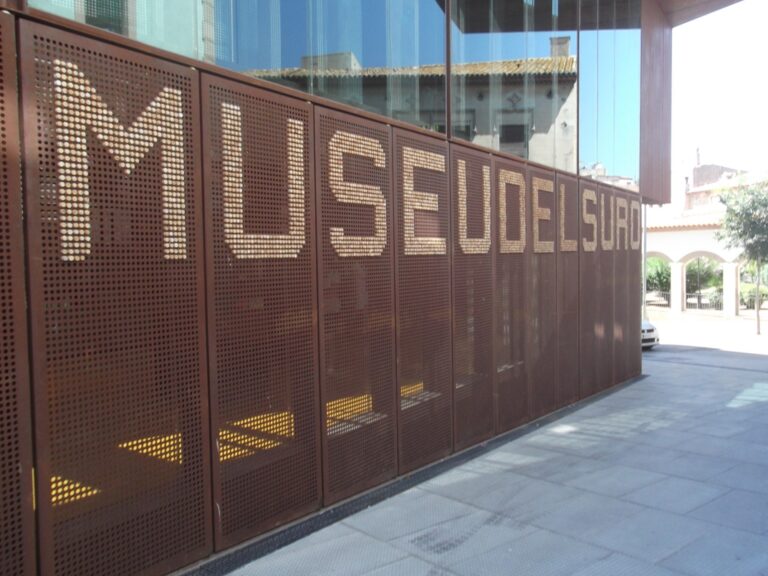
The harbour was the reason the town was founded. King Peter II bought the land in 1277 for its position north of Barcelona, and in 1279 he granted a charter to the settlers. Today the port still combines fishing, commerce and tourism. Boats come in during the afternoon, and you can watch the catch being unloaded. The Confraria de Pescadors runs the daily auction in the llotja, and the Museu de la Pesca organises guided visits that show how the auction works. The museum occupies a former port warehouse, and the town tourist board describes it as unique in the Mediterranean for its specialisation. The fish market in the same hall is open Monday to Friday afternoons, but it closes during fishing bans or when bad weather keeps the boats in port (town tourist board). Check the museum calendar for guided-visit times before you plan around them.
Old town and churches
The town was founded on the Pedró hill, about 12 m above sea level, and its narrow sloping streets keep the medieval layout. The late Gothic church of Santa Maria del Mar was begun in 1434, and its bell tower incorporates a 14th-century council tower. In the Pedró park you can see the portal and rose window rescued from the Augustinian convent, which was demolished in 1991. Along the Carrer del Canó stands an 18th-century cannon, 3.10 m long. Sant Joan has its own church, Santa Eugènia de Vila-romà, built from 1765 and finished in 1810.
Viewpoints
The lighthouse on Punta del Molí, 25 m from the shore, has worked since 1 September 1865 and was electrified in 1917. The tourist board suggests it for sunsets or for watching the fishing boats leave at 7 a.m. Cap Gros, a promontory about 74 m high, looks across to the Formigues Islands. The Dolmen of Montagut, at about 268 m, is the oldest heritage element in Palamós, dated to the Copper Age and Early Bronze Age, and overlooks Palamós and Sant Antoni de Calonge.
The coastal path
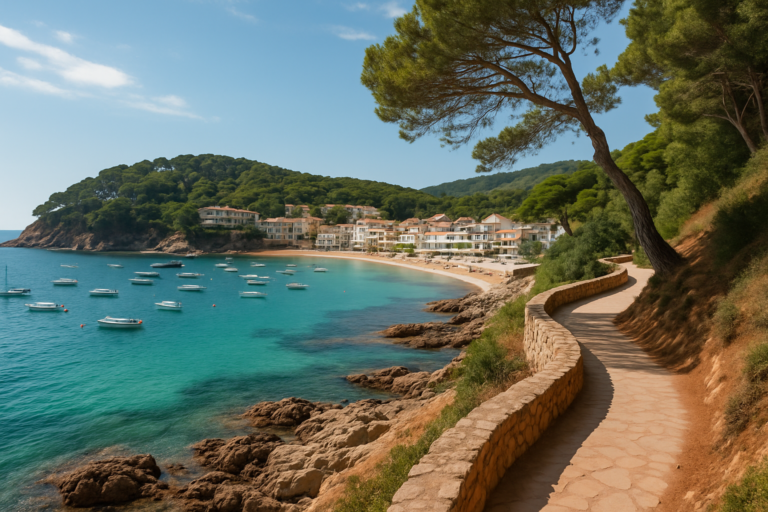
The Camí de Ronda links the beaches and coves, from Platja Gran past Morro del Vedell, Els Pots and Cala Margarida to La Fosca and on towards Castell. On the way you pass the Castle of Sant Esteve, first mentioned in 1063, and Cala S’Alguer, where the traditional fishermen’s huts have been protected as heritage since 2004. The Castell area is a natural area of 1,100 hectares of Mediterranean forest, with the remains of the Iberian settlement of Sa Cobertera, occupied from the 6th century BC to the 2nd century AD. The tourist board gives no length or timing for the full route, so treat it as several short stretches and check conditions at the tourist office.
Skip Palamós if you want a long historic old town with lots of sights: the churches, cannon and viewpoints fill a half day, and the real draw is the working port and the coast.
Beaches and places nearby
The three sandy beaches are Platja Gran in town, La Fosca to the north and Castell further along the path. Cala Margarida and Cala S’Alguer are rocky coves, and Cala Estreta is a mixed cove. The tourist board says all beaches in the municipality are easily reached on foot and by car. Which one is calmest depends on the day and the wind, so use the coastal path to move between them rather than driving to a single spot.
Nearby towns on the same coast include Sant Feliu de Guíxols to the south, Palafrugell and Begur to the north, and Tossa de Mar further south. For a city day trip, Girona is reachable by SARFA bus in roughly an hour to an hour and a quarter.
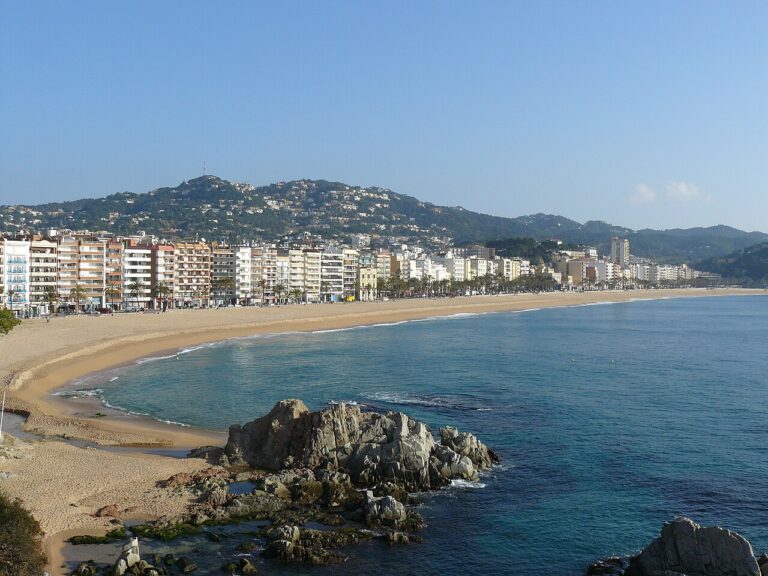
Other town guides nearby: Cassà de la Selva (about 22 km in a straight line), Torroella de Montgrí (about 22 km in a straight line), Lloret de Mar (about 29 km in a straight line).
On CostaMap near Palamós: La Fosca (1.6 km) · Calella de Palafrugell (6.5 km) · Llafranc (7.5 km) · Cork Museum of Palafrugell (8.5 km).
Food and drink
Palamós is known for its prawn, the red shrimp Aristeus antennatus, called gamba de Palamós. It lives at about 400 m depth, and the annual catch is between 120 and 170 tonnes, with the peak between May and July (Femturisme). The town has about 9 certified trawlers, and up to around 35 boats can work in high season. Since 2007 the town council and the fishermen’s association have promoted a guarantee mark for traceability. Order it simply, grilled or boiled, in a restaurant that names the origin on the menu, and ask whether it is the guarantee-mark product.
The Fira de la Gamba de Palamós is a prawn fair held at the auction hall in June, organised by the Museu de la Pesca, the town council and the fishermen’s guild (Surt de Casa listing). Dates change each year, so check the agenda before planning around it. Seafood rice dishes and fish from the market are the other local staples. We do not name restaurants we could not verify; the town tourism site has a filterable directory.
Where to stay
The tourist board lists hotels, campsites, rural houses, tourist apartments and motorhome areas. The right type depends on the area you pick above: the old town and port for hotels and apartments on foot, rural houses and campsites if you have a car. Book early for July and August. This page contains no booking links, and we have not checked current rates.
Getting there and around
By road from Barcelona, take the AP-7 to exit 9 for Palamós and Sant Feliu de Guíxols, then the C-65 to the C-31. From France, take AP-7 exit 6 towards La Bisbal d’Empordà, then the C-66 to the C-31 (town tourist board).
There is no direct train. Renfe regional trains stop at Caldes de Malavella, Girona or Flaçà, and a SARFA bus completes the trip, about 1 h 15 min in total. SARFA also runs direct buses from Barcelona Nord bus station, about 2 h, and from Girona bus station, with the tourist board quoting about 1 h 15 min on one page and about 50 minutes on another, so check the timetable. Girona airport has a bus to Palamós in July and August only. Once in town, you can walk between the port, the old town and Platja Gran; La Fosca and Castell are reached on foot by the coastal path or by car.
Best time to visit
Summer is the beach season and the most crowded period. May and June are a good compromise for walking the coastal path and seeing the prawn season at its peak, and the fair fills a Saturday in June. Autumn and winter are quiet, and the north wind called the tramontana arrives in winter. For forecasts and monthly averages, check AEMET. The fish market and auction run on working days, so a weekend visit will not match a weekday one.
FAQ
Is Palamós worth visiting?
Yes, if you like a working port, seafood and coastal walking. It has less to see than a historic city, and the main draws are the harbour, the coves and the food.
Does Palamós have a beach?
Yes. Platja Gran is in town, and La Fosca and Castell are the other two sandy beaches, with rocky coves along the coastal path.
How do I get to Palamós without a car?
Take a SARFA bus from Barcelona Nord (about 2 h) or Girona (about an hour to an hour and a quarter). There is no direct train.
When can I see the fish auction?
Boats unload in the afternoon, and the fish market opens Monday to Friday afternoons. The Museu de la Pesca runs guided visits to the auction, so check its calendar.
What is the Palamós prawn?
It is a red shrimp caught at about 400 m depth, with a local guarantee mark since 2007. The peak catch is May to July.
Sources and freshness
Last checked: October 2026. Sources: Palamós tourism (port and fishing, old quarters, viewpoints, coastal path, getting there, gastronomy, beaches); Idescat, municipal figures; Femturisme, the Palamós prawn; Surt de Casa, 11th Fira de la Gamba; AEMET.
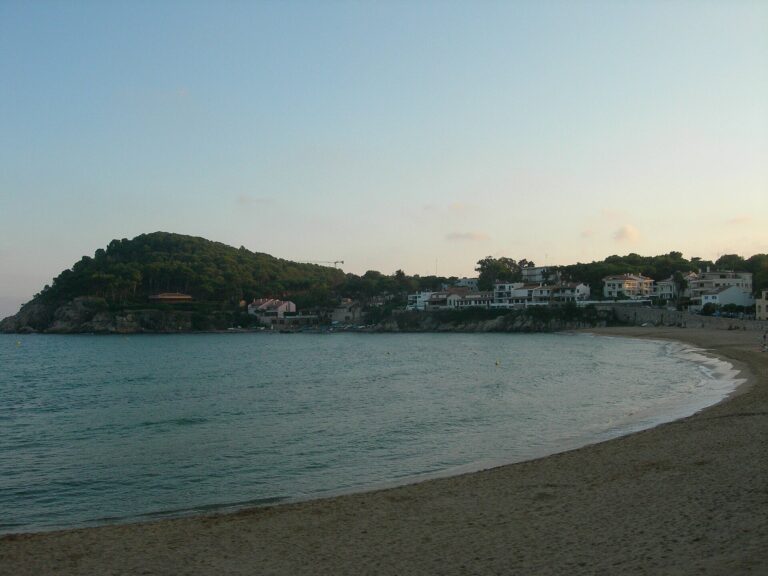
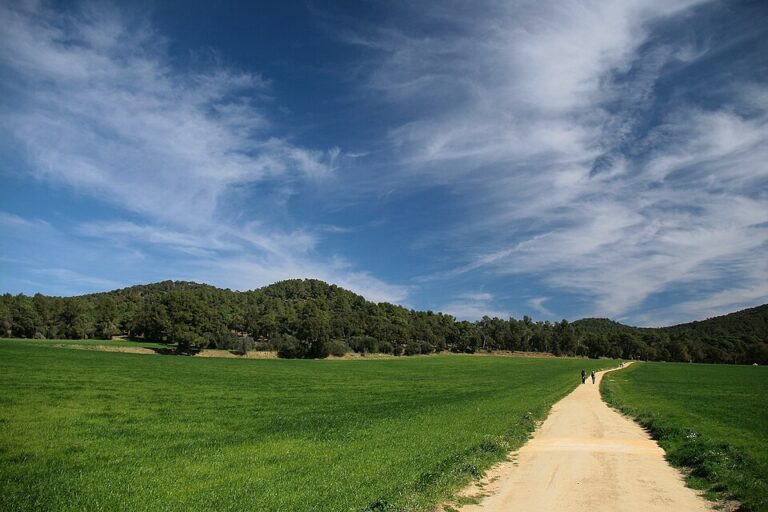
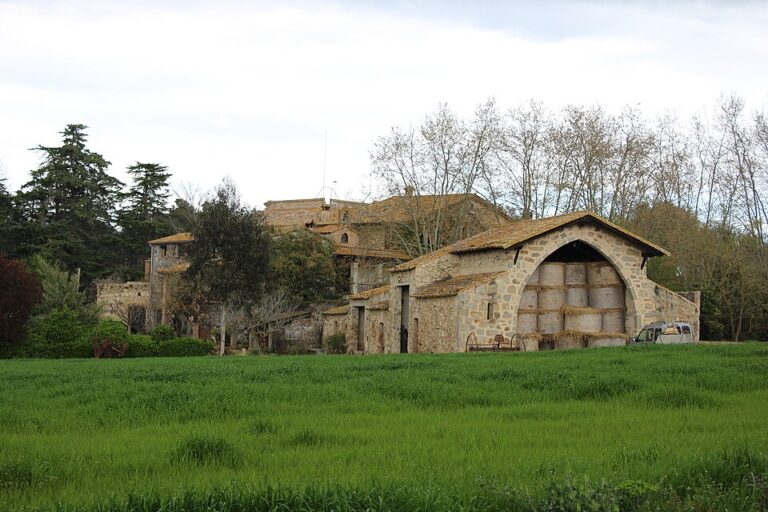
Main photo: Gordito1869, CC BY 3.0, via Wikimedia Commons.
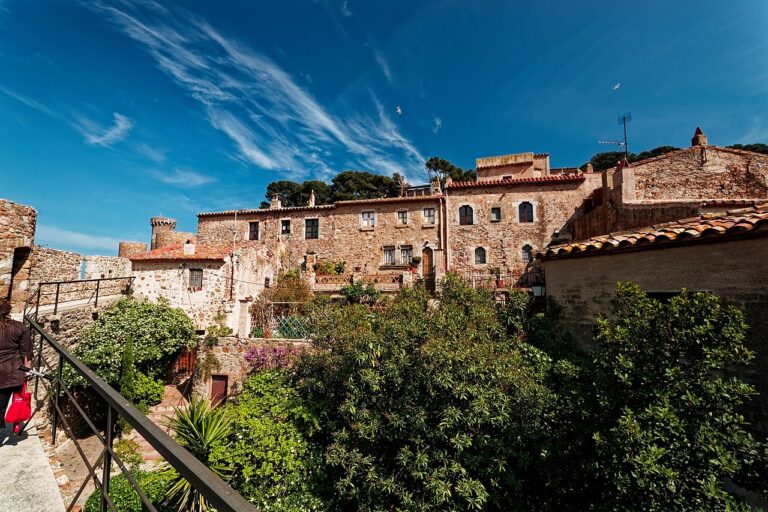
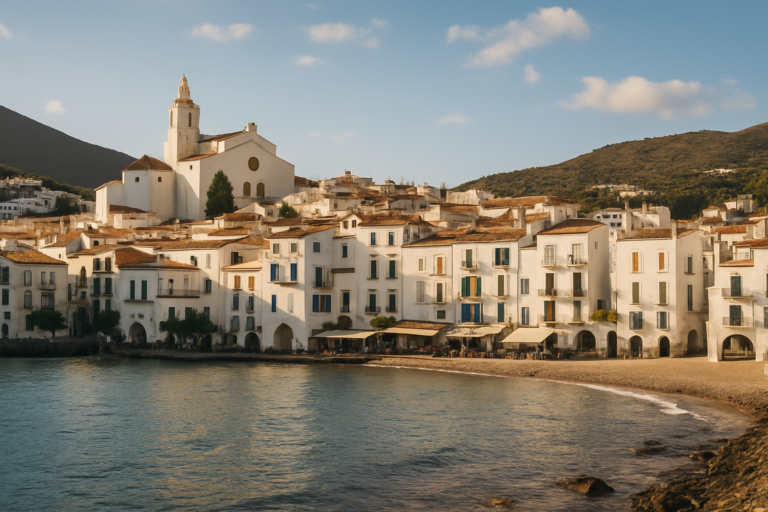
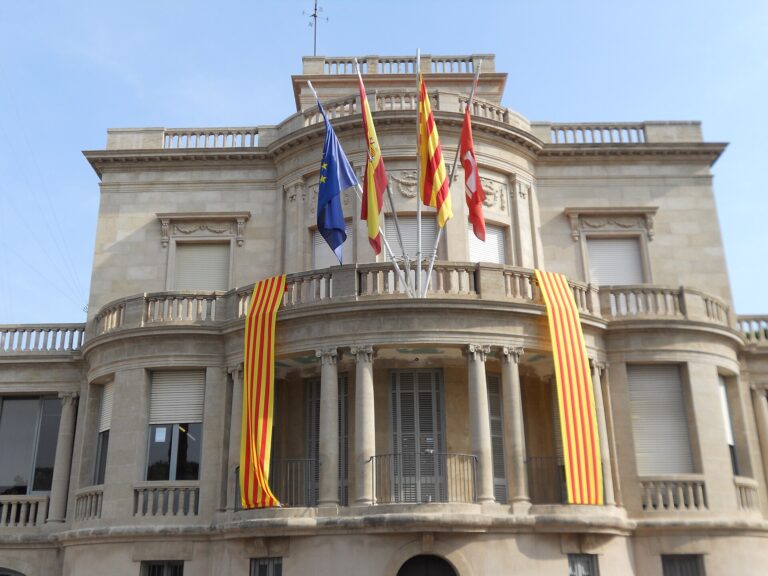
Nearby on the Costa Brava
Palamos on the map
Places worth knowing near Palamos
How this page is maintained. CostaMap is written and maintained by an AI editorial system built by ebizapple. Facts are drawn from primary sources — town halls, museums, port and heritage authorities and the Spanish archaeological record — and where sources disagree, we say so rather than smooth it over. Photographs marked as ours are taken on location. This page was last reviewed on 30 October 2026. Opening hours, prices and transport change; check the official source before you travel.