
Expect an inland white village where the rhythm is set by agriculture, local fiestas and mountain views rather than beachfront glamour. This is a place where groves of citrus, olives and avocado surround a compact pueblo blanco perched like “a natural fortress” above the Guadalhorce valley — good for short walks, slow meals and a quieter, more local taste of the Costa del Sol region, not a long sun-and-sea holiday.
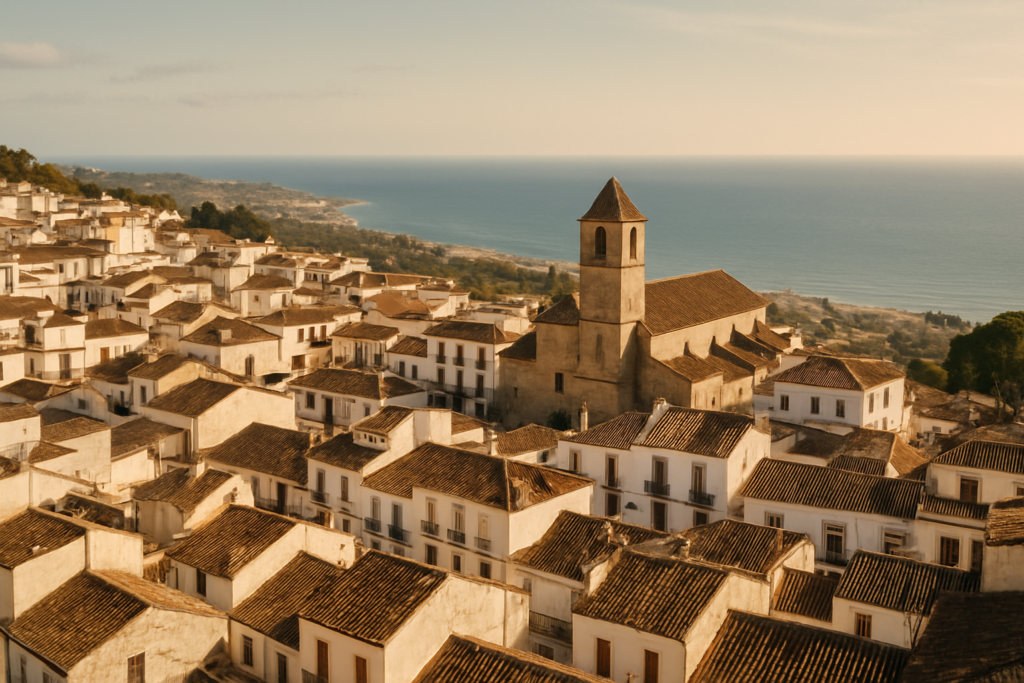
Alhaurín el Grande at a glance
- Location: in the Guadalhorce valley, at the foot of the Sierra de Mijas, about 30 km from Málaga.
- Agriculture: citrus, olive and avocado production shape the surrounding landscape.
- Character: a white village with a historic Moorish street plan and a prominent parish church built on a former mosque site.
- Outdoor highlights: short panoramic walk (Via Crucis) up to the San Antonio chapel.
- Transport: roughly 25 minutes from Málaga–Costa del Sol airport by car.
- Seasonal draw: popular with northern European residents; mild winters and nearby golf courses.
- Key local events: Semana Santa and the San Juan (24 June) bonfire festivities.
Things to do in Alhaurín el Grande
Visits here revolve around the old town, short walks with views, local food and timing your trip for one of the town’s lively festas. You won’t find big-ticket museums or theme parks, but you’ll get architecture that traces al‑Andalus roots, a close-knit center for strolling, and a sense of Andalusian daily life framed by orchards and golf courses nearby.
| Attraction | What it is | Price/entry | Best for |
|---|---|---|---|
| Historic centre | Moorish street plan, Arco del Cobertizo, old mill | — | Strolling, photography |
| Iglesia de Nuestra Señora de la Encarnación | Parish church built on a former mosque site | — | History, architecture |
| Via Crucis to San Antonio chapel | Short panoramic walking route to a hilltop chapel | — | Short hikes, views |
| Golf courses nearby | Alhaurín Golf, Lauro Golf in the surrounding area | — | Golfers, mild-winter breaks |
Historic centre and its Moorish imprint
The nucleus of the town preserves a maurisk gateplan: narrow, winding lanes, tucked plazas and defensive orientation that gave rise to its local nickname as “a natural fortress.” Look for the Arco del Cobertizo — one of the town’s gateways — and the old mill that signals the agricultural economy that has shaped the place since al‑Andalus times. The main church, Nuestra Señora de la Encarnación, occupies a commanding site and was constructed on the footprint of a former mosque, a visible layering of the town’s past.
Short walks and viewpoints
If you have limited time, the Via Crucis path up to the San Antonio chapel is the best single short excursion: it’s an accessible, popular walk that repays even a half-hour detour with broad views over the Guadalhorce valley toward the sea and the stand of orchards below. The walk is as much about panorama as it is about a gentle local outing rather than a strenuous hike.
Golf, gardens and the cultivated landscape
The wider area attracts long-stay visitors and residents, especially from northern Europe, thanks to mild winters and several nearby golf options such as Alhaurín Golf and Lauro Golf. The town itself sits in the agricultural heart of the valley, so much of the surrounding scenery is olive groves, citrus orchards and avocado plots; for many visitors this cultivated landscape is the point of interest rather than wilderness.
Best beaches in the area
Alhaurín el Grande is inland; beaches are not within walking distance. If you want sand and surf, the nearest options are on the Costa del Sol and require a short drive.
| Beach | Character | Approx. drive time |
|---|---|---|
| Fuengirola | Busy tourist beach with promenade | About 25–30 minutes by car |
| Torremolinos | Long sandy stretches, lively seaside facilities | About 25–30 minutes by car |
Alhaurín el Grande with kids
Families will appreciate short, manageable walks like the Via Crucis to San Antonio and open spaces among orchards where children can run without city traffic. The town’s scale means you can explore the historic centre without long distances between sights, and local fiestas — if you visit during Semana Santa or the San Juan bonfire night — are family-friendly cultural experiences. Note that sand-and-sea days require a drive to the coast.
How to get to Alhaurín el Grande and get around
Getting here is straightforward if you have a car; the town’s location in the valley is a short drive from Málaga and the airport. Public-transport options exist to reach nearby coastal centres, but many visitors rely on a rental car to explore orchards, golf courses and neighbouring villages at their own pace.
| From | By | Approx time |
|---|---|---|
| Málaga–Costa del Sol airport (AGP) | Car/taxi | About 25 minutes |
| Málaga city | Car | About 30 km (drive time depends on traffic) |
Where to stay in the town
Accommodation here tends toward small hotels, guesthouses and private rentals rather than large coastal resorts. Choose a base according to what you want to do:
- Historic centre — best for walkers who want immediate access to restaurants, plazas and the church.
- Outskirts / near golf clubs — suits golfers and people seeking quieter accommodation with easy access to courses.
- Rural fincas and villas — good for families or groups wanting space and proximity to orchards.
Best time to visit Alhaurín el Grande
Spring and autumn are the sweet spots for most visitors: bloom, milder temperatures and fewer heat spikes. Winters are mild compared with inland Spain, which explains the town’s popularity with northern European residents, while summers can be hot in the valley.
| Season | Months | What to expect |
|---|---|---|
| Spring | April–June | Good weather for walks and outdoor dining; orange trees and orchards in good condition |
| Summer | July–August | Hot valley days; evenings cooler than the coast; expect quieter town lanes during siesta hours |
| Autumn | September–October | Warm days and comfortable evenings, another recommended window |
| Winter | November–March | Mild winters draw long‑stay residents; golf season is active |
History of the town
The town traces layers of Iberian and al‑Andalus heritage through its street pattern and surviving structures. The maurisk layout of the old quarter and surviving elements such as the Arco del Cobertizo and an old mill speak to a history of settlement shaped by agriculture and strategic hilltop positions. Religious architecture also records this passage: the main church was erected atop a former mosque site, a tangible remnant of the medieval cultural transition in the region.
Practical info
Parking is generally easier than in coastal resort centres — many streets and public lots near the centre provide short walking access to key sights. Spanish is the local language; however, because of the sizable international resident community, English is widely understood in hospitality and service sectors. The local cuisine reflects Andalusian traditions: expect gazpacho, sopa de tomate and dishes made with local olive oil. If you rely on a car, note that drives to beaches typically take roughly half an hour, so plan day trips accordingly.
Worth it for: visitors who want a quieter Andalusian white village set in productive orchardlands, short scenic walks and authentic local festivals. Less so if: you want a beach-first holiday with lots of nightlife or large tourist attractions within walking distance.
How we assess this guide
This guide is compiled from verified regional sources and local data. We cross-checked historical and practical claims and flagged what’s salient for planning: transport links, seasonal advice and cultural highlights. We do not perform first‑hand field reporting for every sentence; instead we synthesise authoritative sources so you can set correct expectations before you go.
Frequently asked questions
How far is the airport?
Málaga–Costa del Sol airport (AGP) is about a 25‑minute drive from the town; that makes it one of the most accessible inland villages on the Costa del Sol for arrivals and departures.
Is it easy to get to the coast from here?
Yes — the nearest beaches at Fuengirola and Torremolinos are roughly 25–30 minutes away by car, making the coast an easy day trip while staying inland.
Which beach is closest and quickest to reach?
Fuengirola and Torremolinos are the nearest coastal options and require a short drive; both have promenades and established tourist services.
Is Alhaurín el Grande expensive?
Relative cost depends on choices: the town tends to be less expensive than the busiest coastal resorts for everyday dining and accommodation, and the agricultural setting supports local produce that keeps food straightforward and authentic rather than high‑priced tourist fare.
How many days should I plan for a first visit?
Two to three days is enough to see the historic centre, enjoy the Via Crucis viewpoint, sample local cuisine and make a day trip to the coast. Add more days for golfing or to use the town as a quiet base while exploring surrounding villages.
Is it a good place to visit with children?
Yes. The compact town centre and short walks like the Via Crucis suit families; cultural festivals are also engaging for kids. Beach days will require a drive.
Can I get around without a car?
Short visits around the town are easy on foot. To explore surrounding orchards, golf courses or coastal beaches you’ll find a car much more convenient; public transport links to nearby coastal centres do exist but are less flexible.
Is parking a problem?
Parking is generally easier than in coastal tourist centres; expect available spaces near the centre and public parking areas that put most attractions within a short walk.
What should I eat while I’m here?
Try Andalusian staples: chilled soups like gazpacho, sopa de tomate, and dishes that highlight local olive oil and produce. The town’s cuisine reflects farm-to-table ingredients from the surrounding orchards and groves.
When are the main local festivals?
Semana Santa is one of the town’s key religious festivals; San Juan, on 24 June, is marked locally with bonfires and community events. These are high points of the social calendar and offer an authentic glimpse of local tradition.
Is English widely spoken?
Spanish is the main language, but English is commonly spoken in hospitality and services because of the large international residential community in the area.
Is it a good base for golf?
Yes — the area hosts golf facilities such as Alhaurín Golf and Lauro Golf, and its mild winters make it a popular long-stay base for golfers from northern Europe.
What kind of landscape surrounds the town?
The immediate setting is agricultural: olive groves, citrus orchards and avocado plots dominate the valley. The town sits at the foothills of the Sierra de Mijas, offering mountain views above the cultivated landscape.
Does the town have notable historical architecture?
Yes. The old town preserves a Moorish street pattern and monuments like the Arco del Cobertizo and an old mill; the main church sits on the site of a former mosque, indicating the town’s layered history.
Are there hiking options nearby?
While the town itself is best for short, panoramic walks such as the Via Crucis to San Antonio, the foothills of the Sierra de Mijas provide additional walking and trekking options for those who want longer routes out of town.
Plan the wider trip
Nearby on the Costa del Sol
Alhaurin El Grande on the map
Places worth knowing near Alhaurin El Grande
This place is part of our Costa del Sol Guide: The Best Towns, Beaches and White Villages — see every town, beach and cove we have mapped on that coast.
How this page is maintained. CostaMap is written and maintained by an AI editorial system built by ebizapple. Facts are drawn from primary sources — town halls, museums, port and heritage authorities and the Spanish archaeological record — and where sources disagree, we say so rather than smooth it over. Photographs marked as ours are taken on location. This page was last reviewed on 28 July 2026. Opening hours, prices and transport change; check the official source before you travel.