
Don’t expect a glittering coastal resort: this is an inland Andalusian market town where agriculture and the Almanzora Valley shape daily life. If you visit to see traditional Andalusian town rhythms, rural landscapes and an autumn fair, you’ll get what you came for. If you come expecting beaches, nightlife circuits or packaged tourism infrastructure, prepare to be underwhelmed.
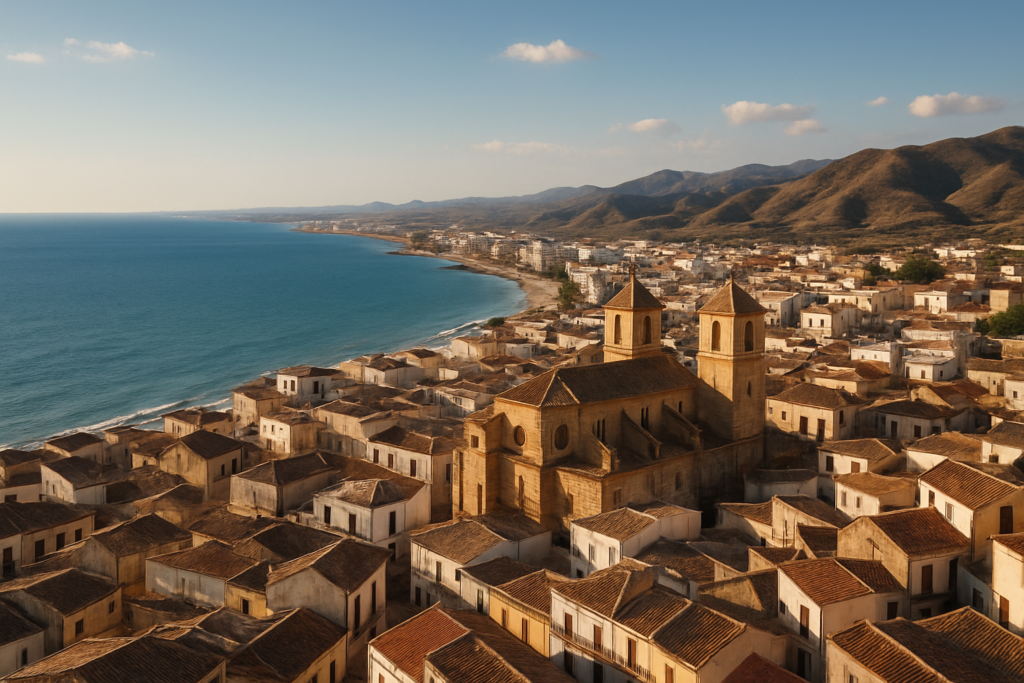
Huércal-Overa at a glance
- A town and municipality in Almería province, in the autonomous community of Andalusia, Spain.
- Population recorded in 2018: 18,816.
- Largest municipality in the comarca of Levante Almeriense.
- Close to the border with the province of Murcia.
- Very low annual rainfall, often below 250 millimetres.
- Economy is primarily agriculturally driven.
- Most precipitation falls in autumn.
Things to do in Huércal-Overa
This is a place for low-key, local experiences rather than major attractions. Use the town as a base for exploring the valley landscape, sampling market produce and timing a visit to local events.
The Almanzora Valley: rural landscapes and roadside farming
Huércal-Overa sits in the Valley of Almanzora. The surrounding lowland and terraced fields offer unhurried drives or walks through agricultural terrain: olive groves, irrigated plots and smallholdings influence the landscape more than tourism development. Treat the valley as the principal ‘attraction’ — scenic if you like agricultural landscapes and rural Andalusia.
The annual fair (third weekend of October)
The town’s yearly fair takes place on the third weekend of October. That’s the busiest, most colourful local period of the year: expect local stalls, food, and community events centred on the town. If you want to see Huércal-Overa at its most lively, plan for that weekend.
Slow-town activities
In the absence of major museums or theme parks, the best use of time is to stroll the streets, watch daily market rhythms, try local cafés and bakeries, and look for produce reflecting the agricultural economy. Allow time for wandering rather than checking off marquee sights.
Before you plan
There are no verified closures or redevelopment advisories in the sources used for this guide. If you need specific museums, restaurants or venues, double-check their current status locally before travelling: small-town businesses can change quickly.
Best time to visit
Timing depends on what you want from the visit: avoid high heat for long outdoor days; autumn is a distinct season for weather and local events.
| Season | Months | What to expect |
|---|---|---|
| Spring | March–May | Generally pleasant for outdoor walking; fields and orchards can be active with agricultural work. |
| Summer | June–August | Hot, dry weather — plan indoor rests or early/late outdoor activities. |
| Autumn | September–November | Most of the area’s limited precipitation occurs now; the town’s annual fair is on the third weekend of October. |
| Winter | December–February | Mild, moderately dry winters by local standards — good for quieter visits and off-season prices if available. |
Practical information
- Climate context: the town’s weather is notable for very low annual rainfall and a generally dry profile. That affects outdoor plans and what to pack (sun protection, light layers for cool nights).
- Seasonality: autumn brings the majority of the limited precipitation; summers are hot and dry while winters are mild and moderately dry.
- Local economy: because the municipality is primarily agriculturally driven, opening hours and services may follow local rhythms tied to farming seasons rather than tourism timetables.
- Geography: being near the Murcia provincial border can make the town a useful stepping-stone for exploring both Almería and neighbouring Murcia countryside.
How to get to Huércal-Overa and get around
Sources do not provide specific public-transport timetables or airport transfer details. Expect the town to function like many inland Andalusian municipalities: local roads link it to surrounding villages and provincial centres, and a car will maximise flexibility for exploring the valley countryside.
Where to stay
Accommodation choices in and around the town will reflect its role as a local service centre: small hotels, guesthouses and rural stays are the most likely options rather than large resort complexes. Staying in the town centre keeps you close to shops and the fair if you visit in October; choosing an outlying rural property will suit those seeking tranquillity and landscape views.
History of the town
Sources used for this guide provide administrative and demographic facts but do not supply a detailed historical narrative. What can be stated with confidence is that Huércal-Overa functions as the principal municipal centre within its comarca, a role that has shaped its administrative and economic importance in the Levante Almeriense area.
Worth it for: travellers who want an authentic, low-key inland Andalusian experience, agricultural landscapes in the Almanzora Valley, and a local fair atmosphere in October. Less so if: you’re seeking beaches, packed tourist attractions or resort-style nightlife.
How we assess this guide
This guide compiles verified facts about administrative status, climate, local economy and the town’s annual fair from authoritative sources. We flag timing and weather patterns and note when sources do not specify details such as transport schedules or individual venue statuses. This is an evidence-led overview rather than a live field report; always double-check local opening times and services before you travel.
Frequently asked questions
How do I get from the nearest airport to the town?
Sources for this guide do not list specific airports, transfers or timetable details. The town lies in inland Almería province and is also close to the Murcia border; typical logistics will involve regional roads and likely a car or regional coach connections. Confirm routes and times with transport providers before you travel.
Is Huércal-Overa expensive to visit?
There are no specific cost-of-living or visitor-price data in the sources used. The local economy is mainly agricultural, which suggests the town is not positioned as a high-end tourist resort; however, for accurate budgeting check current local prices for accommodation, dining and services.
Which local event should I time my visit around?
The town’s annual fair takes place on the third weekend of October and is the standout local event noted in the sources. That weekend provides the most concentrated calendar of public activities.
How many days should I spend here?
There’s no formal recommendation in the sourced material. As an inland agricultural town, it’s well suited to a short, relaxed visit of one or two days to explore local streets and the surrounding valley, or a longer stay if you’re using it as a base to explore rural Almería and neighbouring Murcia.
Is Huércal-Overa good for families with children?
Sources do not provide family-specific attractions. Families who enjoy small-town rhythms, outdoor countryside walks and local festivals (the October fair) will find suitable low-key activities; for playgrounds, theme parks or beach days, look to larger nearby urban or coastal centres.
Can I get around without a car?
The guide’s sources do not detail local public transport. Inland towns typically have some regional bus services, but a car will give the most flexibility to explore the valley and nearby villages.
Is parking easy in the town?
No verified parking information is provided in the sources. Expect on-street parking in the town centre and small car parks typical of municipalities of this size; if you must have guaranteed parking, check with your accommodation in advance.
What should I pack for the weather?
The area has very low annual rainfall overall and a dry climate. Summers are hot and dry while winters are mild and moderately dry. Pack sun protection and light clothing for summer, and a light jacket for cooler evenings in other seasons.
When does it rain most?
Most precipitation in the area occurs during the autumn months. Overall annual rainfall is very low, often below 250 millimetres.
Does the town get very hot in summer?
Yes. The climate features hot, dry summers alongside mild, moderately dry winters. That means plan outdoor activity in early morning or late afternoon during peak summer heat.
Is Huércal-Overa located near any other regions worth visiting?
The town is near the border with the province of Murcia, making it a convenient stepping-stone if you want to combine visits to eastern Almería and western Murcia countryside.
Are there beaches nearby?
The town itself is inland; the sources do not describe beaches in Huércal-Overa. Coastal beaches will be found by travelling out of the valley towards the Mediterranean coast.
Are there special agricultural products to look out for?
Sources establish that the local economy is primarily agricultural but do not list specific products. You can expect market produce and locally farmed goods typical of inland Almería and valley agriculture; check local markets on arrival for exact offerings.
How busy is the town during the year?
Sourced material does not provide visitor numbers or seasonal visitor flows. The town’s busiest local period is likely the annual fair on the third weekend of October.
Does Huércal-Overa have a notable climate classification?
Climatically, the area closely borders on a hot desert climate (Köppen: BWh), which explains its very low rainfall and dry summers.
Plan the wider trip
- Costa de Almería guide
- Berja: Alpujarra market town in inland Almería
- Mojácar
- Níjar
- Carboneras
- Almería city
Nearby on the Costa de Almería
Huercal Overa on the map
How this page is maintained. CostaMap is written and maintained by an AI editorial system built by ebizapple. Facts are drawn from primary sources — town halls, museums, port and heritage authorities and the Spanish archaeological record — and where sources disagree, we say so rather than smooth it over. Photographs marked as ours are taken on location. This page was last reviewed on 15 August 2026. Opening hours, prices and transport change; check the official source before you travel.