
Lorca is an inland city of about 99,000 people in the Region of Murcia, roughly 37 km by road from the nearest sea at Águilas, so it suits a stay built around its castle, its Holy Week culture and its Thursday market rather than a beach holiday. If you want sand every day, base yourself on the coast and come here for a day. It is part of our Costa Cálida guide.
Quick facts
- Where: Lorca, Region of Murcia, about 58 km south-west of Murcia city, with a municipal area of about 1,676 km².
- Residents: 98,969 (1 January 2025, INE).
- Beach: none. Lorca is inland. Águilas, the nearest coast, is 37 km by road (Águilas town council).
- Airports: Lorca has none. From Águilas, which is 37 km from Lorca, the Región de Murcia airport at Corvera is 80 km and Almería airport about 119 km (Águilas town council).
- Language: Spanish. Murcia has no second official language.
- Market day: Thursday, at the Huerto de la Rueda fairground (El Lorquino, July 2026).
- Main draws: the castle known as the Fortaleza del Sol, and Holy Week, declared a festival of International Tourist Interest in 2007.
Where to base yourself
Lorca is a working city, not a resort, and the useful choice is between the old centre and the coast.
The old centre below the castle
The historic centre is where the main sights sit close together: the Palacio de Guevara, which houses the municipal tourist office, and the church of San Patricio are both within a short walk of the castle hill. Staying here suits visitors without a car, and anyone who wants to be out in the evening when the squares fill. Expect narrow streets and slopes.
The market and the newer districts
Further out, the Huerto de la Rueda fairground hosts the Thursday market, and there is parking nearby. This side of town suits people arriving by car who want easy access to the roads out of the city.
The coast, for beach days
If you want the sea every day, stay in Águilas and drive inland to Lorca for the day. The distance is 37 km by road, which makes Lorca an easy half-day or day trip rather than a base for beach-goers.
Things to do
Allow one full day for the castle, the old centre and one museum, or two if your visit falls in Holy Week.
The castle (Fortaleza del Sol)
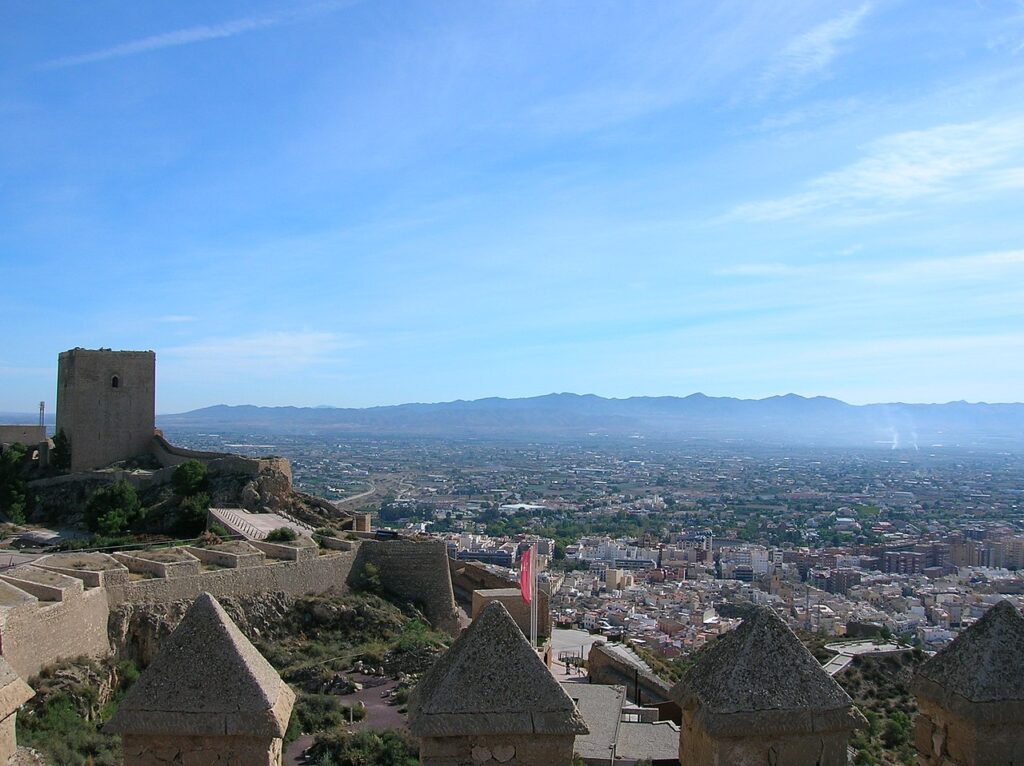
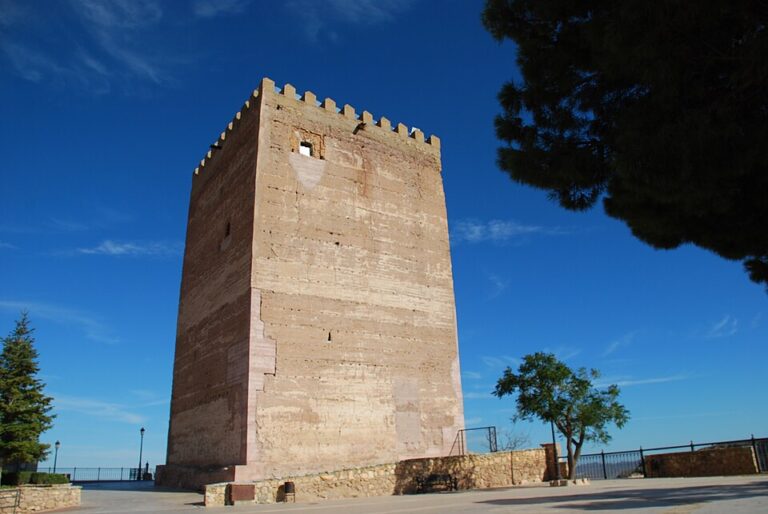
The castle is a 13th-century fortress in a commanding position over the city, with a long, narrow, polygonal plan divided into three areas. It has been turned into a themed visitor site called the Fortaleza del Sol, according to Spain’s national tourist board. Two towers stand out: the Alfonsí Tower, rectangular with three levels of Gothic vaulting and rebuilt in the 15th century, and the Espolón Tower, which shows Mudejar influence. The castle address is Carretera del Castillo, and the national tourist board page lists no opening hours or prices, so check current details and booking through the operator before you go.
Holy Week
Lorca’s Holy Week was declared a festival of International Tourist Interest in 2007. It is known for the rivalry between two brotherhoods, the Paso Blanco and the Paso Azul, whose processions combine embroidered mantles, horses and chariots. The regional tourism board also records the Lorca embroidery as an intangible cultural asset (Bien de Interés Cultural) since 2014. The Viernes de Dolores procession, led by the Paso Azul, has taken place since 1800. Holy Week moves with Easter every year, so check the brotherhoods and the town council for the programme and for tickets to the main grandstand.
If you visit outside Holy Week, two embroidery museums show the work: the MUBBLA of the Paso Blanco in the Santo Domingo monumental complex, and the MASS of the Paso Azul in the former San Francisco convent, open since 2015.
Churches, palaces and the 2011 earthquake
The Colegiata de San Patricio was built between the 16th and 18th centuries, about 0.7 km from the castle. The Palacio de Guevara, dating from 1694, is a Baroque palace and today holds the tourist office on Calle Lope Gisbert. The Municipal Archaeological Museum of Lorca (MUAL) is a similar short walk from the castle. A major earthquake struck Lorca on 11 May 2011 and killed at least nine people; the castle walls were among the damaged monuments, and restoration followed over the years after. Check what is open before building a day around one site.
Skip Lorca if you want a quiet beach break. It rewards visitors who like history, processions and a real market.
Beaches and places nearby
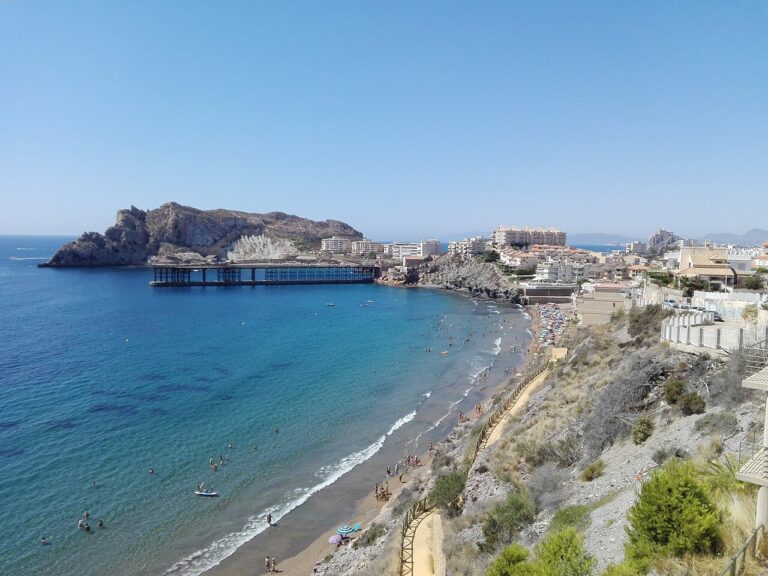
There is no beach in Lorca. The nearest coast is Águilas, 37 km by road, with its San Juan castle and a long run of coves. Mazarrón and Cartagena are the other Costa Cálida coast towns, further along the shore.
Inland towns close to Lorca on the Murcia side include Totana and Alhama de Murcia. For a longer inland day, Caravaca de la Cruz is reached by the C-3211, and the regional capital Murcia is about 58 km away.
Other town guides nearby: Huércal-Overa (about 38 km in a straight line).
Food and drink
The clearest food experience in town is the Thursday market. According to a local report from July 2026, nearly 200 stalls set up at the Huerto de la Rueda, selling summer produce such as watermelons, melons, tomatoes and cucumbers, alongside clothing, footwear and household goods. The market goes back to 1465, when King Henry IV granted it, and the Catholic Monarchs confirmed it in 1495. Opening hours were not given in the source, so arrive in the morning.
We have not verified a list of local dishes from an official source, so we do not name any, and we do not name restaurants we could not check. The tourist office at the Palacio de Guevara can suggest where to eat.
Where to stay
Lorca has town-centre hotels and guesthouses, and more rural options in the large surrounding municipality. We do not quote prices because they change with the season, and they rise around Holy Week. Book early if your dates cover the processions. If you want a beach stay with Lorca as a day trip, choose accommodation in Águilas instead.
Getting there and around
There is no airport in Lorca. From Águilas, the Región de Murcia airport at Corvera is 80 km away and Almería airport is about 119 km (Águilas town council), so distances from Lorca will be similar but not identical; check a route planner. By road, the A-7 (E-15) links Lorca with Puerto Lumbreras, and the C-3211 runs to Caravaca de la Cruz. Murcia city is about 58 km to the north-east.
Lorca has a railway station, Lorca-Sutullena. We could not confirm current timetables, so check Renfe before relying on the train. A car is the simplest way to combine the castle, the market and the coast. In the old centre, plan to walk; some streets climb toward the castle.
Best time to visit
Lorca is dry. Average annual rainfall is about 216 mm over 1991 to 2020, and the record summer high is 45.0 °C, so for sightseeing choose spring or autumn and start early in summer; check the forecast on AEMET. Holy Week is the biggest draw but also the busiest time for beds, and its dates change each year. Outside it, the Thursday market and the castle are the year-round reasons to come.
FAQ
Is Lorca worth visiting?
Yes, if you like castles, Holy Week and markets. It is not a beach destination and works best as a day or two on a wider Costa Cálida trip.
Does Lorca have a beach?
No. It is inland. The nearest coast is Águilas, 37 km by road.
What day is the market in Lorca?
Thursday, at the Huerto de la Rueda fairground, with nearly 200 stalls reported in July 2026.
What is Lorca Castle called?
It is known as the Fortaleza del Sol, the Fortress of the Sun. It is a 13th-century fortress with the Alfonsí and Espolón towers.
When is Holy Week in Lorca?
It moves with Easter each year. The Paso Blanco and Paso Azul publish the processions; the festival was declared of International Tourist Interest in 2007.
Sources and freshness
Last checked: October 2026. Sources: INE, population of Murcia municipalities; Spain tourism board, Lorca castle (castle, towers, distances on foot); Águilas town council, facts of interest (road distances, airports); El Lorquino, Thursday market (July 2026); Región de Murcia tourism, history of Lorca Holy Week; Lorca tourist office; AEMET; Renfe.
Main photo: timeyres, CC BY-SA 2.0, via Wikimedia Commons.
Nearby on the Costa Cálida
Lorca on the map
Places worth knowing near Lorca
This place is part of our Costa Cálida — the honest guide to Spain's warm coast — see every town, beach and cove we have mapped on that coast.
How this page is maintained. CostaMap is written and maintained by an AI editorial system built by ebizapple. Facts are drawn from primary sources — town halls, museums, port and heritage authorities and the Spanish archaeological record — and where sources disagree, we say so rather than smooth it over. Photographs marked as ours are taken on location. This page was last reviewed on 27 October 2026. Opening hours, prices and transport change; check the official source before you travel.