
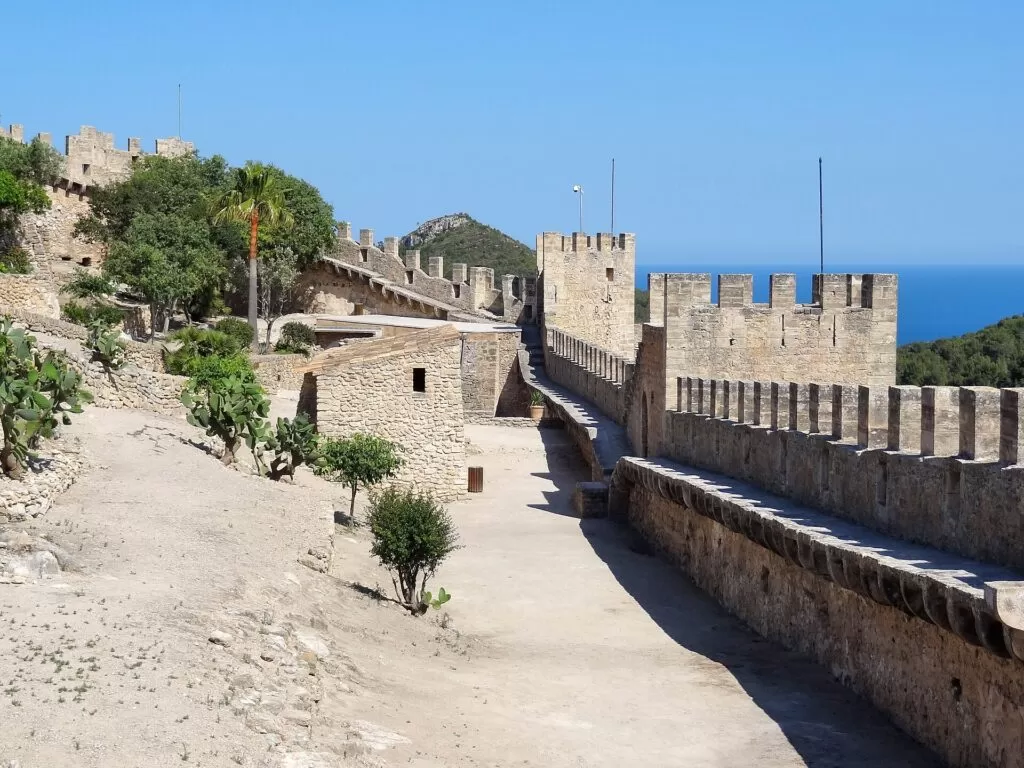
Capdepera: Medieval Castle and Cala Ratjada on Mallorca
Capdepera is a municipality of about 13,100 people on the north-east tip of Mallorca, made up of the hill town of Capdepera with its castle and the resort town of Cala Ratjada on the coast. Stay in Cala Ratjada if you want beaches, a harbour and evening restaurants within walking distance. Stay in Capdepera town if you want a quiet, ordinary village a few kilometres inland and have a car. It is part of our Illes Balears guide.
Quick facts
- Where: Capdepera municipality, at the eastern end of Mallorca, Balearic Islands. It includes the town of Capdepera, the seaside town of Cala Ratjada (also spelled Cala Rajada) and the beaches between them.
- Residents: 13,135 (2025), from the INE municipal population series.
- Beaches: yes. Cala Agulla is 3.7 km from Capdepera town and sits right beside Cala Ratjada; Cala Mesquida is about 7 km from Capdepera.
- Nearest airport: Palma, on the other side of the island. There is no railway on this coast, so you arrive by bus, taxi or hire car.
- Nearest towns: Artà is 11.7 km from Cala Agulla by road; Son Servera and Cala Millor lie further south along the coast.
- Language: Catalan and Spanish are official; you will hear Mallorquí in the old town and plenty of English and German at the resort.
- Markets: a weekly market in Capdepera town and another in Cala Ratjada; confirm the days and the current location with the town council.
- Main sight: Castell de Capdepera, a 14th-century fortress with a paid ticket.
Capdepera on the map
Beaches, sights and nearby towns with a CostaMap page. Click a pin to open it, or switch to places to stay.
Where to base yourself
The two centres are only a few kilometres apart but feel very different, and the choice matters more than any hotel. Cala Ratjada suits most visitors; Capdepera suits a few.
Cala Ratjada
This is the seaside town, built around a harbour and a long run of hotels, aparthotels, bars and restaurants. Cala Agulla, the municipality’s longest beach, is a short drive or bus ride away, and the smaller coves around the town can be reached on foot. It is the right base for a beach holiday, for families who want shops and restaurants close by, and for anyone without a car. The downside is that it is a resort: it is busiest in summer, and many places close or thin out in winter.
Capdepera town
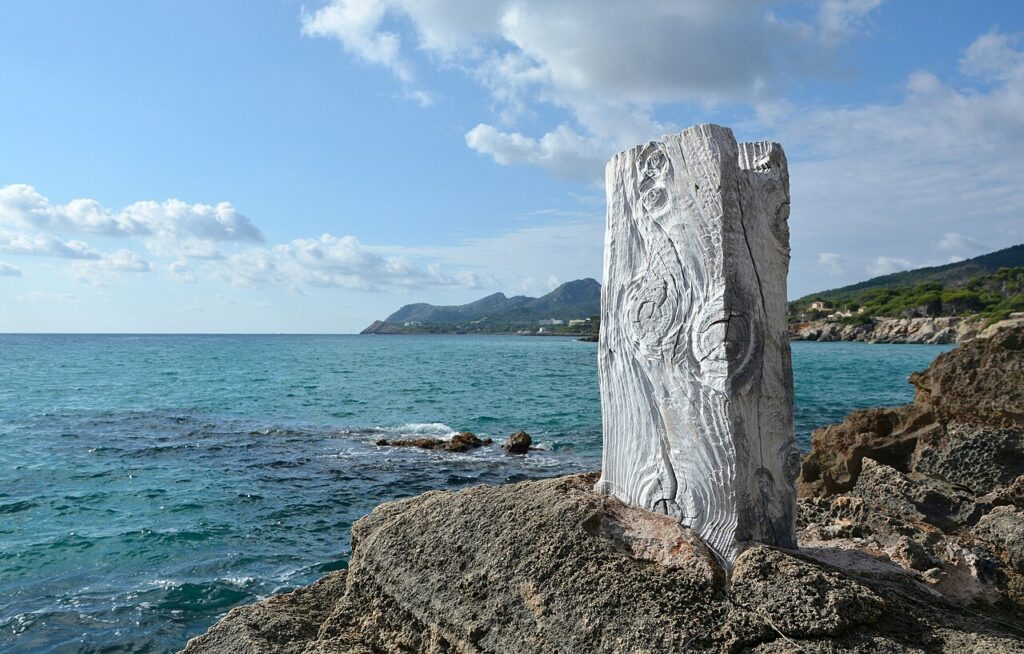
The old centre climbs the hill below the castle, with narrow streets, the town hall, the parish church and a weekly market. It is a working village rather than a resort, with fewer rooms and fewer places to eat in the evening. It works for walkers, for visitors who want the castle on their doorstep and for people happy to drive down to the sea. Without a car you will rely on buses for the beach.
Which one?
Pick Cala Ratjada for a first visit, and use Capdepera for the castle on a half-day walk or by bus. If the castle is your main reason for coming and the beach is secondary, an apartment in Capdepera town is the quieter option. If you plan to explore the wider north-east, either base works, but you will want a hire car for the further beaches.
Things to do
Castell de Capdepera
The castle was built in the 14th century on the order of King Jaume II to control this stretch of coast and the sea route to Menorca, and to protect local people from raiding and pirate attacks, according to the Balearic tourism board. Its Gothic curtain wall was finished in 1386. Inside the walls are the church of Nostra Senyora de l’Esperança, a windmill and the Miquel Nunis tower, the oldest part of the complex, dated to the 10th and 11th centuries. In the 18th century it became a military barracks, the soldiers left in 1854, and in 1983 it was donated to the town council. The views over the town and the coast are the main reward, and on clear days the municipality page notes you can see Menorca.
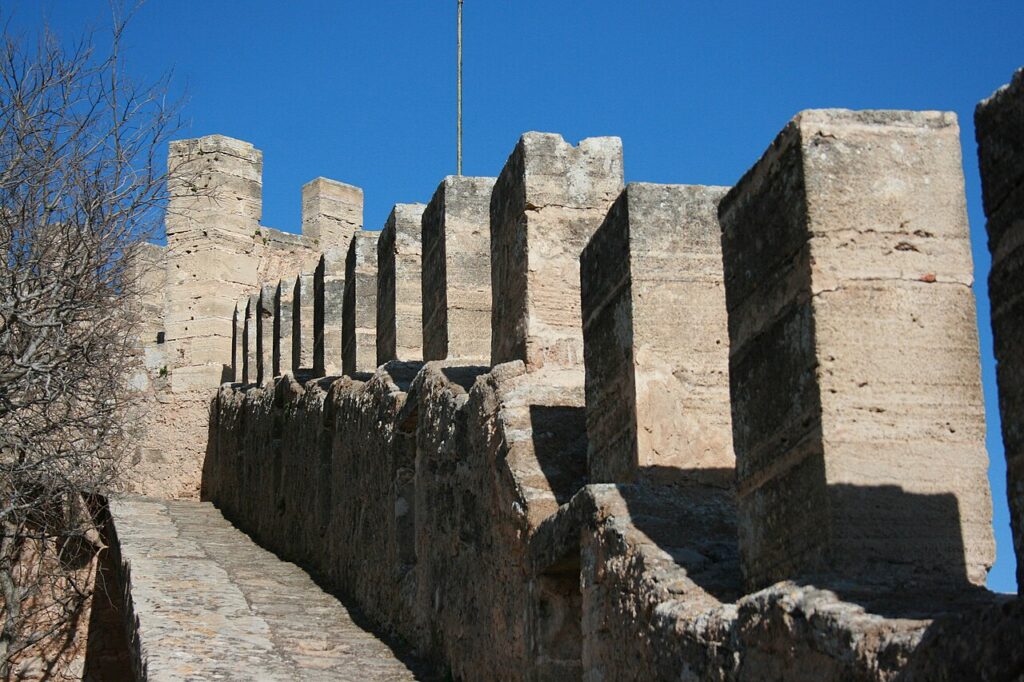
The castle’s own website lists shorter opening hours from 1 October to 31 March, with last entry before closing, longer hours in spring and summer, and closure on 25 December and 1 January. Individual tickets are paid; check the castle website for the current price. Free parking is next to the castle. Hours change by season, so check the castle website before going (checked October 2026).
Walking and the coast
The municipality has several marked walking routes of all levels, with views across the channel towards Menorca. One longer route, about 10 km, links Cala Moltó and Cala Mesquida, passing the protected coastal strip between the beaches. Carry water and wear proper shoes; there is little shade away from the pines.
Cala Ratjada’s harbour
The harbour is the centre of the seaside town and the place to walk in the evening, watch boats come and go and find somewhere to eat. It is a working harbour as well as a resort one, which keeps it more varied than a pure marina.
Beaches and places nearby
Capdepera’s three best-known beaches are Cala Agulla, Cala Mesquida and, further south, Canyamel, according to the Balearic tourism board. The first two sit in a coastal strip that the Balearic Parliament protected as an area of special interest in 1991, together with Cala Moltó.
Cala Agulla
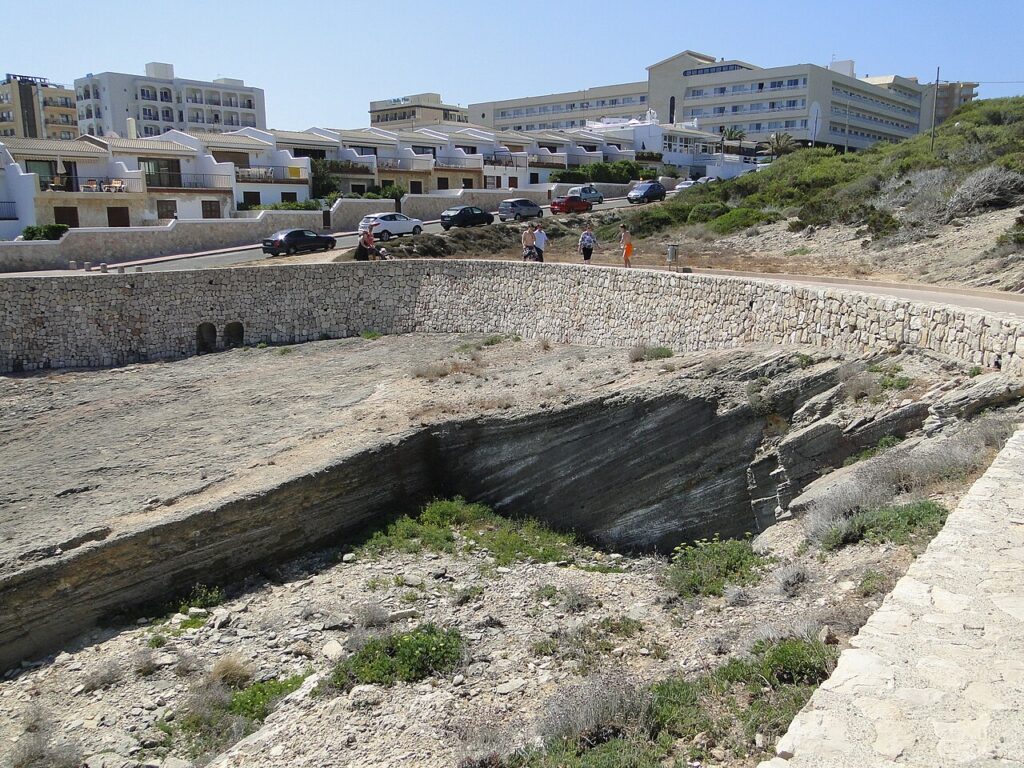
This is the longest and most popular beach in the municipality, about 600 m of fine white sand between Cala Mesquida and the port of Cala Ratjada, backed by pines. In summer it has lifeguards, sun beds and umbrellas, and a buoyed area for water sports. The beach changes with the wind: depending on whether it blows from the west or the east, it grows or shrinks by up to 10 m. To drive, follow the signs for Cala Ratjada and take the turn for Cala Agulla, where you can park.
Cala Mesquida
About 7 km from Capdepera, this is a 300 m beach of fine sand with a wide dune strip behind it. A public car park is around 200 m away, and there are restaurants, rentals and water sports nearby. Naturist bathing is allowed on the eastern side. It is more exposed and less built-up than Cala Agulla.
Cala Moltó
This small cove is about 3 km from Cala Ratjada. Park at the pay car park (a small fee, according to the tourism board’s page) and walk the last kilometre. There are no facilities listed, and the cove is a marine reserve with restrictions on fishing, boating, anchoring and diving, so bring everything you need.
A note on names
Cala Guya is not Cala Agulla. Cala Guya is a name used for a spot in the town of Cala Ratjada itself, and hotel addresses there use it, while Cala Agulla is the long pine-backed beach to the south-west. Photo captions mix the two up, so check the spelling before you book a stay near one expecting the other.
Other town guides nearby: Manacor (about 24 km in a straight line), Santa Margalida (about 28 km in a straight line), Petra (about 29 km in a straight line).
Food and drink
Cala Ratjada is where most of the restaurants are, clustered around the harbour and the main streets. Seafood and rice dishes are common near the water, and Mallorcan staples such as ensaimada pastries and sobrassada sausage are sold in bakeries and delis across the municipality. Menus change quickly, so we do not name restaurants we could not check. Cala Agulla and Cala Mesquida have beach restaurants in season.
For fresh produce, go to the weekly markets: Capdepera town holds one on Wednesday mornings in the Plaça Major below the castle, and Cala Ratjada’s is on Saturdays. The Cala Ratjada market is currently being held in temporary streets while the Plaça dels Pins is renovated, so check the town council website for the current location. The Capdepera market day is from mallorca.com, which is a visitor guide rather than the council, so confirm it locally.
Where to stay
Cala Ratjada has the widest choice: hotels and aparthotels near the beaches and the harbour, plus holiday apartments in the side streets. Capdepera town has fewer rooms, mostly small guesthouses and rented houses. Prices follow the season, with summer clearly the most expensive period and winter the cheapest, but many seaside places close or reduce service in winter. Book early for July and August. If you want the beach on foot, stay in Cala Ratjada; if you want quiet, choose Capdepera town or a rented house inland.
Getting there and around
Fly to Palma, then continue by road across the island. The regional bus operator TIB runs line 411 between Cala Rajada, Capdepera, Artà, Sant Llorenç and Manacor. In June 2025 it also introduced an express, line 411e, linking Cala Rajada and Capdepera with Palma without a change in Manacor, saving about 30 minutes according to TIB; its announcement says it runs from April to October from 2026. Check tib.org for the current timetable.
By car, the castle’s website gives the route from Palma as the Ma-15 towards Manacor and then the Ma-4040 towards Capdepera. A car is the easiest way to reach the beaches in a single day, and it is the only practical way to reach Cala Moltó. Beach car parks fill in summer, so arrive early. Within Cala Ratjada the centre is walkable, and Cala Agulla is the one beach many visitors reach on foot or by bus.
Best time to visit
For swimming and beach services, come from late spring to early autumn, when lifeguards and beach facilities operate at Cala Agulla. July is the hottest month: at Palma airport, the nearest AEMET station with published normals, the July mean for 1981–2010 was 24.8 °C and August was 25.1 °C. January averaged 9.5 °C, so winter days suit the castle and walks but not the sea. The north-east coast can differ from Palma, so treat these as a guide. Check the forecast on AEMET before a hike. Fiesta dates change from year to year; ask the town council for the current calendar rather than trusting a printed date.
FAQ
Is Capdepera or Cala Ratjada better to stay in?
Cala Ratjada for most visitors, because it has the harbour, the restaurants and quick access to Cala Agulla. Capdepera town is quieter and better for the castle and for visitors with a car.
How far is Capdepera from Cala Ratjada?
The official tourism page gives 3.7 km from Capdepera to the Cala Agulla turn-off, which lies beside Cala Ratjada. The towns are only a few minutes apart by car.
How much does the Capdepera castle cost?
The castle’s website lists a paid individual ticket and closure on 25 December and 1 January. Hours change by season, so check the website.
Which is the best beach near Cala Ratjada?
Cala Agulla is the longest and most popular, at about 600 m, with lifeguards and rentals in summer. Cala Mesquida, about 7 km from Capdepera, is smaller and backed by dunes.
Is Cala Guya the same as Cala Agulla?
No. Cala Guya is a spot in the town of Cala Ratjada, while Cala Agulla is the long beach beside the pine woods. Check captions before relying on a photo of either.
Sources and freshness
11 sources Show
Last checked: October 2026. Sources: Balearic tourism board, Capdepera; Balearic tourism board, Castell de Capdepera; Cala Agulla; Cala Mesquida; Cala Moltó; Castell de Capdepera (hours, price, route); Ajuntament de Capdepera (Cala Ratjada market); INE (population 2025); TIB, line 411e announcement; mallorca.com, Capdepera market; AEMET, Palma airport normals.
Main photo: Olaf Tausch, CC BY 3.0, via Wikimedia Commons.
How this page is made. CostaMap is written with an AI editorial system run by Ebizapple. This page is based on the sources listed above. Last updated 28 October 2026. Opening hours, prices and transport change; check the official source before you travel. How we work · Partner links and ads