
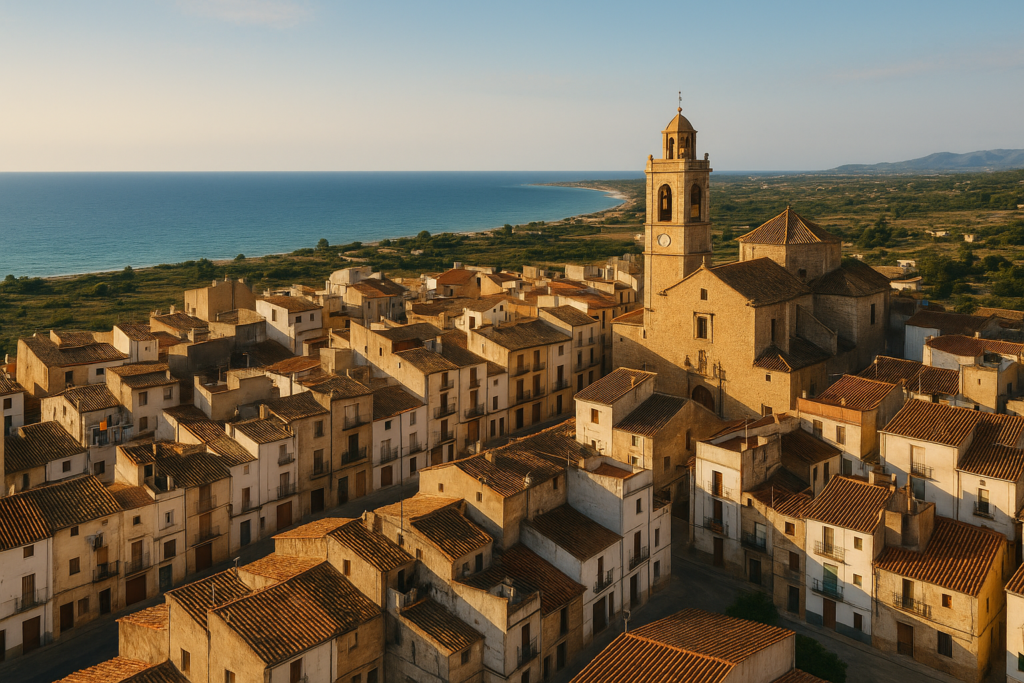
Small, quietly agricultural and squarely rooted in local life — Càlig rarely shows up on first-time tourist itineraries, and that’s part of its appeal. If you arrive expecting a bustling resort or a museum-packed town, you’ll be disappointed. What you will find is a compact municipal centre at the heart of its comarca, surrounded by cultivated plots of almond and olive trees, a strong Valencian language presence, and an unpretentious, working-rural rhythm. This guide sets realistic expectations and gives practical, verifiable facts so you can decide whether the town fits the kind of low-key, landscape- and culture-focused visit you want.
Càlig at a glance
- Small agricultural municipality in the Valencian Community, province of Castellón.
- Located in the comarca of Baix Maestrat and positioned at the centre of that comarca.
- Surrounded mainly by almond and olive tree fields; fruit and orange trees are not common nearby.
- Population (2025): 2,042 people; population density about 74.3 inhabitants per km².
- Total area 27.5 km²; elevation 122 m above sea level; coordinates 40°27′42″N 0°21′13″E.
- Official language: Valencian. Postal code: 12589.
- Member municipality of the Taula del Sénia free association; in the judicial district of Vinaròs.
Before you plan
This guide uses current, verifiable municipal and regional facts. Càlig is an active, inhabited agricultural town — there are no venue status changes flagged here. If you need hours for specific services (museums, wineries, municipal offices) check local sources before travel.
Things to do in the area
The experience here is low-key and outdoors-oriented: the main attraction is the landscape itself and small-town rhythms. Stroll the narrow streets of the town centre, watch seasonal agricultural work in the surrounding cultivated plots, and use the town as a base to sample the quieter side of Baix Maestrat. Expect quiet plazas, local cafés, and a strong Valencian-language presence in signage and everyday speech.
Explore the agricultural landscape
Càlig sits amid fields of almond and olive trees; those cultivated plots define the local scenery. Walk or cycle country lanes (respect private property) to get close to the terraces and groves. Because fruit and orange trees are not common in the vicinity, the palette of blossoms and harvest activity will reflect dry-land Mediterranean crops rather than citrus orchards.
Town centre and everyday life
The municipality functions as a local administrative and social hub; being at the centre of its comarca, the town carries a pragmatic local role. A quiet wander through the town gives a clear impression of an agricultural community where Valencian is the official language and municipal life follows a rhythm tied to farming seasons.
Local associations and context
Càlig is a member of the Taula del Sénia free association of municipalities, which reflects wider regional cooperation across municipal borders. It is also in the judicial district of Vinaròs — this is the larger administrative context that affects services and legal jurisdiction.
Càlig with kids
This is a family-friendly rural setting if your children enjoy outdoors, short walks and watching farm activity. There are no claims here about theme parks, large recreational facilities or specific child-focused attractions; plan activities around nature walks, simple picnics and relaxed exploration of the town centre.
How to get to Càlig and get around
Geographically, the town sits at 40°27′42″N 0°21′13″E and at 122 metres elevation, making it clearly inland. The town’s postal code is 12589, which helps for mapping and navigation. As a small municipality in the province of Castellón, local access will typically involve regional roads rather than large transport hubs; for legal and administrative matters the judicial district is Vinaròs. Public-transport details and specific airport connections are not part of this guide’s verified claims; check provincial travel resources for up-to-date timetables and links to nearby rail or road connections.
Where to stay
The town is compact and primarily agricultural. Accommodation choices are typically small-scale — family-run guesthouses or rural rentals are the kind of options that match the local character. Use the municipal postal code (12589) to search listings, and look for properties that emphasise proximity to the town centre and the surrounding almond and olive groves if you want landscape access.
Best time to visit Càlig
This guide does not include specific climate or festival dates, but because the town is in a Mediterranean agricultural area, seasonal agricultural rhythms matter: spring and autumn are logical shoulder seasons for mild walking conditions and field activity, while high summer will reflect warm inland temperatures. Check local sources if you need exact festival dates or climate statistics before planning.
History of the town
The verified facts in this guide establish Càlig as a longstanding municipality in Baix Maestrat within the Valencian Community. While a full chronological history or heritage-listing details are beyond the verified claims assembled here, its position at the centre of the comarca and its agricultural character point to a community shaped by rural land use and regional municipal networks such as the Taula del Sénia.
Practical info
- Official language: Valencian — you will encounter Valencian in official signage and everyday speech.
- Postal code: 12589 — use this for navigation, deliveries and accommodation bookings.
- Population (2025): 2,042; total area 27.5 km²; population density approx. 74.3 inhabitants/km² — expect a small, low-density town rather than an urban centre.
- Elevation and coordinates: 122 m above sea level at 40°27′42″N 0°21′13″E — useful for mapping apps and situational awareness.
- Administrative context: province of Castellón, comarca of Baix Maestrat; judicial district of Vinaròs; member of the Taula del Sénia association.
- Landscape and land use: predominantly almond and olive cultivation; fruit and orange trees are not commonly found nearby, so plan expectations for local produce accordingly.
Worth it for: travellers who enjoy low‑key rural Spain, agricultural landscapes, quiet village life and a Valencian-language environment. Less so if: you want coastal resorts, a wide range of tourist attractions, or lively nightlife — Càlig is a small, agriculture-centred municipality without claims here of major tourism infrastructure.
How we assess this guide
This article compiles verifiable municipal and regional facts about the town and its setting. We cross-checked population figures, administrative affiliations, linguistic status and land-use details against reliable regional records. We flag closures or major status changes when known, and we avoid conjecture: where specific business hours, festival dates or transport timetables are not part of the verified claims we advise checking local sources directly.
Frequently asked questions
How do I find Càlig on a map?
Use the coordinates 40°27′42″N 0°21′13″E or the postal code 12589 to locate the town precisely in mapping apps.
What is the nearest judicial or administrative centre?
Càlig belongs to the judicial district of Vinaròs, which is the larger administrative jurisdiction for legal matters.
What language will I hear spoken there?
The official language is Valencian; you will encounter Valencian in official signage and everyday conversation.
Is Càlig in the province of Castellón?
Yes. The town is a municipality in the province of Castellón, within the Valencian Community.
What is the population of the town?
As of 2025, the population is 2,042 people.
How large is Càlig?
The municipality covers a total area of 27.5 km² and sits at an elevation of 122 metres above sea level.
What kind of landscape surrounds the town?
The surrounding landscape is agricultural, dominated by almond and olive tree fields; fruit and orange trees are not commonly found nearby.
Is Càlig part of any regional associations?
Yes — it is a member municipality of the Taula del Sénia free association of municipalities, a regional cooperative grouping.
Is the town coastal?
No. The town’s verified facts describe it as an inland agricultural municipality in Baix Maestrat rather than a coastal resort.
Can I expect busy tourist infrastructure?
No. With a small population and an agricultural setting, the town is oriented toward local life rather than mass tourism; plan for modest facilities and a quiet atmosphere.
Which crops are typical around Càlig?
Almond and olive trees predominate in the cultivated plots around the town.
Are citrus orchards common nearby?
No. Fruit and orange trees are not commonly found in the vicinity according to the verified regional details.
Will official documents or signage be in Spanish?
Valencian is the official language; in practice you may encounter Valencian alongside Spanish in the region, but Valencian is the documented official language for the municipality.
How central is the town within its comarca?
The town is located at the centre of its comarca, Baix Maestrat, which gives it a central role within that local district.
How should I plan if I want to visit nearby towns?
Use Càlig as a quiet base if you want to explore Baix Maestrat; for specific neighbouring destinations and travel links, consult provincial transport resources and mapping tools. The town’s judicial district association with Vinaròs and membership in Taula del Sénia provide administrative context for regional planning.
Plan the wider trip
Nearby on the Costa del Azahar
Calig on the map
Places worth knowing near Calig
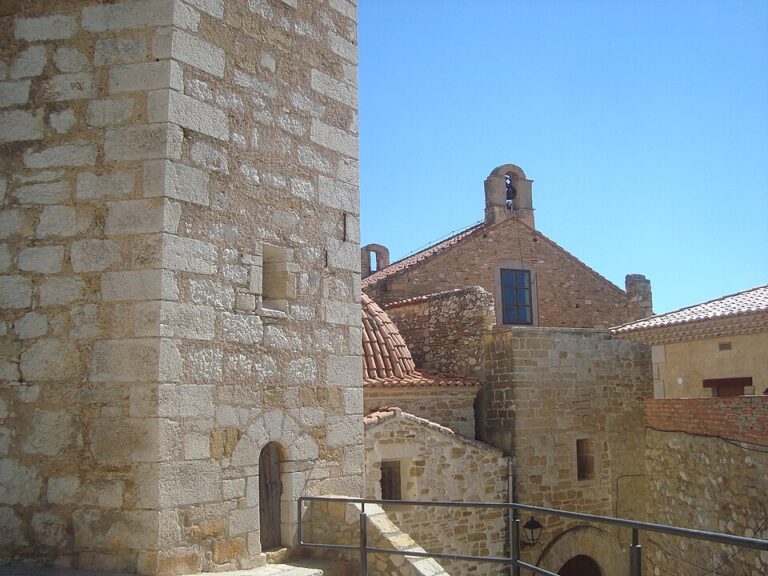

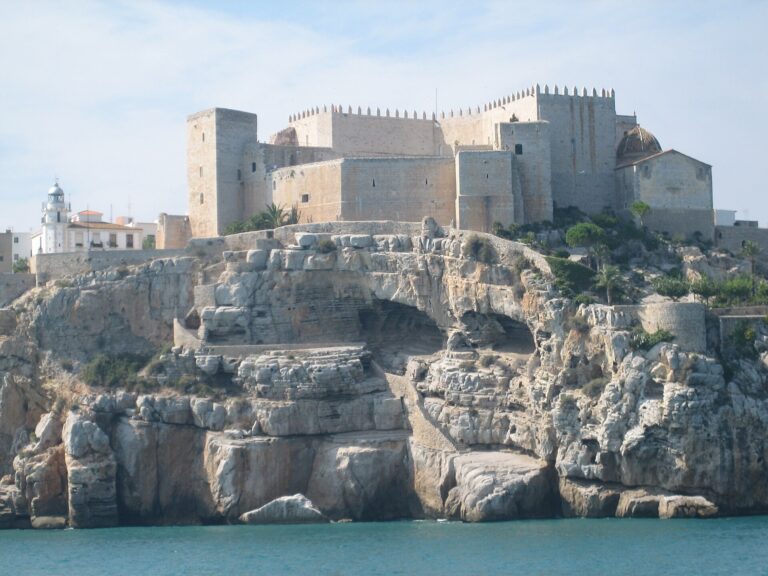
This place is part of our Costa del Azahar Guide: Peñíscola, Orange Country and Morella — see every town, beach and cove we have mapped on that coast.
How this page is maintained. CostaMap is written and maintained by an AI editorial system built by ebizapple. Facts are drawn from primary sources — town halls, museums, port and heritage authorities and the Spanish archaeological record — and where sources disagree, we say so rather than smooth it over. Photographs marked as ours are taken on location. This page was last reviewed on 14 August 2026. Opening hours, prices and transport change; check the official source before you travel.