
Costa del Maresme · South
Mataró to El Masnou travel guide: Roman Iluro, marinas and Alella wine
The Baix Maresme between Mataró and Barcelona: beach towns with marinas, Iberian and Roman sites in the hills and the vineyards of DO Alella.
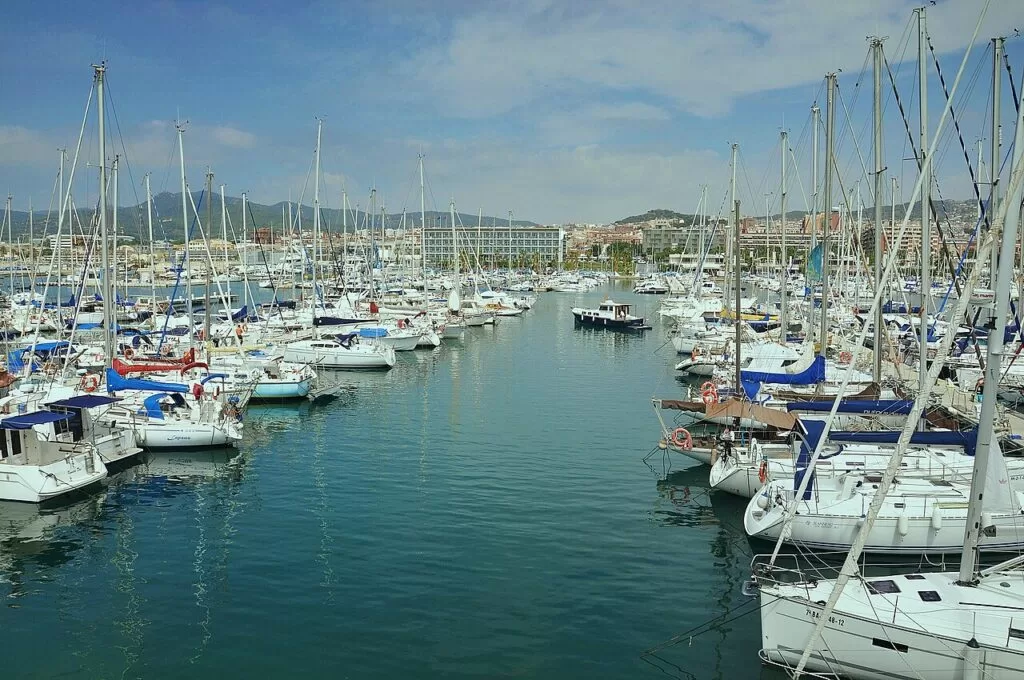
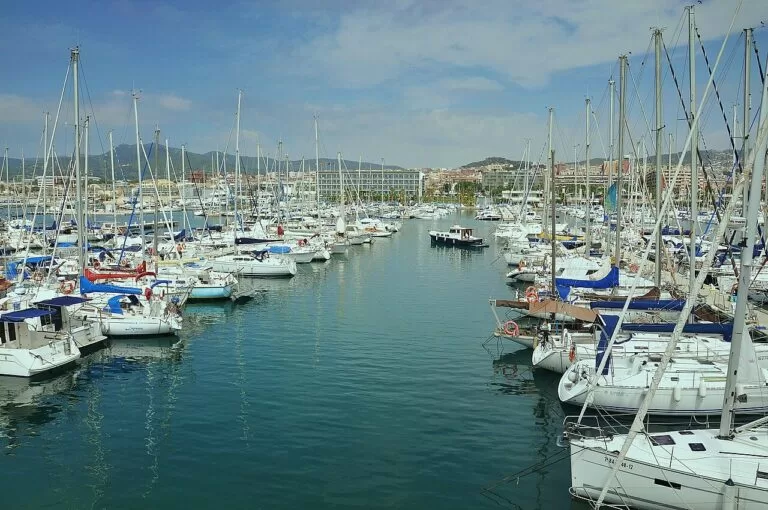
Port of Mataró · Photo: Alberto-g-rovi, CC BY 3.0
Part of the Costa del Maresme guide · South: Mataró to El Masnou
The stretch from Mataró to El Masnou is the southern end of the Costa del Maresme, the coast of the Maresme comarca north-east of Barcelona: about 21 km in a straight line from Sant Andreu de Llavaneres, just north of Mataró, to Montgat, the last Maresme town before Badalona. Mataró, the capital of the comarca, is about 28 km from central Barcelona in a straight line, and the R1 train runs along the shore through every coastal town (Catalunya.com).
At a glance
- Where the Baix Maresme, Barcelona province, from Sant Andreu de Llavaneres and Mataró south to El Masnou and Montgat, between the sea and the Serralada Litoral.
- Towns Sant Andreu de Llavaneres, Mataró, Cabrera de Mar, Vilassar de Mar, Premià de Mar, El Masnou and Montgat on the coast; Argentona, Vilassar de Dalt, Cabrils, Premià de Dalt, Teià and Alella just inland.
- Best for day trips from Barcelona by train, town beaches, marinas, Modernisme, Roman and Iberian sites, and DO Alella wine.
- Getting there the R1 train, the C-32 and the N-II along the coast; Barcelona airport is 25–41 km away in a straight line.
- On CostaMap town guides to Mataró, El Masnou and Premià de Mar, and pages on Iluro, Burriac Castle and Illa Fantasia.
Map of Mataró to El Masnou
The map shows the places on this stretch that have a CostaMap page. Tick a place type to filter, and click a marker to see the place in the panel.
Place type
Area · next level
 Area map
Mataró to El Masnou
Click a marker to see the place here. The Baix Maresme, from Mataró and its Roman past to the marinas and vineyards on the way to Barcelona.
Towns and villagesTowns and villages
From north to south. Several coastal towns have an older village “de Dalt” in the hills behind, founded away from the shore because of pirate raids (Catalunya.com). Descriptions are from Catalunya.com, Catalonia’s official tourism site, and Catalan Wikipedia.
Sant Andreu de Llavaneres
Llavaneres lies between the sea and the Montnegre i el Corredor hills at the northern edge of this stretch, with its seaside district of Cal Sanç below the old village. Catalan Wikipedia describes it as an early 20th-century summer resort of Barcelona families, which left Modernista and Noucentista villas, and its marina, Port Balís, opened in 1974 with 764 berths. The town is known for its peas (Catalunya.com). Its neighbour Sant Vicenç de Montalt, towards Caldes d’Estrac, was called Sant Vicenç de Llavaneres until 1935.
Mataró
Mataró is the capital of the Maresme and by far its largest town, with 129,613 inhabitants (Catalunya.com). It grew from the Roman town of Iluro, founded in the 1st century BC, and in the 18th century built ships and ran a nautical school. The first railway in the Iberian Peninsula ran from Barcelona to Mataró in 1848 (spain.info). See our Mataró town guide and the Mataró Museum in Can Serra. Catalan Wikipedia lists eleven districts; these are the ones visitors meet.
Mataró: the historic centre
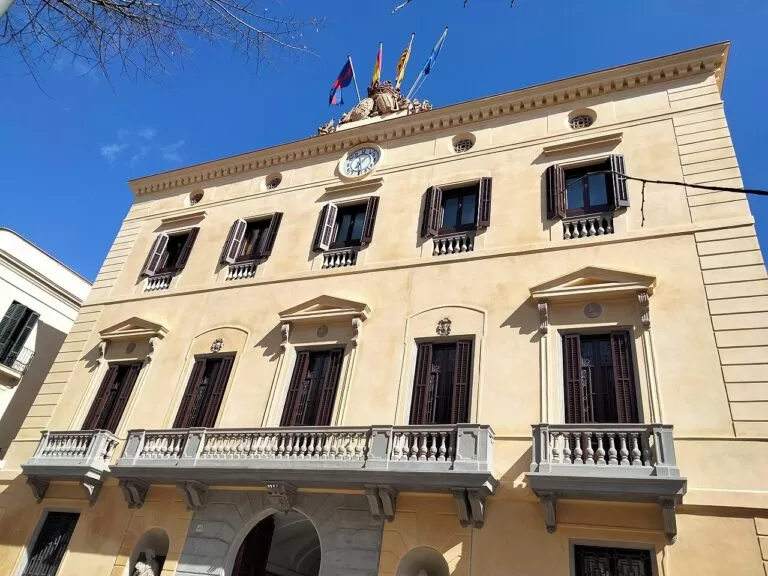
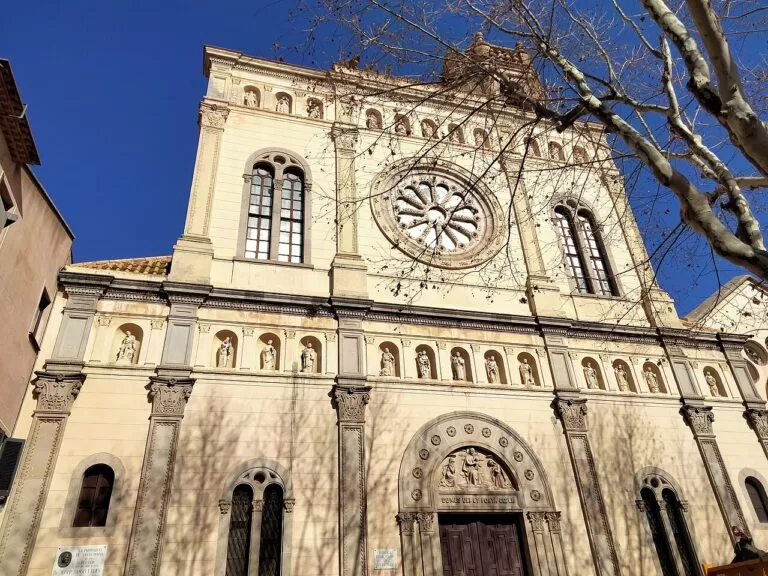
The old town grew in the 16th century around the church of Santa Maria and the Plaça Gran (Catalunya.com). The Basilica of Santa Maria, documented since 1054, holds the Capella dels Dolors, one of the best-preserved examples of Catalan Baroque, with work by Antoni Viladomat (Catalan Wikipedia). The 17th-century town hall stands on La Riera, the main shopping street (spain.info). The Modernista route takes in the Casa Coll i Regàs by Josep Puig i Cadafalch, who was born in the city, and the Fideueria La Confianza (Catalunya.com). The Nau Gaudí, Antoni Gaudí’s first building, from 1878, now shows a contemporary art collection (Catalan Wikipedia).
Mataró: the seafront and the port
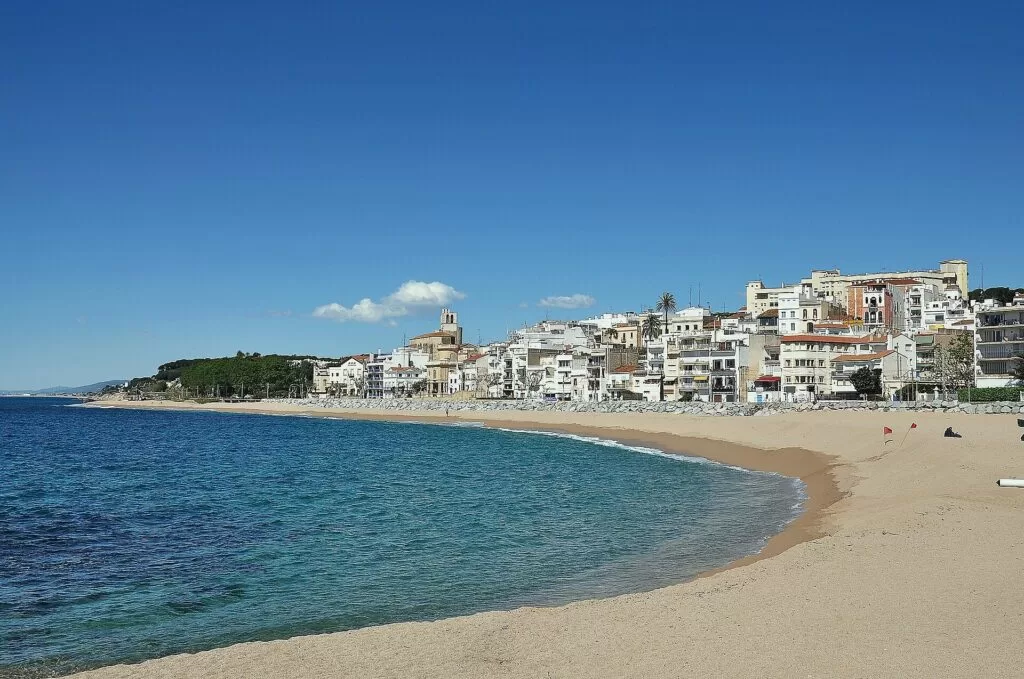
Between the old town and the sea, a promenade runs along 2.2 km of beaches, from the Sant Simó stream to the Platja de Ponent, and links with the promenades of Llavaneres and Cabrera de Mar (Catalan Wikipedia). The marina opened in 1991 with room for 1,080 boats; Spain.info calls it the most important in the region, with shops and restaurants along the quay. Catalunya.com notes boat trips, sailing and diving from the marina.
Mataró: Cerdanyola and Rocafonda
Cerdanyola, Rocafonda, Cirera and La Llàntia grew in the 1960s and 1970s, when tens of thousands of people came from Andalusia and Extremadura to work in Mataró (Catalan Wikipedia). Cerdanyola is now the second most populated district. Its Parc de Cerdanyola is one of the city’s green spaces (Catalunya.com), and Holy Week, revived from the 1980s, is especially rooted there (Catalan Wikipedia).
Mataró: Pla d’en Boet and the Cinc Sénies
Pla d’en Boet, south-west of the centre, holds the Roman villa of Torre Llauder, built in the time of Augustus in the 1st century, with rich floor mosaics (Catalunya.com). To the north-east, the Palau-Escorxador district takes in the Cinc Sénies, the city’s farming land, and the 17th-century seafarers’ hermitage of Sant Simó, where an aplec with the local pastry, the sabre de Sant Simó, is held around 28 October (Catalan Wikipedia). Vista Alegre, the largest district at 925 ha, covers the wooded hills behind the city.
Argentona
Argentona lies 4 km inland from Mataró in the valley of the Argentona stream, with 11,914 inhabitants (Catalunya.com). It has more than 215 fountains, the best known the Font Picant, with naturally sparkling water. Puig i Cadafalch built Can Garí and his own summer house here. The Museu del Càntir, in a Gothic building near the Plaça Nova, collects pottery water jugs, and the festival of Sant Domènec on 4 August coincides with the International Ceramics Fair. Paths lead up to Burriac Castle on the hill above (Catalunya.com).
Cabrera de Mar
Cabrera de Mar sits in a small green valley open to the sea, below the castle of Burriac, with 4,532 inhabitants (Catalunya.com). Its hills hold the Iberian settlement of Burriac, which Catalunya.com calls the first historical capital of the Maresme, the Roman baths of Ca l’Arnau, described as the oldest on the peninsula, and the site of Can Modolell. On the shore, its sandy beach continues that of Vilassar de Mar, with a nautical club founded in 1966. The Fira Iberoromana in June presents the town’s ancient history.
Vilassar de Mar
Vilassar de Mar began as a group of fishermen’s huts and grew into a town of shipyards and transatlantic sailors; the Platja de l’Astillero is named after its old shipyards (Catalan Wikipedia). It became a separate municipality from Vilassar de Dalt in 1875 (Catalunya.com). Casa Marimon, known as Can Lari, was built in 1918 for a Barceloneta shipyard owner in imitation of a building he had seen in San Francisco (Catalunya.com). The Museu de la Marina covers its fishing and seafaring past (Catalan Wikipedia).
Vilassar de Dalt and Cabrils
Up the hill, Vilassar de Dalt has a medieval castle above the old centre, the La Massa theatre and a walk to the hermitage of Sant Salvador and the Roca d’en Toni dolmen (Catalunya.com); see our new guide. The Illa Fantasia water park is also in the municipality. Cabrils, next door, is a mostly residential village among pine and holm oak woods below Montcabrer; it became independent of Vilassar in 1821 (Catalan Wikipedia).
Premià de Mar and Premià de Dalt
Premià de Mar is the second city of the Maresme, with 28,702 inhabitants (Catalunya.com). Its old gasworks, built in 1884 and described as the only building of its kind left in the Iberian Peninsula, now houses the Textile Printing Museum, which Catalunya.com calls the only one in Spain. The town was the seaside district of Premià de Dalt until it became a separate municipality in 1836. Visitors come for the beaches, the marina and the Roman site of Can Farrerons (Catalunya.com). Premià de Dalt, above, has the Iberian settlement of the Cadira del Bisbe.
El Masnou
El Masnou is a seafaring town of 22,550 inhabitants with more than three kilometres of beach (Catalunya.com). It became a municipality in 1825 and took in the beach district of Ocata. Its old part, on a small rise, is mainly from 1840 to 1930. The Casino del Masnou, by Bonaventura Bassegoda, is one of the few buildings of its time open inside (Catalunya.com). It also has a Municipal Nautical Museum and the Cusí Pharmacy Museum, with the old pharmacy of the monastery of Santa María de Nájera (Catalunya.com). The marina dates from the 1970s (Catalan Wikipedia).
Teià and Alella
Behind El Masnou, Teià lies in a small valley at the foot of the Serralada Litoral; remains at Vallmora suggest it was a centre of wine production in Roman times (Catalan Wikipedia). Alella, with 9,610 inhabitants, is a landscape of vineyards, farmhouses and sea views (Catalunya.com). Its white wines, mostly from the pansa blanca grape, belong to DO Alella, and the harvest festival is held on the second weekend of September (Catalunya.com).
Montgat
Montgat is the southernmost town of the Maresme, on the border with Badalona and the Barcelonès (Catalan Wikipedia). Its old core sits around the Turó de Montgat, a small sea cliff pierced by a railway tunnel. It has two beaches, the old Banys Montgat and Montsolís, separated by the hill. Montgat is the closest town on this stretch to Barcelona, about 13 km from the city centre in a straight line.
Beaches
Long sandy town beaches with promenades, broken up by marinas, with the railway behind the sand. There are no coves.
Ponent, Varador, Callao and Sant Simó
Mataró’s four beaches run west to east: Ponent, small and sheltered by the port; Varador and Callao, the busiest, next to the port; and Sant Simó, the longest and least built-up. All have lifeguards in summer (Catalan Wikipedia). Catalunya.com notes that nudism is practised on the Búnquer beach near Sant Simó.
See the Mataró guide →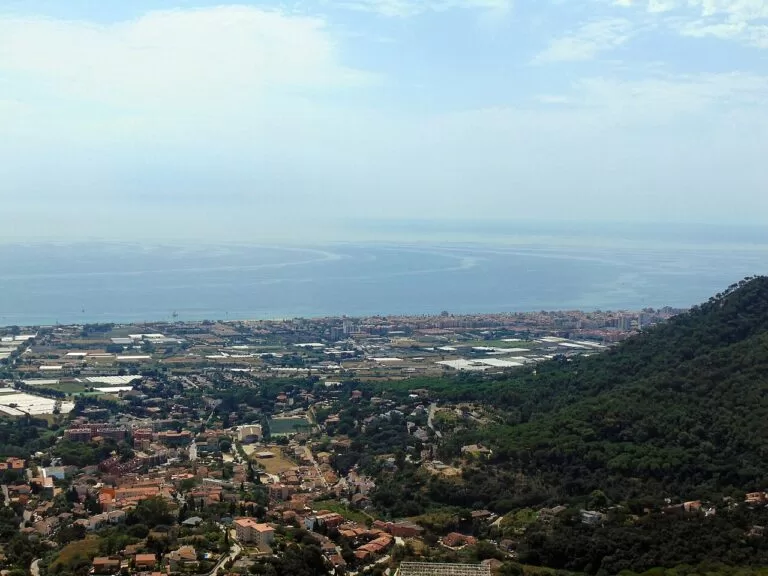
Cabrera de Mar and Vilassar de Mar
A continuous sandy beach below the Burriac hills, with a nautical club (Catalunya.com), and Vilassar’s Platja de l’Astillero.
Llevant, Bellamar and Ocata
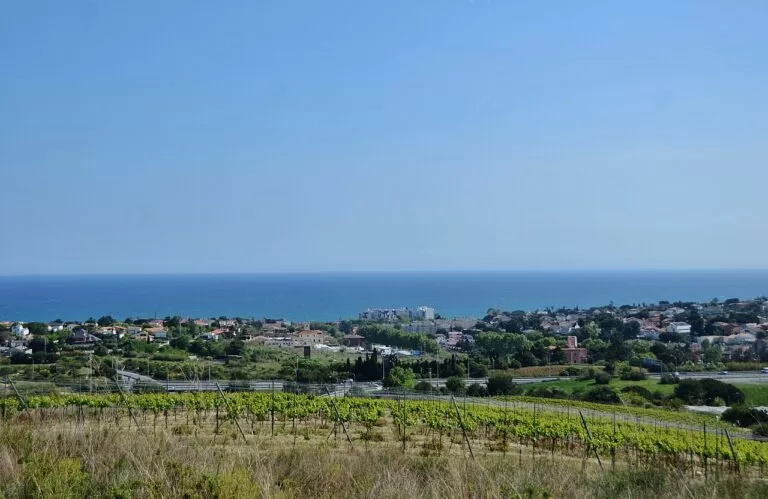
Premià de Mar’s best-known beaches are Llevant and Bellamar (Catalunya.com). El Masnou has more than three kilometres of beach, including Ocata (Catalunya.com); next to its marina, Catalan Wikipedia says, is one of the widest beaches of the Maresme.
See the El Masnou guide →Montgat has two short beaches either side of its hill.
Things to do
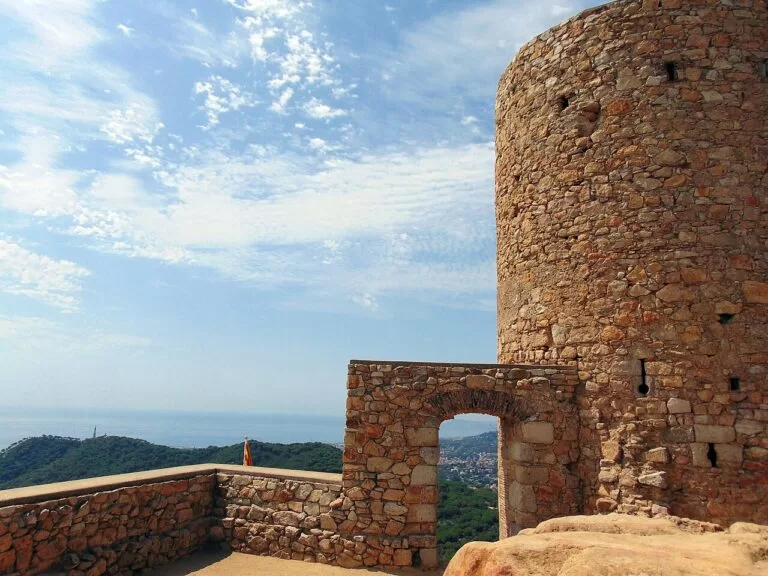
History: Iberians and Romans
The Iberian settlement of Burriac, below Burriac Castle, was the first capital of the comarca; in the 1st century BC the capital moved to Roman Iluro, present-day Mataró (Catalunya.com). See the Torre Llauder villa and the Mataró Museum in Mataró, Ca l’Arnau in Cabrera and Can Farrerons in Premià. Divers can see remains of a Roman road under the water between Premià and Vilassar (Catalunya.com).
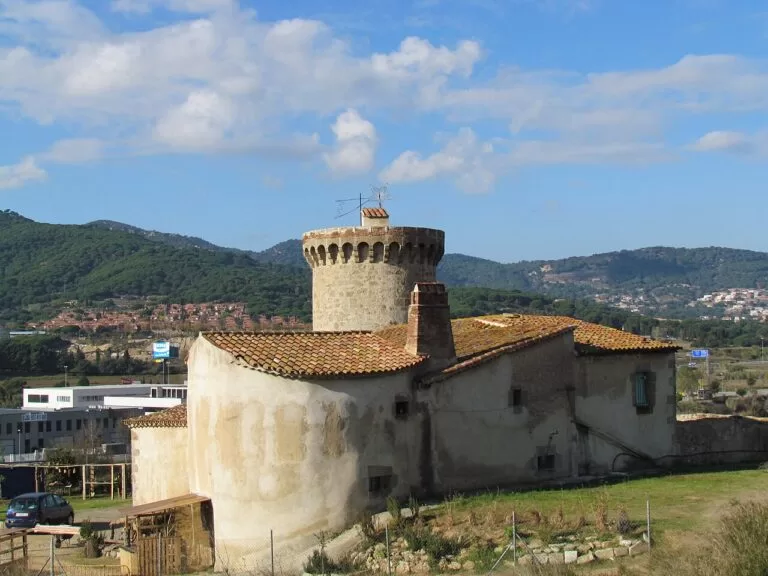
Modernisme and the indianos
After free trade with America was allowed in 1778, emigrants who came back rich, and Barcelona families, built the mansions that still line these towns (Catalunya.com). Highlights: Puig i Cadafalch’s Casa Coll i Regàs and Can Fonrodona in Mataró, the Casino del Masnou, and Casa Marimon in Vilassar de Mar. Can Palauet, on the edge of Mataró, is a Renaissance tower house (Catalunya.com).
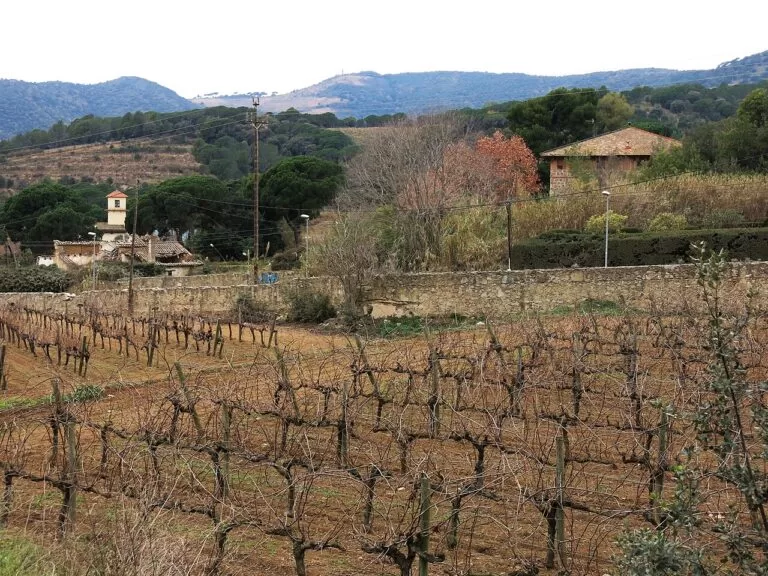
Food and wine: DO Alella, peas and potatoes
Maresme cooking draws on fish from the local markets and on garden produce such as the peas of Sant Andreu de Llavaneres and the potatoes of Mataró; the white wines of DO Alella go with all of them (Catalunya.com). El Masnou holds a food fair in May and wine-themed gastronomic days in November (Catalunya.com).
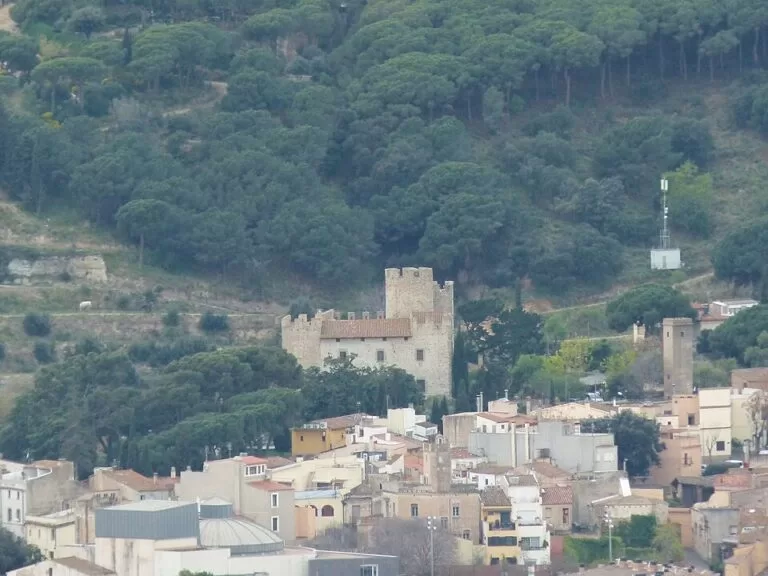
Nature: the Serralada Litoral
The hills behind the towns belong to the Serralada Litoral park. Popular walks climb to Burriac Castle from Cabrera de Mar or Argentona, and to the Roca d’en Toni dolmen from Vilassar de Dalt or Cabrils (Catalunya.com). In summer, check the Catalan forest-fire rules before you go.
Where to stay by town
We do not name hotels. These are the three bases we would choose, north to south.
Mataró
The most choice and the most services: a city centre, a marina, four beaches and fast R1 trains in both directions.
City break, first visitPremià de Mar or Vilassar de Mar
Smaller beach towns in the middle of the stretch, between Mataró and El Masnou, with marinas and promenades.
Families, beach daysEl Masnou
The closest base to Barcelona, with a long beach, a marina and the Alella vineyards a short way inland.
Barcelona plus beach, wineGetting there and around
By train
The R1 Rodalies line runs along the whole coast with frequent stops (Catalunya.com). Inland towns are reached by bus from the coast.
By car
The C-32 motorway and the N-II road run along the coast; the C-60 starts in Mataró and leads to Granollers and the AP-7 (Catalan Wikipedia). Expect busy roads on summer weekends.
By air and bus
Barcelona airport is about 25 km from Montgat, 28 km from El Masnou and 41 km from Mataró in a straight line; Girona airport is about 48 km from Mataró. Catalunya.com mentions interurban buses, taxis and bicycle hire; we could not confirm 2026 timetables.
A two-day route
By train and on foot, with a night in Mataró.
Day 1
Mataró: Roman Iluro, the old town and the seafront
Start at the Mataró Museum in Can Serra for the story of Iluro, then walk to the Basilica of Santa Maria and the Capella dels Dolors. See the Casa Coll i Regàs and the Nau Gaudí, then swim at Varador or Callao.
Day 2
Burriac, the Vilassars and El Masnou
Climb to Burriac Castle early from the Font Picant above Cabrera de Mar, or from Argentona. Then visit Vilassar de Dalt (or Illa Fantasia in summer) and end on the beach at El Masnou.
FAQ
How far is Mataró from Barcelona?
About 28 km in a straight line from central Barcelona. The R1 Rodalies train runs along the coast, and the C-32 motorway and N-II road link the two.
Is Mataró worth visiting?
Yes, for a day: Roman Iluro, a Baroque basilica, Modernisme by Puig i Cadafalch, Gaudí’s first building and 2.2 km of beaches. It is a working city rather than a resort.
What is the best beach between Mataró and El Masnou?
For space, Sant Simó in Mataró, the longest of the city’s beaches, or El Masnou, which has more than three kilometres of beach. For services, Varador and Callao next to Mataró’s port.
Is there a nudist beach near Mataró?
Yes. Catalunya.com names the Búnquer beach near Sant Simó, at the eastern end of Mataró, as a beach where nudism is practised.
Which marinas are on this stretch?
Port Balís at Sant Andreu de Llavaneres, Mataró, Premià de Mar and El Masnou, four of the five marinas of the Maresme; the fifth is at Arenys de Mar.
Other areas of the Costa del Maresme
Costa del Maresme
The whole Maresme coast from Malgrat de Mar to Montgat, with the map, the three areas, campsites and inland day trips.
Costa del Maresme guide →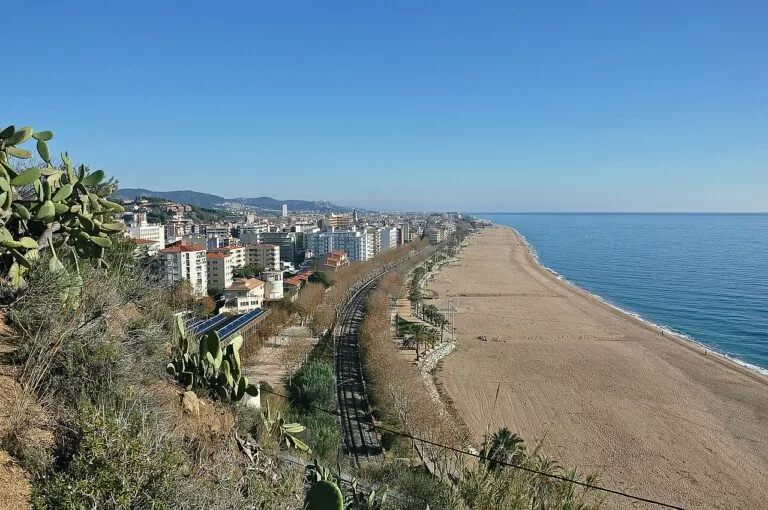
Malgrat de Mar to Calella
The resort beaches between the Tordera and Calella, with Pineda de Mar and the Calella lighthouse.
Malgrat, Pineda and Calella guide →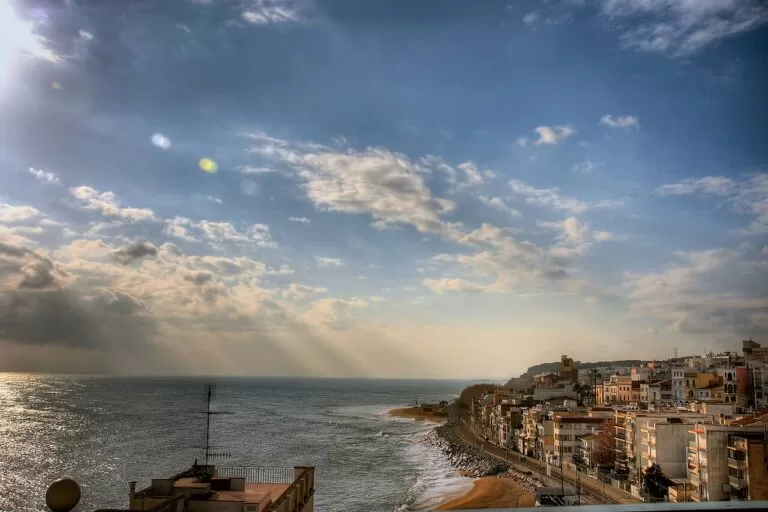
Sant Pol de Mar to Caldes d’Estrac
The smaller towns of the middle Maresme: Sant Pol, Modernista Canet, the fishing port of Arenys and the baths of Caldes.
Sant Pol, Canet, Arenys and Caldes guide →North of Llavaneres the middle area begins with Caldes d’Estrac; south of Montgat lies the Costa de Barcelona.
Sources and freshness
Checked 9 November 2026. Catalunya.com (Agència Catalana de Turisme) on the Maresme, Mataró, Argentona, Cabrera de Mar, Vilassar de Dalt, Premià de Mar, El Masnou and Alella. Spain.info on Mataró. Background: Catalan Wikipedia on Mataró, Sant Andreu de Llavaneres, Port Balís, Vilassar de Mar, Cabrils, El Masnou, Port de Mataró, Teià and Montgat. Map data and straight-line distances: OpenStreetMap (ODbL). Not confirmed: timetables, 2026 Blue Flags, museum hours. The Barcelona provincial tourist board (barcelonaesmoltmes.cat) and the town hall sites could not be reached when we checked. Photos (Wikimedia Commons): Alberto-g-rovi (CC BY 3.0, CC BY-SA 4.0); Enric (CC BY-SA 4.0); Jramis (CC BY-SA 3.0); Josep Maria Viñolas Esteva (CC BY-SA 4.0); Pere López Brosa (CC BY-SA 4.0); MARIA ROSA FERRE (CC BY-SA 2.0); miki (CC BY-SA 3.0).