
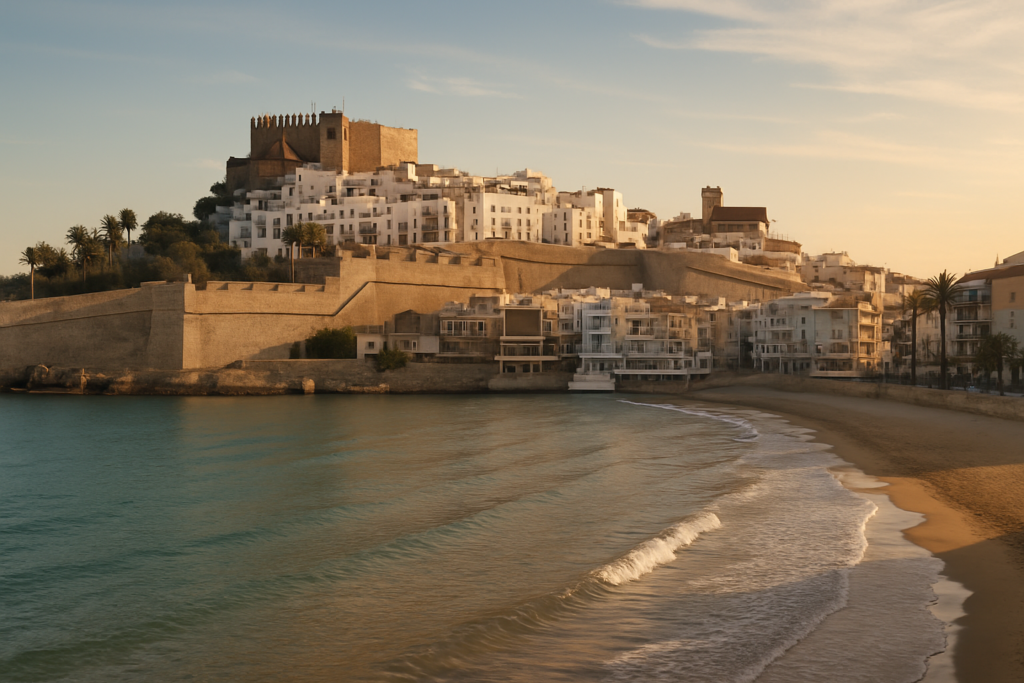
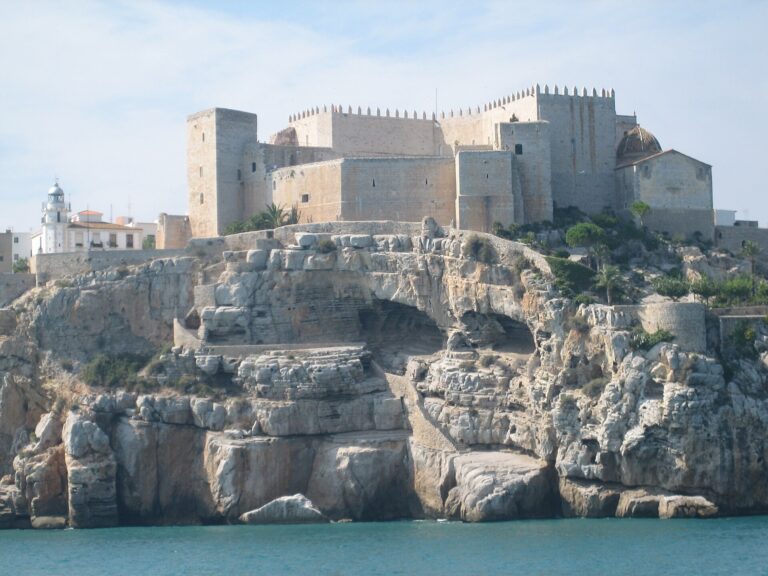
Expect a compact, dramatic place: a medieval fortress plonked on a rocky headland, reached from the shore by a narrow sand-and-stone causeway. The visuals are striking, and much of the town’s identity revolves around that cinematic castle and its seafront setting. That creates a satisfying short-break destination, but also limits how much there is to do beyond wandering the old town, visiting the castle and enjoying the immediate coastline. Read on so you know what to plan for — and what not to expect.
Peníscola at a glance
- Perched on a rocky headland about 67 metres high, linked to the mainland by a narrow tombolo.
- Dominated by a medieval castle built by the Knights Templar (1294–1307) and later garrisoned by the Knights of Montesa.
- Known locally as the “Gibraltar of Valencia” and “The City in the Sea”.
- On the Costa del Azahar, in the Province of Castellón, Valencian Community, Spain.
- Served as the backdrop for Luis García Berlanga’s film Calabuch and had its castle restored for Anthony Mann’s film El Cid in 1960.
- Deep archaeological roots: Iberian, then Phoenician, Greek and Carthaginian presences are part of the town’s past.
- Hosts annual cultural events including the International Festival of Ancient and Baroque Music and an International Jazz Festival.
Things to do in Peníscola
Most visitors come for the castle, the medieval old town and the dramatic setting on the headland. Activities are concentrated: castle visiting, wandering the narrow streets, coastal views from the headland and attending seasonal music festivals if they coincide with your visit. This is a place to soak up atmosphere rather than cover vast distances.
| Attraction | What it is | Price/entry | Best for |
|---|---|---|---|
| Castle on the headland | Templar-built fortress (1294–1307), later used by Knights of Montesa and restored for film | — | History fans, photographers |
| Old Town | Narrow, whitewashed streets clinging to the castle slopes | — | Strolling, cafés, short breaks |
| Seafront and tombolo | Rocky headland linked to the mainland by a narrow strip of land | — | Coastal walks, views |
| Cultural festivals | International Festival of Ancient and Baroque Music; International Jazz Festival | — | Music lovers |
The castle and the headland
The present fortress was built by the Knights Templar between 1294 and 1307. Later, the castle was garrisoned by the Knights of Montesa and, by 1420, it had reverted to the Crown of Aragon — that shifting control is part of the medieval story you see in the thick walls and battlements. The castle’s dramatic seaside location has made it a film set: in 1960 it underwent restoration for Anthony Mann’s El Cid, and the town itself later provided the backdrop for Luis García Berlanga’s Calabuch. Expect steep, stepped streets up to the walls and excellent vantage points of the Mediterranean from the ramparts.
Wander the old town
The old quarter clings to the slopes below the fortress. Streets are compact and oriented toward the headland; wandering with no precise plan is the usual way to enjoy it. Buildings and alleys reflect the layered history — Iberian, Phoenician, Greek and Carthaginian influences are part of the long story of settlement here — though what visitors experience is largely medieval and cinematic in character. Cafés and small boutiques cater to day trippers and short-stay visitors rather than long-stay tourists.
Seafront and the tombolo
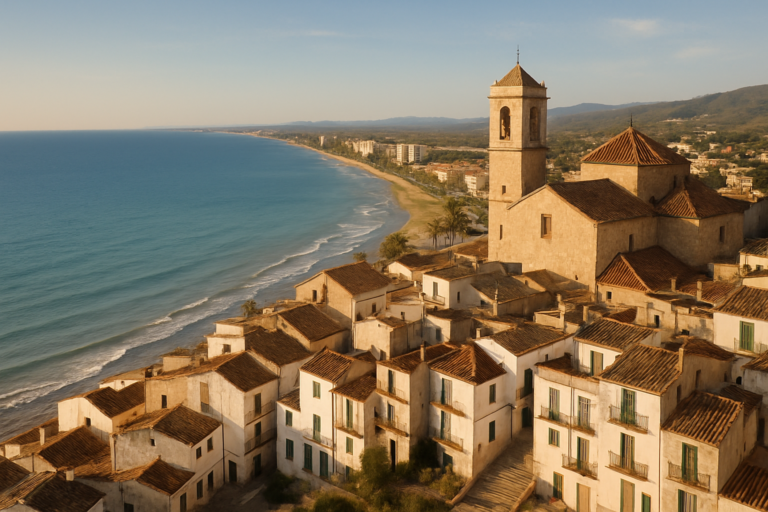
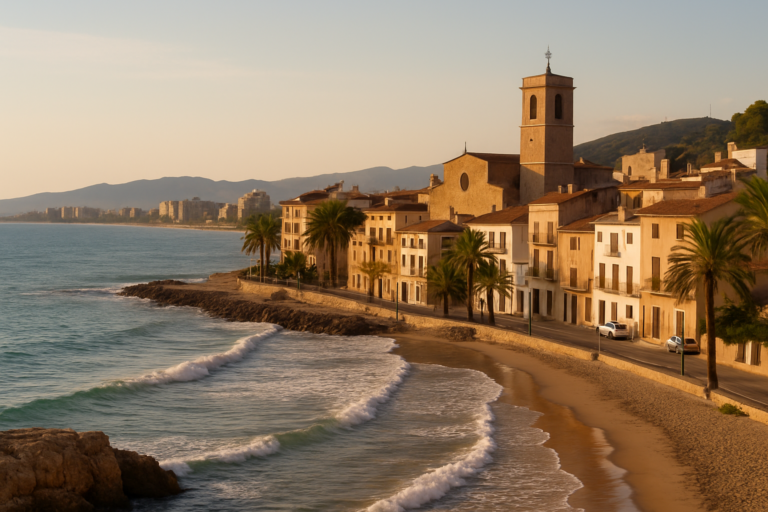
A defining geographical feature is the narrow strip of land linking the headland to the mainland: the tombolo. This connection creates the distinctive “island city” silhouette at low and high tide and concentrates seafront activity along both sides of the causeway. Walks along the shore and around the base of the headland give different perspectives on the castle and are best done slowly to spot small viewpoints, cafés and photo opportunities.
Best beaches in the area
Coastal swimming and sunbathing are a natural complement to a castle-and-old-town visit. The town’s position on the Costa del Azahar means there is a Mediterranean shoreline immediately adjacent to the headland; facilities and the exact character of each stretch of sand vary along the coast.
| Beach | Character | Facilities / Notes |
|---|---|---|
| Seafront beaches around the tombolo | Coastal sands and promenades beside the headland | — |
| Shoreline south and north of the headland | Open Mediterranean beaches with views back to the fortress | — |
Peníscola with kids
Young visitors usually enjoy the castle as a place to explore ramparts and imagine medieval life; its compact size suits a child’s attention span. The tombolo and short beach walks provide safe, contained outdoor time. The town’s layout (steep steps and narrow lanes) can be tiring with pushchairs — if you’re travelling with toddlers or a stroller, plan for carrying or choosing a base at the foot of the headland rather than inside the steep old quarter.
How to get to the town and get around
Peníscola sits on a headland reachable from the nearby coastal plain by the tombolo. The town is on the Costa del Azahar in the Province of Castellón, Valencian Community. Once you arrive, most attractions are within walking distance: the castle, the narrow streets of the old town and the immediate seafront are compact and pedestrian-friendly. Because the principal sights are concentrated, you can see the core on foot without needing a car; however, a car is useful if you plan to explore beyond the immediate coast.
Best time to visit
Peníscola’s calendar has two notable cultural highlights: an International Festival of Ancient and Baroque Music and an International Jazz Festival. These events are a reason to time a visit to coincide with performances, though specific dates vary by year. The town’s coastal position makes it a natural summer destination, while shoulder seasons will be quieter and better for sightseeing without the crowds of high season.
| Season | Months | What to expect |
|---|---|---|
| Summer | — | Most active period for coastal tourism and local businesses; seafront and beaches busiest |
| Shoulder seasons | — | Quieter for sightseeing and castle visits; cultural festivals can provide reasons to visit |
History of the town
The headland has been occupied for millennia: archaeological and historical accounts trace settlement back to the Iberians, with subsequent Phoenician, Greek and Carthaginian phases. One famous legend ties the site to the Carthaginian commander Hamilcar Barca, who is said to have made his son Hannibal swear an oath there. The medieval fortress that defines the skyline was constructed by the Knights Templar at the turn of the 14th century (1294–1307). Control shifted after that: the castle later served the Knights of Montesa and, by 1420, had reverted to the Crown of Aragon. In the 20th century the fortress and town received renewed attention as film locations, including a restoration in 1960 for the production of El Cid and use as the background for Luis García Berlanga’s Calabuch, cementing the place’s cinematic image.
Practical info
Cars can reach the base of the headland and parking is available in peripheral lots and streets, but the old town itself is pedestrianised and steep; expect to walk. The compact nature of the main sights means you can comfortably base yourself in or near the town for a multi-day stay and not need to drive daily. Services such as cafés and shops cluster around the seafront and the streets leading up to the castle, catering primarily to day-trippers and short-stay visitors. Cultural programming includes the International Festival of Ancient and Baroque Music and an International Jazz Festival; if either is on your list, check official festival listings for current schedules before you travel.
Worth it for: visitors who enjoy compact historic towns, dramatic coastal castles, photographic seafronts and short cultural breaks that may include baroque or jazz concerts.
Less so if: you want a broad range of museums, a long list of daytime activities or a quiet flat waterfront — the town’s steep, medieval layout and strong film-and-fortress identity means it’s best as a short, immersive stop rather than a sprawling resort base.
How we assess this guide
This guide is compiled from cross-checked historical and cultural sources. We emphasise accurate expectations and flag notable cultural events and film connections. We do not present closed venues as open and avoid inventing specifics such as ticket prices or exact festival dates; consult official local sites and festival organizers for up-to-the-minute schedules and admissions.
Frequently asked questions
How do I get from the nearest airport to the town?
Transport options depend on which airport you use. The town is on the Costa del Azahar in Castellón province and is connected to the mainland by a narrow tombolo; travellers typically use regional transport or cars from nearby cities and airports. Check timetables for regional buses and trains for current connections.
Is the castle open to visitors?
The medieval castle that dominates the headland is a principal attraction; it has historic layers (Templar construction, Montesa garrison, Crown of Aragon) and has been used as a film set. For current opening times, access arrangements and any conservation closures, consult local tourism authorities or the official site managing the monument.
Which beach is best for families?
Beaches immediately adjacent to the tombolo and the seafront offer convenient access from the town and are most practical for families because of proximity to cafes and services. Exact facilities can vary, so if you require lifeguards or rental amenities, check local beach information before you go.
How many days should I plan?
A compact town with a concentrated set of attractions: most visitors find one to two full days enough to visit the castle, wander the old streets and enjoy the seafront. Add extra days if you want to attend festival performances or take day trips into the wider Costa del Azahar.
Is the town good for a cultural weekend?
Yes — the area hosts an International Festival of Ancient and Baroque Music and an International Jazz Festival, which can make a weekend especially rewarding. Confirm current festival dates and programme details before booking.
Can I get around the town without a car?
Yes. The key sights — the castle, the old town and the immediate seafront — are within walking distance of one another. The town’s compact and pedestrian nature makes it easy to explore on foot, though steep streets mean comfortable footwear is recommended.
Is there parking near the old town?
There are parking areas and streets at the base of the headland; the medieval core is pedestrianised and reached on foot. If you plan to drive, expect to park outside the steepest lanes and walk up to the castle and viewpoints.
What are good rainy-day options?
The town’s principal attractions are architectural and tightly concentrated: the castle and the streets of the old town can still be enjoyed in light rain if you’re prepared, but for indoor museum-like activities or extensive covered attractions you may need to look to the wider province. Film history and the town’s cinematic connections are best appreciated outdoors and visually.
When are the music festivals held?
Peníscola hosts an International Festival of Ancient and Baroque Music and the International Jazz Festival. Festival dates vary year to year; check official festival communications or local tourism sources for the current schedule.
Is the town expensive to visit?
Costs depend on season and your choices. The town’s concentrated attractions and seaside location mean peak-season prices on accommodation and dining are likely to be higher; off-season visits tend to be quieter and generally less expensive. For specific prices, consult current hotel and restaurant listings.
What makes this headland historically important?
The site shows long-term strategic and settlement value: occupation traces back to Iberian, Phoenician, Greek and Carthaginian times. Medieval military architecture — notably the Templar-built castle — and later ownership by the Knights of Montesa and the Crown of Aragon underline its military and political importance in the region.
Why is the town called the “City in the Sea” or “Gibraltar of Valencia”?
These nicknames reflect the dramatic visual of a fortified town rising from a rocky headland and being linked to the mainland by a narrow tombolo. The fortress-dominated skyline and coastal position evoke a strong sense of an island-like, defensible place, hence the comparisons.
Are there film-related tours or information about El Cid and Calabuch?
The fortress and town have cinematic connections — restoration work for the 1960 El Cid production and the town’s role as the backdrop for Calabuch. For guided tours or interpretive material specifically about film history, contact the local tourist office which can indicate whether any film-focused walks or information panels are available during your visit.
Is Peníscola suitable as a base to explore the Costa del Azahar?
It can be a convenient base for short excursions along the Costa del Azahar due to its coastal location in Castellón province. If you want to explore further afield in the region, a car will give you the most flexibility; otherwise, regional transport options may link you to neighbouring towns and resorts.
Plan the wider trip
- Costa del Azahar guide
- Benicarló
- Vinaròs
- Almenara: Beaches and Castle Hill near Sagunto
- Cervera del Maestre: Castle Village of the Maestrat
- Càlig: Wine Village of the Baix Maestrat
Nearby on the Costa del Azahar
Peñíscola on the map
Places worth knowing near Peñíscola
How this page is maintained. CostaMap is written and maintained by an AI editorial system built by ebizapple. Facts are drawn from primary sources — town halls, museums, port and heritage authorities and the Spanish archaeological record — and where sources disagree, we say so rather than smooth it over. Photographs marked as ours are taken on location. This page was last reviewed on 15 August 2026. Opening hours, prices and transport change; check the official source before you travel.