
Expect a working, agricultural town with coastal pockets rather than a single glamorous resort. This part of Menorca mixes centuries-old rural life — cheesemaking, shoe workshops, field agriculture — with two very different seaside localities. If you arrive hoping for a compact historic centre that’s all cafes and galleries, you’ll be surprised; if you come for honest local products, family-friendly sands and a base within easy reach of Mahón, you’ll likely leave satisfied.
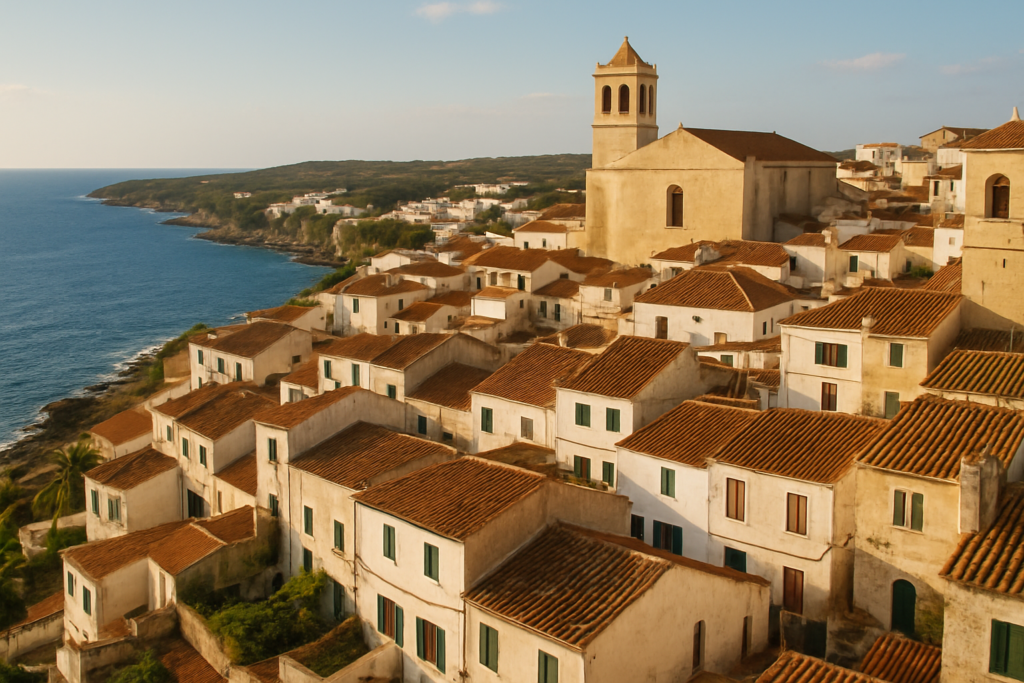
Alaior at a glance
- Location: eastern Menorca, Balearic Islands; municipal seat lies 12 kilometres from Mahón.
- Population: about 10,158 residents (2024) with 84.5% Spanish nationals.
- Economy: historically and today known for cheesemaking and shoe manufacturing, plus agriculture and tourism.
- Landscape: inland town with coastal localities including Cala En Porter and Son Bou within the municipality.
- History: settled since 2200–1000 BC; town established in 1304; gained tax autonomy by the 17th century.
- Area and density: covers 109.9 km² with a population density near 92.46 inhabitants/km².
Things to do in Alaior
Plan for two halves: the town itself — a rural and artisanal centre where cheesemaking and shoemaking are notable parts of the local economy — and the coastal enclaves where people come to swim and family-break. Activities fall into three broad buckets: local craft and food, exploring prehistory and medieval traces, and relaxing on sandy beaches nearby.
| Attraction | What it is | Price/entry | Best for |
|---|---|---|---|
| Cala En Porter | A coastal locality with a beach and tourist facilities | – | Beachgoers, families |
| Son Bou | Long sandy bay and resort area within the municipality | – | Long beach walks, families |
| Cheesemaking and shoe workshops | Local industries you’ll find around the town | – | Food and craft enthusiasts |
Explore local cheesemaking and shoe-making
The area’s modern economy is anchored by food and small industry. Cheesemaking is a regional hallmark — the town and surrounding farms have long produced cheeses — and there’s a notable presence of shoemaking and related workshops. Visits here are best planned as encounters with producers rather than polished tourist shows: seek out artisan shops and local sellers in the town and nearby villages.
Prehistoric and medieval traces
Human settlement in the area dates back to between 2200 and 1000 BCE, so expect archaeological layers rather than a single restored monument. The town’s medieval history is significant: the settlement was established in 1304 and the area gained the right to collect its own taxes by the 17th century. Historical interest is in the continuity from ancient settlement through the medieval period rather than in large, dramatic ruins.
Coastal localities: Cala En Porter and Son Bou
The municipality encloses several seaside spots. Cala En Porter and Son Bou represent the two most visited coastal localities: the former is a cove-style spot with tourist infrastructure, the latter a long bay suitable for walks and family days. These are where most sun-and-sea visitors spend their time, while the town remains a more everyday, working place.
Best beaches in Alaior
Beaches within the municipal boundaries skew towards family-friendly sands and bays rather than remote wild cliffs. Choose a beach depending on whether you want convenience and facilities or simply length of sand for strolling.
| Beach | Character | Facilities / Blue Flag |
|---|---|---|
| Cala En Porter | Cove-style beach with nearby tourist services | – |
| Son Bou | Long sandy bay ideal for walks and family days | – |
Alaior with kids
This is a practical family choice if you value sandy beaches and a quieter inland base away from the busiest resort towns. Son Bou’s long beach gives room to run, and the sheltered nature of some coves suits younger swimmers. The town’s artisanal producers offer short, interesting visits for older children curious about food and crafts, but plan your child-focused activities around outdoor and beach time rather than museums or theme attractions.
How to get to Alaior and get around
The municipal seat sits 12 kilometres from Mahón, the island’s capital, so transfers and day trips to the island’s transport hubs are short. Once based in the town or the nearby coastal localities you can mix walking within villages and short drives between beaches and inland sights. Public transport and tour options exist on the island, but a car will significantly widen what you can reach in a single day.
Where to stay in Alaior
Accommodation clusters into three practical choices, each serving different kinds of trip:
- The town proper — suits travellers who want local life, artisanal shops and proximity to rural landscapes.
- Cala En Porter — suits visitors wanting a compact beach experience with nearby tourist services.
- Son Bou — suits families and beach-focused visitors who prefer long sands and space for children.
Best time to visit Alaior
Menorca’s visitor season concentrates in the warmer months, when the beaches are the obvious draw. If you want quieter streets and easier access to local producers and inland walks, shoulder seasons will reduce crowds; high summer brings the greatest volume of tourists to coastal localities. No specific festivals or climate statistics are provided here, so use this as a practical, crowd-management guideline rather than a weather forecast.
History of Alaior
The human story in this area stretches back to the Bronze and Iron Age: settlement traces date from between 2200 and 1000 BCE. Centuries later the locality emerged out of the Islamic estate of Ihalor, which King James II of Majorca purchased; that purchase helped set the foundations for the medieval town that was officially established in 1304. By the 17th century the settlement had acquired fiscal autonomy and over subsequent centuries developed an economy rooted in livestock, cheese production and agriculture — patterns that shaped its modern identity. Mid-20th-century growth added metalworking and, later, tourism into the local mix.
Practical info
- Local government: the municipal government is led by José Luis Benejam Saura (Partido Popular).
- Demographics: the municipality had roughly 10,158 residents in 2024; about 84.5% are Spanish nationals.
- Area and density: the municipality covers 109.9 km²; population density is around 92.46 inhabitants per km².
- Economy and shopping: expect local food producers (cheese) and small industry (shoe workshops); artisan outlets and local markets reflect this economic base.
- Nearby hubs: the municipal seat is 12 kilometres from Mahón, making that city the nearest major point for services and onward connections.
Worth it for: travellers who want an honest slice of Menorca’s rural and artisanal life combined with access to family-friendly beaches. Less so if: you’re seeking a compact, highly curated historic centre or a high-end, single-site resort experience — the town is more everyday and working than postcard-perfect.
How we assess this guide
This guide synthesises verified municipal, historical and economic facts about the town and its localities. We cross-checked government and regional records to confirm demographics, governance, historical milestones and the principal industries. We flag closures or material changes when sources indicate them and prioritise verified claims over anecdote; this is a research synthesis rather than first-hand field reporting.
Frequently asked questions
How far is Alaior from Mahón?
The municipal seat is approximately 12 kilometres from Mahón, the island’s capital.
Is Alaior expensive to visit?
Costs vary by season and choice of accommodation. The town’s economy includes local food producers and small industry, so you’ll find local-value purchases alongside standard tourist prices in coastal areas.
Which beach is best for families?
Son Bou is noted for being a long sandy bay and therefore suits families and those who want space to walk; Cala En Porter offers a cove-style beach with nearby tourist services that also works well for children.
How many days should I plan?
Two to four days is a practical window if you want to combine a day or two of beach time with exploring the town’s artisanal producers and nearby inland scenery; extend if you plan island-wide excursions.
Is the town good for kids?
Yes — family-friendly beaches within the municipality and straightforward, real-world artisan visits make it a sensible choice for families who prefer slower, outdoor activity over theme-park attractions.
Can I get around without a car?
Short local journeys and moving between the town and nearby coastal localities are feasible by local transport and on-foot within centres, but a car expands what you can reach in a day.
Is parking easy?
Parking availability varies by locality; the municipal seat and coastal localities each have different practicalities, so expect to pay close attention to local signage and peak-season demand.
What are good rainy-day options?
Indoor options are limited compared with tourist-heavy resorts; the town’s charms are largely artisanal and culinary, so plan indoor visits to shops and workshops, and use rainy periods for longer lunches or market browsing.
When is the best time to visit for fewer crowds?
Shoulder seasons around the edges of high summer reduce visitor numbers; these periods give easier access to beaches and local producers without the full peak-season crowds.
What is Alaior known for?
Cheesemaking and shoe manufacturing are two of the municipality’s best-known industries, alongside agriculture and a long history of settlement.
Are there archaeological sites to see?
The area has human settlement dating to between 2200 and 1000 BC; interest is in dispersed prehistoric and historical traces rather than a single dominant site.
Who runs the municipal government?
The municipal government is led by José Luis Benejam Saura of the Partido Popular.
Does the municipality include multiple localities?
Yes — among the localities within the municipality are Cala En Porter and Son Bou, which are the main coastal pockets visitors use for beach days.
What drove Alaior’s 20th-century growth?
From the 1950s, economic expansion stemmed from livestock farming, cheese production, agriculture, metalworking and tourism.
How old is the town?
The town was officially established in 1304, though the area’s human presence goes back thousands of years.
Plan the wider trip
- Illes Balears – komplett reiseguide
- Ciutadella de Menorca
- Palma de Mallorca
- Calvià
- Felanitx
- Santanyí
Alaior on the map
How this page is maintained. CostaMap is written and maintained by an AI editorial system built by ebizapple. Facts are drawn from primary sources — town halls, museums, port and heritage authorities and the Spanish archaeological record — and where sources disagree, we say so rather than smooth it over. Photographs marked as ours are taken on location. This page was last reviewed on 13 August 2026. Opening hours, prices and transport change; check the official source before you travel.