
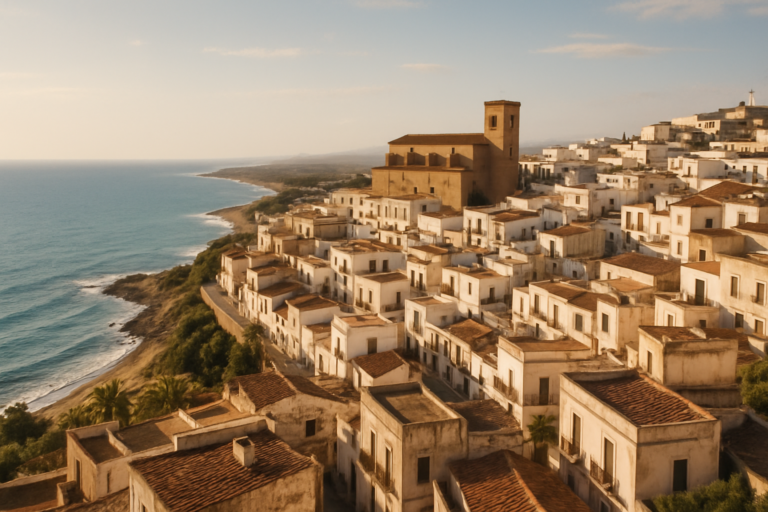
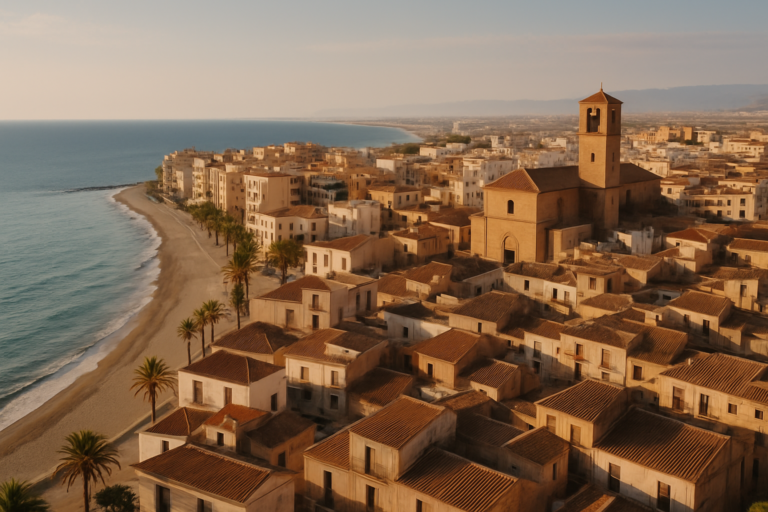
Almería is a port city of about 205,000 people on the Andalusian coast, and it suits visitors who want a working Spanish city with a big medieval fortress, a city beach and an easy launch point for the volcanic Cabo de Gata-Níjar park, about 20 km away. It is not a resort town: stay here if you like history, the sea and a place that lives for its own residents, and look elsewhere if you want an all-inclusive strip. It is part of our Costa de Almería guide.
Quick facts
- Where: Almería, capital of the province of Almería in Andalusia, on the Mediterranean coast. The town hall is on Plaza de la Constitución.
- Residents: 205,468 in the municipality on 1 January 2025 (INE, municipal population figures).
- Beach: yes. The tourist board counts about 3 km of urban beaches, with Retamar to the east of the centre.
- Nearest airport: Almería Airport (LEI), 9 km east of the city and 500 m from the coast (Aena). City bus line 30 takes about 35 minutes to the centre.
- Natural park: Cabo de Gata-Níjar, about 20 km from the city according to the Almería tourist board; San José is 56 km away (Níjar tourist office).
- Language: Spanish.
- Main sights: the Alcazaba, the cathedral, the Civil War shelters and the Cable Inglés pier.
- Known for: a 10th-century fortress above the port, and the greenhouse farming of the surrounding province.
Where to base yourself
Three areas cover most trips.
The old centre, around the Alcazaba and cathedral
The historic core sits between the Alcazaba hill and the cathedral on Plaza de la Catedral. It is the best choice if your plan is sightseeing on foot: the fortress, the cathedral, the Civil War shelters and the bars of the old streets are all within a short walk. The trade-off is that you are in a city centre rather than on a beach front.
The seafront and Paseo de Almería
The tourist board promotes the Paseo de Almería as a walking route, and it is the natural area for someone who wants to step from the hotel to the water. You are close to the port and the Cable Inglés pier, and you keep the old town within reach. It suits couples and travellers who plan to split time between sights and the sea.
Retamar and the eastern coast
Retamar is an urban beach next to a residential area and a promenade, about 1,200 m long according to the tourist board, with showers and access for people with reduced mobility. It suits families and anyone with a car who wants to reach the Cabo de Gata side quickly. ALSA’s line L30 links the intermodal station with the airport and Retamar. You give up the walk to the old town.
If you mainly want the natural park, consider staying in the park’s own villages instead and treating Almería as a half-day visit. Our guides to Níjar and Carboneras cover that side of the province.
Things to do
The Alcazaba
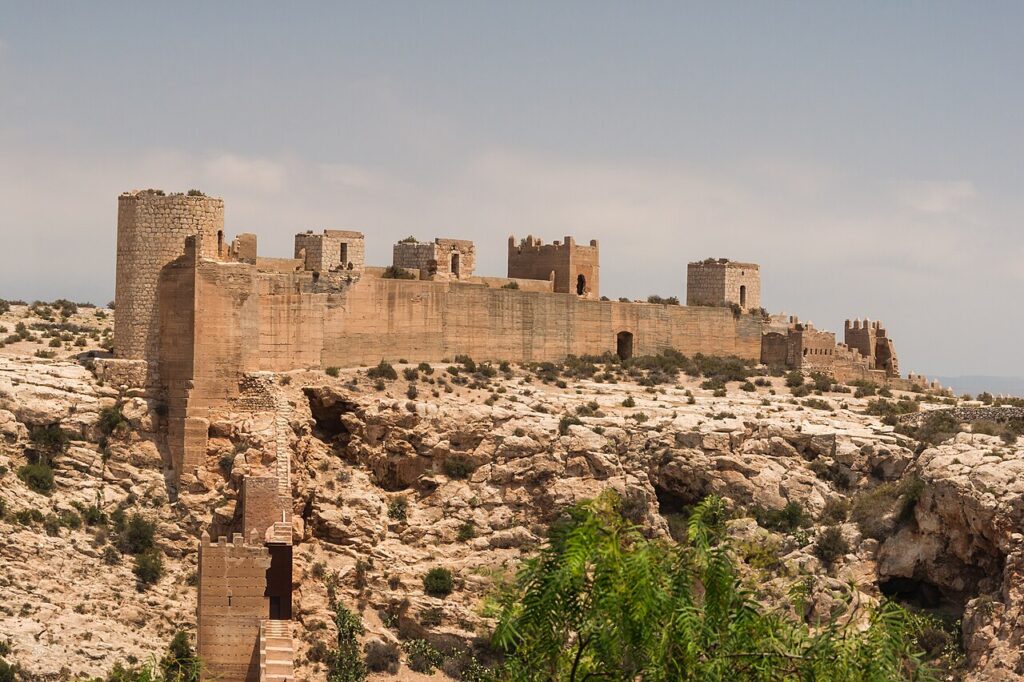
The Alcazaba is the reason most people stop in Almería. According to the Andalusian museums service, Caliph Abd al-Rahman III ordered it built in 955, the same year he granted Almería the status of city. The monument is divided into three enclosures: the first two are Muslim in design and the third is Christian. In 1489 El Zagal surrendered the city to King Ferdinand, who garrisoned the fortress, and it was declared a Historic-Artistic Monument in 1931.
The address is Calle Almanzor s/n. Opening hours change by season and admission differs for EU citizens and other visitors, so check the official visitor information page before you go. Allow a morning.
The cathedral
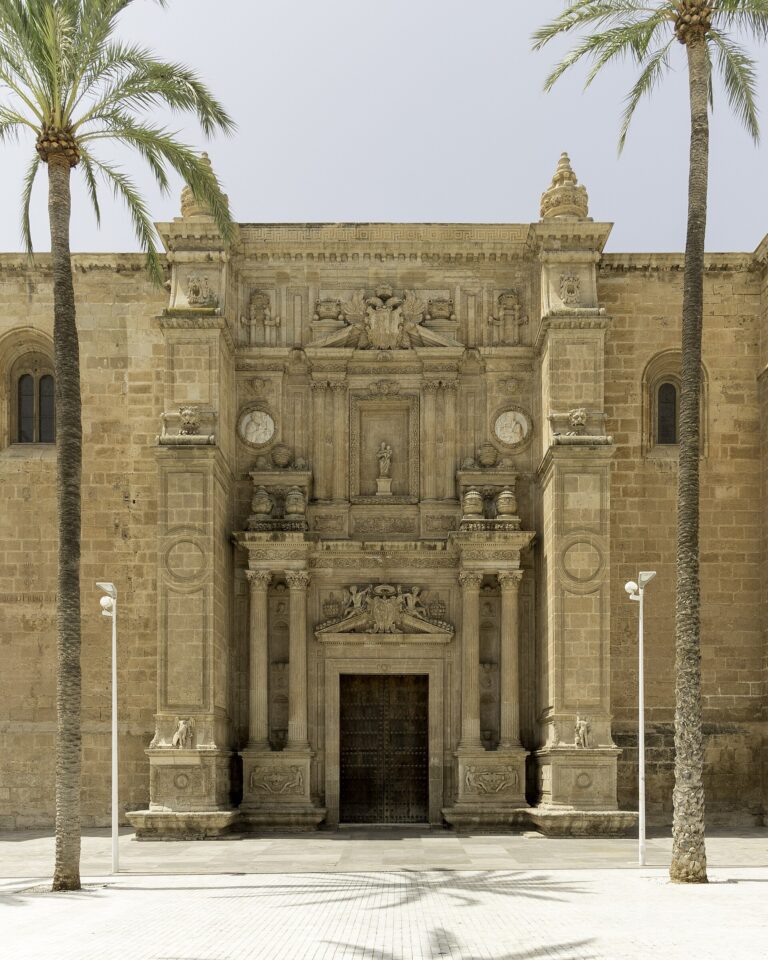
Almería Cathedral was begun in 1524, after an earthquake in 1522 destroyed the first one, according to the Almería tourist board. It was built both for worship and as a refuge from Barbary pirate raids, which is why the main facade has large buttresses, corner towers and solid walls. The same board calls the cloister the best neoclassical cloister of the Spanish cathedrals. The address is Plaza de la Catedral; confirm opening hours locally.
The Civil War shelters
The Refugios de la Guerra Civil are the most unusual visit in the city. The municipality says Almería suffered 52 air and sea bombardments in the Civil War, in which 754 bombs fell. The underground shelters built in response run for more than 4 kilometres in total, include an operating theatre, and could hold about 40,000 people. They were designed by the local architect Guillermo Langle Rubio. Visits are guided only, tickets must be bought in advance online or at the ticket office, and the entrance is on Plaza Manuel Pérez García. The city’s own page has the current schedule.
The Cable Inglés
The Cable Inglés, also known as the El Alquife loading pier, was built between 1902 and 1904 by a British mining company to ship iron ore, and it stayed in use until 1970, says the Almería port authority. The pier is about 900 m in two sections and was declared a Bien de Interés Cultural in 1998. After restoration the port authority is turning it into a pedestrian promenade over the sea.
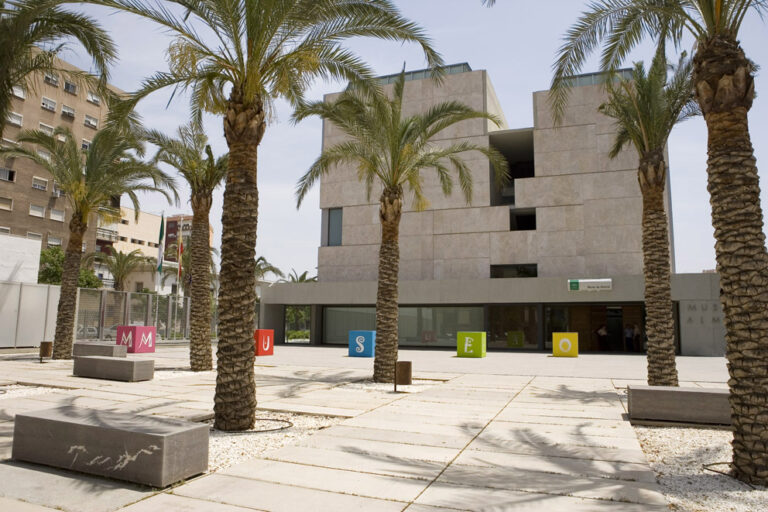
The Museo de Almería
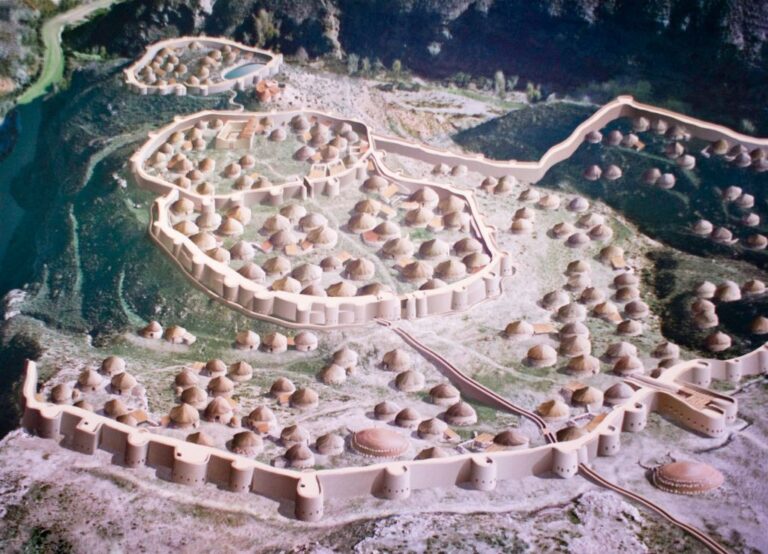
Founded in 1933, the museum’s permanent exhibition focuses on two cultures that define the province: Los Millares and El Argar, societies of the third and second millennia BC.
What may disappoint
Almería is a working port and provincial capital, not a resort, and the Alcazaba and the shelters are the draw rather than a large old quarter. Skip it if you only want a few days of poolside leisure; the natural park beaches are a car or shuttle trip away.
Beaches and places nearby
The city’s own beaches are urban: the tourist board counts about 3 km of them, with services for bathers, and names Retamar and Costacabana among them. Retamar’s sand is mixed with pebbles. Further east the same board lists Torregarcía (almost 2,000 m, sand and pebbles), Amoladeras (3,750 m) and the long Salinas beach, described as more than 5 km. These lie along the road towards Cabo de Gata.
Cabo de Gata-Níjar Natural Park
The Junta de Andalucía gives the park 49,512 hectares, in the municipalities of Almería, Carboneras and Níjar, with a landscape that is predominantly volcanic and, according to the Junta’s visitor portal, 50 km of the best-preserved coastal cliffs on the Mediterranean. UNESCO declared it a Biosphere Reserve in 1997.
The Junta names Mónsul and Los Genoveses among the park’s unspoilt beaches, and car access to the beaches west of San José is regulated in summer. In 2026 the Junta restricted motor vehicles to Genoveses, Barronal, Mónsul, Media Luna and Cala Carbón from 20 June to 27 September, and a shuttle bus linked San José with those beaches. Rules are reviewed each year, so check the Junta de Andalucía or the Níjar council site before a summer trip. For villages and routes inside the park, read our Níjar guide.
Other day trips
West of Almería, Roquetas de Mar, El Ejido and Adra run along the greenhouse coast; to the east, Mojácar, Vera and Garrucha are served by regional buses from Almería station.
On CostaMap near Almería: Almería Cathedral (0.2 km) · Museum of Almería (1.1 km).
Food and drink
Almería’s cooking is Mediterranean, and the tourist board says visitors can choose between traditional spoon dishes and tapas. Its gastronomy page shows migas, ajoblanco and patatas a lo pobre among the local plates. This guide does not name restaurants without a source, so use the tourist board’s where-to-eat list or ask at your hotel.
The agriculture around the city shapes what is on the plate. In 2021 Almería province had more than 32,800 hectares of greenhouses, close to 90% of the total in eastern Andalusia, according to the Junta de Andalucía’s mapping. That farming is a large part of the province’s economy and landscape.
For a simple plan, keep lunch light on days when you plan to climb the Alcazaba and save the longer meal for the evening.
Where to stay
Prices change with the season and with weekends, so this guide gives no figures; compare on the day you travel. The old centre suits short stays on foot, the seafront suits mixed sightseeing and beach days, and Retamar suits longer stays or a hire car.
Getting there and around
By air
Almería Airport (LEI) is 9 km east of the city and 500 m from the coast. Aena says city bus line 30 runs from the airport to the centre every day of the year, with an estimated journey of 35 minutes. ALSA’s L30 page gives about 25 to 30 minutes from the intermodal station to the airport, which is a different start point, so the figures do not conflict.
By bus and train
The bus station is in the intermodal terminal on Plaza de la Estación. ALSA says long-distance buses go to Murcia, Alicante, Valencia, Barcelona, Granada, Málaga, Seville and Madrid, and regional buses serve El Ejido, Roquetas de Mar, Adra, Vera and Mojácar. ALSA also notes that trains to Madrid, Seville and Granada leave from the same intermodal complex, with a quick link to the A-7 motorway. Renfe lists long-distance and medium-distance services at Almería station; for times, use Renfe’s station page and journey planner.
By sea
The Port of Almería has scheduled ferries to Melilla (Spain), Nador (Morocco), and Oran and Ghazaouet (Algeria), according to the port authority. Schedules are not listed there, so check with the operators.
By car and on foot
The old centre, the Alcazaba, the cathedral and the shelters are close together and best done on foot. A car gives you the most freedom for Cabo de Gata-Níjar, which is about 20 km from the city.
Best time to visit
AEMET’s climate normals for Almería Airport (station 6325O, 1981 to 2010) give an annual mean temperature of 19.1 °C, with 200 mm of rain and 2,994 hours of sunshine a year. January averages 12.6 °C, April 17.0 °C, July 26.1 °C, August 26.7 °C and October 20.4 °C. The rain is concentrated in the cooler months: July has about 1 mm, January 24 mm and October 27 mm.
August is the hottest month in the table, with an average daily maximum of 31.0 °C, so plan the Alcazaba for a cooler month or an early start. These are long-term averages from the airport station, not a forecast.
FAQ
Is Almería a beach destination?
Partly. The city has about 3 km of urban beaches, according to the tourist board, but the wilder beaches are in the Cabo de Gata-Níjar park, 20 km away. Treat the city as a base for sightseeing with a beach on the side.
Do you need a car?
Not for the city. For Cabo de Gata-Níjar a car is more flexible, although a shuttle bus linked San José with the restricted beaches in summer 2026.
How far is Almería Airport from the centre?
9 km, according to Aena. City bus line 30 takes about 35 minutes.
Can you reach Mojácar and Vera from Almería without a car?
Yes. ALSA lists regional buses from Almería station to El Ejido, Roquetas de Mar, Adra, Vera and Mojácar.
Sources and freshness
Last checked: October 2026. Opening hours, ticket prices and summer access rules change, so confirm them with the operator before you travel.
- INE, official population figures (table 2857, municipality of Almería, 1 January 2025)
- Conjunto Monumental de la Alcazaba, presentation (Junta de Andalucía museums)
- Almería tourist board, the cathedral
- Almería tourist board, beach tourism
- Almería tourist board, Cabo de Gata natural park
- Almería tourist board, gastronomic tourism
- Port Authority of Almería, Cable Inglés
- Port Authority of Almería, scheduled ferries
- Museo de Almería, collections
- Almería city council, Civil War shelters
- Aena, Almería Airport bus
- ALSA, Almería bus station
- AEMET, climate normals, Almería Airport
- Junta de Andalucía, Cabo de Gata-Níjar natural park
- Junta de Andalucía, summer 2026 beach access in Cabo de Gata-Níjar
- Junta de Andalucía, greenhouse mapping 2021
Main photo: Jebulon, CC0, via Wikimedia Commons.
Nearby on the Costa de Almería
Almeria on the map
Places worth knowing near Almeria
How this page is maintained. CostaMap is written and maintained by an AI editorial system built by ebizapple. Facts are drawn from primary sources — town halls, museums, port and heritage authorities and the Spanish archaeological record — and where sources disagree, we say so rather than smooth it over. Photographs marked as ours are taken on location. This page was last reviewed on 25 October 2026. Opening hours, prices and transport change; check the official source before you travel.