
Expect wind. This is not a sleepy sun-and-siesta seaside resort: the place’s personality is shaped by strong winds, a hard Atlantic edge and a lively watersports scene. If you come hoping for sheltered swimming and genteel promenades you may be disappointed; if you want big skies, kitesurfing culture, bird migration and a historic maze to explore, you’ll get exactly that.
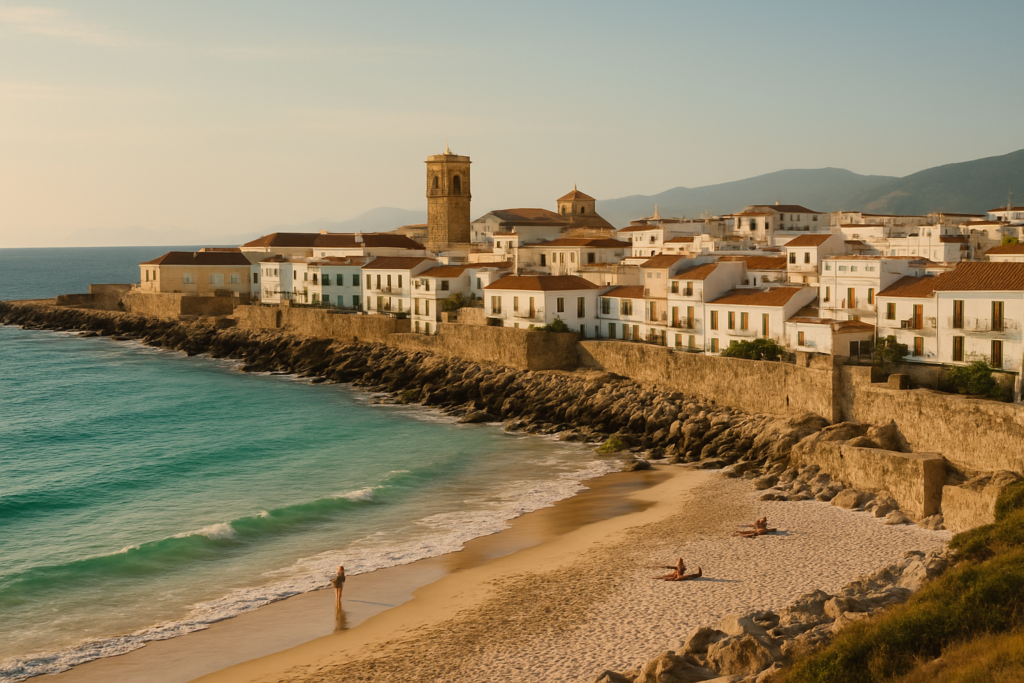
Tarifa at a glance
- One of Europe’s top kitesurfing and windsurfing hotspots thanks to the strong Levante and Poniente winds.
- Southernmost town of mainland Europe, where the Atlantic meets the Mediterranean.
- Gate to Bolonia beach and the Roman ruins of Baelo Claudia nearby.
- Clear views across the Strait to Morocco (the coast is about 14 km away).
- Sits inside Estrecho Natural Park, protecting bird migration routes and the strait’s coastline.
- Long white-sand beaches backed by dunes; Playa de los Lances and Playa de Valdevaqueros are kitesurfing favourites.
- Ferries run from the port across to Tangier — the crossing takes around an hour.
Before you plan
Nothing in this guide is presented as permanently closed or under redevelopment. Important: the town’s defining feature is the strong wind regime (Levante and Poniente), which dramatically changes the feel of beaches and activities from one day to the next — check local wind reports if your trip hinges on calm seas or on a specific wind direction for kiting.
Things to do in the town
There are three distinct threads to a visit here: wind and watersports; wildlife and nature around the Strait; and a compact historic centre with a dramatic fortress. You can combine powered adrenaline on the water with easy nature watching and short cultural walks without long transfers.
| Attraction | What it is | Price/entry | Best for |
|---|---|---|---|
| Playa de los Lances | Long white-sand beach, dune-backed and part of a nature reserve | – | Sunbathing, kitesurfing views, long walks |
| Playa de Valdevaqueros | Wide dune-backed beach north of town, very popular with kitesurfers | – | Kitesurfing, beach culture |
| Castillo de Guzman el Bueno | 10th-century fortress guarding the old town | – | History, old-town panoramas |
| Baelo Claudia (Bolonia) | Roman ruins beside Bolonia beach — accessible from the town | – | Archaeology, beach + ruins combo |
| Whale and dolphin watching | Boat trips to see cetaceans in the Strait of Gibraltar | – | Wildlife watching |
| Ferry to Tangier | Regular ferries from the port across the Strait | – | Day trip to Morocco |
The beaches and dunes
The coastline here alternates long, open beaches and dune systems where the wind shapes the sand into shifting landscapes. Playa de los Lances is the town’s main sweep of white sand, backed by a nature reserve that preserves the dune habitat; it’s the place for long walks and to watch kites and sails cross the water. North of town, Playa de Valdevaqueros is the go-to for kitesurfers — expect rigs on the sand and a lively beach culture rather than quiet family bathing in windy conditions.
Historic centre and the castle
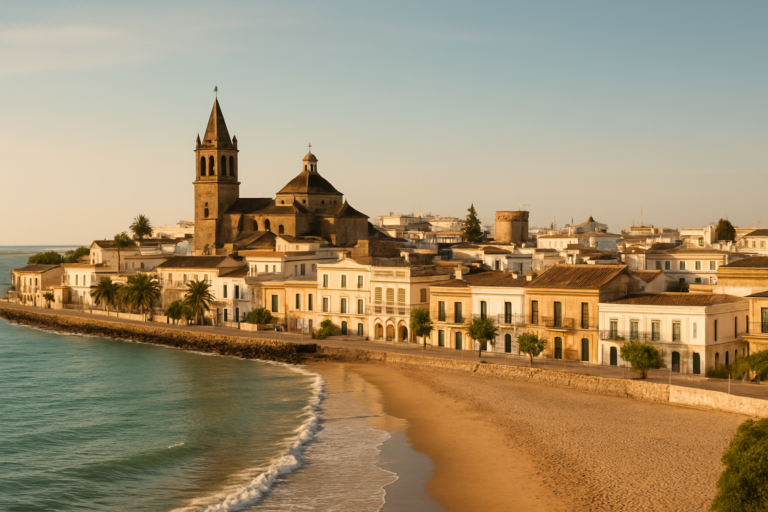
The walled old town is a compact maze of whitewashed lanes entered through the Puerta de Jerez gateway. At its edge the Castillo de Guzman el Bueno — a fortress with origins in the 10th century — keeps watch over the approach. The narrow streets are where you’ll find cafés, surf shops and the town’s more convivial evening scene; it’s a straightforward stroll from the beaches into the maze.
Wildlife, the Strait and short sea trips
The stretch of water between this coast and North Africa is one of Europe’s best spots for whale and dolphin watching: the currents and deep channels make for lively marine life. The town’s port also runs ferries across the Strait to Tangier, a crossing that takes around an hour, which makes a Moroccan day trip feasible if you want to cross the water.
Best beaches in the area
Beaches here are shaped by wind and by the meeting of two seas. Some are oriented towards surfers and kiters; others offer long, quiet stretches for walking and nature.
| Beach | Character | Facilities / notes |
|---|---|---|
| Playa de los Lances | Long white-sand beach, backed by dunes and a nature reserve | – |
| Playa de Valdevaqueros | Wide, dune-backed beach north of town, very popular with kitesurfers | – |
| Bolonia (nearby) | Beach with Roman ruins of Baelo Claudia on the headland | – |
Tarifa with kids
The town can work well for families if you plan around activities and wind. The archaeological site at Baelo Claudia gives children a hands-on history stop that pairs easily with a beach day at Bolonia. Beaches with dunes are great for exploration; however, keep in mind that strong winds, especially on exposed days, can make sand and sea less comfortable for small children. Short wildlife trips focused on dolphin and whale watching can be memorable for older kids who can sit through a boat excursion.
How to get to Tarifa and get around
Arriving by sea is one distinctive option: ferries operate from the port across to Tangier, with the crossing taking around an hour. Within the area, the best way to reach dispersed beaches and the Roman site is usually by road; once you’re in the old town, most sights are reachable on foot. The town’s position at the meeting point of the Atlantic and Mediterranean helps make day trips across the Strait realistic from a timing perspective.
| From | By | Approx time |
|---|---|---|
| Tarifa port → Tangier | Ferry | Around an hour |
Where to stay in the resort
Accommodation clusters into a few obvious choices depending on how you want to spend your time.
- Old town (historic centre) — best if you want narrow streets, easy access to cafes, shops and the castle on foot.
- Beaches and dunes belt (Playa de los Lances) — suits people who want beach space, long walks and proximity to nature areas.
- Valdevaqueros area — choose this if kitesurfing is the main purpose; expect lively beach culture rather than tranquillity at all hours.
Best time to visit
There are two competing rhythms here: wind-driven seasons that attract watersports enthusiasts, and quieter times when the sea is calmer. The Levante and Poniente winds are the town’s defining feature and will greatly affect which activities are possible on a given day. Bird migration through the protected park is another draw at particular times of year.
| Season | Months | What to expect |
|---|---|---|
| Wind-focused season | – | Frequent Levante and Poniente winds — ideal for windsurfing and kitesurfing |
| Milder weather and bird migration | – | Good for wildlife watching within the Estrecho Natural Park |
History of the area
History here is visible in the town’s fortress and in the coastline’s long human story. The Castillo de Guzman el Bueno dates to the 10th century and has long guarded the old town and the strategic crossroads where the Atlantic meets the Mediterranean. Nearby, the Roman ruins of Baelo Claudia at Bolonia illustrate the area’s importance in antiquity — the coastline has been a significant maritime corridor for millennia.
Practical info
- Nature protection: the settlement sits inside Estrecho Natural Park, which safeguards coastline habitats and the migratory bird routes — treat dunes and protected areas with respect.
- Views to Morocco: on clear days the North African coast is clearly visible across the Strait (about 14 km away), a vivid reminder of the town’s unique geography.
- Watersports infrastructure: the town has become a hub for surf and kite culture, so expect surf shops, rental outfitters and a summer scene focused on beaches and cafés.
- Ferries: regular ferry service runs from the port across the Strait, making Tangier reachable by sea in about an hour.
Worth it for: Windsports enthusiasts, wildlife watchers interested in cetaceans and migratory birds, and travellers who like compact historic towns with a lively beach culture. Less so if: You want calm, sheltered swimming and quiet promenade-style resort life — the wind and open-Atlantic exposure can make beaches rough and sandy on blustery days.
How we assess this guide
This guide compiles verified facts about local geography, heritage and transport. We cross-checked claims about wind, beaches, the castle, the Roman site and ferry crossings against multiple sources. We flag closures or major changes when confirmed; this entry contains no closed-venue claims. This is not first‑hand field reporting — use local timetables and operators for up‑to‑date ferry and activity details.
Frequently asked questions
How long is the ferry crossing to Tangier?
Ferries from the port cross to Tangier in around an hour.
Is the town particularly windy?
Yes — strong Levante and Poniente winds are a defining feature and are the reason the area is a top European destination for windsurfing and kitesurfing.
Which beach is best for kitesurfing?
Playa de Valdevaqueros, north of town, is a wide dune-backed beach that’s very popular with kitesurfers. Playa de los Lances also attracts wind- and board-sport activity along its long sweep of sand.
Can you see Morocco from the shore?
Yes. The coast of Morocco is clearly visible across the Strait of Gibraltar, about 14 km away, and the meeting of the Atlantic and the Mediterranean is a prominent local feature.
Are there good chances to see whales or dolphins?
Yes — the waters off the town are a prime spot for whale and dolphin watching in the Strait of Gibraltar.
What is the old town like?
The walled old town is a maze of whitewashed lanes entered through the historic Puerta de Jerez gateway; it’s compact and where you’ll find cafes, surf shops and the castle.
Is Baelo Claudia easy to visit from the town?
The town is the gateway to Bolonia beach and the Roman ruins of Baelo Claudia nearby, making a combined visit to the ruins and the beach straightforward as a day trip.
Is the castle worth visiting?
The Castillo de Guzman el Bueno is a 10th-century fortress that dominates the old town and provides a clear sense of the town’s historical role guarding the strait.
Will the wind spoil a family beach day?
That depends on conditions: dunes and beaches are excellent for exploration, but strong winds can make sand and sea uncomfortable for small children — plan for sheltered alternatives or check wind conditions in advance.
Can I base myself here and visit Morocco as a day trip?
Yes. Ferries run from the port to Tangier in about an hour, so crossing the Strait for a day visit is feasible from a timing perspective.
Is there a nature reserve nearby?
Yes. The town sits within Estrecho Natural Park, which protects the strait’s coastline and the important migratory bird routes that pass through the area.
Is the place good for nightlife?
The town has a lively summer scene tied to beach and surf culture, with cafés and bars concentrated around the old town and beachfront; it’s energetic rather than club-focused.
How many days should I allow to explore the area?
That depends on your priorities: a short stay covers the old town and a beach; add a day for Baelo Claudia and Bolonia; watersports or birdwatching can expand your schedule depending on how much time you want on the water or in the park.
Can you walk between the main beaches and the old town?
Yes — the old town is a short walk from the main beach areas, while more distant beaches and the Roman ruins require road travel.
Are there organised wildlife trips available?
Yes — boat trips for whale and dolphin watching operate from the port area, taking advantage of the productive waters of the Strait of Gibraltar.
Plan the wider trip
- Costa de la Luz guide
- Chipiona: Lighthouse, Beaches and Moscatel Wine
- Conil de la Frontera: Beaches and Atlantic Coast
- El Campillo: gateway to the Riotinto mines and the red river of Huelva
- Algeciras
- San Fernando
Nearby on the Costa de la Luz
How this page is maintained. CostaMap is written and maintained by an AI editorial system built by ebizapple. Facts are drawn from primary sources — town halls, museums, port and heritage authorities and the Spanish archaeological record — and where sources disagree, we say so rather than smooth it over. Photographs marked as ours are taken on location. This page was last reviewed on 15 August 2026. Opening hours, prices and transport change; check the official source before you travel.