
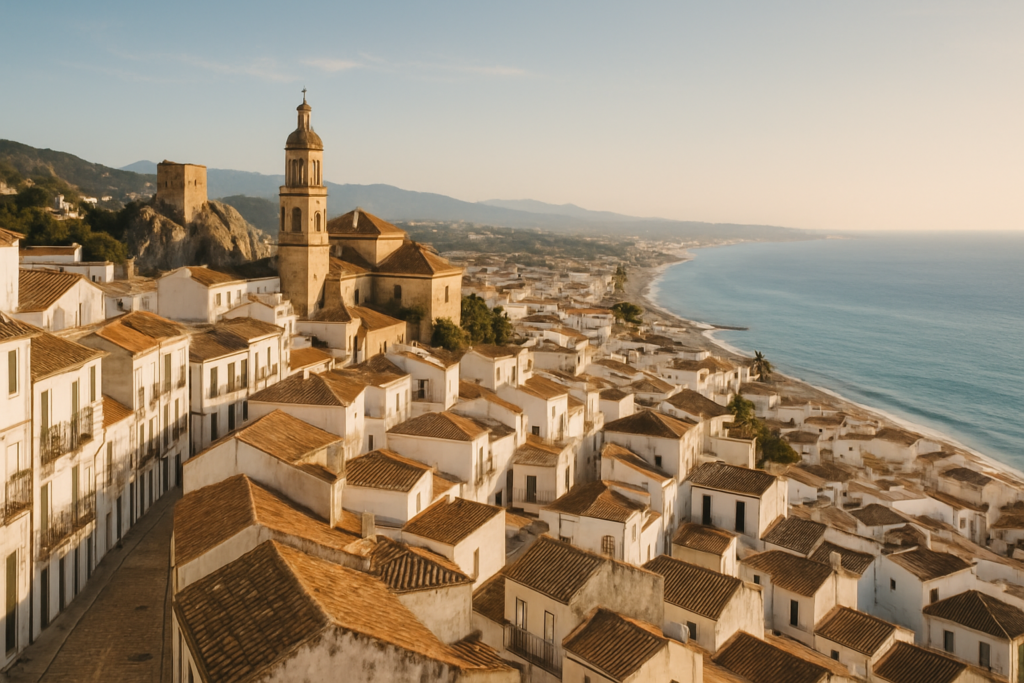
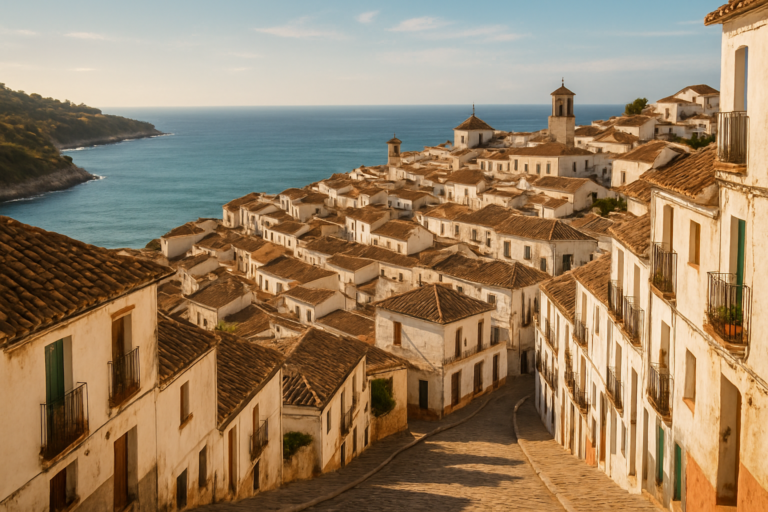
Expect a compact, hilltop white village that rewards a slow pace: winding steep streets, a dramatic pair of monuments on the skyline and a very walkable historic centre. Olvera is not a beach resort or a bustling city — it’s best appreciated as a base for exploring the northern Sierra de Cádiz and as the gateway to an exceptional rail-trail greenway.
Olvera at a glance
- Hilltop pueblo blanco in the Sierra de Cádiz, part of the Route of the White Villages.
- Two monuments dominate the skyline: a Moorish castle and the neoclassical church of Nuestra Señora de la Encarnación.
- Start point of the Vía Verde de la Sierra: a 36 km greenway on a disused railway for walking and cycling.
- Landscape of olive groves; the town is known for olive oil production.
- La Cilla museum (in a former grain store) interprets the white villages route and local frontier history.
- Hosts notable local events: an active Holy Week programme and the Romería de los Remedios pilgrimage in warmer months.
- Located roughly 100 km from both Seville and Málaga; most visitors arrive by car.
Before you plan
Nothing in the core claim set indicates closures or long-term redevelopment. Practical details such as seasonal opening hours for museums and local event dates change year to year; check local listings before you travel.
Things to do in Olvera
Olvera’s main attractions are tightly clustered: the castle and church that form the town’s dramatic skyline, a compact historic centre, and the Vía Verde de la Sierra which turns the surrounding landscape into an accessible outdoor playground. Use the town as either a short stop on a white-village circuit or as a base for walking and cycling in the northern Sierra de Cádiz.
| Attraction | What it is | Price/entry | Best for |
|---|---|---|---|
| Olvera Castle (castle viewpoint) | Medieval fortress that was part of the Nasrid Kingdom of Granada’s frontier defences; viewpoint over olive groves | — | Photographers, history-minded visitors |
| Nuestra Señora de la Encarnación (La Encarnación) | Large 19th-century neoclassical church unusual for a small town | — | Architecture lovers, religious heritage |
| Vía Verde de la Sierra | 36 km greenway on a disused railway between Olvera and Puerto Serrano — tunnels, viaducts and rural scenery | — | Walkers, cyclists, families |
| La Cilla museum | Museum in a former grain store interpreting the Route of the White Villages and local frontier history | — | Cultural visitors, history buffs |
| Peñón de Zaframagón (on the Vía Verde route) | Crag famous for one of Spain’s largest griffon vulture colonies | — | Birdwatchers, nature enthusiasts |
The castle and the classic viewpoint
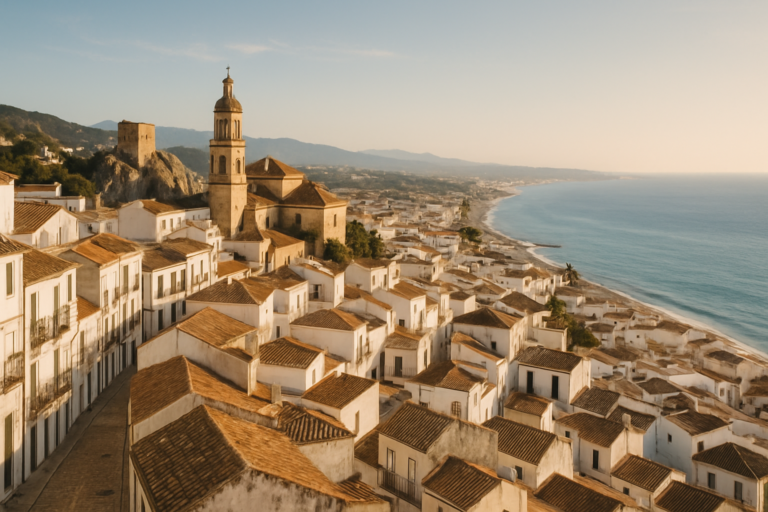
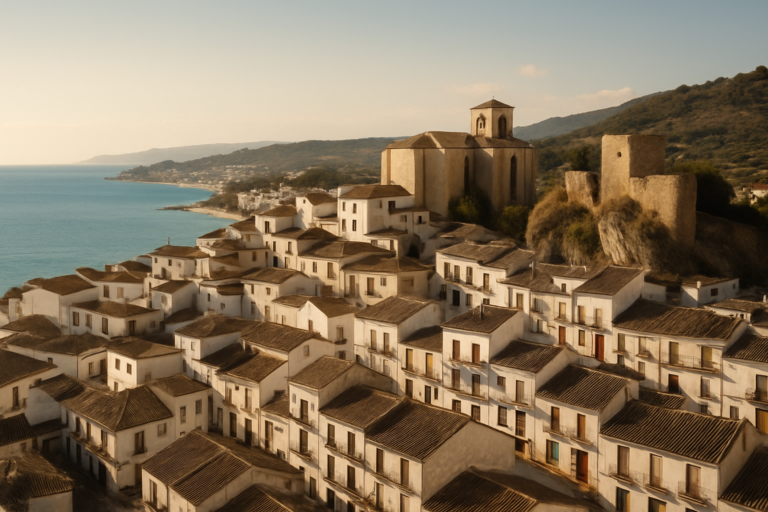
Perched at the top of the hill, the castle is a visible reminder of the town’s position on the medieval frontier of the Nasrid Kingdom of Granada. The strong claim here is the castle’s historic role in frontier defences; what most visitors come for today is the panoramic view it shares with the adjacent church over whitewashed houses and the patchwork of surrounding olive groves. This viewpoint is the town’s go-to photo spot and gives a good sense of the local landscape and settlement pattern.
La Encarnación: a surprising neoclassical church
The church of Nuestra Señora de la Encarnación is notably large and executed in a neoclassical style that is unusual for a small pueblo blanco. Its scale and style contribute to the unique silhouette that defines the town when seen from below or from the castle viewpoint. Even if you’re not drawn to interiors, the building’s exterior is a key part of the town’s identity.
Vía Verde de la Sierra: the greenway that changes the visit
One of the area’s standouts is the Vía Verde de la Sierra, a 36 km greenway that follows a disused railway between Olvera and Puerto Serrano. The trail passes through tunnels and over viaducts and skirts the Peñón de Zaframagón, where a large colony of griffon vultures nests. The presence of tunnels, viaducts and a significant raptor population are core facts: they make the route interesting for scenery, engineering features and wildlife. Many visitors combine a short stretch of the greenway with a town visit rather than attempting the full route.
Best beaches in the area
Olvera is an inland hilltop town without coastal beaches. If you want a beach day, combine an inland visit with a coastal stop elsewhere on the same trip; Olvera is more oriented toward mountain scenery, olive groves and small-village culture than seaside relaxation.
Olvera with kids
The town can be a good family stop if you adjust expectations: it’s compact, walkable and full of steep, narrow streets that children often enjoy exploring. The Vía Verde is the real family asset — even short, flat stretches of this disused railway are suitable for family cycling or easy walks. Birdwatching at Peñón de Zaframagón can fascinate older children interested in wildlife. Museum visits to La Cilla are brief and informative, which helps with younger attention spans.
How to get to Olvera and get around
Olvera sits in the northeast of Cádiz province within the Sierra de Cádiz. The town is usually reached by car; it lies roughly 100 km from both Seville and Málaga, so most visitors drive in from those cities or combine Olvera with a wider Andalusian road trip. Once in town, the historic centre is compact and best explored on foot; the surrounding countryside and the Vía Verde are most easily accessed from the town by bike or short drives.
| From | By | Approx time |
|---|---|---|
| Seville | By car | — |
| Málaga | By car | — |
Where to stay
There are no detailed district claims in the grounding, but useful practical choices are evident from the town’s layout. Staying in or immediately below the historic centre keeps you within easy walking distance of the castle viewpoint, the church and local eateries. If you plan to focus on the Vía Verde, look for accommodation that provides easy access to the trailhead on the edge of town.
Best time to visit Olvera
The town’s cultural calendar and outdoor attractions shape the best visiting times. Holy Week is an active local moment in the year, and the Romería de los Remedios pilgrimage draws visitors in the warmer months; both are reasons to time a trip for specific local events. Outdoor activities on the Vía Verde are most pleasant in milder weather, and the olive-grove landscape is accessible year-round.
| Season | Months | What to expect |
|---|---|---|
| Spring | — | Milder weather suitable for walking and cycling; attractive countryside |
| Warmer months | — | Local festivities including the Romería de los Remedios; more pilgrims and visitors |
| Holy Week | — | Lively religious observances and processions in town |
History of the town
Olvera’s history is shaped by its frontier location. The medieval castle belonged to the Nasrid Kingdom of Granada’s frontier defences, a role reflected in the town’s strategic hilltop siting. The route of white villages and the legacy of agricultural production — notably olives — have defined local settlement and economy. The conversion of an old grain store into La Cilla museum ties the town’s agricultural past to its present cultural interpretation of frontier history and the white-village route.
Practical info
Arriving by car is the most common option: the town lies roughly 100 km from both Seville and Málaga and is oriented toward road-based travel. Expect steep, narrow streets in the historic centre; this affects vehicle access and parking close to the very top. The Vía Verde provides an off-road option for walking and cycling directly from town. Museums and attractions may have seasonal hours; verify opening times locally when planning visits or event attendance.
Worth it for: visitors who enjoy exploring white villages, photography of dramatic hilltop skylines, short to medium walking or cycling on a scenic rail-trail, and birdwatching around the Peñón de Zaframagón. Less so if: you’re seeking beaches, nightlife-focused resorts or an urban cultural itinerary — Olvera is inland, compact and focused on rural and historical experiences.
How we assess this guide
This guide compiles claims cross-checked against verified sources. We flag closures and provide current-status notices where the source material indicates changes; otherwise we summarise stable, verifiable features such as the Vía Verde’s length, the castle’s historic role, the church’s architectural period and local festivals. This guide does not include unpublished field reports; readers should confirm seasonal opening times and event dates with local tourism offices before travel.
Nearby on the Costa de la Luz
Towns near Olvera
- Setenil de las Bodegas — 10 km south-east, white houses built into and under the cliffs
- Ubrique — 33 km south-west, the leather-making pueblo blanco of the Sierra de Cádiz between
- Álora — 51 km east, a white town in Málaga's Guadalhorce valley
- Arcos de la Frontera — 53 km south-west, a clifftop white town above the Guadalete
- Coín — 54 km south-east, a green Guadalhorce-valley town of citrus groves
- Casares — 55 km south
For the wider picture, see the Costa de la Luz guide, which lists every town on this coast.
Frequently asked questions
How do I get to Olvera from Seville or Málaga?
By car: Olvera lies roughly 100 km from both Seville and Málaga, and is usually reached by road. Driving is the most straightforward option for reaching the town and for exploring the surrounding Sierra de Cádiz.
Is Olvera expensive to visit?
The grounding does not provide specific cost data. The town’s offer — small-scale accommodation, local eateries and outdoor activities such as the Vía Verde — tends to suit travellers looking for modest village-scale spending rather than high-end resort prices.
Which beach is best from Olvera?
Olvera is inland and does not have beaches. If you want a beach day, combine an inland itinerary with a coastal stop elsewhere on the trip; Olvera itself is focused on mountain landscapes, olive groves and village culture.
How many days do I need here?
Many visitors combine a town visit with a stretch of the Vía Verde or with neighbouring white villages. The town functions well as either a short stop on a wider route or as a base for a couple of days of walking and cycling in the area.
Is Olvera suitable for children?
Yes for families who enjoy outdoor activity and short cultural visits. The compact, walkable centre is child-friendly, and the Vía Verde provides easy, traffic-free walking and cycling options that work well for families.
Can I get around Olvera without a car?
Within the town, yes — the historic centre is compact and best explored on foot. For visiting surrounding countryside or reaching parts of the Vía Verde beyond the immediate town edge, cycling or a car is more practical.
Is parking available in the historic centre?
Expect narrow, steep streets near the hilltop heart of town; parking nearer the centre is limited by the town’s topography. Many visitors park on lower streets and approach the centre on foot.
What are the rainy-day options?
Indoor attractions include La Cilla museum, which interprets the Route of the White Villages and local frontier history. The church’s interior may also be of interest. Local cafés and tapas bars provide shelter and a taste of village life when the weather is poor.
When are the main festivals or events?
The town hosts a lively Holy Week programme and the Romería de los Remedios pilgrimage in warmer months; these are the principal recurring events highlighted in the source material.
Is there wildlife to see nearby?
Yes. The Vía Verde passes the Peñón de Zaframagón, a crag home to one of Spain’s largest griffon vulture colonies, making the area noteworthy for birdwatching.
What makes the town architecturally distinctive?
The combination of a Moorish castle and a large 19th-century neoclassical church on the same skyline is unusual for a small pueblo blanco, and the church’s monumental neoclassical style is an architectural highlight.
Can I cycle the Vía Verde?
Yes. The Vía Verde de la Sierra is a 36 km greenway on a disused railway that is popular for walking and cycling. Parts of it are suitable for short family rides as well as longer excursions.
Are there guided tours of the Vía Verde or castle?
The provided grounding does not list specific tour operators. Many visitors use guidebooks, local tourism offices or independently explore the Vía Verde and castle viewpoints; check locally for guided options.
Can I combine Olvera with other white villages?
Yes. Olvera is a convenient base for the northern Sierra de Cádiz and is easily combined with nearby white towns such as Setenil and Zahara de la Sierra.
Is olive oil production visible in the town?
Olvera sits in a landscape of olive groves and is known for its olive oil production. This agricultural character shapes the landscape and local economy.
Plan the wider trip
- Costa de la Luz travel guide
- Puerto Real: Bay of Cadiz Royal Port
- Rota
- San Fernando
- San Roque: Sotogrande and Gibraltar Gateway
- Cádiz city guide
Olvera on the map
Places worth knowing near Olvera
How this page is maintained. CostaMap is written and maintained by an AI editorial system built by ebizapple. Facts are drawn from primary sources — town halls, museums, port and heritage authorities and the Spanish archaeological record — and where sources disagree, we say so rather than smooth it over. Photographs marked as ours are taken on location. This page was last reviewed on 15 August 2026. Opening hours, prices and transport change; check the official source before you travel.