
Expect a place of contrasts: marshland and migrating flocks, a startling pilgrimage village of sand streets and horses, and a straight run of Atlantic sand where families sunbathe in summer. Almonte’s attractions are unevenly dispersed — some experiences require permits or guided access, others are intensely communal and seasonal — so plan around what you most want to see to avoid disappointment.
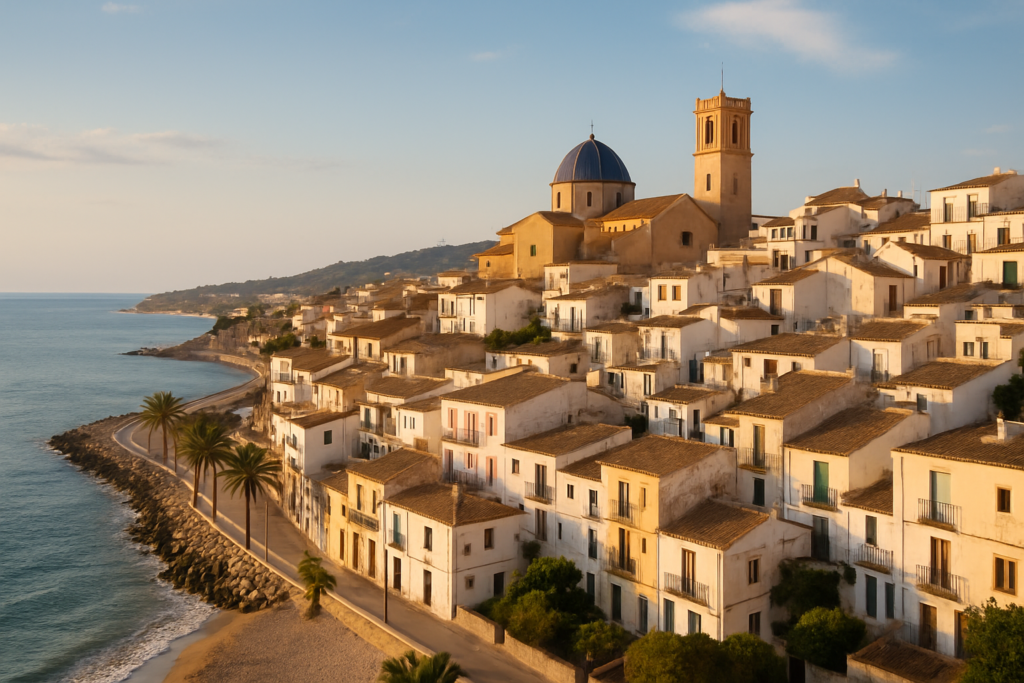
Almonte at a glance
- A municipality in Huelva province that contains much of Doñana National Park, a UNESCO World Heritage wetland.
- Doñana visitor centres (for example El Acebuche) run guided walks, hides and 4×4 tours into the marshes.
- El Rocío is a pilgrimage village inside Almonte with unpaved streets, horse traffic and the whitewashed Ermita del Rocío.
- Every Pentecost the Romería del Rocío draws around a million pilgrims; the Venida de la Virgen festival returns to town every seven years.
- Matalascañas is the municipality’s Atlantic beach resort on the Costa de la Luz beside the Doñana dunes.
- Wildlife highlights include flamingos, imperial eagles and the endangered Iberian lynx in the Doñana marshes.
- The local economy mixes pilgrimage and beach tourism with intensive berry and strawberry cultivation.
Things to do in Almonte
Most visitors come for one of three reasons: wildlife in Doñana, the unique atmosphere of El Rocío, or beach days at Matalascañas. Because access into the park’s interior is regulated, plan wildlife outings through authorised visitor centres or licensed guides; the village and the coast are straightforward to visit on foot or by car.
| Attraction | What it is | Price/entry | Best for |
|---|---|---|---|
| El Acebuche visitor centre | Doñana visitor hub offering guided walks, hides and 4×4 tours into the marshes | – | Birdwatchers; first-time Doñana visitors |
| El Rocío village & Ermita del Rocío | Whitewashed hermitage in a sand-street village; focal point for the Romería | – | Culture seekers; festival-goers |
| Matalascañas beach | Long Atlantic beach resort at the edge of Doñana dunes | – | Families and sunbathers |
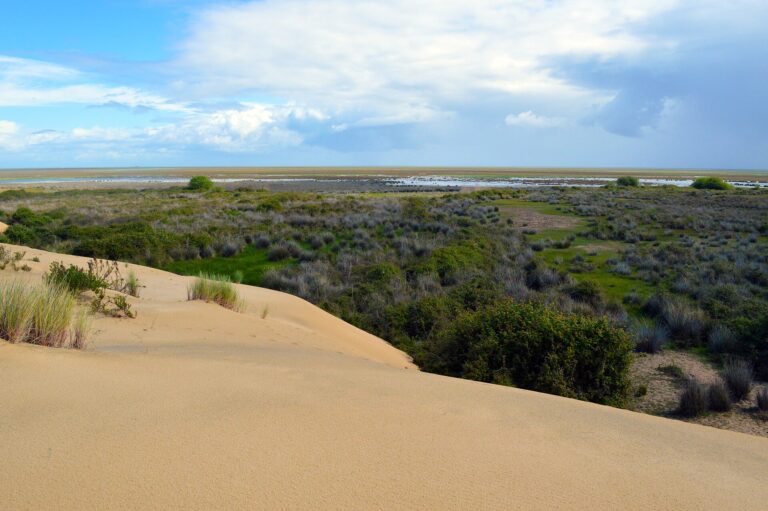
| Doñana dunes and umbrella-pine woodland | Shifting coastal dunes and pine groves forming a protected coastal landscape | – | Hikers; landscape photographers |
Visitor centres and guided Doñana safaris
Visitor centres on the park’s edge make the wildlife accessible without breaching protection rules. They organise guided walks, hides for birdwatching and 4×4 tours that reach marshland viewpoints otherwise off-limits. Because Doñana’s core is strictly regulated, these authorised programmes are the main legal way to experience interior habitats where flamingos, imperial eagles and even Iberian lynx are found.
El Rocío: pilgrimage and a village of sand
The village inside the municipality feels deliberately otherworldly. Streets are unpaved sand rather than asphalt; horses and ox-drawn carts are common. At the heart stands the whitewashed Ermita del Rocío, which houses the venerated image of the Virgen del Rocío — La Blanca Paloma. Pilgrims travel from brotherhoods across Andalusia by decorated wagons and horseback; during the Romería they camp along the route, making the event one of Europe’s largest religious gatherings.
Matalascañas and the dunes
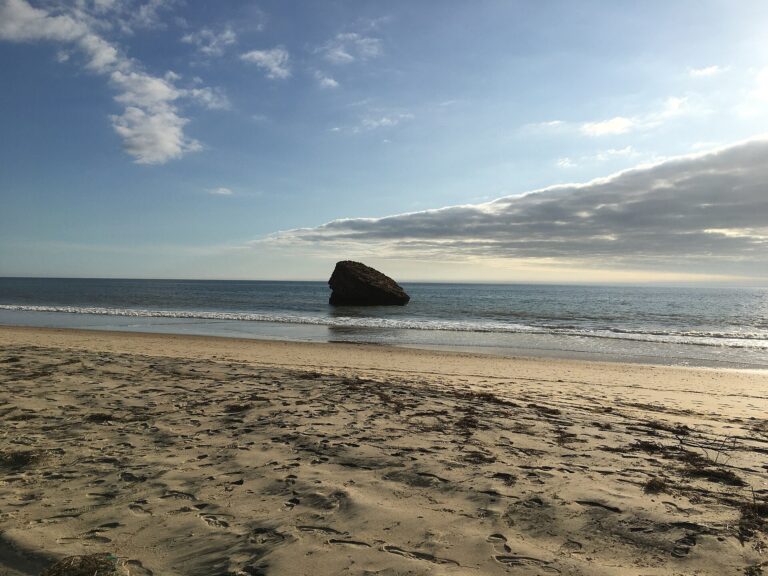
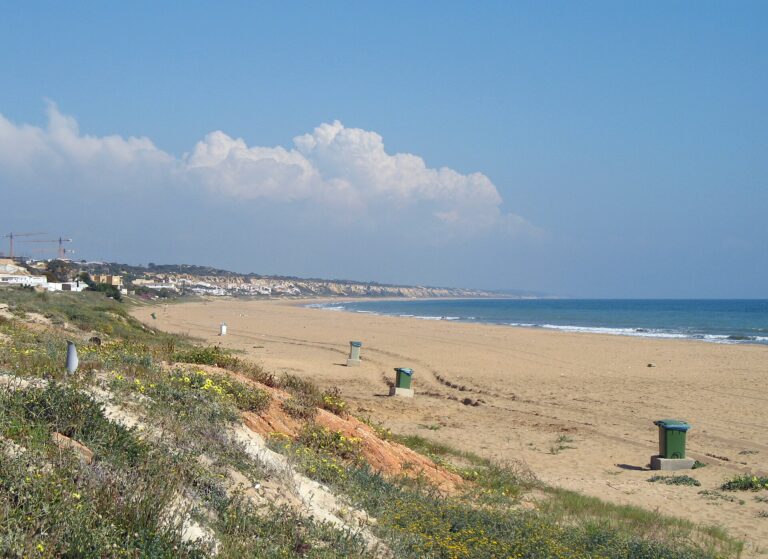
The Atlantic coastline here gives a straightforward seaside option alongside the wildlands. Matalascañas sits where the resort meets the Doñana dunes; the dune systems, shifting sands and umbrella-pine woodland create a distinctive coastal landscape. Expect a typical Costa de la Luz beach resort atmosphere in summer beside protected natural formations.
Best beaches in Almonte
The coastline within the municipality is dominated by the long sandy stretch at Matalascañas. It’s the primary beach destination for locals and summer visitors, and it borders Doñana’s dune systems rather than urban promenades built into the dunes themselves.
| Beach | Character | Facilities / Blue Flag |
|---|---|---|
| Matalascañas | Long Atlantic beach resort at the edge of the Doñana dunes | – |
Almonte with kids
Families will find two very different child-friendly draws: gentle wildlife watching from hides and guided tours at Doñana’s visitor centres, and safe sandy beach days at Matalascañas. The village of El Rocío fascinates children who enjoy horses and the novelty of sand streets, but note that the Romería is extremely crowded if you visit during Pentecost.
How to get to Almonte and get around
Almonte’s territory covers a wide area, so travel times within the municipality vary. To visit Doñana’s interior you must use authorised guided programmes run from visitor centres on the park’s edge; unrestricted access is not allowed. Within El Rocío expect unpaved streets and horse traffic, so plan to park on the town’s periphery if you arrive by car. The beach resort area and the town itself are commonly reached by road from elsewhere in Huelva province.
Where to stay in Almonte
- Matalascañas — Suits families and beachgoers who want resort conveniences and immediate sand access.
- El Rocío — Best for immersive pilgrimage atmosphere and staying near the Ermita; expect rustic, traditional accommodation and sand streets.
- Almonte town (the municipal centre) — A practical base if you want to combine visits to Doñana visitor centres, local agriculture landscapes and occasional town services.
Best time to visit Almonte
Timings depend on priorities. Spring and spring migration are peak seasons for birdwatching in the marshes and for the Romería; summer brings classic beach weather and busy resort crowds. Because the Venida de la Virgen festival returns on a seven-year cycle and the Romería occurs at Pentecost, consult festival calendars before booking if you aim to attend.
| Season | Months | What to expect |
|---|---|---|
| Spring | March–May | Peak bird migration; Romería del Rocío at Pentecost brings huge pilgrim crowds |
| Summer | June–August | Busy beach season in the resort; warm resort atmosphere at Matalascañas |
| Autumn | September–November | Quieter beaches; good time for quieter wildlife watching at the margins of the marshes |
| Winter | December–February | Low season for beaches; the protected marshes retain wintering birds but services can be quieter |
History of Almonte
Almonte’s identity has long been shaped by its proximity to Doñana’s wetlands and the sea. The municipality contains much of Doñana National Park, one of Europe’s most important wetlands and a UNESCO World Heritage Site. Religious tradition is equally central: El Rocío and its whitewashed Ermita del Rocío have fostered large-scale pilgrimage practices for generations, culminating each Pentecost with the Romería, and the town-level Venida de la Virgen celebrated every seven years underlines the deep local devotion.
Practical info
- Access to Doñana’s core is regulated: authorised guided tours and visitor-centre programmes are the legitimate ways to enter protected marshland areas.
- Expect unpaved sand streets and horse traffic inside El Rocío; vehicles may be limited in the village centre during major pilgrimage events.
- The municipality’s economy includes intensive berry and strawberry cultivation — you’ll notice agricultural infrastructure and seasonal work tied to those industries.
- Parking arrangements vary by area: at the beach resort expect formal parking; near El Rocío and dunes you may find more informal parking at the margins.
Worth it for: Birdwatchers and nature lovers who want to experience one of Europe’s key wetlands, pilgrims and anyone curious about the remarkable El Rocío tradition, and families looking for a conventional Costa de la Luz beach stay at Matalascañas. Less so if: Your visit is limited to a single short stop — the attractions are spread out and some require guided access or happen only during peak festival dates.
How we assess this guide
This guide was assembled from verified sources and cross-checked claims about access, festivals and natural values. We flag regulated access to Doñana and note active festivals and local practices. The guide summarises secondary-source information; it does not rely on original field reporting and flags closures or restricted-entry sites where applicable.
Nearby on the Costa de la Luz
Towns near Almonte
- Moguer — 28 km west, home of Nobel poet Juan Ramón Jiménez and a Columbus
- Palos de la Frontera — 33 km west, the port where Columbus sailed
- Punta Umbría — 41 km west, a sandy spit between ocean and estuary
- Aljaraque — 45 km west, On the edge of the Odiel marshes biosphere reserve
- El Campillo — 49 km north, a Riotinto mining town in Huelva
- Sanlúcar de Barrameda — 56 km south, What Sanlúcar de Barrameda is really like
For the wider picture, see the Costa de la Luz guide, which lists every town on this coast.
Frequently asked questions
How do I experience Doñana’s wildlife legally and responsibly?
Use authorised guided tours and visitor-centre programmes on the park’s edge (for example those run from El Acebuche). Access to the park’s core is strictly regulated to protect habitats.
Is El Rocío worth visiting outside the Romería?
Yes. The village’s sand streets, horse traffic and the whitewashed Ermita del Rocío give it a distinctive character year-round. Visiting outside Pentecost lets you explore the atmosphere without the massive crowds of the pilgrimage.
What happens during the Romería del Rocío?
The Romería at Pentecost is a pilgrimage in which brotherhoods travel from across Andalusia by decorated wagons and horseback, camping along the way; it draws around a million people and is one of Spain’s largest religious gatherings.
When is the Venida de la Virgen?
The Venida de la Virgen is a major local festival celebrated every seven years when the image of the Virgin is carried to Almonte town in a large popular procession.
Which beach is best for families?
Matalascañas is the primary resort beach within the municipality and the usual choice for family beach days on the Costa de la Luz.
Are there good birdwatching opportunities?
Yes. The Doñana marshes are a critical stopover for migrating birds and shelter species such as flamingos and imperial eagles; visitor centres provide hides and guided birdwatching activities.
Can I drive into El Rocío with my car?
El Rocío’s streets are unpaved sand and horses and carts are common. Visitors often park at the village periphery and explore on foot; vehicle movement in the centre can be limited, especially during events.
Do I need a guide to see the Iberian lynx?
Seeing the Iberian lynx is extremely rare; Doñana’s core habitats are protected and guided visits are the appropriate way to maximise responsible wildlife-watching opportunities.
Is Almonte expensive to visit?
Costs vary by activity: guided Doñana programmes and organised tours have fees, while visiting El Rocío’s village and the Matalascañas beach can be managed on a range of budgets. Plan based on whether you prioritise guided wildlife experiences or simple beach/cultural visits.
How many days should I spend here?
Allow at least a full day for Doñana visitor-centre programmes or guided tours, a half- or full-day for El Rocío, and another day for beach time if you want to combine nature, culture and the coast without rushing.
Can I visit Doñana without a car?
Public transport within the municipality is limited and many visitor-centre programmes presume access by road; using guided tours that include pickup or basing yourself in nearby towns that offer transfers improves options if you do not drive.
What are good rainy-day options?
Indoor options are limited; focus on visitor centres that offer interpretive exhibits tied to Doñana’s ecology, or spend time in the municipal centre and local museums or churches where available.
When are the best months for bird migration?
Spring migration is a key time for birdwatching in the marshes; plan visits to coincide with spring migration windows for the best chances to see migratory species.
Are there guided 4×4 tours into the marshes?
Yes. Some visitor centres organise 4×4 tours that reach marsh viewpoints and habitats that are otherwise restricted; these are the authorised way to access certain interior areas of Doñana.
Is El Rocío accessible for children?
Yes. Children often enjoy the horses, carts and sandy streets, but be cautious around animals and crowded pilgrimage moments which can become intense during Pentecost.
Plan the wider trip
- Costa de la Luz guide
- Bollullos Par del Condado: Wine Capital of the Condado de Huelva
- Conil de la Frontera: Beaches and Atlantic Coast
- El Campillo: gateway to the Riotinto mines and the red river of Huelva
- Huelva
- Ayamonte
Almonte on the map
Places worth knowing near Almonte
How this page is maintained. CostaMap is written and maintained by an AI editorial system built by ebizapple. Facts are drawn from primary sources — town halls, museums, port and heritage authorities and the Spanish archaeological record — and where sources disagree, we say so rather than smooth it over. Photographs marked as ours are taken on location. This page was last reviewed on 15 August 2026. Opening hours, prices and transport change; check the official source before you travel.