
Costa Brava · Alt Empordà
Cap de Creus and the Bay of Roses travel guide: Portbou to Empuriabrava
Border fishing towns, Cadaqués and Dalí’s Portlligat, the Cap de Creus Natural Park, Romanesque Sant Pere de Rodes, Roses and the Aiguamolls wetlands.
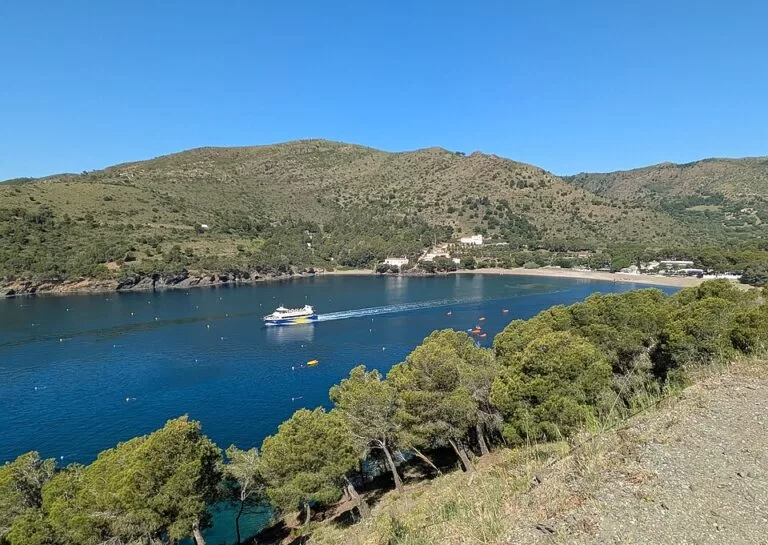
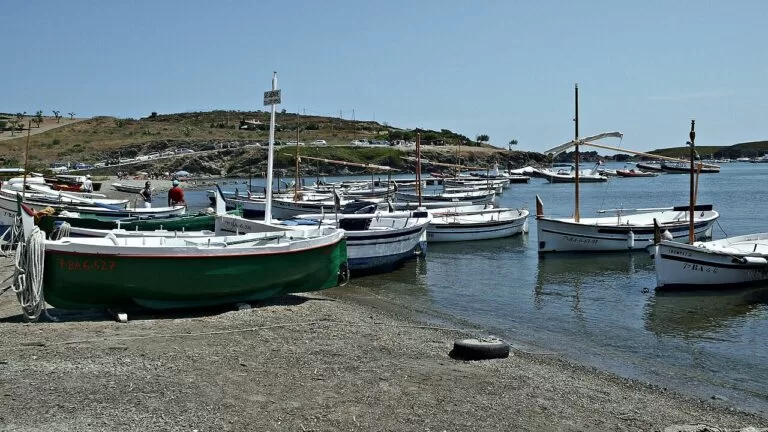
Cala Montjoi, Roses · Photo: Alan Mattingly, CC0
Part of the Costa Brava guide · North: Cap de Creus and the Bay of Roses
The northern Costa Brava runs from Portbou, on the French border, round the Cap de Creus peninsula to Roses and the flat shore of the Bay of Roses at Empuriabrava, all in the Alt Empordà. It is a coast of small harbours and dark-rock coves inside the Cap de Creus Natural Park, the first maritime-terrestrial park in Catalonia, followed by the long beaches and wetlands of the bay (catalunya.com). This guide covers each town from north to south, the beaches, what to do, where to base yourself, how to get there and a two-day route.
At a glance
- Where the far north-east of Catalonia, from Portbou on the French border round Cap de Creus to the Muga river mouth at Empuriabrava.
- Towns Portbou, Colera, Llançà, El Port de la Selva, Cadaqués, Roses, Empuriabrava and Castelló d’Empúries, with Figueres inland.
- Best for rocky coves, coastal walks, Dalí, Romanesque and Greek sites, birds and family beaches.
- Getting there AP-7 exits 3 and 4 at Figueres; trains from Barcelona to Figueres, Llançà and Portbou; Girona airport is about an hour from Cadaqués.
- On CostaMap Cadaqués, Cap de Creus, Dalí’s house, Roses, the Aiguamolls, Sant Pere de Rodes, Castelló d’Empúries and three GR 92 walks.
Map of Cap de Creus and the Bay of Roses
The map shows the places on this stretch that have a CostaMap page. Tick a place type to filter, and click a marker to see the place in the panel.
Place type
Area · next level
 Area map
Cap de Creus and the Bay of Roses
Click a marker to see the place here. From Portbou and Llançà round Cap de Creus to Cadaqués, Roses and the Aiguamolls.
Towns and villagesTowns and villages
From north to south, from the French border to the Bay of Roses.
Portbou
Portbou grew up with the railway to France, opened in 1872. Steep streets with iron handrails climb to the Neo-Gothic church of Santa Maria, with a Virgin by the local sculptor Frederic Marès. The cemetery hangs above the sea and holds the grave of the philosopher Walter Benjamin, who died here in 1940; Dani Karavan’s memorial to him stands at the entrance. Its beaches include the Platja Gran and Tres Platgetes (catalunya.com). Portbou is the start of the Portbou to Llançà walk, GR 92 stage 1.
Colera
Colera is a small village of beaches between Portbou and Llançà. Since 2006 a tunnel links it with Portbou. The main beach, Les Portes, is 130 m of dark coarse sand beside a small marina, with lifeguards and easy access, and the sheltered cove of Garbet faces south (catalunya.com). Inland, in the l’Albera hills, are dolmens and the monastery of Sant Quirze de Colera, with an 11th-century church of three naves (catalunya.com).
Llançà
The tourist board calls Llançà the largest town on the north coast of Cap de Creus. The old town sits a couple of kilometres inland, built there to avoid pirates, round the Plaça Major and its century-old plane tree, the Tree of Liberty, and the 18th-century church of Sant Vicenç. The harbour quarter has the fishing port and El Castellar, a former islet with a viewpoint. Seven kilometres of coast include the Blue Flag beaches of El Port and Grifeu (catalunya.com). Grifeu is 170 m of golden sand with a free car park and full services (catalunya.com).
El Port de la Selva
A white fishing village at the foot of the Rodes mountains, with the 18th-century church of Santa Maria de les Neus facing the sea. It is still an important fishing port. The town beach is 350 m long and gently shelving, and paths lead to quiet coves such as Tamariua and Taballera inside the natural park (catalunya.com). Above the village stands the Monastery of Sant Pere de Rodes. See our El Port de la Selva guide.
Cadaqués and Portlligat
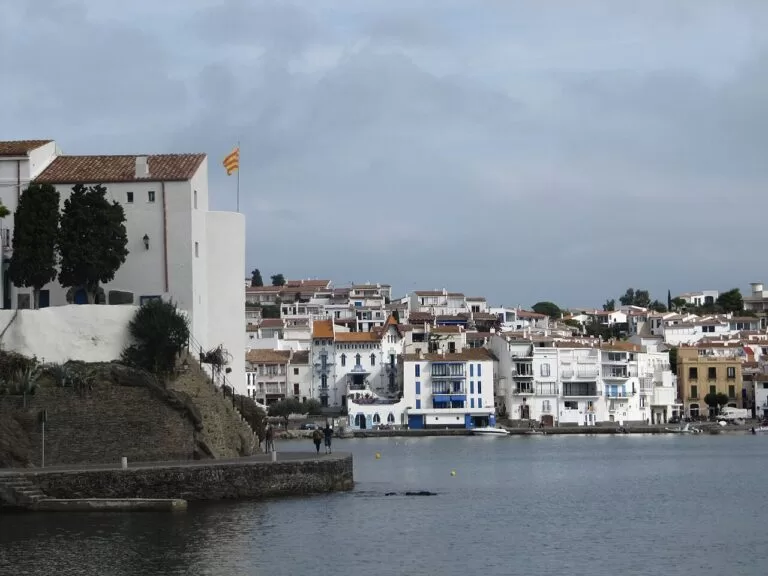
Cadaqués lies in its own bay between Cap de Creus to the north and Cap Norfeu to the south: a white, sober village with a medieval old town and the modernista Casino de l’Amistat. In the 20th century it drew artists, above all Salvador Dalí and Gala (catalunya.com). It has about 3,000 inhabitants (visitcadaques.org). Over the hill, the small cove of Portlligat, about 150 m of coarse sand and stones, is where Dalí lived and worked; the house can be visited (catalunya.com). See our guides to Cadaqués, the Cadaqués town page and the Salvador Dalí House-Museum.
Roses
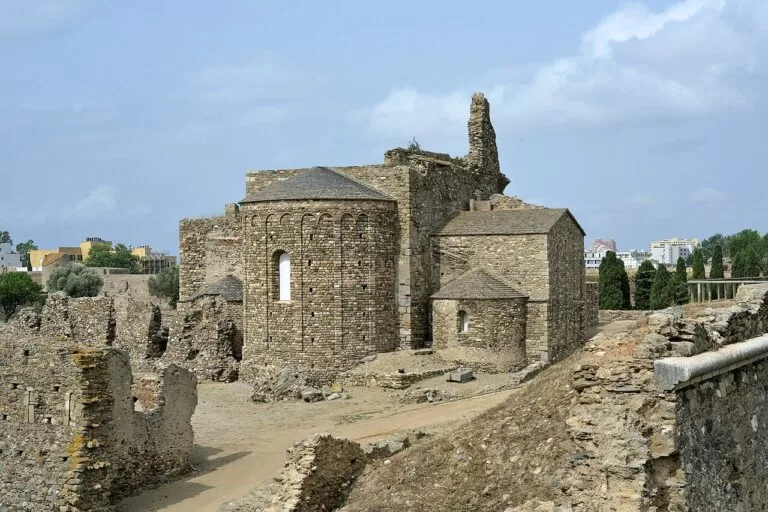
Roses sits at the northern end of the Gulf of Roses, where the Cap de Creus peninsula meets the bay, with two natural parks in its municipality: Cap de Creus, including Cap Norfeu, and the Aiguamolls (catalunya.com). The Ciutadella holds the remains of the Greek city of Rhode, a Roman villa and an 11th-century monastery inside a Renaissance fortress, and the five-pointed Castell de la Trinitat guards the Poncella point (Spain.info). See our guides to Roses, the Ciutadella de Roses and Port de Roses.
Empuriabrava
Empuriabrava, part of Castelló d’Empúries, was built from 1967 as a residential marina on a grid of navigable canals with more than 5,000 moorings and a private aerodrome (catalunya.com). Its main beach is more than 1.5 km of fine sand, and frequent east winds suit windsurfing and kitesurfing (catalunya.com). It is also known for skydiving and has the liveliest nightlife in the area.
Castelló d’Empúries
The old capital of the counts of Empúries is a medieval town on the Muga, 4 km inland. Its 13th-century basilica of Santa Maria is nicknamed the cathedral of the Empordà. The old streets take in the Jewish quarter, the Portal de la Gallarda, the prison of 1336 and a 14th-century bridge (catalunya.com). The headquarters of the Aiguamolls de l’Empordà Natural Park is at El Cortalet, about 5 km away on foot or by bike. See our Castelló d’Empúries guide.
Figueres (inland)
Figueres is the rail and bus hub for this coast (Parcs Naturals de Catalunya) and Dalí’s home town and has the Dalí Theatre-Museum. See our Figueres page.
Beaches and coves
From north to south. Lengths and services are as the Catalan tourist board gives them, checked in November 2026.

Les Portes, Garbet and Grifeu
Colera’s main beach, Les Portes, is 130 m of dark coarse sand by the marina, with lifeguards and easy access (catalunya.com). In Llançà, Grifeu has 170 m of golden sand, a gentle slope, full services and a free car park (catalunya.com).
On the Portbou to Llançà walk →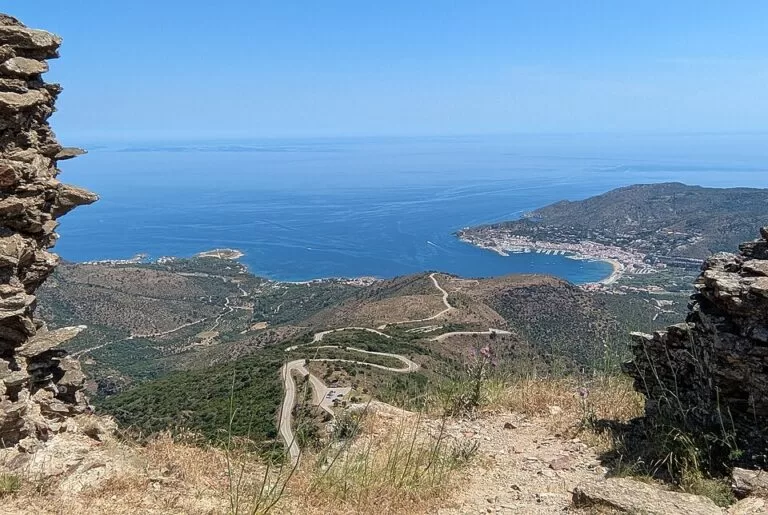
Town beach, Tamariua and Taballera
The Blue Flag town beach is 350 m of coarse grey sand with a very gentle slope, lifeguards and ramps. Cala Tamariua, 1 km away on a paved path, has clear water for snorkelling; Taballera is a wild cove 6 km away on foot (catalunya.com).
See the El Port de la Selva guide →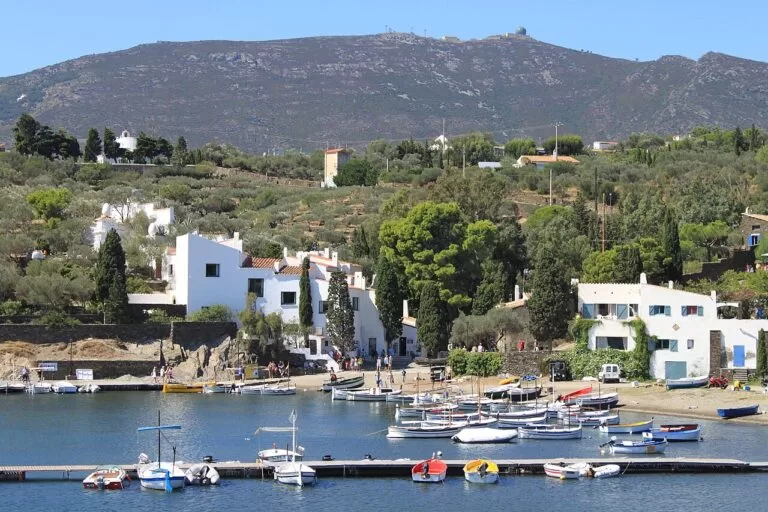
Portlligat
About 150 m of coarse sand and stones in a shallow cove sheltered by an island, with fishing boats on the shore. No lifeguards; bars and summer kayak hire (catalunya.com).
See the Dalí house guide →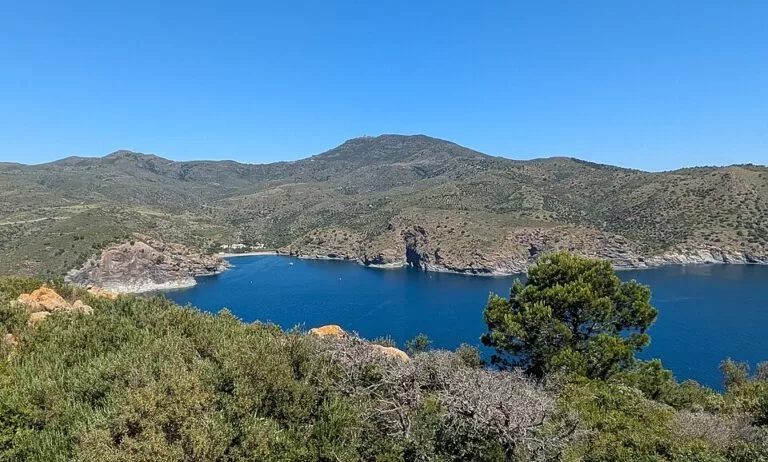
Montjoi and Jòncols
Coves on the wild south side of the cape, reached by the Montjoi and Jòncols road or on the GR 92. From 1 July to 31 August 2026, cars are stopped at Torre del Sastre from 9:30 to 16:00 (Parcs Naturals de Catalunya).
See the Cadaqués to Roses walk →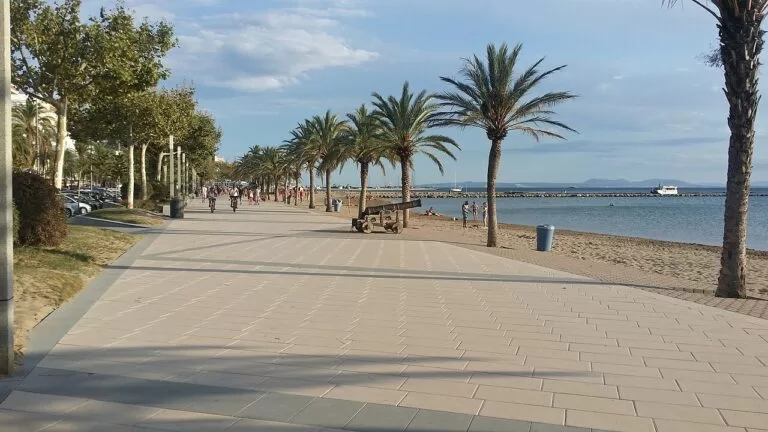
The beaches of the bay
Roses has wide sandy beaches with all facilities, some with the Blue Flag, as well as coves among cliffs (Spain.info). Empuriabrava’s main beach runs for more than 1.5 km of fine golden sand with a gentle slope, full services and wind for kitesurfing (catalunya.com).
See the Roses page →Things to do
Nature: Cap de Creus, Cap Norfeu and the Aiguamolls
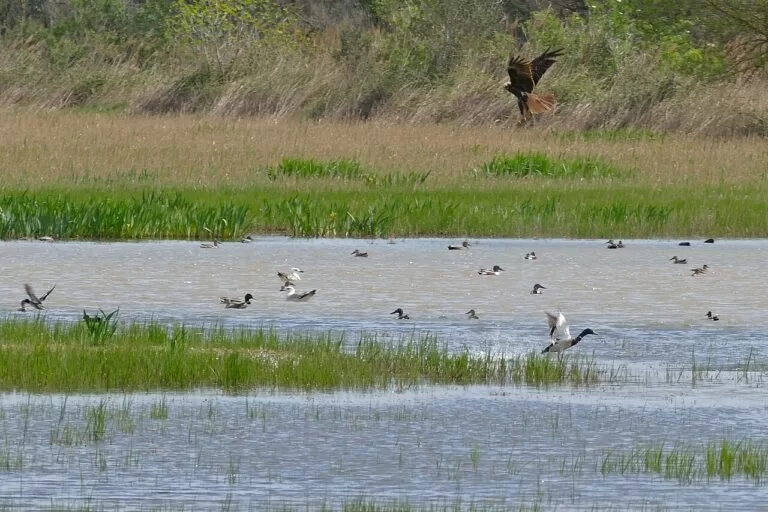
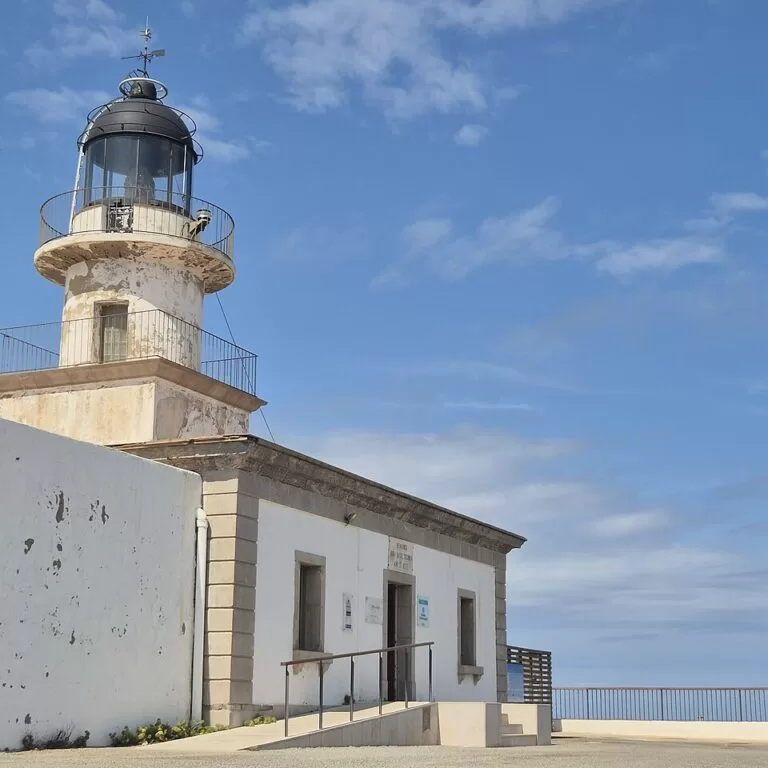
The Cap de Creus Natural Park was created by a law of 1998 and protects about 11,000 hectares of land and 3,000 of sea round the peninsula, between Cadaqués, El Port de la Selva, Llançà and Roses. The tourist board calls its geology unique in the world (catalunya.com). Visit the Cap de Creus lighthouse at the eastern tip; on the south side, Cap Norfeu juts out almost two kilometres with cliffs of up to seventy metres and is a favourite dive site (catalunya.com). On the bay, the Aiguamolls de l’Empordà, a natural park since 1983, is one of Catalonia’s main wetlands (Parcs Naturals de Catalunya).
History: Greeks, monks, counts and Dalí
In Roses, the Ciutadella holds Greek Rhode and a Roman villa, and the municipality has a megalithic route with the Creu d’en Cobertella, which the tourist board calls the largest dolmen in Catalonia (catalunya.com). On the Verdera mountain, the Monastery of Sant Pere de Rodes is the finest example of native Catalan Romanesque, first recorded in 878. Castelló d’Empúries keeps its medieval town, and Portbou the memorial to Walter Benjamin. For Dalí, combine his house at Portlligat with the Theatre-Museum.
Walking: the GR 92 and the camí de ronda
The GR 92 coastal trail starts at the French border. Stage 1, the Portbou to Llançà walk, is 9.81 km with a station at each end. Stage 2 runs from Llançà via El Port de la Selva over the Muntanya Negra to Cadaqués (catalunya.com). Stage 3, the Cadaqués to Roses walk, is a long day past Jòncols, Cap Norfeu and Montjoi. The Cadaqués to Cap de Creus walk ends at the lighthouse.
Food: fish auctions, suquet and anchovies
This is fishing country. In Roses the tourist board recommends suquet (fish stew), anchovies and rossejat de fideus, and a look at the fish market during the auction (catalunya.com). In Llançà the auction at the fish market starts around five in the afternoon (catalunya.com), and El Port de la Selva is known for its anchovies. Cadaqués lists sea bass, mussels, sea urchins and fish with cream (visitcadaques.org). Castelló d’Empúries is known for duck.
Where to stay by town
The towns we would base a trip in, north to south. We name no hotels.
Llançà
The largest town on the north side of the cape, with a railway station, a harbour and Blue Flag beaches. Good for walkers and anyone arriving by train.
Train and beaches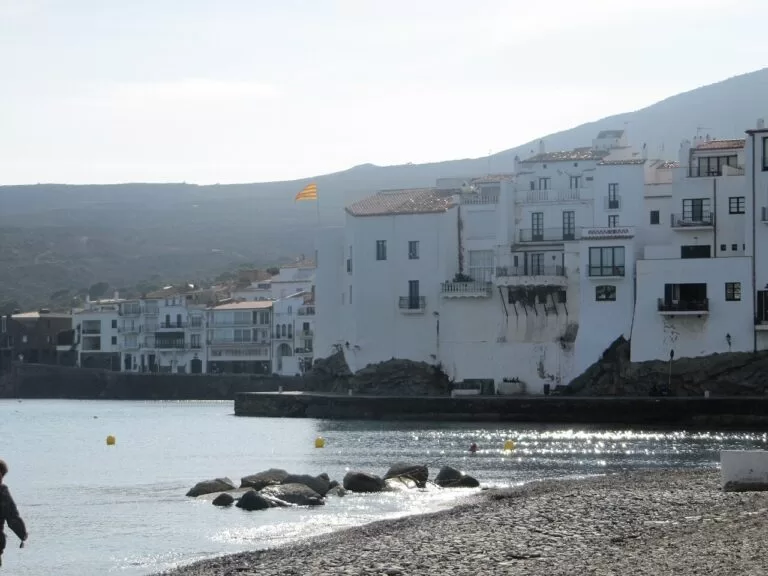
Cadaqués
The most attractive base for Cap de Creus and Portlligat, but small, busy in summer and with limited parking. Book early.
Village and Dalí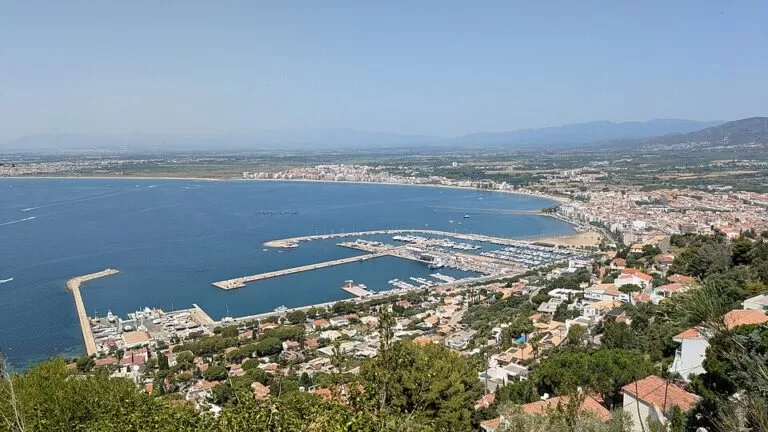
Roses
The biggest town of the stretch, with long beaches, a port, a bus station and a Family Tourism Destination seal. Central for both the cape and the bay.
Families and central baseCampsites on CostaMap: Wecamp Cadaqués, Camping Rodas in Roses and, inland near Figueres, Agricola Siurana.
Getting there and around
By car: leave the AP-7 at exit 4 (Figueres–Roses) or exit 3 (from France). For Cadaqués, turn off before Roses (about 50 minutes), or go via Llançà and El Port de la Selva and over the hills, 13 km from El Port (visitcadaques.org).
By train: trains run regularly from Barcelona and Girona to Figueres, both regional and high-speed. The regional line continues to Llançà and Portbou; high-speed trains stop at Figueres-Vilafant.
By bus: from Figueres bus station, beside the railway station, buses run to Castelló d’Empúries, Roses and Cadaqués (about an hour), and line 30 to El Port de la Selva; Cadaqués is about three hours from Barcelona Nord (visitcadaques.org). Check timetables.
Access rules in the park: on regulated days in 2026 the road from Cadaqués to the Cap de Creus lighthouse is closed to cars from 9:30; you park free at Corral d’en Morell in Cadaqués and take a shuttle. In Roses, motor access to the coves of Montjoi and Jòncols is restricted at Torre del Sastre from 1 July to 31 August, 9:30 to 16:00, for vehicles with four or more wheels (Parcs Naturals de Catalunya, checked November 2026).
A two-day route
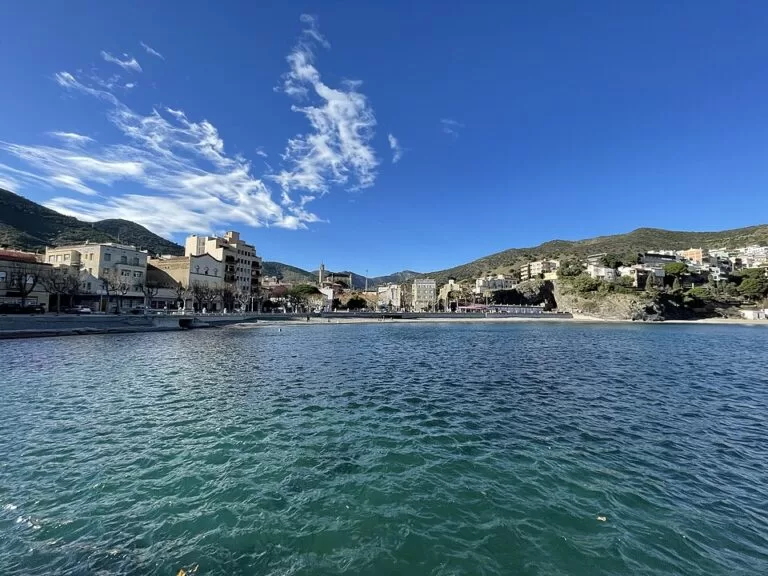
By car, north to south. Day 1 covers about 25 km in a straight line from Portbou to Cadaqués, day 2 about 20 km from Cadaqués to Castelló d’Empúries.
Day 1
The border coast and Sant Pere de Rodes
Start in Portbou at the Walter Benjamin memorial. Drive through Colera to Llançà for a swim at Grifeu. Climb to Sant Pere de Rodes and walk on to Santa Helena, then lunch in El Port de la Selva and cross the hills to Cadaqués for the evening.
Day 2
Portlligat, Cap de Creus and the Bay of Roses
Visit the Dalí house at Portlligat first thing (book ahead), then Cap de Creus, by shuttle from Corral d’en Morell on regulated days. In the afternoon see the Ciutadella in Roses, then the old town of Castelló d’Empúries, and end at the Aiguamolls (check the El Cortalet hours).
FAQ
What is the most beautiful village on the northern Costa Brava?
Cadaqués is the best known: a white village in its own bay between Cap de Creus and Cap Norfeu, with Dalí’s Portlligat next door. El Port de la Selva is a quieter white fishing village on the north side of the cape.
Can you drive to Cap de Creus?
Not always. On regulated days in 2026 the road from Cadaqués to the lighthouse is closed to cars from 9:30, and a shuttle runs from the free Corral d’en Morell car park in Cadaqués. You can always walk to the cape.
Is Roses or Cadaqués better to stay in?
Roses is larger, with long beaches, a busy port and a Family Tourism Destination seal from the Catalan Tourist Agency. Cadaqués is smaller and quieter at night but harder to reach and to park in.
What are the best beaches near Roses and Cap de Creus?
For families, the long sandy beaches of Roses and Empuriabrava on the bay. For clear water and rock, the coves of the natural park: Montjoi and Jòncols near Roses, Portlligat near Cadaqués, and Tamariua and Taballera near El Port de la Selva.
Is the northern Costa Brava windy?
Often. The Catalan tourist board stresses the tramuntana in the Empordà and frequent strong winds in the bays, good for windsurfing. On a windy day, pick a sheltered cove.
Other areas of the Costa Brava
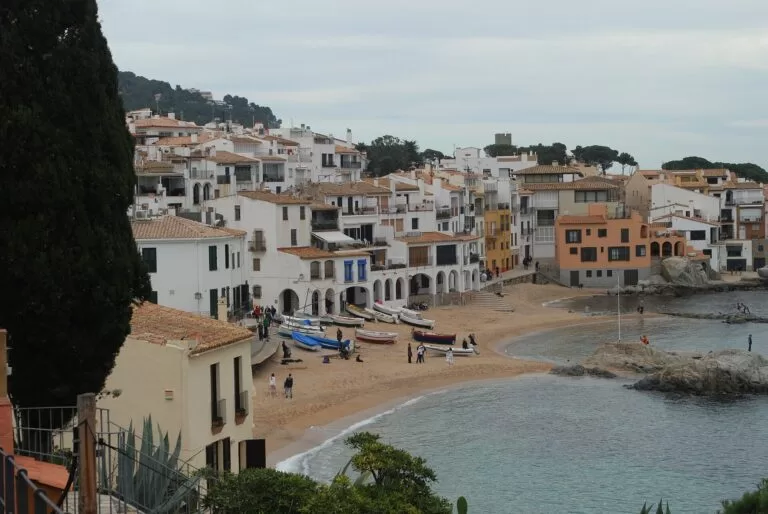
Costa Brava
The whole coast from Portbou to Blanes, with the full map, beaches, campsites and itineraries.
Costa Brava guide →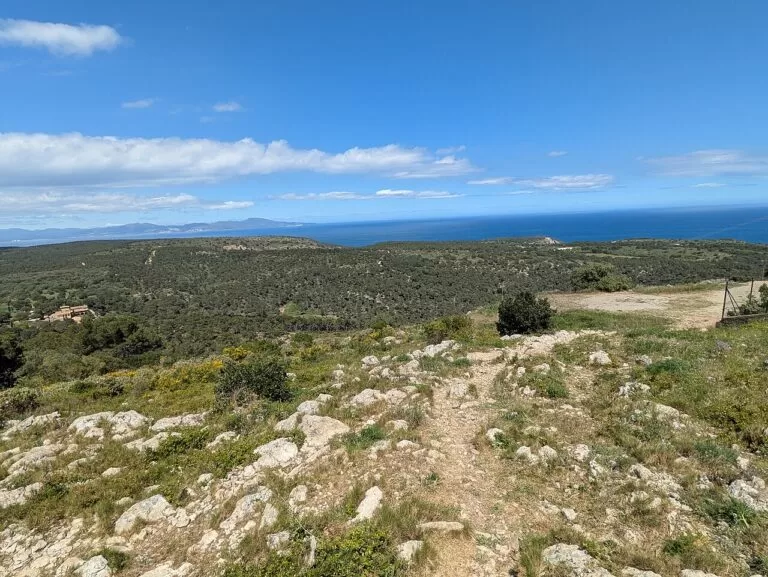
L’Escala, Empúries and the Montgrí
Greek and Roman Empúries, the anchovies of L’Escala, L’Estartit and the Medes Islands.
L’Escala and Montgrí guide →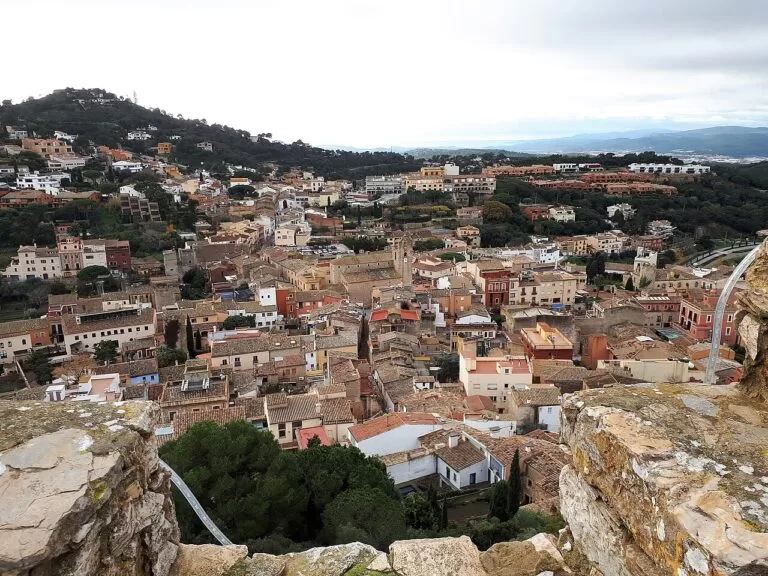
Begur, Palafrugell and Palamós
The coves of Begur, Calella and Llafranc on the camí de ronda, and the fishing port of Palamós.
Begur and Palafrugell guide →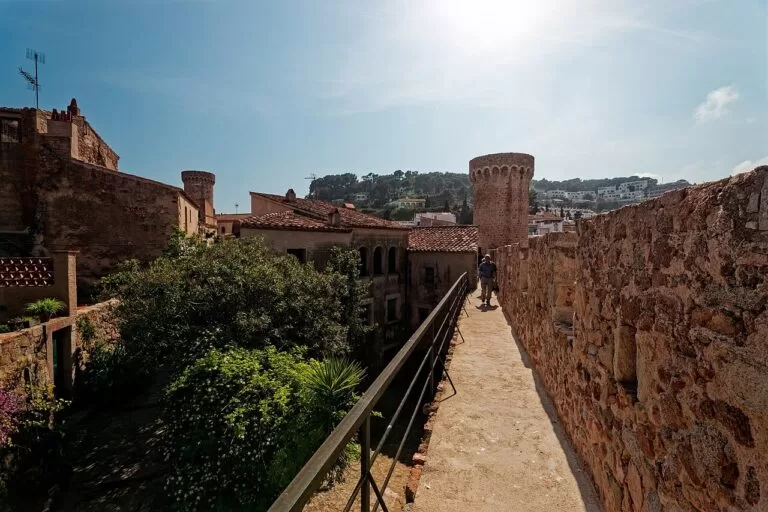
Sant Feliu, Tossa, Lloret and Blanes
Walled Tossa de Mar, the coves of the south and the resorts of Lloret and Blanes.
South Costa Brava guide →Sources and freshness
Checked 7 November 2026. Catalan Tourist Board (catalunya.com) on the municipalities of Portbou, Colera, Llançà, El Port de la Selva, Cadaqués, Roses and Castelló d’Empúries; the beaches of Colera, Grifeu, El Port de la Selva, Tamariua, Taballera, Portlligat and Empuriabrava; Sant Pere de Rodes, Sant Quirze de Colera, the Cap de Creus Natural Park and GR 92 stage 2. Parcs Naturals de Catalunya on access to Cap de Creus and the Roses coves and the Aiguamolls (how to get there). Cadaqués tourist office on getting there. Spain.info on Roses. Map data, bus lines and straight-line distances: OpenStreetMap. Not confirmed: bus and train timetables, museum and monument hours and prices, parking fees. The town hall websites of Llançà, El Port de la Selva, Roses and Castelló d’Empúries could not be reached.