
Costa de la Luz · The sherry coast and the Bay of Cádiz
The sherry coast and the Bay of Cádiz travel guide: Sanlúcar to San Fernando
Manzanilla bodegas facing Doñana, lighthouse and fish-trap beaches at Chipiona and Rota, the sherry towns of El Puerto and Jerez, and Cádiz on its peninsula in the bay.
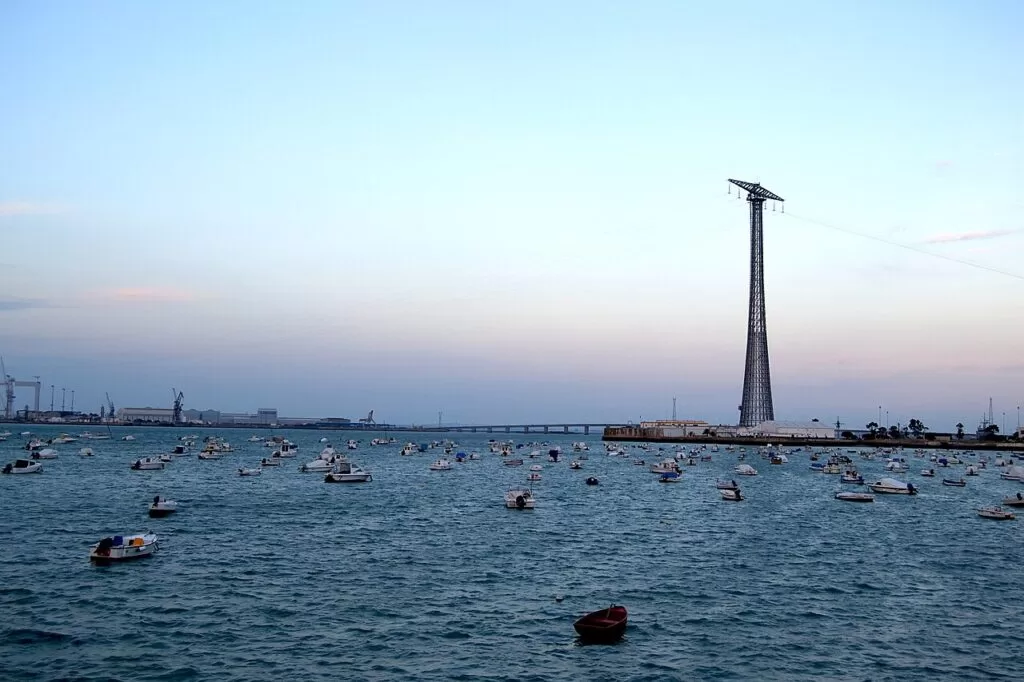
The Bay of Cádiz at dusk · Photo: Josan Gómez, CC BY-SA 3.0
Part of the Costa de la Luz guide · The sherry coast and the Bay of Cádiz
This is the middle stretch of the Costa de la Luz in Cádiz province: the Atlantic coast from Sanlúcar de Barrameda, at the mouth of the Guadalquivir opposite Doñana, south past Chipiona, Rota and El Puerto de Santa María to the Bay of Cádiz, with Cádiz city, Puerto Real and San Fernando around it. It is about 37 km in a straight line from Sanlúcar to San Fernando, with Jerez de la Frontera about 14 km inland from El Puerto.
At a glance
- Where the Atlantic coast of Cádiz province from the Guadalquivir estuary at Sanlúcar to the Bay of Cádiz and San Fernando, with the sherry country of Jerez inland.
- Towns Sanlúcar de Barrameda, Chipiona, Rota, El Puerto de Santa María, Jerez de la Frontera (inland), Puerto Real, Cádiz and San Fernando.
- Best for sherry bodegas, fried fish, an old port city with city beaches, flamenco, horses and long natural beaches.
- Getting there Jerez airport (XRY) is about 32 km from Cádiz and 26 km from Sanlúcar in a straight line; the Seville–Cádiz railway runs through Jerez and El Puerto and ends in Cádiz.
- On CostaMap guides to all eight towns and more than 15 places on this stretch: beaches, castles, museums, a marina and three motorhome sites.
Map of the sherry coast and the Bay of Cádiz
Every place on this stretch with a CostaMap page. Click a marker to see it in the panel.
Place type
Area · next level
 Area map
The sherry coast and the Bay of Cádiz
Click a marker to see the place here. From Sanlúcar and Chipiona past Rota and El Puerto to Cádiz and San Fernando, with Jerez inland.
Towns and villagesTowns and villages
From north to south along the coast, with Jerez placed next to El Puerto, the coastal town you reach it from.
Sanlúcar de Barrameda
Sanlúcar sits on the left bank of the mouth of the Guadalquivir, opposite Doñana National Park. The Andalusian tourist board describes vineyards inland that produce the famous manzanilla, and pine woods such as La Algaida and the Bonanza marshes towards the river (Andalucía tourist board). Magellan and Elcano’s expedition sailed from here in 1519. The upper town holds the 15th-century Castillo de Santiago, the church of Nuestra Señora de la O, the palace of the Dukes of Medina Sidonia and the Orleans-Borbón palace, now the town hall (Spain.info). Down by the river, Bajo de Guía has the fish restaurants and the boats to Doñana. See our Sanlúcar de Barrameda guide.
Chipiona
Chipiona lies about 9 km south-west of Sanlúcar on marsh and dunes near the river mouth, a town of beaches and fishing. The tourist board traces it to a Roman lighthouse built for ships heading up the Guadalquivir; the modern Chipiona Lighthouse, of 1867, stands at the end of Regla beach and is the tallest in Spain (Andalucía tourist board). Along the shore are the corrales, semicircular stone walls about a metre and a half high that trap fish at low tide, a technique still used here. Chipiona is also home to the Santuario de Regla and to a endangered chameleon. See our Chipiona guide.
Rota
Rota is in the north of the Bay of Cádiz, about 12 km from Cádiz across the water. Its landmark is the 13th-century Castillo de Luna, built for Guzmán el Bueno over an older Muslim fortified convent, with five crenellated towers around a patio; it now houses the town hall and the tourist office (Andalucía tourist board; Spain.info). Spain.info names the town beaches of La Costilla, beside the old town, and El Rompidillo, with wilder beaches further out. Since 1953 Rota has also had a naval base used jointly by Spain and the United States. See our Rota guide.
El Puerto de Santa María
El Puerto sits on the bay at the mouth of the Guadalete, between marshes, pine woods and beaches; Spain.info counts more than 15 km of beaches, with fried-fish bars on Levante, Valdelagrana, Santa Catalina and Fuenterrabía (Spain.info). Columbus lived here, and Juan de la Cosa put his ship, the Santa María, at his service (Andalucía tourist board). Visit the Castle of San Marcos, built over a former mosque, the Priory Church and the Casa de los Leones. Inland lies the Phoenician settlement of Doña Blanca, and to the west the marina of Puerto Sherry. See our El Puerto de Santa María guide.
Jerez de la Frontera (inland)
Jerez is about 14 km inland from El Puerto. Its municipality is the largest in the province, running from the Sierra through the Guadalete farmland almost to the coast. The tourist board calls the city a cornerstone of flamenco, and lists the Alcázar, the churches of Santiago and San Miguel, the cathedral and the Cartuja, the bodegas of the Jerez wine route and the motor racing circuit (Andalucía tourist board). The Royal Andalusian School of Equestrian Art stages its horse show on Tuesdays and Thursdays, and the Museo Arqueológico covers the area’s long history. See our Jerez de la Frontera guide.
Puerto Real
Puerto Real lies on the inner bay, about 8 km south-east of El Puerto. The Catholic Monarchs founded it by charter on 18 June 1483, wanting a port for the conquest of Granada and for contacts with North Africa, and its streets were laid out in a straight grid (Andalucía tourist board). The town has the Prioral de San Sebastián and the church of La Victoria. Its lagoons are a nature reserve, and the Isla del Trocadero is part of the natural park. The Los Toruños marsh and the La Algaida pine wood form a 1,000-ha metropolitan park shared with El Puerto (Andalucía tourist board). See our Puerto Real guide.
Cádiz
Cádiz stands at the end of the bay on a site that is half island, half peninsula, joined to land by a narrow strip of sand. Spain.info says it was founded about 3,000 years ago by the Phoenicians and calls it the oldest city in Western Europe (Spain.info). Puerta Tierra leads to the old quarters of El Pópulo, La Viña and Santa María. See the gold-tiled dome of Cádiz Cathedral, the Phoenician finds in the Museum of Cádiz and the Oratorio de San Felipe Neri, seat of the Cortes that wrote the 1812 Constitution. The city beaches run from La Caleta to La Victoria and Cortadura. See our Cádiz guide.
San Fernando
San Fernando lies in the middle of the bay, joined to Cádiz by a spit of land about eight kilometres long (Spain.info). Almost all of its municipality is within the Bahía de Cádiz Natural Park, with marshes turned into salt pans (Andalucía tourist board). Once called the Isla de León, it hosted the Cortes from 24 September 1810, the only part of free Spain the French never entered. Its Royal Observatory of the Navy, founded in 1753, is the oldest in Spain. The flamenco singer Camarón de la Isla was born here. Its beach is Camposoto. See our San Fernando guide.
Beaches
From north to south. Details as the Andalusian tourist board and Spain.info give them, checked November 2026.
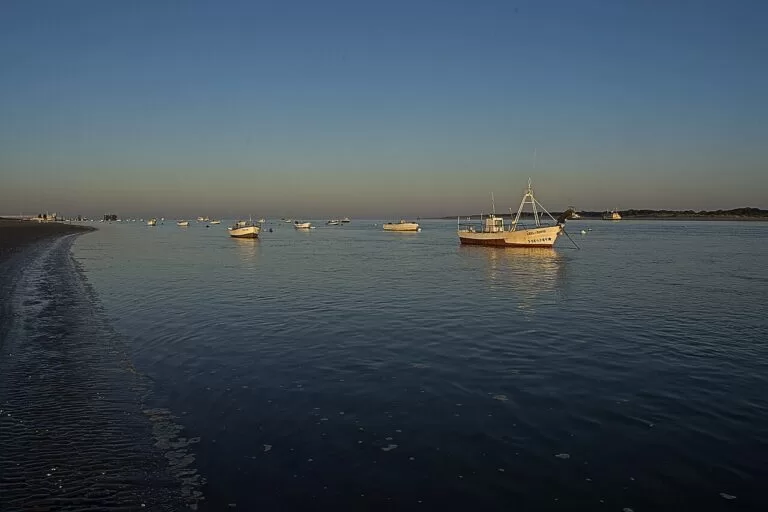
Bajo de Guía and La Calzada
Bajo de Guía is a calm river beach where you can hire boats and cross to the beaches of Doñana opposite (Spain.info). La Calzada–Las Piletas is a very wide beach where the horse races are held every summer (Andalucía tourist board).
See the Sanlúcar guide →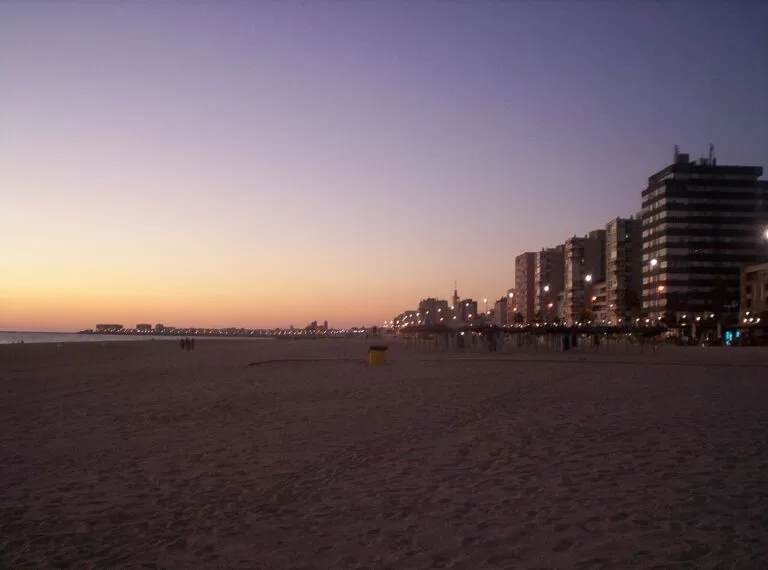
La Victoria, Santa María del Mar and Cortadura
La Victoria is an immense beach with a promenade along the whole of the town’s coast and every service (Spain.info). Cortadura, on the road out of town, has dunes.
Playa de la Victoria guide →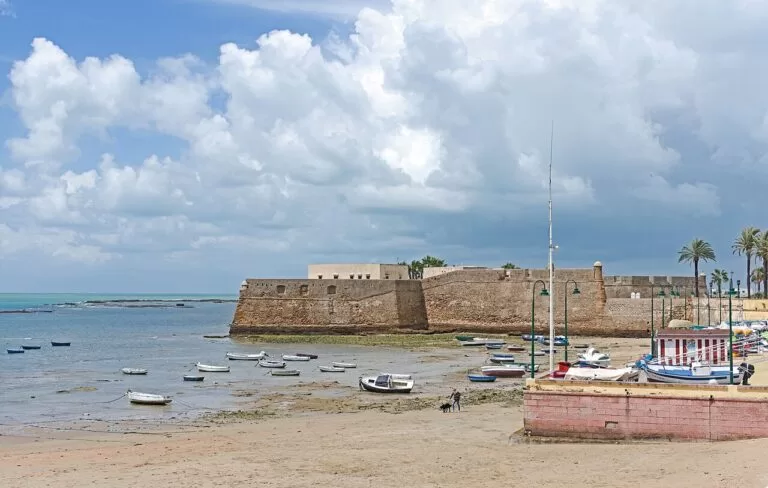
La Caleta
The most popular beach in Cádiz, between the castles of Santa Catalina and San Sebastián, with the old Balneario de la Palma, beach bars and calm water (Andalucía tourist board).
La Caleta guide →- Regla, Chipiona – a Blue Flag town beach between the lighthouse and Camarón beach, by the Regla monastery, with calm water and many services (Andalucía tourist board).
- Las Tres Piedras–La Ballena – about 2,580 m of fine golden sand on the Costa Ballena side (Andalucía tourist board).
- Punta Candor and Los Corrales, Rota – Punta Candor is reached through dunes and vegetation from the car park (Spain.info); Los Corrales runs about 1.4 km on raised walkways that protect the dunes and pines (Andalucía tourist board). Offshore are the eight Corrales de Rota, the first Natural Monument declared in Andalusia.
- Valdelagrana, El Puerto – a very large, busy beach with a promenade, wheelchair walkways and parking, good for windsurfing and kitesurfing (Spain.info; Andalucía tourist board).
- Camposoto, San Fernando – about 5.7 km of natural beach in the natural park, with a Blue Flag, a dog zone and the Punta del Boquerón facing the Sancti Petri castle.
Things to do
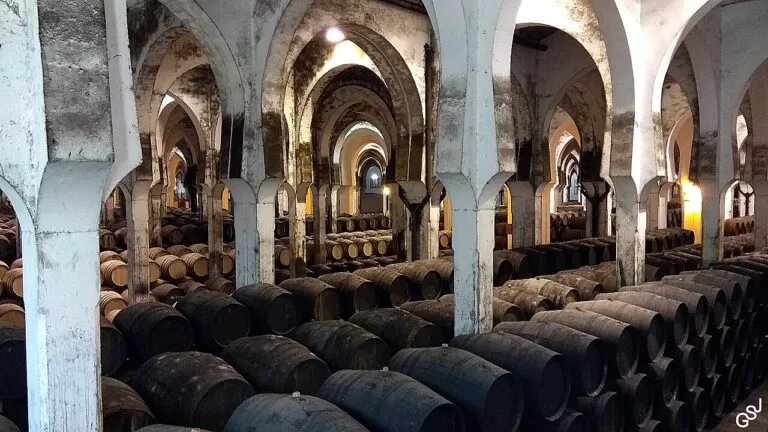
Food and wine: sherry, manzanilla and fried fish
Jerez, El Puerto, Sanlúcar, Chipiona, Rota and Puerto Real all have vineyards in the Jerez designation of origin, and manzanilla can only be aged in Sanlúcar’s bodegas (Consejo Regulador, as given in our Costa de la Luz guide). Jerez’s bodegas belong to the Ruta del Marco de Jerez wine route. Eat langostinos in Bajo de Guía, fried fish at El Puerto’s beach bars, and tortillitas de camarones in San Fernando. In Cádiz, the Mercado Central, opened in 1838, is one of the oldest markets in Spain (Andalucía tourist board).
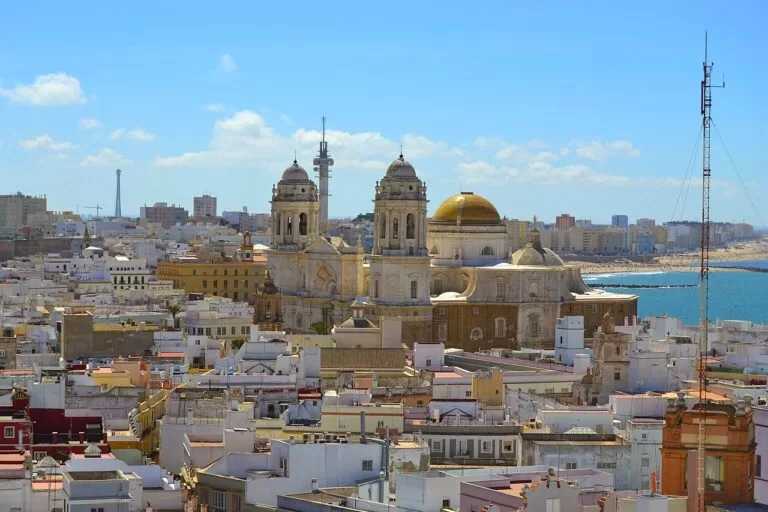
History: Phoenicians, castles and the 1812 Constitution
Cádiz has the 18th-century Torre Tavira, with Spain’s first camera obscura and a 360° view of the city (Andalucía tourist board), and the Oratorio de San Felipe Neri, where the Cortes drafted the 1812 Constitution. Jerez’s Alcázar is one of the few Almohad buildings left in Spain, with a mosque, baths and a camera obscura in the Villavicencio palace (Andalucía tourist board).
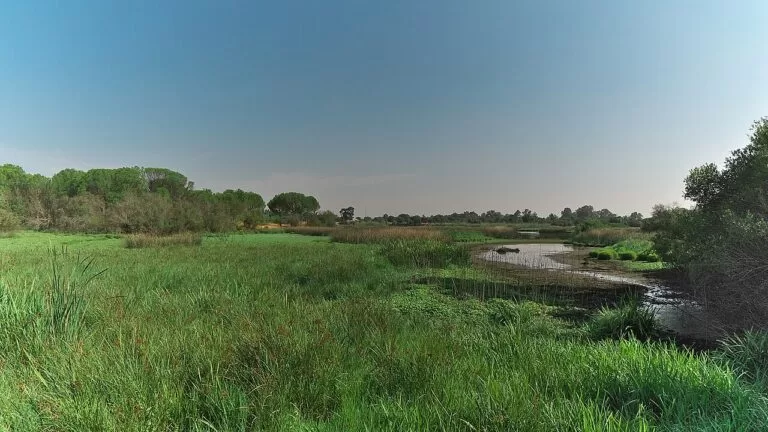
Nature: Doñana, the bay and the fish traps
From Sanlúcar you look straight across to Doñana National Park. Its Fábrica de Hielo visitor centre is in Sanlúcar and can be reached by public transport from Seville and Cádiz, and you may walk freely along the 33 km of park beach between Sanlúcar and Matalascañas (Doñana National Park). The interior can only be seen on licensed guided tours, one of them by river boat from Sanlúcar. Around the bay, the Bahía de Cádiz Natural Park covers the marshes and salt pans of San Fernando, Puerto Real and El Puerto.
Where to stay by town
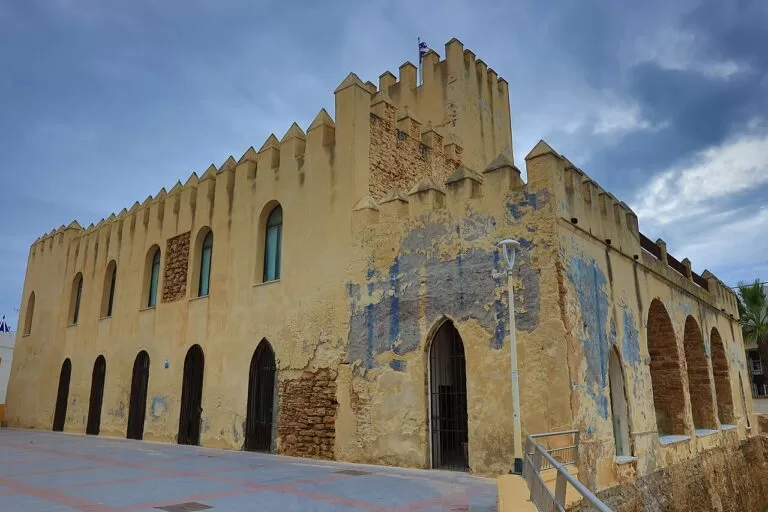
Sanlúcar or Chipiona
Sanlúcar for bodegas, Bajo de Guía and Doñana trips; Chipiona for family beach holidays by the lighthouse. They are about 9 km apart.
Food, wine and beach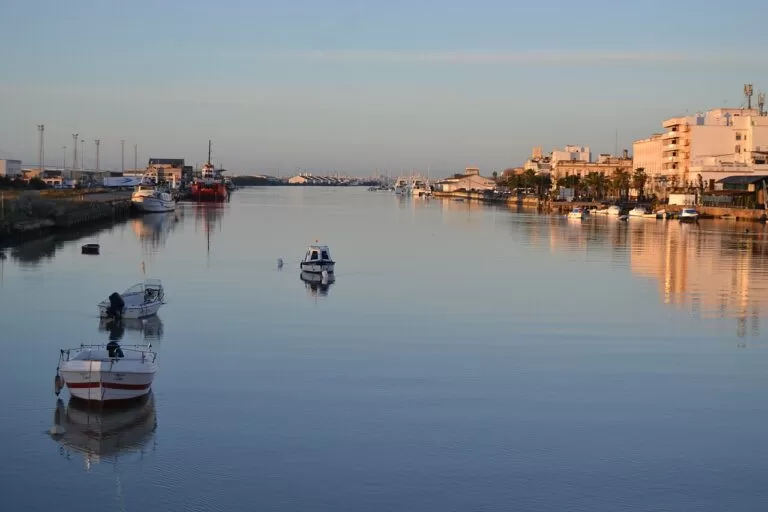
El Puerto de Santa María
A railway station on the Seville–Cádiz line, more than 15 km of beaches and fried-fish bars, and about 9 km from Cádiz and 14 km from Jerez. A good base without a car.
A base without a car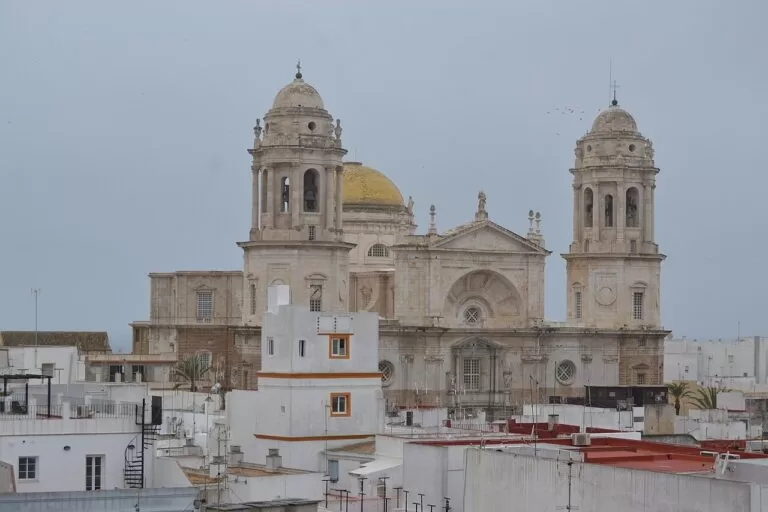
Cádiz
The old town and city beaches within walking distance, at the end of the railway. Parking in the old town is difficult, so arrive by train if you can.
A first visit, city and beach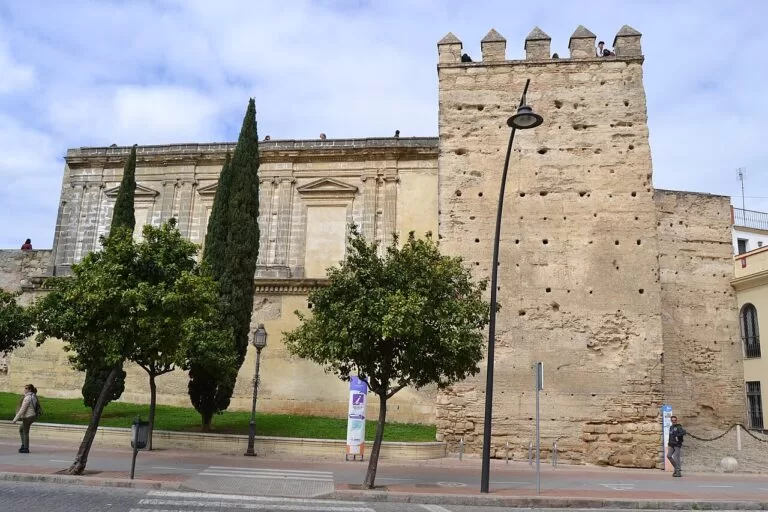
Jerez de la Frontera
Bodegas, flamenco and the horse show, close to the airport, but inland and hotter in summer.
Wine, flamenco and horsesMotorhomes have three sites near Sanlúcar and Chipiona: Sanlúcar AC Parking, La Siesta de La Gaviota and Camper Park Buenavida.
Getting there and around
By air
Jerez airport (XRY) is the closest: about 32 km from Cádiz and 26 km from Sanlúcar in a straight line. Seville (SVQ) is about 105 km from Cádiz (our Costa de la Luz guide, from OurAirports coordinates).
By train
Renfe’s Seville–Cádiz line ends in Cádiz and carries Media Distancia and Cercanías trains; Jerez and El Puerto have stations on it. The Trambahía tram-train links Cádiz with Chiclana (Renfe, as given in our Costa de la Luz guide).
By car and bus
The A-480 runs from Jerez to Sanlúcar (Doñana National Park), and the A-4 motorway reaches El Puerto. Check bus lines and times locally.
A two-day route
Day 1 in Cádiz on foot; day 2 by car, about 37 km in straight-line legs from El Puerto via Jerez to Sanlúcar.
Day 1
Cádiz
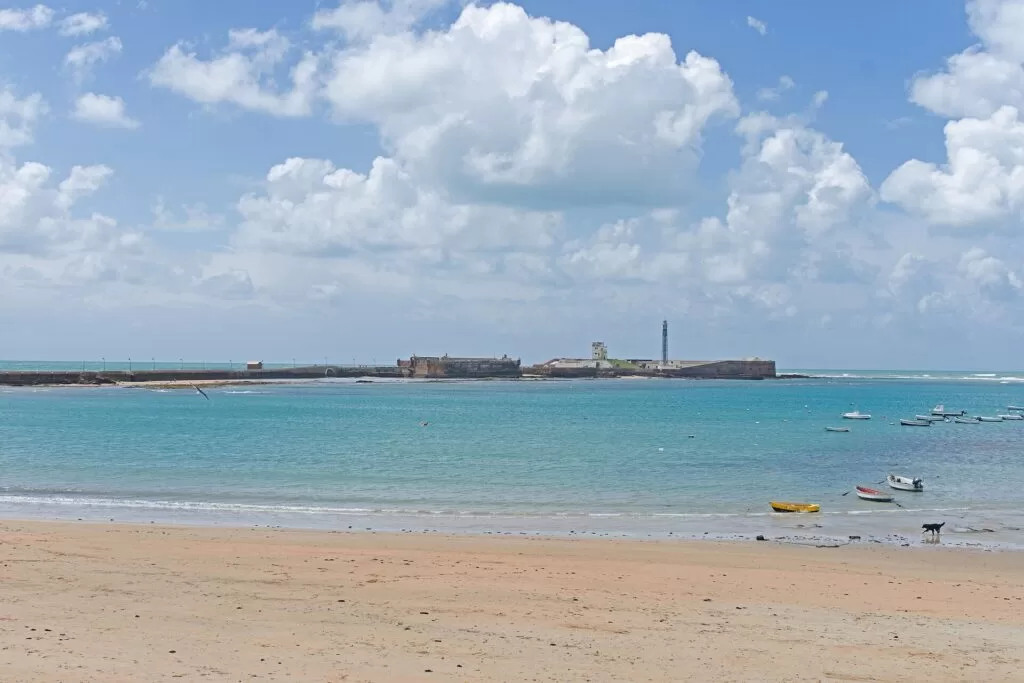
Enter the old town at Puerta Tierra and walk to El Pópulo and the cathedral. Climb the Torre Tavira for the camera obscura, then see the Phoenician rooms of the Museum of Cádiz in Plaza Mina. In the afternoon swim at La Victoria or walk to La Caleta for sunset between the castles.
Day 2
El Puerto, Jerez and Sanlúcar
Start in El Puerto at the Castle of San Marcos. Then go to Jerez: on a Tuesday or Thursday, the horse show at the Real Escuela at 12:00, otherwise the Alcázar and a bodega. In the afternoon take the A-480 to Sanlúcar, walk up to the Castillo de Santiago, then down to Bajo de Guía for manzanilla and fried fish as the sun sets over Doñana.
FAQ
Which airport is closest to Cádiz?
Jerez (XRY), about 32 km from Cádiz in a straight line. Seville (SVQ) is about 105 km away.
Can you visit Cádiz and the sherry towns without a car?
Yes for Cádiz, El Puerto and Jerez, on the Seville–Cádiz railway. For Sanlúcar, Chipiona and Rota you need a bus or a car.
Is it better to stay in Cádiz or El Puerto de Santa María?
Cádiz for the old town and beaches on foot; El Puerto for more beaches and easy trips to Cádiz and Jerez.
Where is manzanilla made?
Only in Sanlúcar de Barrameda: manzanilla can only be aged in the town’s bodegas. Jerez and El Puerto age the other sherries.
How do you visit Doñana from Sanlúcar?
The interior can only be visited on licensed guided tours, one of them by river boat from Sanlúcar; book ahead. The park’s Fábrica de Hielo visitor centre is in Sanlúcar.
What are the best beaches near Cádiz?
La Caleta for the old-town setting, La Victoria for a long city beach with every service, and Camposoto in San Fernando for a natural beach inside the park.
Other areas of the Costa de la Luz
Costa de la Luz
Spain’s Atlantic coast from the Portuguese border to Tarifa, with the map, beaches, weather and itineraries.
Costa de la Luz guide →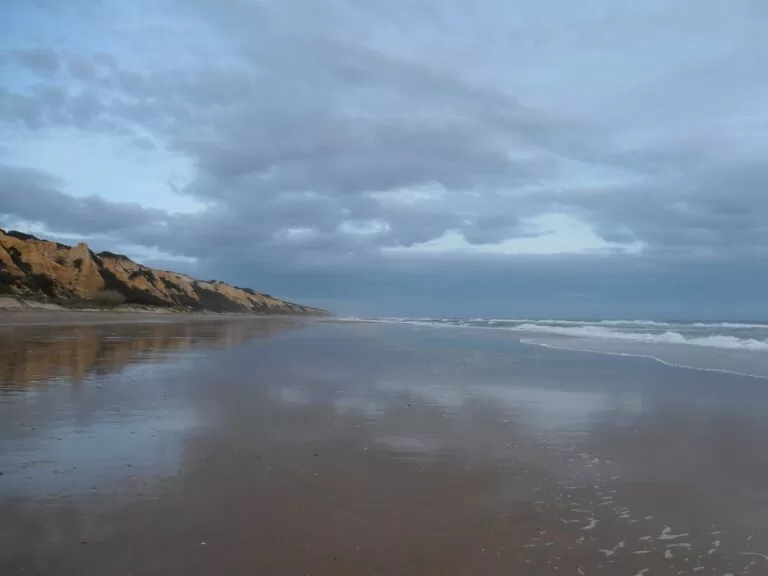
Huelva coast: Ayamonte to Moguer
Long, low beaches from the Portuguese border to the Huelva estuary, with marshes, pine woods and the Columbus sites.
Huelva coast guide →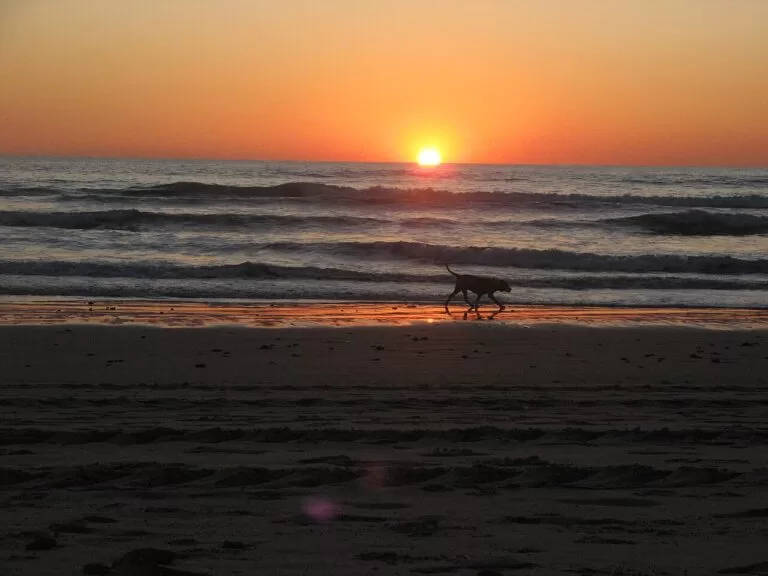
La Janda: Chiclana, Conil, Vejer and Barbate
Wide, open beaches south of San Fernando, the hill town of Vejer, the cliffs of La Breña and the tuna traps off Barbate.
La Janda guide →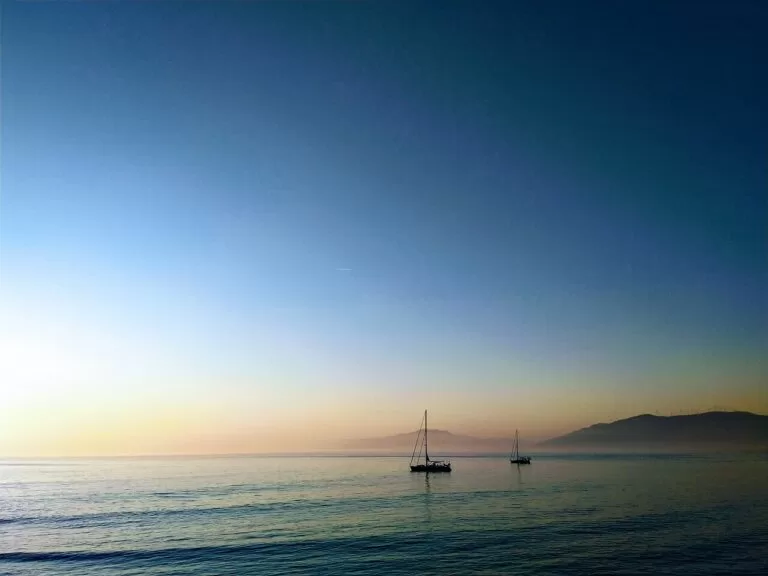
Tarifa and the Strait of Gibraltar
Bolonia and Baelo Claudia, the kitesurf beaches of Tarifa and the view across to Morocco.
Tarifa and the Strait guide →Sources and freshness
Checked 7 November 2026. Andalucía tourist board (Spanish) on Sanlúcar de Barrameda, Chipiona, Rota, El Puerto de Santa María, Jerez de la Frontera, Puerto Real, Cádiz and San Fernando, and the monuments and beaches linked in the text. Spain.info on Sanlúcar, Rota, El Puerto de Santa María, Cádiz and San Fernando, and the beaches linked above. Doñana National Park access page (MITECO). Airport distances, rail, sherry rules and Doñana tours: as given, with their official sources, in our Costa de la Luz guide and the CostaMap pages linked above. Map data and straight-line distances: OpenStreetMap. Not confirmed: bus times, bodega hours and Doñana tour prices.