
Costa de la Luz
Other coasts
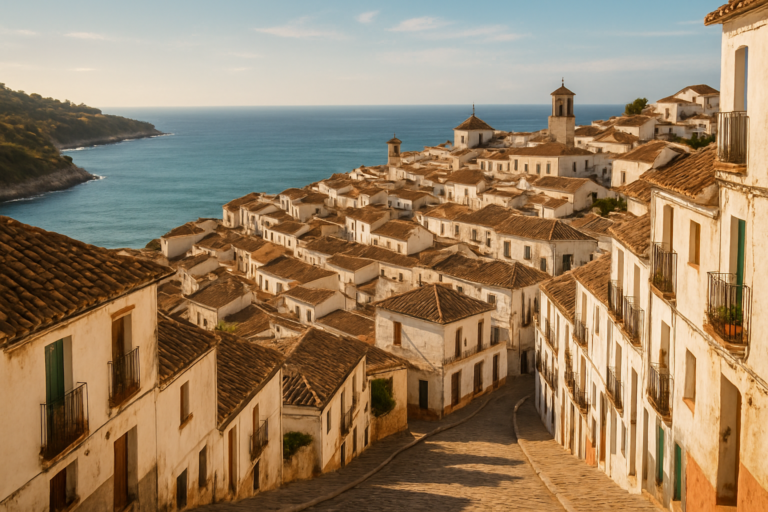 Costa de la Luz
Ubrique
Discover Ubrique, the leather-making pueblo blanco of the Sierra de Cádiz between the Grazalema and Los Alcornocales natural parks.
Read more →The Costa de la Luz is Andalusia’s Atlantic coast, running from Tarifa and the Strait of Gibraltar to Ayamonte on the Portuguese border. It combines some of southern Spain’s longest sandy beaches with white hill towns, historic cities, sherry country and protected wetlands.
Compared with the Costa del Sol it is less continuously developed and generally quieter outside July and August. The trade-off is cooler Atlantic water, stronger wind and a greater need for a car.
Tarifa, Cádiz, Vejer and Conil are the best-known bases in Cádiz province, while Punta Umbría, Islantilla, El Rompido and Mazagón give easier access to the Huelva coast and Doñana. This guide explains which area to choose, the best beaches, when to visit, how to get around and how to plan a 3, 5 or 7-day trip. The map above holds every place we have mapped on this coast — pick a category on the left, click a marker and it opens on the right.
Costa de la Luz at a glance
- Where: Cádiz and Huelva provinces, southwest Andalusia, facing the Atlantic and the Gulf of Cádiz.
- Coastline: Tarifa to Ayamonte, roughly 200 km.
- Best time: May, June, September and early October.
- Airports: Jerez and Seville for Cádiz province, Faro for the Huelva coast, Gibraltar for Tarifa.
- Best for: long beaches, white towns, seafood, sherry, surfing, kitesurfing, birdlife and road trips.
- Less suitable for: warm calm Mediterranean water, or a car-free all-inclusive holiday.
- Recommended stay: five to seven days for Cádiz province; seven to ten to include Huelva.
Which part of the Costa de la Luz should you choose?
The coast covers two provinces and several distinct travel areas. Choosing the right base matters more than trying to see everything from one hotel — Tarifa to Ayamonte is a three-hour drive, and day-tripping the whole coast from one town does not work.
| Area | Character | Best bases | Best for |
|---|---|---|---|
| Atlantic Cádiz coast | Cliffs, dunes, white towns, wind and surf | Conil, Vejer, Tarifa | First visits, beaches, food and road trips |
| Bay of Cádiz and sherry country | Historic cities, bodegas, salt marshes, urban beaches | Cádiz, El Puerto, Jerez | Culture, restaurants, travel without a car |
| Huelva coast | Long flat beaches, pine, dunes and wetlands | Punta Umbría, El Rompido, Islantilla, Mazagón | Families, nature, quieter holidays |
| Doñana and El Rocío | Wetlands, wildlife, sand tracks, pilgrimage culture | El Rocío, Matalascañas, Sanlúcar | Birdwatching and guided nature trips |
Every mapped place on this coast, coloured by type. Click a marker to open its guide.
For a first trip the Cádiz side normally gives the strongest combination of towns, beaches and food in a manageable area. Cádiz works well for a short car-free break; Conil or Vejer is the better base for exploring the Atlantic beaches by car. Choose the Huelva side for a slower beach holiday, easier access from Faro, or more time around Doñana and the Odiel marshes.
Best places to visit on the Costa de la Luz
If this is your first trip, focus on Cádiz, Vejer, Tarifa, Conil and the beaches around Bolonia and El Palmar. Add Jerez or Sanlúcar for sherry and food, and Doñana or the Huelva coast if nature matters more to you than nightlife.
| Place | Best for | Allow |
|---|---|---|
| Cádiz | History, food, urban beaches, a car-free city break | 1–2 days |
| Tarifa | Kitesurfing, views of Morocco, ferries, nightlife | 1–2 days |
| Vejer de la Frontera | White-town atmosphere and restaurants | Half or full day |
| Conil de la Frontera | A beach holiday with a real town attached | 2–4 days |
| Bolonia | Beach, giant dune and Roman ruins | Half or full day |
| Jerez de la Frontera | Sherry bodegas, flamenco and horses | 1–2 days |
| Sanlúcar de Barrameda | Seafood, manzanilla and Doñana access | 1 day |
| Doñana and El Rocío | Wildlife, wetlands, a sand-street village | 1–2 days |
| El Rompido and Punta Umbría | Quiet Huelva beaches and estuaries | 2–4 days |
Best things to do on the Costa de la Luz
The strongest experiences here combine beaches, historic towns, local food and protected nature rather than conventional resort attractions.
- Bolonia beach and Baelo Claudia. The only place in Spain where a complete Roman town opens straight onto an undeveloped bay. Add the 30-metre dune trail at the western end.
- Explore Cádiz old town. Phoenician houses under the puppet theatre, the cathedral, the Torre Tavira camera obscura, then La Caleta at sunset.
- Walk through Vejer de la Frontera. A walled Moorish street plan on a hill, and one of the best places to eat on the coast.
- Watch the kites at Valdevaqueros. Or take a lesson at Los Lances, where the wind blows you back to the beach rather than out to sea.
- Tour a sherry bodega in Jerez. Fino, manzanilla, amontillado and oloroso all come from one decision made at fortification; a guided visit is the clearest way to understand it.
- Eat almadraba tuna. Spring is the season in Barbate, Zahara, Conil and Tarifa. Order ventresca, morrillo, mojama or atún encebollado.
- Visit Doñana National Park. Free trails at La Rocina and El Acebuche, or a booked 4×4 or boat excursion for the restricted core.
- Walk to Cabo de Trafalgar. Ten minutes along the sand from Los Caños de Meca, ending at an 1862 lighthouse on a double sand tombolo.
- Take the ferry from Tarifa to Tangier. About an hour, landing in the middle of the city, which makes a real day trip possible.
- Cross to the Flecha del Rompido. A twelve-kilometre sand spit reachable only by boat, and the largest on the Andalusian coast.
Beaches
This is the coast’s actual argument. Andalusia’s Mediterranean beaches are mostly short, narrow and built up; the Atlantic ones are measured in kilometres and many still have nothing behind them but dune. A Blue Flag here confirms services and lifeguard cover, not water quality — Tarifa municipality holds none in 2026, and its beaches are among the best on the coast.
Three to start with
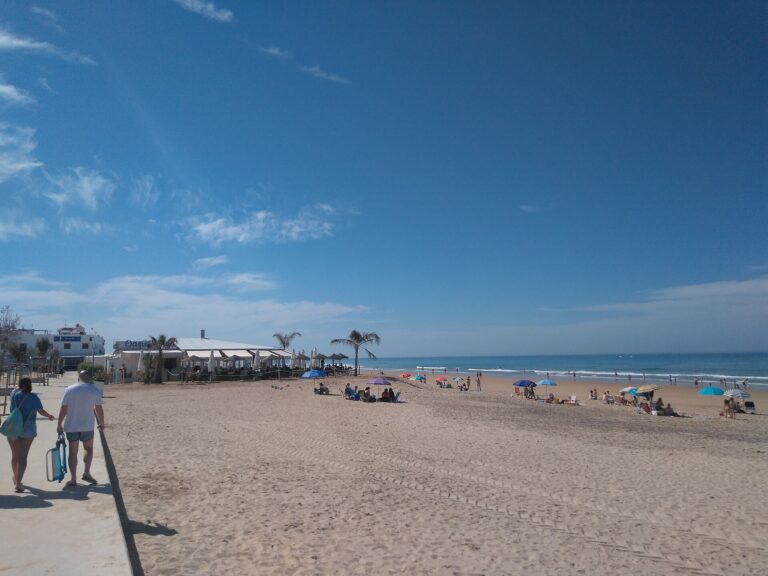 Beach · Conil de la FronteraPlaya de la FontanillaConil's main Blue Flag beach: wide, shallow and a five-minute walk from the white old town.Read more about Playa de la Fontanilla →
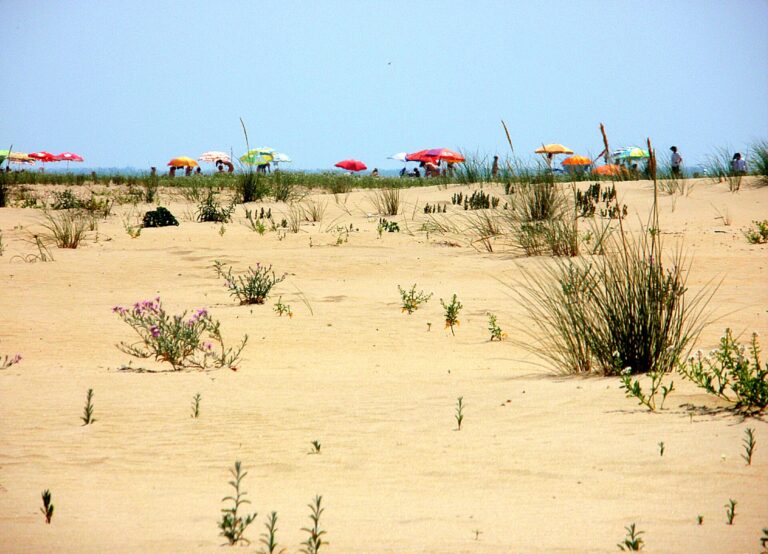 Beach · Punta UmbríaPlaya de la BotaPunta Umbría's wild beach behind a rare juniper dune woodland, with no promenade and no lifeguards.Read more about Playa de la Bota →
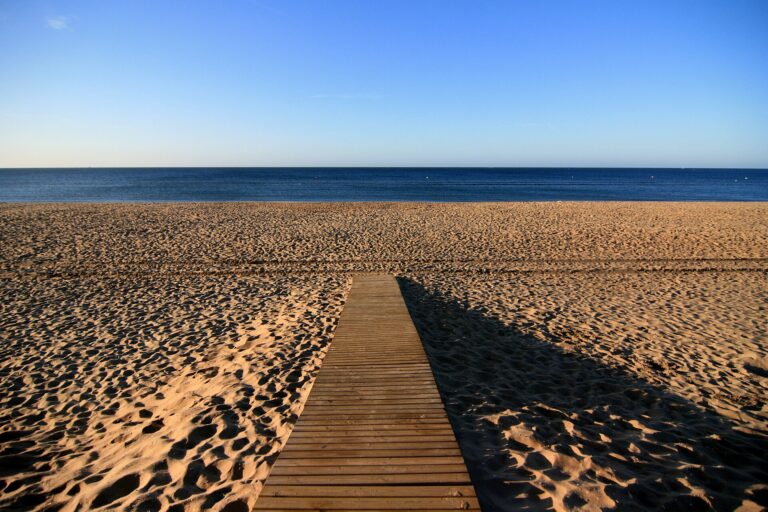 Beach · LepePlaya de IslantillaThe only beach in Andalusia jointly run by two municipalities, with a kilometre of accessible promenade.Read more about Playa de Islantilla →
Towns and villages
Cádiz province has the cities, the wine and the food; the Huelva side is flatter, greener and much less visited by foreigners. Between them the coast has 33 town guides on this site, from working tuna ports to hilltop white towns.
On the map
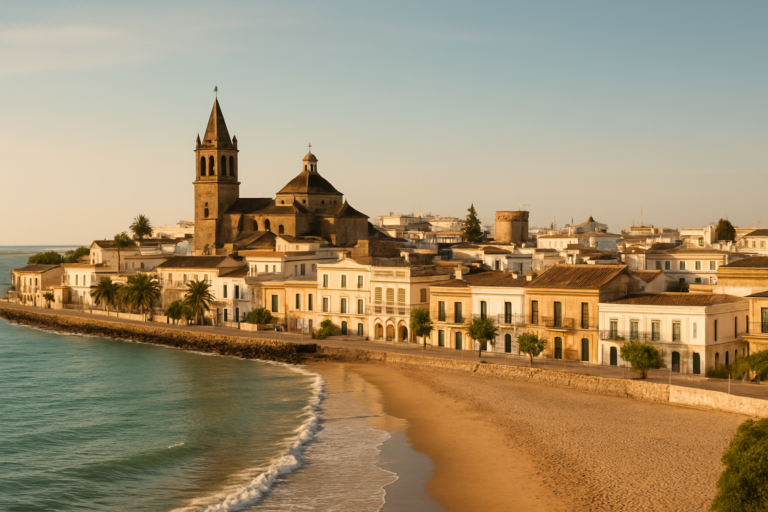 Town · CádizSanlúcar de BarramedaWhat Sanlúcar de Barrameda is really like — Manzanilla sherry, beach horse races, langostinos at Bajo de Guía and boat trips to Doñana National Park.Read more about Sanlúcar de Barrameda →
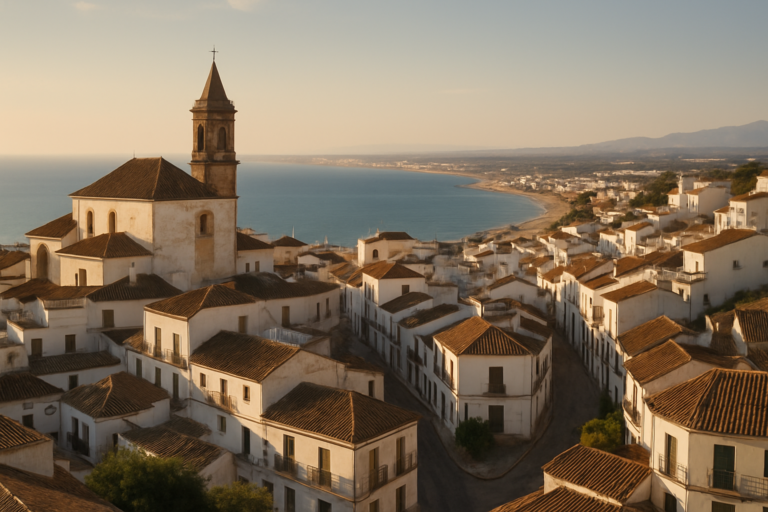 Town · CádizSan RoqueWhat San Roque is really like: a Campo de Gibraltar town founded by Gibraltar exiles, home to Sotogrande's marina, golf and polo near the Strait.Read more about San Roque →
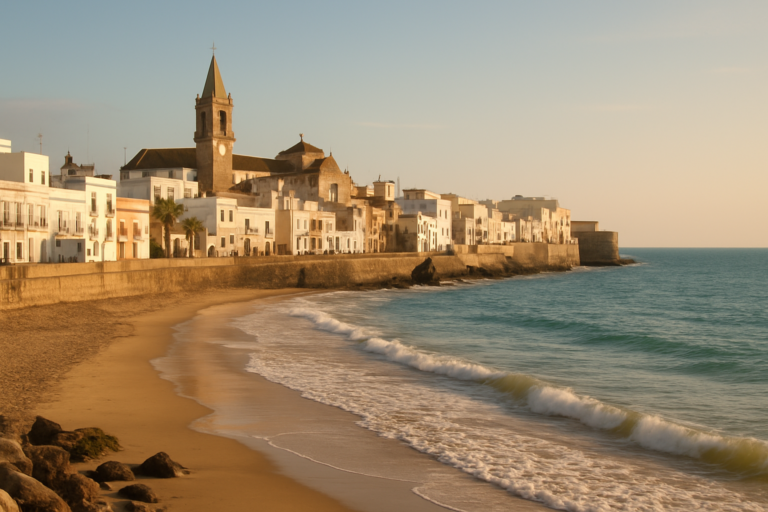 Town · CádizRotaWhat Rota is really like: wide Bay of Cadiz beaches, the Castillo de Luna, ancient stone fish traps and an easy Costa de la Luz base.Read more about Rota →
The full set of town guides — Cádiz, Jerez, Sanlúcar, El Puerto, Chiclana, Conil, Vejer, Barbate, Tarifa, Rota, San Fernando, Algeciras, Huelva, Punta Umbría, Isla Cristina, Ayamonte, Lepe, Cartaya, Palos, Moguer, Almonte and the white towns inland — is linked from the map above and from the index at the foot of this page.
Doñana and the natural parks
Protected landscape is the defining feature of this coast, and the reason the beaches are still empty. Doñana covers 543 km² of marsh, dune and cork woodland; it has been a national park since 1969 and a UNESCO World Heritage Site since 1994, and it holds Iberian lynx, Spanish imperial eagle and more than 300 bird species.
You cannot drive into the core. There are three official ways in: a four-hour 4×4 tour from El Acebuche on the Huelva side (around €35, twice daily, booking essential); the «Real Fernando» boat from Sanlúcar, which sails 13 km up the Guadalquivir with a guided landing; and a combined boat and 4×4 from Sanlúcar, from about €50. Free and unbooked: the walking trails at La Rocina, the Palacio del Acebrón and El Acebuche, and the waterfront at El Rocío, which is one of the best free birding spots in Spain.
Nearer Huelva, the Marismas del Odiel give accessible viewpoints and breeding spoonbills and flamingos without the logistics of a Doñana tour. Around Barbate, trails through La Breña lead to the Torre del Tajo above a hundred-metre cliff, and the Parque Natural del Estrecho covers Bolonia, Valdevaqueros and Baelo Claudia at the southern tip.
Protected landscapes
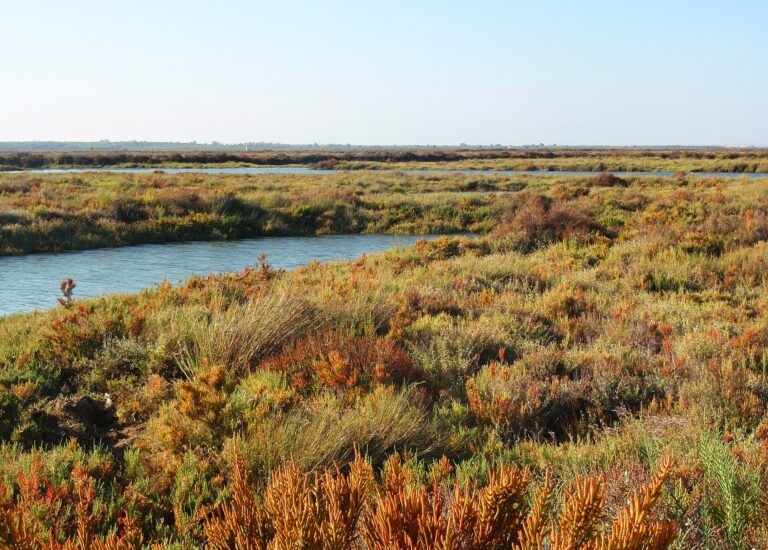 Natural park · HuelvaMarismas del OdielUNESCO biosphere tidal marshes at Huelva's doorstep, with spoonbill and flamingo colonies.Read more about Marismas del Odiel →
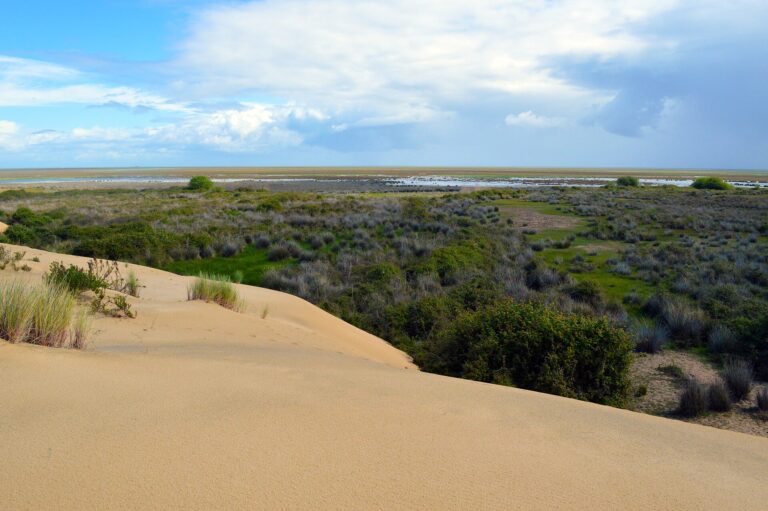 Natural parkDoñana National ParkDoñana National Park is a natural reserve of marshes, shallow streams and sand dunes in the delta where the Guadalquivir flows into the Atlantic Ocean, covering 543 km2 across the provinces of Huelva, Cádiz and Seville. It was est…Read more about Doñana National Park →
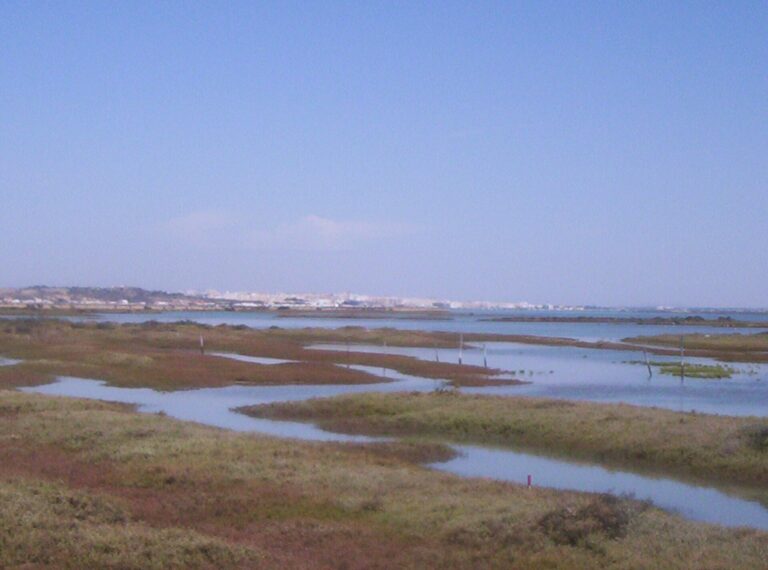 Natural parkBahía de Cádiz Natural ParkBahía de Cádiz Natural Park is a 10,522-hectare natural park established in 1989 at the mouth of the Guadalete river, consisting of marshland, beaches, reeds and sand dunes. A Special Protection Area for birds, it hosts flamingos…Read more about Bahía de Cádiz Natural Park →
Historic sites
The coast reads as a stack of civilisations. Cádiz is usually described as the oldest continuously inhabited city in Western Europe: the traditional founding date of Phoenician Gadir, around 1104 BC, comes from classical writers rather than excavation, but continuous urban occupation from the 9th century BC is archaeologically proven and you can stand in it. Add Roman Baelo Claudia, Moorish castles at Tarifa and Jerez, the 1805 battle off Cabo de Trafalgar, and the Columbus ports of Palos and Moguer.
Worth the detour
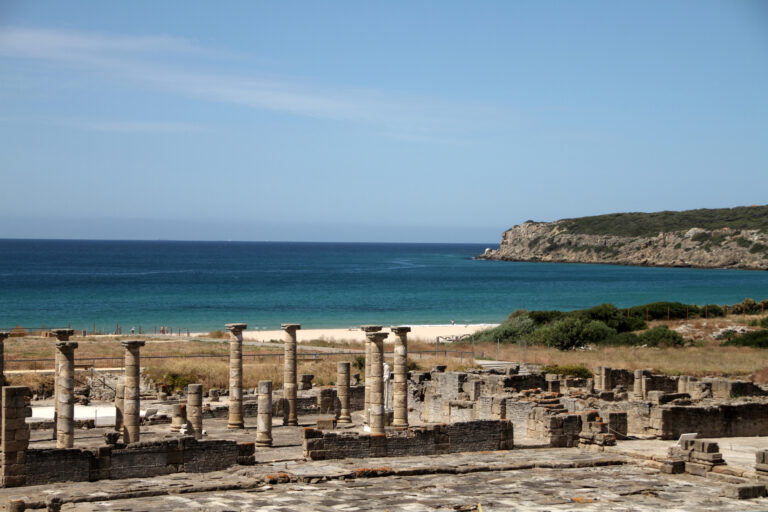 Historic siteBaelo ClaudiaA Roman town founded on fish sauce in the late 2nd century BC, with its forum, theatre, basilica and garum vats still standing at Bolonia.Read more about Baelo Claudia →
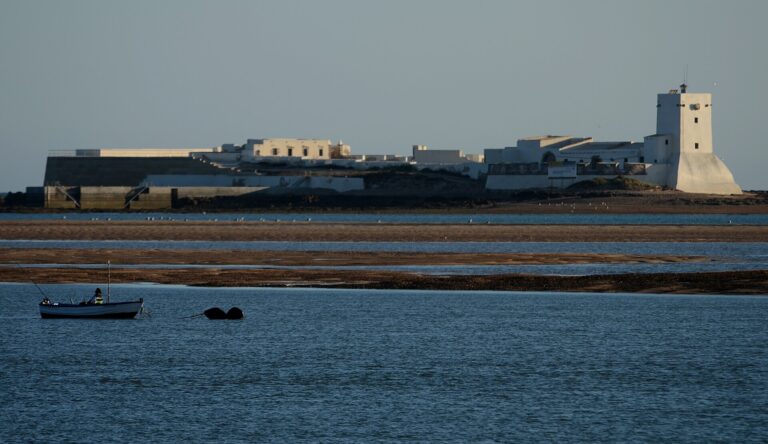 Historic siteCastle of Sancti PetriThe Castle of Sancti Petri is a 13th-century Moorish-style stronghold on the little island of Sancti Petri, once one of a series of forts protecting the Caño de Sancti Petri inlet. The Phoenicians founded a temple on the island de…Read more about Castle of Sancti Petri →
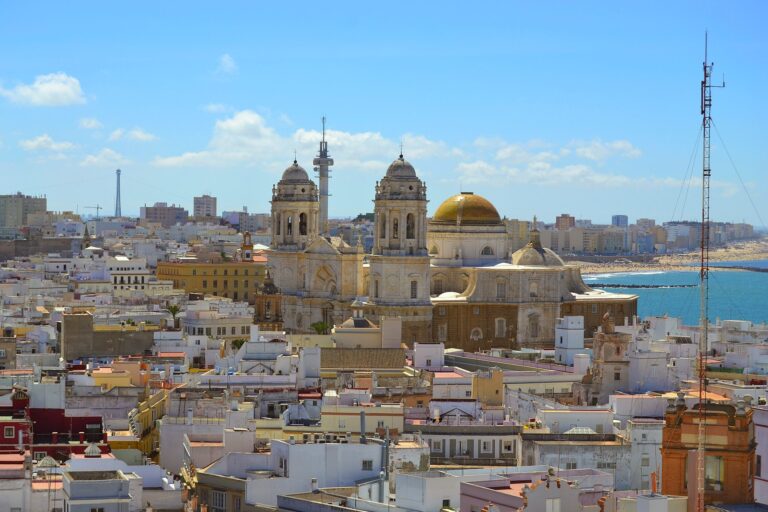 Historic siteCádiz CathedralThe Cathedral of the Holy Cross over the Waters in Cádiz, seat of the Diocese of Cádiz y Ceuta, was built between 1722 and 1838. Known as 'The Cathedral of The Americas' because it was built with money from the trade between Spain…Read more about Cádiz Cathedral →
Sherry, tuna and what to eat
Food is one of the strongest reasons to choose this coast. Cádiz province fries fish better than anywhere else in Spain, and adds tortillitas de camarones, cazón en adobo, Sanlúcar langostinos and bluefin tuna. Huelva contributes white prawns, choco, and the Iberian ham country inland.
Sherry is made in the Marco de Jerez, historically the triangle of Jerez, Sanlúcar and El Puerto de Santa María, though ageing rights were extended to the rest of the production zone in the early 2020s. The mechanism that makes it different from every other wine is flor, a living film of yeast: wine fortified to exactly 15% keeps it and ages biologically into fino or manzanilla; wine taken to 17% or more kills it and ages oxidatively into amontillado, oloroso or palo cortado. The barrels are not vintages but tiers — the solera at the bottom, refilled from the criaderas above — so every bottle is a blend of every year the solera has run. Lustau, Fundador, Tío Pepe and Tradición take visitors in Jerez; Barbadillo and La Cigarrera in Sanlúcar.
The almadraba is a labyrinth of fixed nets that intercepts Atlantic bluefin migrating through the Strait to spawn. It is Phoenician in origin, and four Cádiz towns still run one: Barbate, Zahara de los Atunes, Conil and Tarifa. The season runs roughly April to June, and each town holds a Ruta del Atún when the fish arrive. The ronqueo — hand-butchering a whole tuna, named for the sound the knife makes along the backbone — yields around two dozen named cuts.
When to visit: weather month by month
May, June, September and early October give the best balance of warmth, daylight and manageable crowds. July and August are hot, full and expensive; winter is mild but wet.
| Month | Avg high °C | Sea °C | Rain mm | Verdict |
|---|---|---|---|---|
| January | 16 | 16.5 | 70 | Mild, wet, empty. Fine for towns and bodegas. |
| February | 17 | 16 | 60 | Carnival month in Cádiz. Book far ahead. |
| March | 19 | 16 | 35 | Drying out. Poniente season starts. |
| April | 20 | 17 | 45 | Tuna season opens. Semana Santa crowds. |
| May | 23 | 18 | 25 | Arguably the best month of the year. |
| June | 25 | 20 | 5 | Warm, dry, still not full. |
| July | 27.5 | 22 | 0 | Levante season. Hot and busy. |
| August | 28 | 22.6 | 0 | Peak everything. Spanish holiday month. |
| September | 26 | 22 | 25 | Warmest sea, thinning crowds. Excellent. |
| October | 23.5 | 20.6 | 65 | Still swimmable. Rain returns late. |
| November | 19.5 | 19 | 100 | Wettest month. Green and quiet. |
| December | 17 | 17.4 | 90 | Mild, wet, festive in the cities. |
Reality check on the Atlantic. The sea peaks at about 22.6 °C in August and sits near 16 °C in late winter, and a strong poniente can drive cold upwelling that drops beach water several degrees for a day or two in midsummer. Cádiz is also noticeably cooler than Seville — high twenties against mid thirties — because the city sits on a spit with sea on both sides. That is a feature in July and a nuisance in October.
The wind, explained
Two winds run this coast. The levante comes from the east through the Strait, warm, dry and gusty, often 20–40 knots. It is offshore at Tarifa, so it flattens the water and pushes you out to sea; it dominates roughly July to October and accounts for about 60% of windy days. The poniente comes off the Atlantic from the west, cooler and steadier at 12–22 knots, side-onshore, and prevails in spring. Tarifa gets usable wind on more than 300 days a year because the Strait narrows to about 14 km between two mountain ranges and accelerates whatever air is moving. When the levante is up, drive northwest to Conil, Chiclana or the Huelva coast, where it barely registers.
How to get to the Costa de la Luz
| Airport | To Cádiz | To Tarifa | To Huelva | Best for |
|---|---|---|---|---|
| Jerez (XRY) | ~40 min | 1h40 | 1h55 | Closest, but mostly seasonal summer flights |
| Seville (SVQ) | 1h25 | 2h30 | 1h05 | Year-round network, the reliable default |
| Faro (FAO) | 3h10 | 4h20 | 1h15 | By far the best for the Huelva coast |
| Gibraltar (GIB) | 1h20 | 45 min | ~3h | Tarifa, if you accept the border queue |
| Málaga (AGP) | 2h20 | 1h45 | 3h30 | Cheap flights, long drive |
Jerez sits on the train line but its international traffic is heavily seasonal and heavily German. Seville has the year-round network. For anything west of Huelva, Faro is usually cheaper and closer — remember Portugal runs an hour behind Spain.
Trains. Cádiz, San Fernando, Puerto Real, El Puerto, Jerez and Jerez Airport are all on one line. Seville–Cádiz takes about 1h30 at best, roughly 19 trains a day; Seville–Huelva is Media Distancia only, five to eight trains a day, about 1h30. Two corrections worth knowing: the Cercanías C-1 runs only Cádiz–Jerez Airport, not to Seville, and there is no direct Cádiz–Huelva train — you change at Seville and it takes over three hours.
Ferries. Tarifa–Tanger Ville is about an hour and the only route landing in central Tangier (Baleària and AML; DFDS withdrew in May 2025). Algeciras–Ceuta is about an hour with ten or more daily departures; Algeciras–Tanger Med is 1h30 and takes vehicles. At Ayamonte the Guadiana ferry still crosses to Vila Real de Santo António in about 15 minutes alongside the road bridge — check times locally, the published timetables are not reliably updated.
Getting around
You need a car for the beaches. That is the honest answer. The train serves the Bay of Cádiz well and Huelva adequately, and buses connect the main towns, but Bolonia, Valdevaqueros, El Palmar, Caños de Meca, La Bota and the Flecha del Rompido are all effectively car-only, and those are the beaches you came for.
Two roads do most of the work: the N-340 along the Atlantic front from Cádiz to Tarifa, and the A-49 west from Seville to the Portuguese border. Parking is the real constraint. At the wild beaches there is no formal car park, and from mid-July to the end of August you either arrive before about 09:30 or you walk twenty minutes from wherever you end up. If you are staying in central Cádiz, rent the car after the city part rather than paying to park it.
Where to stay on the Costa de la Luz
| If you want | Base yourself in | Why |
|---|---|---|
| History, food, no car | Cádiz | Walkable old town, four Blue Flag beaches, trains to Jerez and Seville |
| Bodegas and culture | Jerez or El Puerto | Sherry houses within walking distance, 30 min to the coast |
| Beach with a real town | Conil | Whitewashed centre, three Blue Flags, coves to the north |
| Food and atmosphere | Vejer | Best restaurant scene inland, easy road access to El Palmar and Trafalgar |
| Wind sports and nightlife | Tarifa | Schools, rentals and 300 windy days |
| Family resort, everything on site | Chiclana or Islantilla | Most hotel beds in the province; full accessibility |
| Empty beaches and birds | Mazagón or Punta Umbría | Doñana and the Odiel marshes on the doorstep |
| Easy crossing to Portugal | Ayamonte | Ferry and bridge, Faro about an hour away |
Costa de la Luz vs Costa del Sol
| Costa de la Luz | Costa del Sol | |
|---|---|---|
| Sea | Atlantic, 16–23 °C, tides, swell | Mediterranean, generally warmer and calmer |
| Beaches | Kilometres long, often undeveloped | Shorter, narrower, built up |
| Wind | A defining feature | Rarely an issue |
| Development | Low-rise, protected, gaps between towns | Continuous urban coast |
| Flights | Seasonal to Jerez; Seville or Faro year-round | Málaga, year-round, cheap, huge choice |
| Nightlife | Local, town-based, Spanish | International, extensive |
| Best for | Space, food, road trips, surf, landscape | Convenience, warm water, easy flights |
Choose the Costa de la Luz if you value long beaches, historic towns, local food and protected landscapes and are comfortable driving. Choose the Costa del Sol if flight choice, warmer water, resort facilities and easy transport matter more. A lot of disappointed reviews come from people who booked one expecting the other.
Costa de la Luz itineraries
Three days: the Cádiz essentials
Day 1 — Cádiz: old town, Yacimiento Gadir, cathedral, La Caleta at sunset. Day 2 — Jerez for a bodega and the equestrian school, then Sanlúcar for manzanilla and langostinos at Bajo de Guía. Day 3 — Vejer in the morning, El Palmar or Caños de Meca in the afternoon, Cabo de Trafalgar for sunset.
Five days: add the Strait
As above, then Day 4 — Tarifa, the castle and Los Lances, or a ferry day trip to Tangier. Day 5 — Bolonia and Baelo Claudia in the morning, the dune trail, and Zahara de los Atunes for dinner.
Seven days: both provinces
Add Day 6 — drive north to El Rocío and take a pre-booked Doñana 4×4 tour from El Acebuche, then sleep at Mazagón. Day 7 — the Marismas del Odiel in the morning, Palos de la Frontera and La Rábida after lunch, then the Flecha del Rompido to finish.
Inland variant
Swap any beach day for the white towns: Arcos, Setenil and Olvera make one long, excellent loop from Jerez. Allow more time than the map suggests — Arcos is an hour from Cádiz, Setenil and Olvera closer to two.
Festivals worth planning around
- Carnaval de Cádiz — February. Not a parade but a composed-song competition, with satirical chirigotas and comparsas at the Gran Teatro Falla and unofficial groups singing in the street. Fiesta de Interés Turístico Internacional since 1980; it is not a UNESCO listing, whatever you read.
- Semana Santa — late March or April, in Cádiz, Jerez and Huelva.
- Ruta del Atún — late April to early June, in Barbate, Zahara, Conil and Tarifa.
- Feria del Caballo, Jerez — May. Horses, carriages and largely public casetas, unlike Seville’s.
- Romería de El Rocío — Pentecost. Over a million people. If you are not part of it, plan around it deliberately.
- Sanlúcar horse races — August, on the beach at low tide, continuously since 1845.
Prices, schedules and seasonal services change. Blue Flag counts, ferry operators, train frequencies and festival dates on this page were last checked on 20 August 2026.
Costa de la Luz FAQ
What is the best part of the Costa de la Luz?
The Cádiz coast, for most first-time visitors: it combines historic cities, white towns, restaurants and famous beaches in a relatively compact area. Choose the Huelva coast for quieter family beaches, wetlands and easier access from Faro or Seville.
Where should first-time visitors stay?
Cádiz is best without a car, Conil combines beaches with a lively old town, Vejer suits food and atmosphere, and Tarifa is best for wind sports and nightlife. On the Huelva coast, Punta Umbría and El Rompido are practical bases for beaches and nature.
How many days do you need?
Three days covers Cádiz, Jerez and one Atlantic beach. Five allows time for Vejer, Tarifa and Bolonia. Seven to ten is better if you want both Cádiz and Huelva provinces.
Is the Costa de la Luz suitable for families?
Yes. La Barrosa, La Fontanilla, Islantilla and Punta Umbría offer the easiest combination of facilities, accommodation and family-friendly water. Tarifa and the exposed Atlantic beaches can be uncomfortable on strong-wind days.
Is the water too cold to swim?
No, but it is honest Atlantic water. August sea temperature is about 22–23 °C; June is around 20 °C, which most people find fine after a minute. Late spring and October are wetsuit territory for long swims.
How windy is it really?
At Tarifa, very — more than 300 days a year with usable wind. Fifty kilometres northwest at Conil or Chiclana it is a normal coastal breeze most days. The wind is a Strait phenomenon and it fades fast as you move away from it.
Which airport should I fly into?
Seville for the Cádiz coast if you want year-round flights; Jerez if the season and route suit you; Faro for anywhere in Huelva province; Gibraltar for Tarifa if you can live with the land border.
Can I visit Doñana without booking?
You can walk the free trails at La Rocina, the Palacio del Acebrón and El Acebuche without booking. To get into the park proper you need a 4×4 tour or the Sanlúcar boat, and both must be reserved in advance.
Can I do a day trip to Morocco?
Yes. The Tarifa–Tanger Ville ferry takes about an hour and lands in the middle of Tangier. Take your passport; it is stamped on board.
Do you need a car?
You can manage Cádiz, Jerez and El Puerto by train. For Bolonia, Valdevaqueros, El Palmar, Caños de Meca and most of the natural beaches, a car is effectively required.
Is the Costa de la Luz right for you? It is one of mainland Spain’s strongest choices for travellers who value long Atlantic beaches, historic towns, local food and protected landscapes more than resort convenience. Visit in May, June or September for the best balance of warm weather and manageable crowds. Rent a car if beaches such as Bolonia, El Palmar and Los Caños de Meca are central to your trip, and choose a town base rather than moving hotels every night.
Every place we have mapped on the Costa de la Luz
64 towns, beaches, coves and landmarks, kept up to date automatically.
- Alcázar of Jerez de la Frontera
- Algeciras: Port, Plaza Alta and the Strait of Gibraltar
- Aljaraque: Huelva Costa de la Luz Town Guide
- Almonte: Doñana, El Rocío and Matalascañas
- Arcos de la Frontera: Clifftop White Town
- Ayamonte: Guadiana Border Town and Beaches
- Baelo Claudia
- Bahía de Cádiz Natural Park
- Barbate: Tuna, Cliffs and Atlantic Beaches
- Bollullos Par del Condado: Wine Capital of the Condado de Huelva
- Cabo de Trafalgar
- Cádiz: Old Town, Beaches and Carnival
- Cádiz Cathedral
- Cartaya: El Rompido and Atlantic Beaches
- Castle of San Marcos
- Castle of Sancti Petri
- Chiclana de la Frontera
- Chipiona: Lighthouse, Beaches and Moscatel Wine
- Chipiona Lighthouse
- Conil de la Frontera: Beaches and Atlantic Coast
- Doña Blanca
- Doñana National Park
- El Campillo: gateway to the Riotinto mines and the red river of Huelva
- El Puerto de Santa María
- Flecha del Rompido
- Huelva
- Isla Cristina: Fishing Port, Carnival and Beaches
- Jerez de la Frontera
- Jerez de la Frontera Cathedral
- La Caleta
- La Línea de la Concepción
- Lepe: Strawberries and Costa de la Luz Beaches
- Los Barrios: Cork Forests and the Gibraltar Strait
- Los Caños de Meca
- Marismas del Odiel
- Moguer: Nobel Poetry and Columbus History
- Museo Arqueológico de Jerez
- Museum of Cádiz
- Olvera: White Village and Sierra Greenway
- Palos de la Frontera: Where Columbus Set Sail
- Playa de Bolonia
- Playa de Islantilla
- Playa de la Barrosa
- Playa de la Bota
- Playa de la Fontanilla
- Playa de la Victoria
- Playa de los Lances
- Playa de Matalascañas
- Playa de Mazagón
- Playa de Valdevaqueros
- Playa de Zahara de los Atunes
- Playa El Palmar
- Puerto Real: Bay of Cadiz Royal Port
- Punta Umbría: Beaches, Dunes and Odiel Marshes
- Rota
- San Fernando
- San Roque: Sotogrande and Gibraltar Gateway
- Sanlúcar de Barrameda
- Setenil de las Bodegas: Cave Houses Under the Rock
- Tarifa
- Ubrique: White Town of the Sierra de Cádiz Leather Trade
- Vejer de la Frontera
- Tarifa
- Vejer de la Frontera: White Hilltop Town
How this page is maintained. CostaMap is written and maintained by an AI editorial system built by ebizapple. Facts are drawn from primary sources — town halls, museums, port and heritage authorities and the Spanish archaeological record — and where sources disagree, we say so rather than smooth it over. Photographs marked as ours are taken on location. This page was last reviewed on 20 August 2026. Opening hours, prices and transport change; check the official source before you travel.