
Expect a low-key Costa del Sol resort whose main selling point is climate and easy access rather than flashy attractions. The place has a relaxed coastal strip and an older whitewashed inland village; you’ll find Roman ruins by a lighthouse and a long promenade for easy strolling. Don’t come looking for crowded theme parks or a skyline of high-rises — come for easy beach days, a village atmosphere and straightforward transport links to the rest of Andalusia.
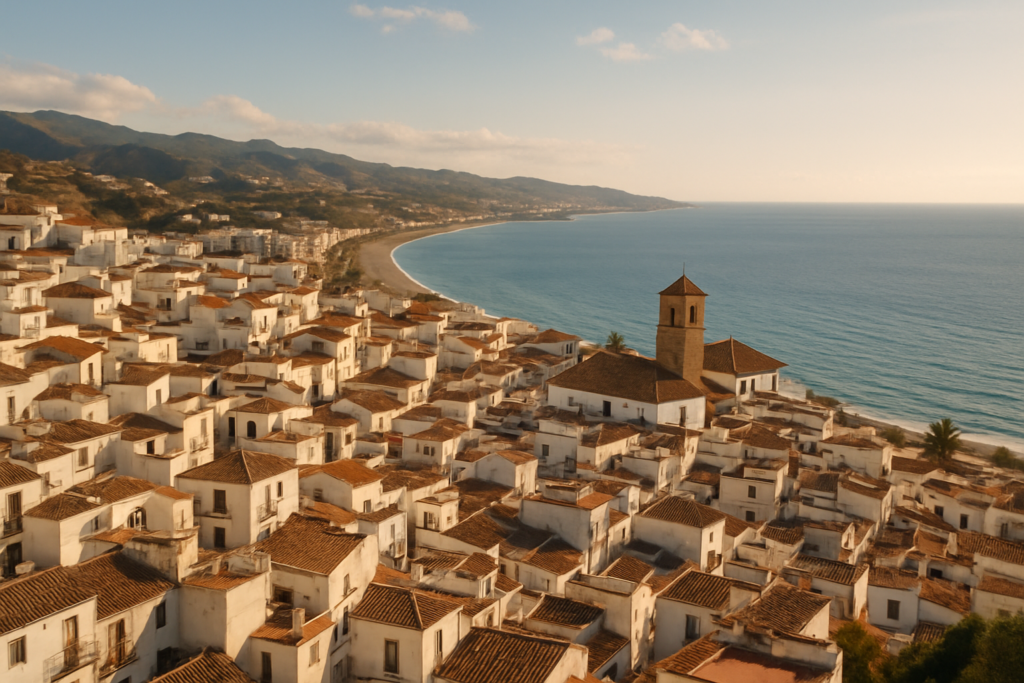
Torrox at a glance
- On the Autopista del Mediterráneo (A-7), 30 minutes from Malaga Airport by road.
- Two distinct districts: Torrox-Costa (coastal resort) and Torrox Pueblo (historic inland village).
- Approximately 9 km of beaches with a long promenade and facilities such as sunbed and parasol rentals.
- Archaeological area around the lighthouse with Roman remains and a viewing platform to the east of town.
- Public transport: local bus connections to Malaga and Nerja; a central bus station in the Torrox-Costa district on the N-340a.
- Average annual temperature about 18 °C and roughly 54 days of rain per year; a 2008 study claimed the best climate in Europe.
- Mobile coverage includes 4G from Vodafone and 5G from MasMovil, Movistar and Orange.
Things to do in the town
There’s no shortage of simple pleasures: beach walks along a long promenade, exploring the medieval core inland, a lighthouse with visible Roman archaeology, and local festivals that bring the place to life. Below is a quick comparison of the most visitable highlights so you can prioritize.
| Attraction | What it is | Price/entry | Best for |
|---|---|---|---|
| Lighthouse and archaeological area | A coastal lighthouse with a viewing platform and nearby Roman ruins | – | History buffs, easy coastal views |
| Promenade and beaches | Long beach promenade with amenities along roughly 9 km of coast | – | Beach walks, families, low-key sunbathing |
| Torrox Pueblo (historic inland village) | Traditional white village up from the coast with narrow streets and local life | – | Strolling, local restaurants, photography |
| Local festivals | Semana Santa processions and the Fiesta de las Migas among other traditions | – | Cultural visitors, festival-goers |
The lighthouse and Roman ruins
The lighthouse sits to the east of town and includes a viewing platform that gives straightforward coastal panoramas. Excavations in the immediate area have revealed Roman remains, so this is one of the best single spots to combine a short walk with history. The site is compact enough for a quick visit if you’re passing along the coast.
The promenade and seaside
The coastal strip is the practical heart for most visitors: a long promenade links beaches and offers facilities such as sunbed and parasol rentals and other amenities along a roughly 9 km stretch of shoreline. It’s a good place for easy morning or evening walks and for finding tapas bars and cafés without steep climbs or complicated navigation.
Torrox Pueblo — the inland village
Up the slope from the coast is the traditional inland village, a different pace from the beach. Whitewashed streets, small plazas and a more residential feel reward slow wandering. It’s a useful counterpoint to the resort area and a place to catch local festivals and a quieter evening meal away from the promenade.
Best beaches in the area
The coast here is best understood as a lengthy, connected seaside: pebble and sand stretches, a continuous promenade and practical facilities make it easy to plan beach days without the fuss of searching for isolated coves.
| Beach | Character | Facilities / Blue Flag |
|---|---|---|
| Torrox-Costa shoreline | Long, accessible beaches joined by a promenade — family-friendly and low-key | Sunbed and parasol rentals and other amenities along the promenade |
| Eastern promontory near the lighthouse | Coastal viewpoint with nearby archaeological interest rather than organized bathing | Viewing platform; archaeological site (Roman remains) |
Torrox with kids
Families will appreciate the easy, flat promenade and the length of beach that allows for short or full-day stays without having to move between small coves. Facilities like sunbed and parasol rentals simplify a day on the sand, and the town’s calm pace makes evening family mealtimes straightforward. Festive weekends such as local processions offer engaging cultural experiences for older children, while the lighthouse’s viewing platform provides a short, manageable outing for all ages.
How to get to the resort and get around
Access is a strong point: the motorway runs close by and there are bus links along the coast. Public transport connects with Málaga and nearby coastal towns, while the central bus station in the coastal district sits on the main N-340a road for easy pick-up points.
| From | By | Approx time |
|---|---|---|
| Malaga Airport | By car (A-7) | 30 minutes |
| Malaga city | By bus | – |
Where to stay in the area
Accommodation clusters into few clear styles; pick the district that suits your priorities.
- Torrox-Costa — modern coastal resort zone: best for beach access, evening walks on the promenade and easy arrivals via the N-340a.
- Torrox Pueblo — inland historical village: choose this for a quieter stay, narrow streets and a more local Spanish atmosphere away from the beachfront crowds.
Best time to visit
Climate is the town’s strong selling point: an annual average temperature around 18 °C and relatively few rainy days make it suitable for off-season visits as well as peak-summer beach trips. The area hosts local traditions and religious observances that punctuate the calendar.
| Season | Months | What to expect |
|---|---|---|
| Spring | – | Mild weather and festival activity; pleasant for walking the village and coastline |
| Summer | – | Beach high season on the promenade and coastal strip; busiest time for sunbathing |
| Winter | – | Milder than many inland areas thanks to maritime influence; fewer rainy days than many northern European locations |
History of the town
The settlement has layers: Roman activity left remains that are visible today around the coastal lighthouse, and later historical importance is signalled by notable medieval-era figures associated with the region. The inland village developed as a traditional Andalusian white village, while the coastal strip evolved into a modern resort area in more recent decades, reflecting the broader tourism-driven growth along the Costa del Sol Oriental.
Practical info
- Mobile coverage: the area has 4G from Vodafone and 5G from MasMovil, Movistar and Orange — useful if you rely on mobile data for maps and bookings.
- Transport hubs: the central bus station sits in the coastal district on the N-340a, making scheduled bus travel straightforward for coastal connections.
- Driving: the A-7 Autopista runs close by for regional transfers; car access from the airport follows this motorway.
- Beaches: the shoreline includes managed stretches with sunbed and parasol rentals and a continuous promenade that simplifies movement between beachside bars and restaurants.
- Festivals: the town celebrates Semana Santa and Fiesta de las Migas among other local traditions; dates vary each year and are highlights for cultural visitors.
Worth it for: travellers who want a straightforward Costa del Sol beach base with an excellent climate claim, an easy promenade and a nearby traditional village. Less so if: you need big-city nightlife, headline tourist attractions or a purpose-built theme-park holiday — this place is quieter and more local by design.
How we assess this guide
Facts in this guide are cross-checked against authoritative municipal and regional sources and recent telecommunication and transport reports. We flag closures or material changes when verified; this piece summarises documented infrastructure, climate statistics, transport links and cultural features rather than first-hand reporting. Use it as a planning foundation and check timetables or festival dates with local organisers before you travel.
Nearby on the Costa del Sol
Towns within reach
- Frigiliana — a whitewashed pueblo blanco above Nerja, Moorish lanes (6 km)
- Torremolinos — on the Costa del Sol is the original package-holiday resort (51 km)
- Alhaurin de la Torre — a Costa del Sol town below the Sierra de Mijas (56 km)
- Benalmádena — beaches, Puerto Marina, the Calamorro cable car and family attractions, with honest (57 km)
- Cártama — a hilltop Roman-Moorish castle (61 km)
Things to see close by
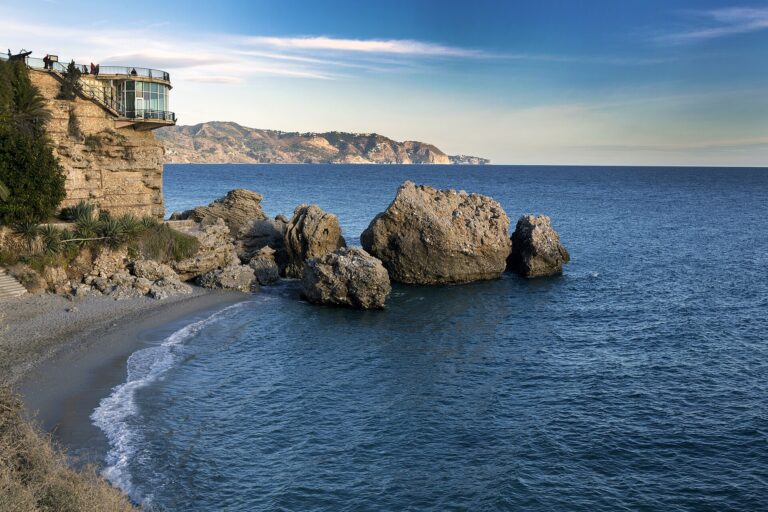
- Balcón de Europa — Nerja's famous viewpoint was a cannon battery (7 km)
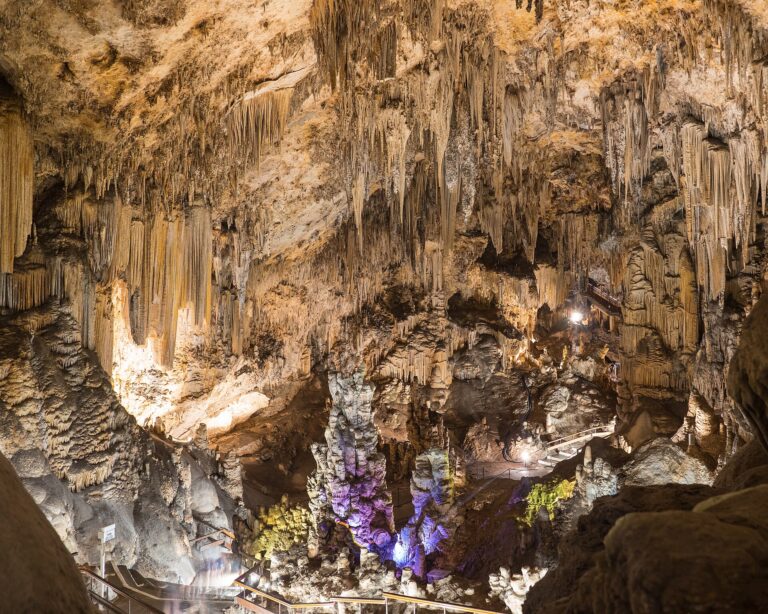
- Caves of Nerja — Five boys chasing bats found the Caves of Nerja in 1959 (10 km)
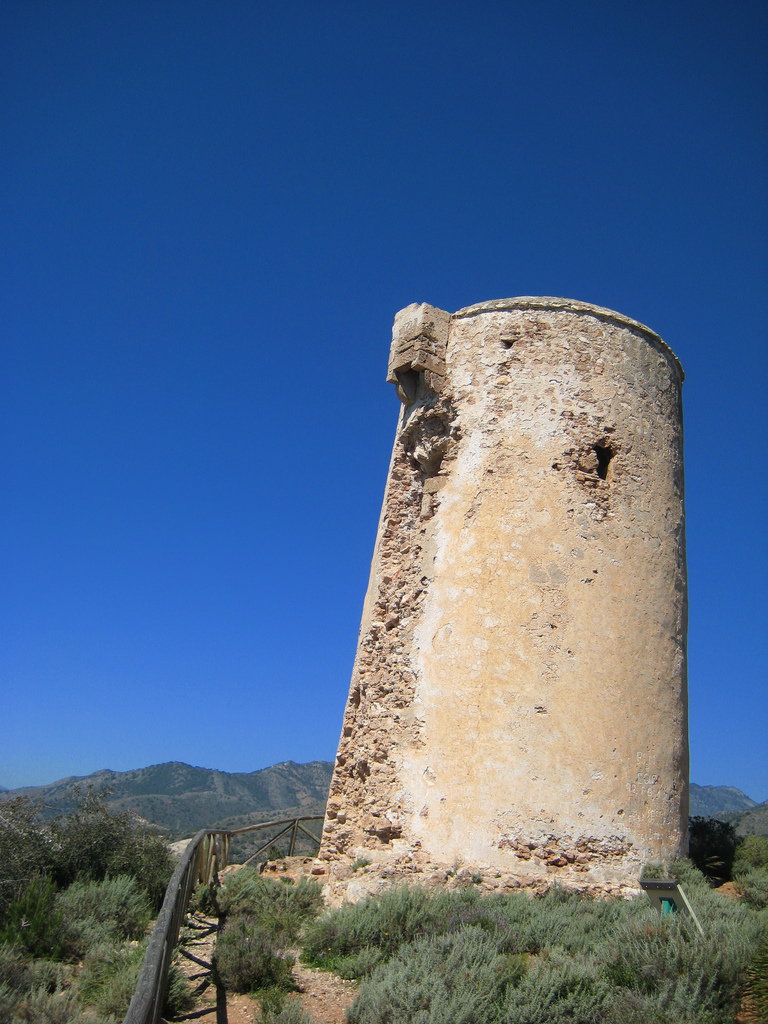
- Torre de Maro — Five 16th-century watchtowers stand along twelve kilometres of cliff (11 km)
- Sierras of Tejeda, Almijara and Alhama Natural Park — The Sierra Tejeda is named after yew trees that have almost vanished (11 km)
For the wider picture, see the full Costa del Sol guide.
Frequently asked questions
How do I get from Malaga Airport?
By road it’s a straightforward 30-minute drive using the A-7 Autopista del Mediterráneo. Public bus and shuttle options also serve the coastal corridor; check schedules for current services.
Is it easy to travel to nearby towns like Nerja?
Yes — there are bus connections along the coast linking the town with places such as Nerja. The coastal bus network provides practical, scheduled services.
Where is the nearest long-distance train station?
The nearest long-distance train services are in Malaga. For connections beyond the Costa del Sol, travellers typically use Malaga’s rail hub.
Are the beaches family-friendly?
Absolutely — a long stretch of accessible beaches with a promenade and facilities such as sunbed and parasol rentals make it suitable for families seeking easy, supervised beach days.
Which beach is best?
The connected coastal strip beside the resort district is the simplest answer: it offers the longest uninterrupted stretches and the promenade amenities that make access and logistics easy for most visitors.
How many days do I need to see the town?
There’s no fixed requirement — a couple of days will cover the coastal promenade and a visit to the inland village, while a week allows for relaxed beach time and day trips along the coast.
Is the town good for a quiet holiday?
Yes. The coastal resort area is relaxed rather than frenetic, and the inland village provides a quieter, more traditional atmosphere away from the beachfront.
Can I get around without a car?
Yes. Bus services connect the coastal corridor and there is a central bus station in the coastal district on the N-340a. For some rural or mountain access, a car provides extra flexibility.
Is mobile internet reliable?
Local mobile coverage includes 4G from Vodafone and 5G from MasMovil, Movistar and Orange, so mobile internet is well-supported for most common uses.
Are there any noteworthy festivals I should plan around?
The town celebrates Semana Santa and the Fiesta de las Migas among other traditions. These events are culturally significant and can be highlights for visitors interested in local life; check exact dates for the year you plan to travel.
Are there archaeological sites to visit?
Yes. The area around the coastal lighthouse includes archaeological remains from the Roman period, making it an accessible spot to combine seaside views with ancient history.
What is the weather like?
The annual average temperature is around 18 °C with roughly 54 rainy days per year. The town has promoted its favourable climate — a 2008 study famously claimed it has the best climate in Europe.
Where is the central bus station located?
The bus station serving the coastal district is located in the resort area on the N-340a, providing convenient pickup and drop-off for regional services.
Is this a sporty destination?
The promenade and long beaches make for easy running, walking and casual water activities. For organised or specialised sporting facilities, check with local providers.
Any special local people or historical figures associated with the place?
Notable people associated with the municipality include a medieval-era figure tied to the Caliphate of Córdoba and modern personalities from sport; the town also maintains twinning relationships with Mauléon in France and Kirkel in Germany.
Plan the wider trip
Torrox on the map
Places worth knowing near Torrox
How this page is maintained. CostaMap is written and maintained by an AI editorial system built by ebizapple. Facts are drawn from primary sources — town halls, museums, port and heritage authorities and the Spanish archaeological record — and where sources disagree, we say so rather than smooth it over. Photographs marked as ours are taken on location. This page was last reviewed on 11 August 2026. Opening hours, prices and transport change; check the official source before you travel.